Congratulations on getting your first betta fish! Whether you call it a betta or a siamese fighter, these stunning little fish have captivated aquarium enthusiasts worldwide. But if you’ve ever seen bettas living in tiny cups or bowls, you might be wondering if that’s enough for them to thrive. The truth is, while bettas can survive in minimal environments, they truly flourish when provided with the right habitat that mimics their natural surroundings.
In this comprehensive guide, I’ll walk you through the essential steps on how to setup a Betta tank that promotes health, happiness, and longevity for your aquatic friend. From selecting the right equipment and substrate to adding live plants and beneficial bacteria, I’ll share everything you need to know to create a thriving betta aquarium.
Let’s dive into creating the perfect home for your betta!
Table of Contents
- Why Your Betta Fish Deserves More Than a Cup
- Step 1: Start with an All-in-One Aquarium Kit
- Step 2: Prepare the Substrate
- Step 3: Install the Aquarium Filter
- Step 4: Set Up the Aquarium Light
- Step 5: Add a Heater for Stable Water Temperature
- Step 6: Decorate Your Tank with Plants and Stones
- Step 7: Dechlorinate Your Tap Water
- Step 8: Fill the Tank Carefully
- Step 9: Add Beneficial Bacteria
- Step 10: Acclimate and Add Your Betta Fish
- Step 11: How to Feed Your Betta
- Step 12: Maintain and Clean Your Betta Tank
- Frequently Asked Questions (FAQs)
- Final Thoughts
Why Your Betta Fish Deserves More Than a Cup
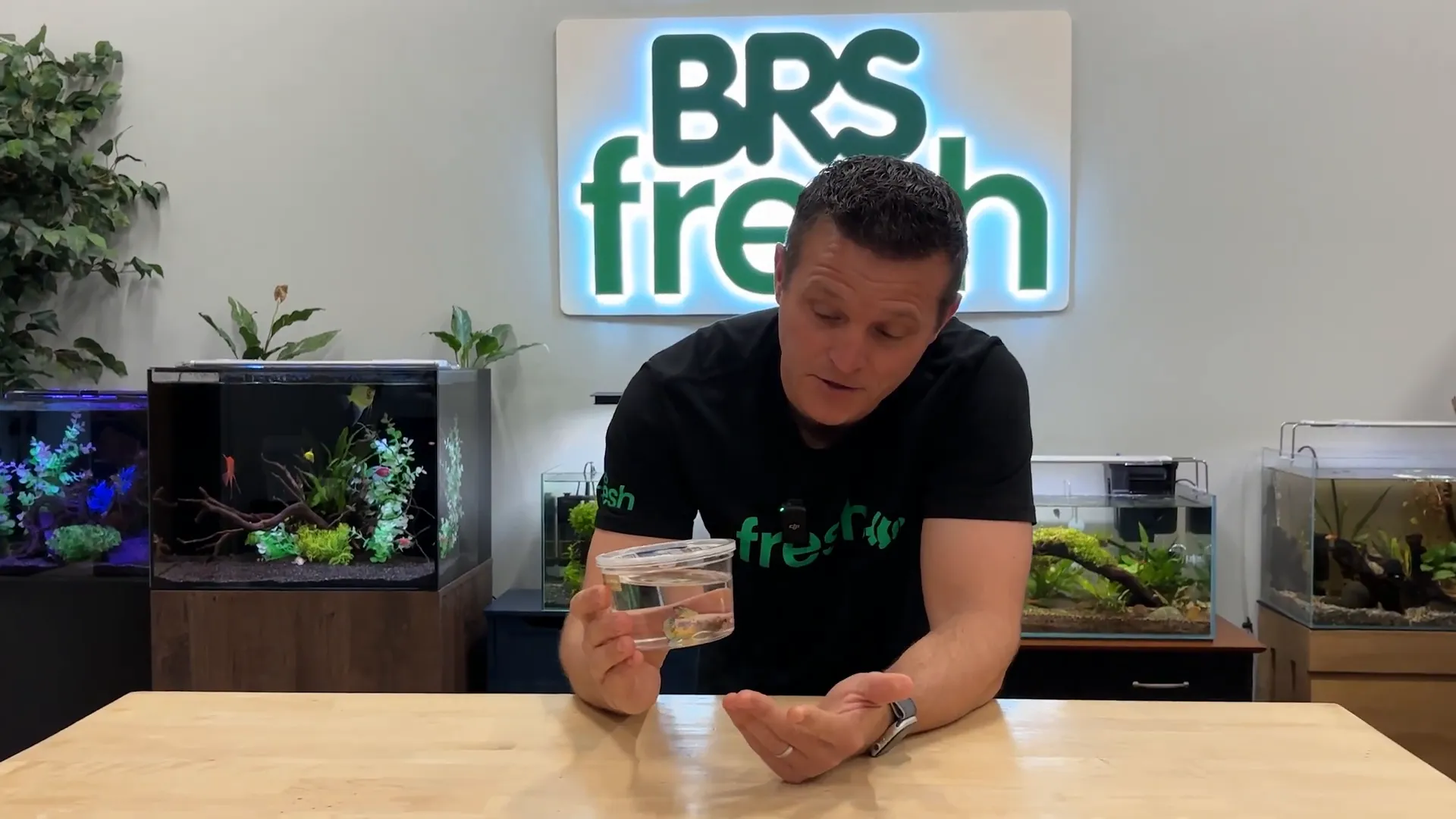
It’s common to see bettas sold in small cups at pet stores, and many people believe that these fish can live happily in such confined spaces. While technically true that bettas can survive in these conditions, it’s far from ideal. Bowls or cups lack the environmental enrichment and water quality control that bettas need to thrive.
Most people place their bettas in decorative bowls and then spend a lot of time simply waiting, hoping their fish will stay healthy. However, a decorative bowl on a kitchen counter usually lacks proper filtration, heating, and space for the fish to explore and exhibit natural behaviours. The goal is not just survival but to provide an environment where your betta can truly flourish.
Step 1: Start with an All-in-One Aquarium Kit
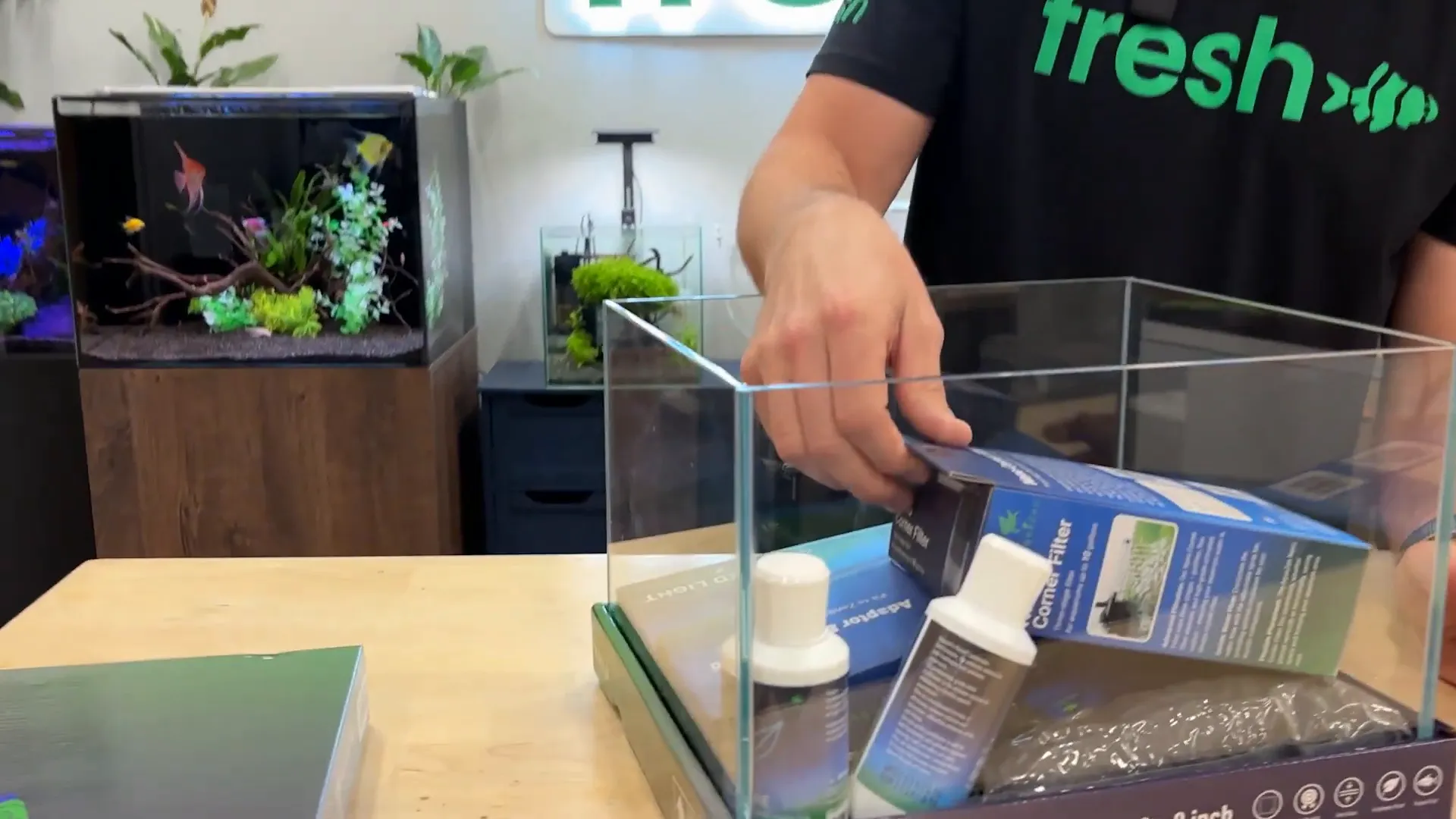
One of the easiest ways to set up your first betta tank is by choosing an all-in-one kit. These kits come pre-packaged with everything you need to get started, reducing the guesswork and making setup straightforward.
A great option is a 10-20L Starter Aquarium Kit. This kit should include:
- A compact aquarium tank (10-20L)
- A slim-profile LED light to illuminate the tank
- A small but efficient filter designed specifically for nano tanks
- Water conditioners and an all-in-one fertilizer for live plants
- A substrate soil that’s pre-washed and ready for planting
- A leveling mat to ensure your aquarium sits evenly and safely
A good starter aquarium kit provides the basic building blocks for a healthy betta environment. The soil substrate is especially useful if you want to add live plants, which bettas love, so choose a suitable planted substrate. Even if you choose a different substrate, having the foundational equipment like the filter and light is essential.
Step 2: Prepare the Substrate

Bettas originate from heavily planted natural environments, so recreating a planted setup is beneficial. The substrate you choose serves as the foundation for your plants and helps maintain water quality.
The soil included in the AquaZen kit is pre-washed, making it easy to use right out of the bag. Pour about half of the bag into the tank and spread it evenly. Aim for a substrate depth of at least one inch; up to three inches is optional but not necessary for bettas.
This substrate will support any live plants you decide to add later and provides a natural look that bettas appreciate.
Step 3: Install the Aquarium Filter
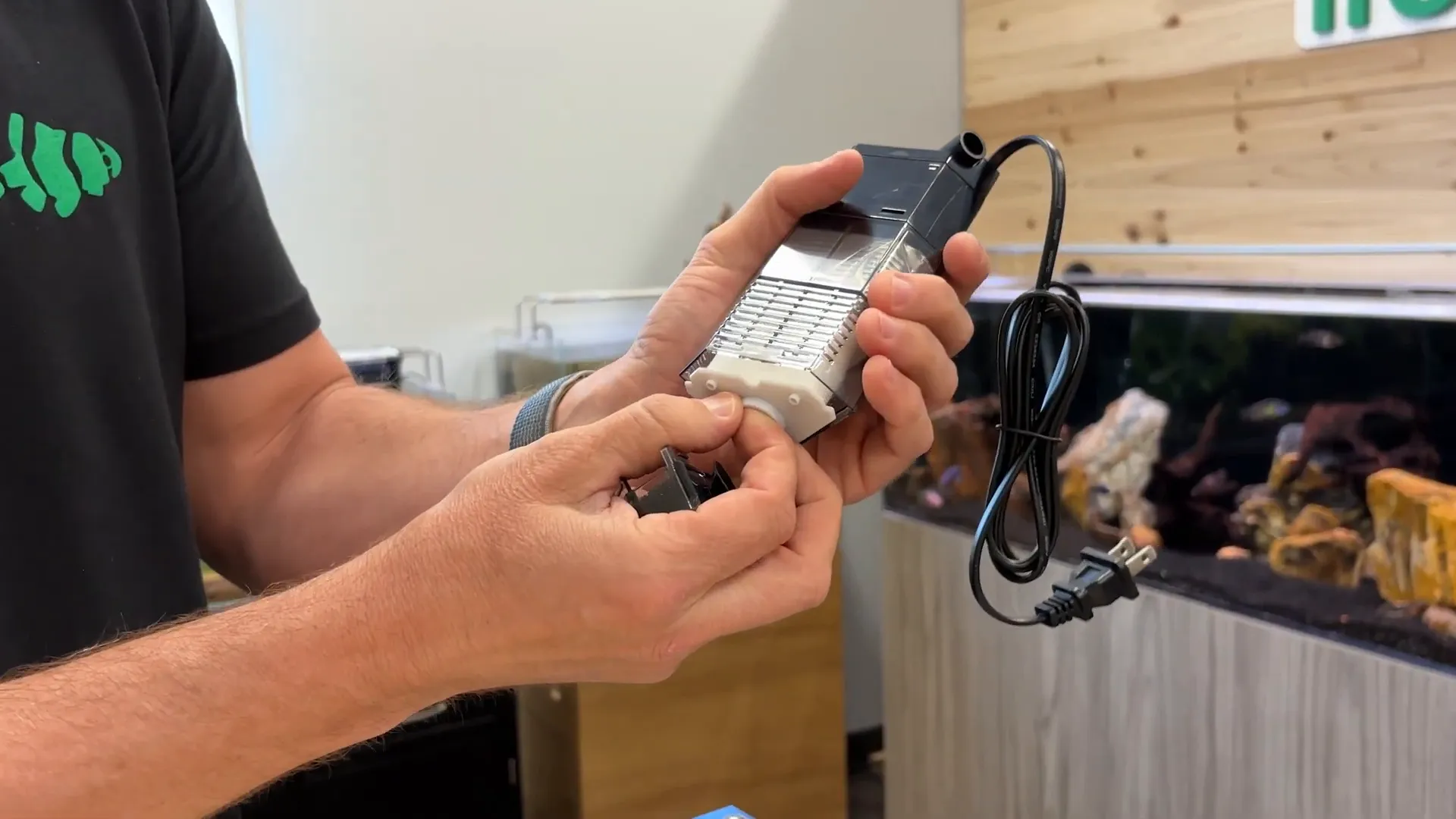
Keeping your betta’s water clean is crucial, and a good filter is key. The AquaZen kit includes a nano filter that is compact but effective. Here’s how to set it up:
- Pop off the bottom of the filter and remove the filter media.
- Remove the plastic bag from the filter media. Leaving this bag in place will block filtration.
- Replace the media inside the filter and snap the bottom back on.
- Attach the outflow pipe. The filter comes with adapters that let you position the outflow vertically or horizontally depending on your tank layout.
- Place the filter in the corner of the aquarium, adjusting the outflow direction to create gentle surface agitation.
The filter works by drawing water through coarse and fine media layers, trapping waste and debris. This keeps the water clear and healthy for your betta.
Step 4: Set Up the Aquarium Light
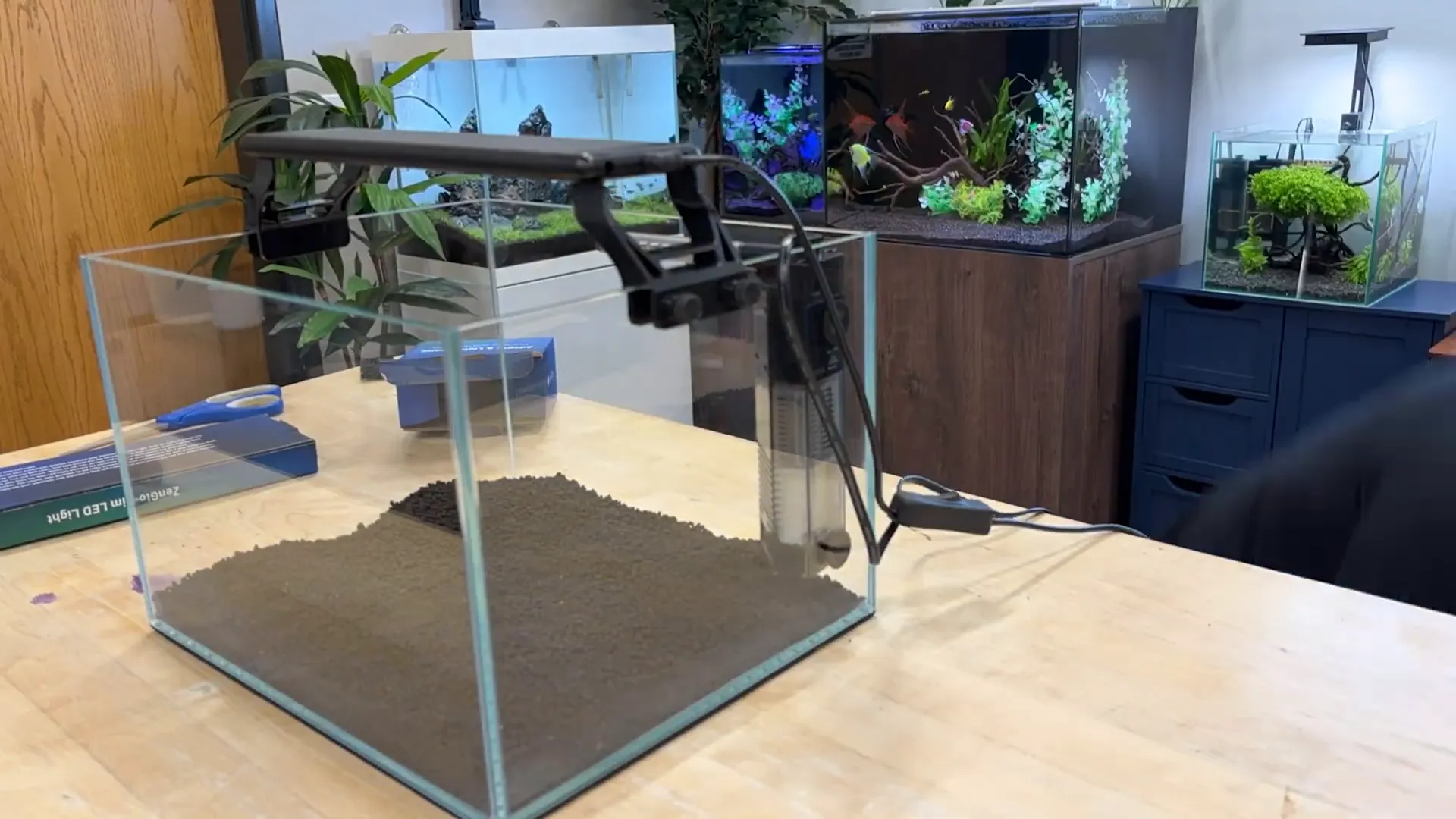
Lighting is important not only for viewing your betta but also for supporting live plant growth. The slim LED light included in the kit provides sufficient illumination without taking up much space.
Place the light on top of the tank and ensure it covers the entire aquarium. This will help your plants photosynthesize and add vibrancy to your tank.
Step 5: Add a Heater for Stable Water Temperature
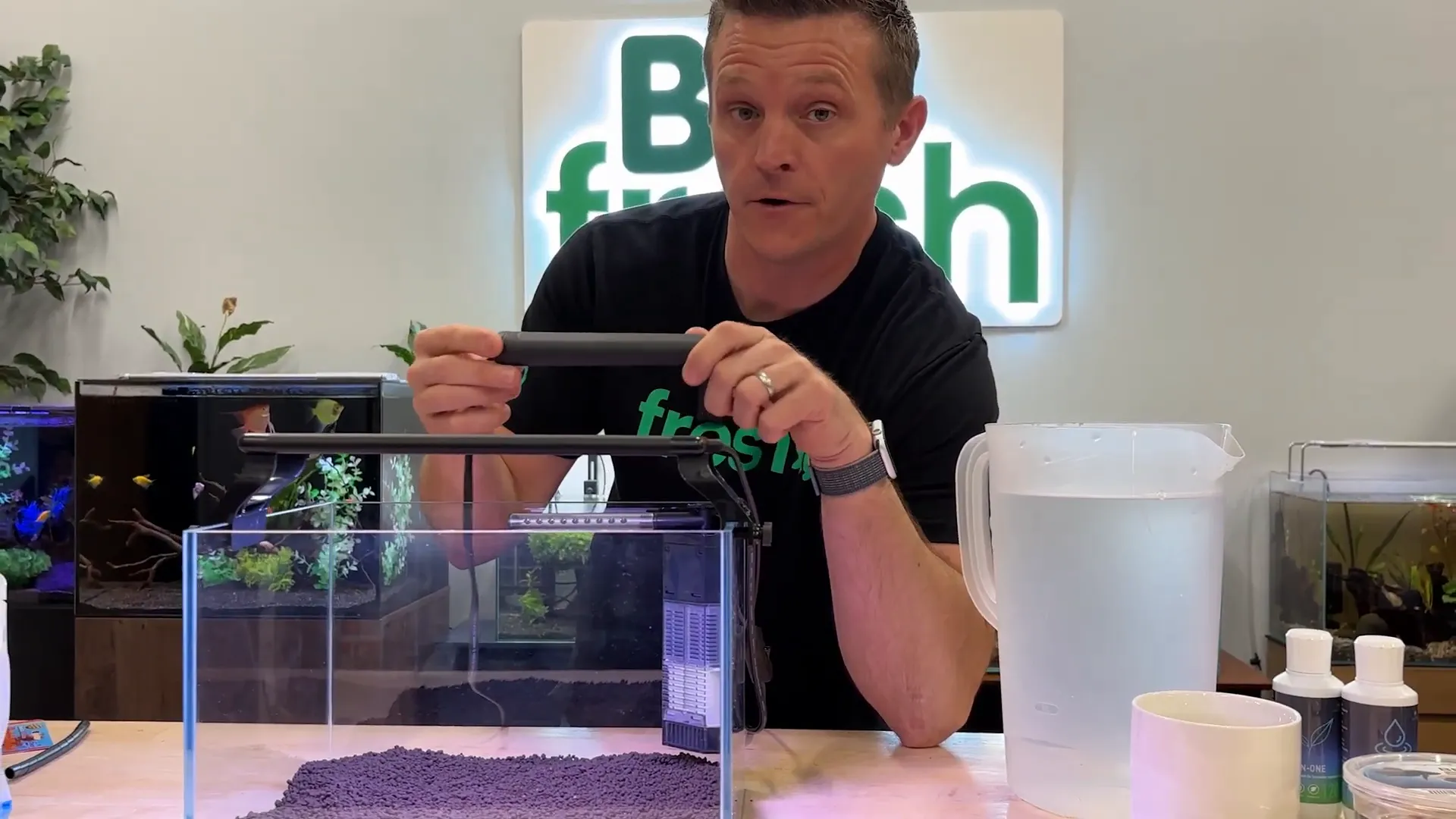
Bettas are tropical fish and require water temperatures between 76°F to 82°F (24°C to 28°C). To maintain this, you’ll need a heater.
I recommend a small, low-wattage heater like the Jolly Heater, which can be buried under the substrate to keep the tank looking neat. The heater has a protective plastic shell for safety.
Important: Never turn on the heater before the tank has water to avoid damaging the unit.
Step 6: Decorate Your Tank with Plants and Stones
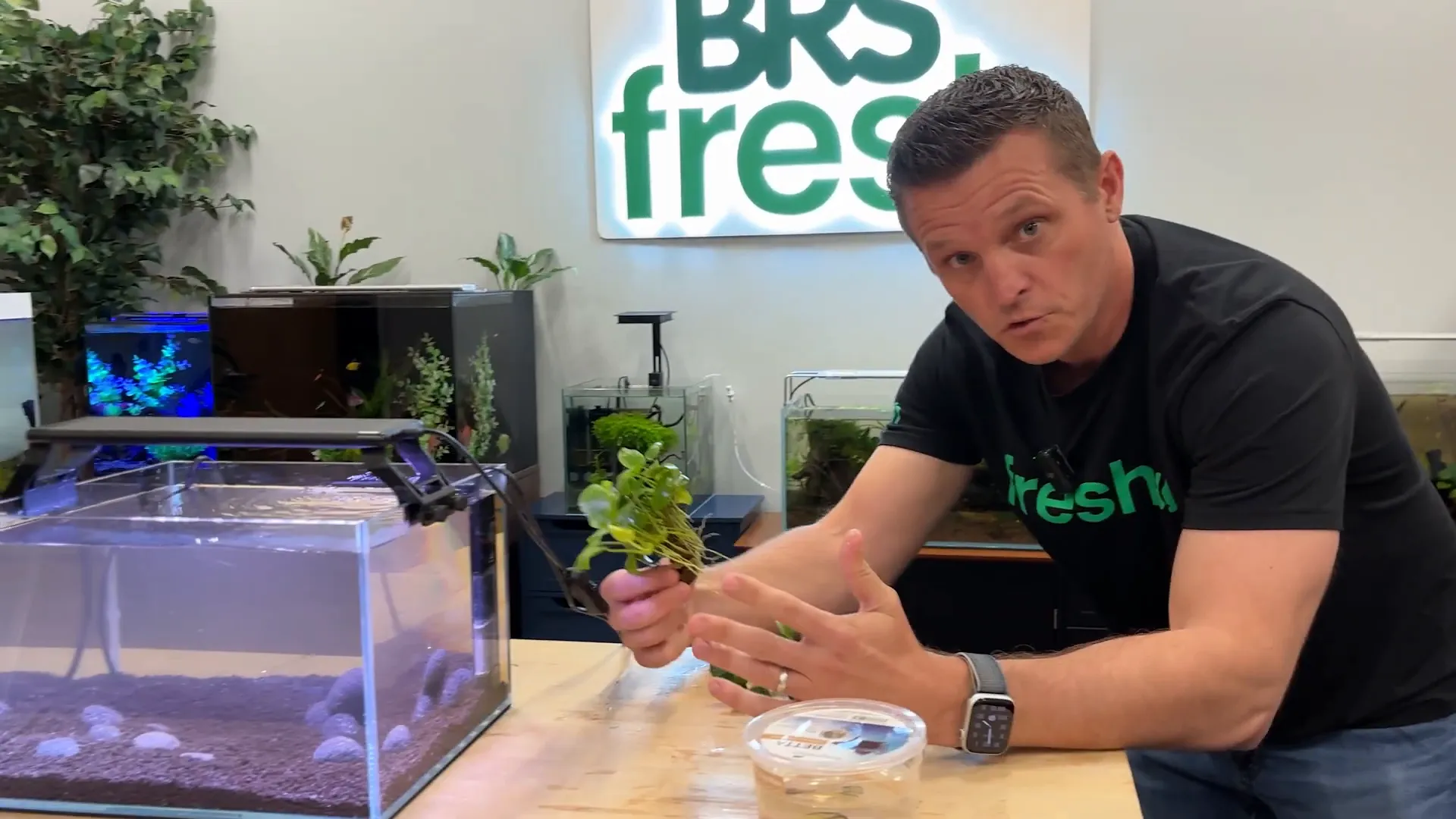
Adding live plants creates a natural habitat and provides hiding spots for your betta, which helps reduce stress. Anubias species are excellent options for beginners because they thrive in low light, require no special substrate, and are easy to care for.
Here are some popular Anubias plants to consider:
- Anubias Nana Petite
- Anubias Nana
- Anubias Golden
These plants don’t need to be planted in substrate; you can simply place them among rocks or attach them with zip ties to decorations. Just be sure not to bury the rhizome (the thick horizontal stem), as this can cause rot.
Creating little shelters with plants and rocks makes your betta feel safe and encourages natural behaviours.
Step 7: Dechlorinate Your Tap Water
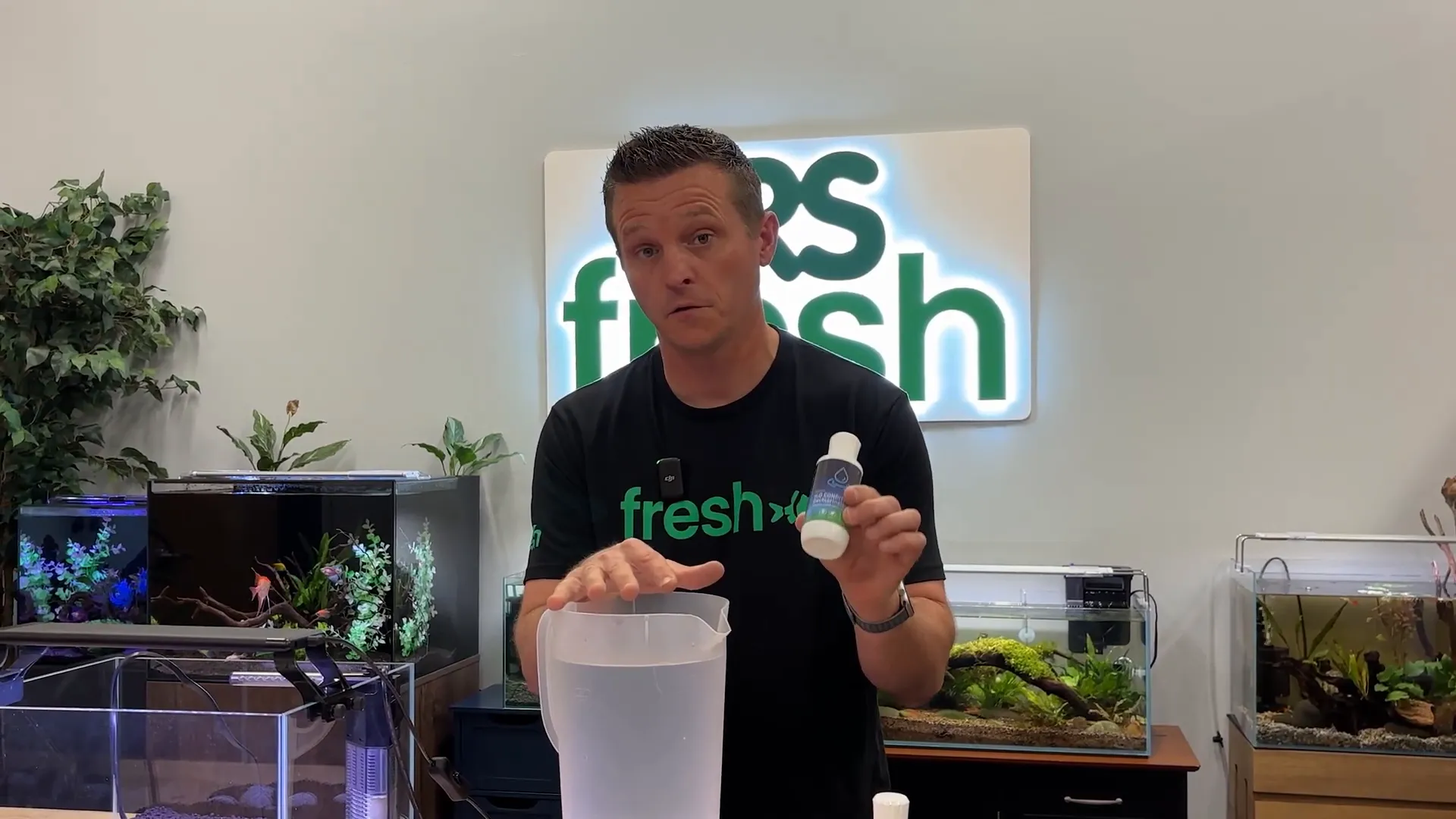
Taps water contains chlorine and chloramine, which are toxic to fish. Always treat your water with a dechlorinator before adding it to your tank.
Follow the directions on the dechlorinator bottle for the size of your aquarium. Usually, a small capful is sufficient for a 4-gallon tank. This step is critical to ensure your betta’s health.
Step 8: Fill the Tank Carefully
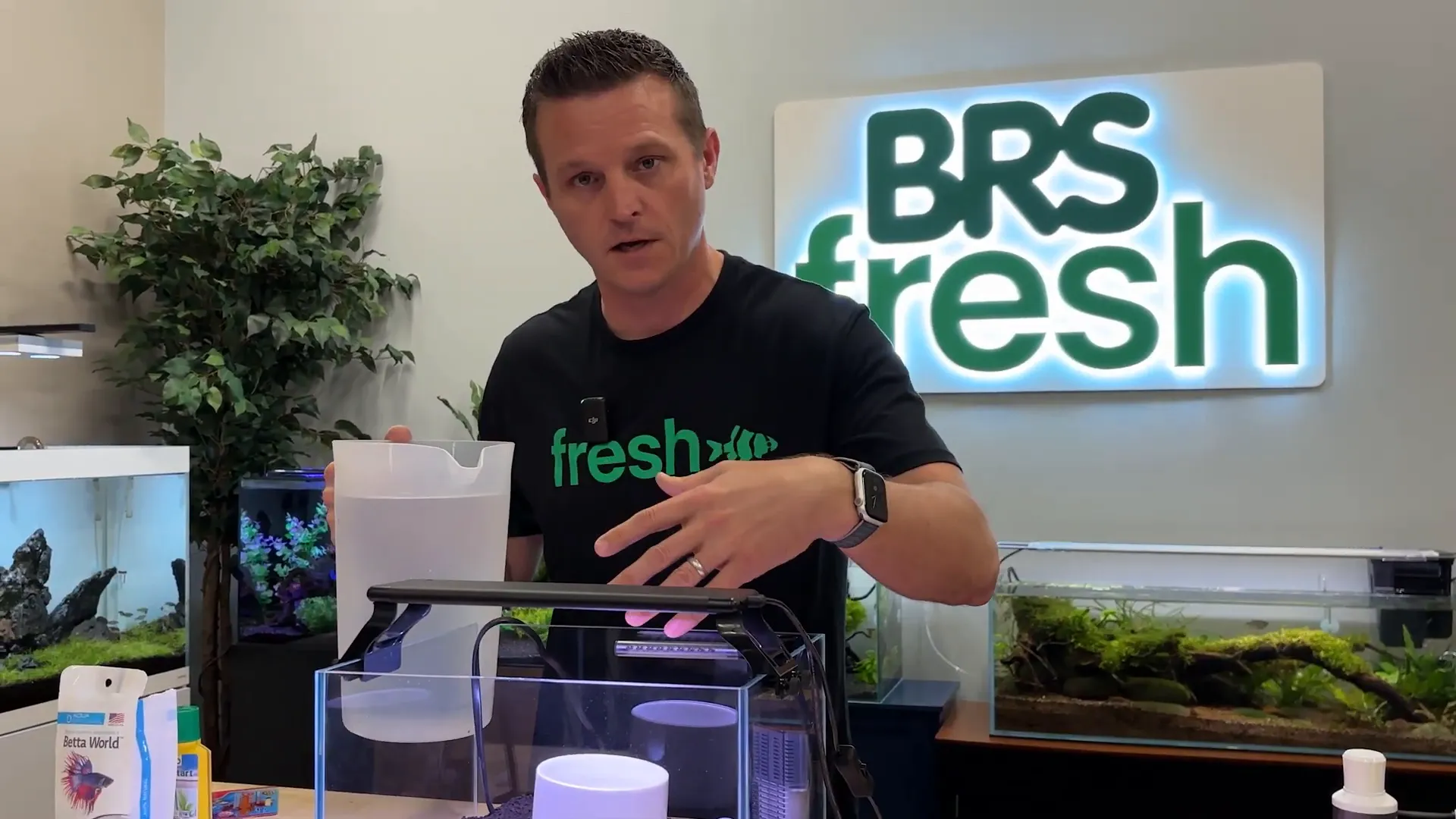
When filling the tank, use a gentle method to avoid disturbing the substrate or creating a mess. A simple trick is to place a cup or mug in the tank and pour water slowly into it. This reduces splashing and keeps your substrate in place.
Expect the water to be cloudy initially; this clears up within a few hours once the filter is running.
Step 9: Add Beneficial Bacteria

Before introducing your betta, it’s important to add beneficial bacteria to establish a healthy nitrogen cycle. Products like Tetra SafeStart introduce live bacteria that break down harmful ammonia and nitrites.
Add about a cap full or slightly more to your aquarium. This will protect your betta from toxic spikes as the tank cycles.
Step 10: Acclimate and Add Your Betta Fish
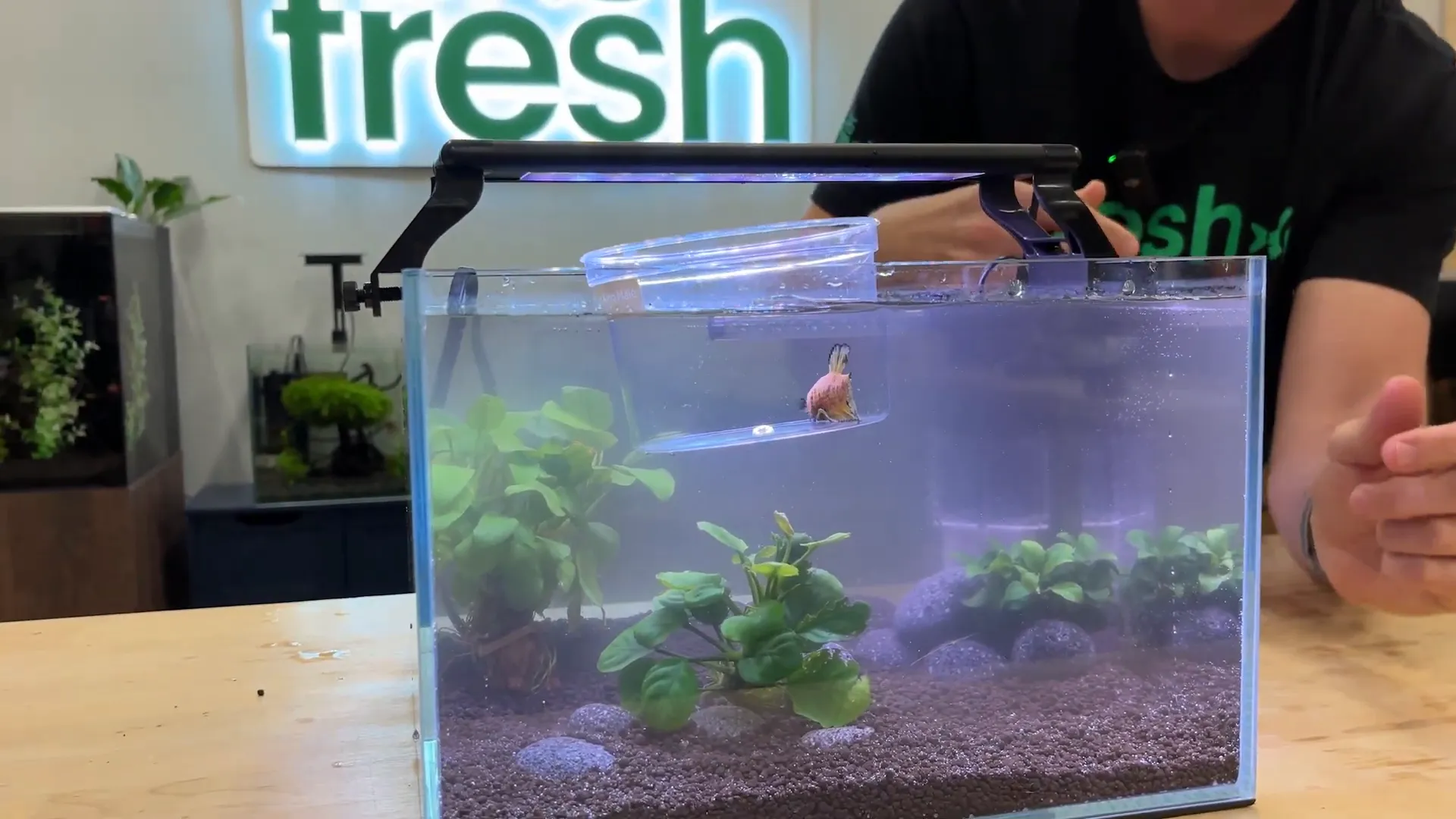
Suddenly transferring your betta from its bag or cup to the tank can cause shock due to temperature and water chemistry differences. Instead, float the bag in the tank water for a couple of hours to acclimate your fish gradually.
Once acclimated, gently submerge the bag and allow your betta to swim out on its own. Avoid pouring the fish directly into the tank to reduce stress.
Step 11: How to Feed Your Betta

Feeding your betta is one of the most enjoyable parts of the hobby. However, overfeeding is a common mistake that can harm your fish and pollute the water.
Start by waiting a few hours after adding your betta to the tank before feeding, as stress may reduce appetite initially.
One handy tool is the Betta Bio-Gold feeder tube. This allows you to dispense a measured amount of food pellets, preventing overfeeding. Typically, 3 to 10 pellets per feeding is enough depending on your betta’s size.
Feed your betta once or twice daily, removing any uneaten food to maintain water quality.
Step 12: Maintain and Clean Your Betta Tank
Keeping your tank clean ensures a healthy environment for your betta. Here are some essential maintenance tools and tips:
- Algae Scraper: Use a small scraper or sponge to clean algae from the glass regularly.
- Gravel Vacuum: Periodically vacuum the substrate to remove waste and uneaten food.
- Light Timer: Set your aquarium light on a timer for about six hours daily to prevent excessive algae growth.
Regular partial water changes (about 25% weekly) also help maintain water quality.
Frequently Asked Questions (FAQs)
Can bettas live in small bowls or cups?
While bettas can survive in small containers, these environments lack proper filtration, heating, and space. For your betta to thrive, a minimum of 2.5 to 4 gallons with proper equipment is recommended.
Why is a heater necessary for bettas?
Bettas are tropical fish requiring stable warm temperatures between 76°F and 82°F. Without a heater, temperature fluctuations can stress or even kill your betta.
What kind of plants are best for betta tanks?
Low-light, easy-care plants like Anubias species are ideal. They don’t require planting in substrate and provide shelter and natural beauty.
How often should I feed my betta?
Feed small amounts once or twice daily. Avoid overfeeding as it can pollute the water and harm your fish.
How do I cycle my betta tank?
Cycling establishes beneficial bacteria that convert toxic ammonia to nitrites and then nitrates. Using products like Tetra SafeStart can speed up this process. Regular water testing helps monitor the cycle.
Can I keep multiple bettas in one tank?
Male bettas are territorial and should be housed alone. Females can sometimes be kept in groups called sororities with careful monitoring. Always research before adding multiple bettas.
Final Thoughts
Setting up your first betta tank is an exciting journey that combines art and science. By following these steps on how to setup a Betta tank, you’ll create an environment where your betta can display its vibrant colours and lively personality.
Remember, bettas are more than just beautiful fish — they are living creatures that deserve thoughtful care and a habitat that supports their wellbeing. With proper equipment, live plants, and regular maintenance, your betta’s new home will be a thriving aquatic paradise.

Happy fishkeeping!
This article was inspired from the video How to Set Up Your First Betta Tank (Complete Beginner Guide) with all credits going to the creator.