When it comes to adding life and vibrancy to your reef aquarium, bivalves such as Tridacna and Hippopus clams are not only reef safe—they are truly reef functional. These photosynthetic marvels, with their stunning colours and natural filtration capabilities, bring a unique blend of beauty and utility to any saltwater setup. If you’ve ever wondered how to care for clams and integrate them seamlessly into your reef system, this guide will walk you through everything you need to know—from lighting and water flow to species selection and feeding.

Table of Contents
- Why Clams Are More Than Just Reef Safe
- Placement and Growth Habits: Where to Put Your Clams
- Lighting: The Cornerstone of Clam Health
- Tank Size and Water Parameters: Creating a Stable Environment
- Feeding Your Clams: Photosynthesis Plus Supplemental Nutrition
- Exploring Popular Clam Species in the Hobby
- Final Thoughts: Why Care for Clams Is Worth the Effort
- Frequently Asked Questions (FAQ) About Care for Clams
Why Clams Are More Than Just Reef Safe
Most hobbyists know that clams like the well-known Tridacna species are safe to keep in reef tanks, but their role goes far beyond being passive inhabitants. These clams are reef functional, meaning they actively contribute to the health and balance of your aquarium ecosystem.
Both Tridacna and their close relatives in the Hippopus genus host symbiotic algae called zooxanthellae within their mantles. These algae perform photosynthesis, producing energy that sustains the clam. This photosynthetic relationship not only gives these clams their vibrant colours but also means that proper lighting is absolutely essential to keep them healthy and thriving.
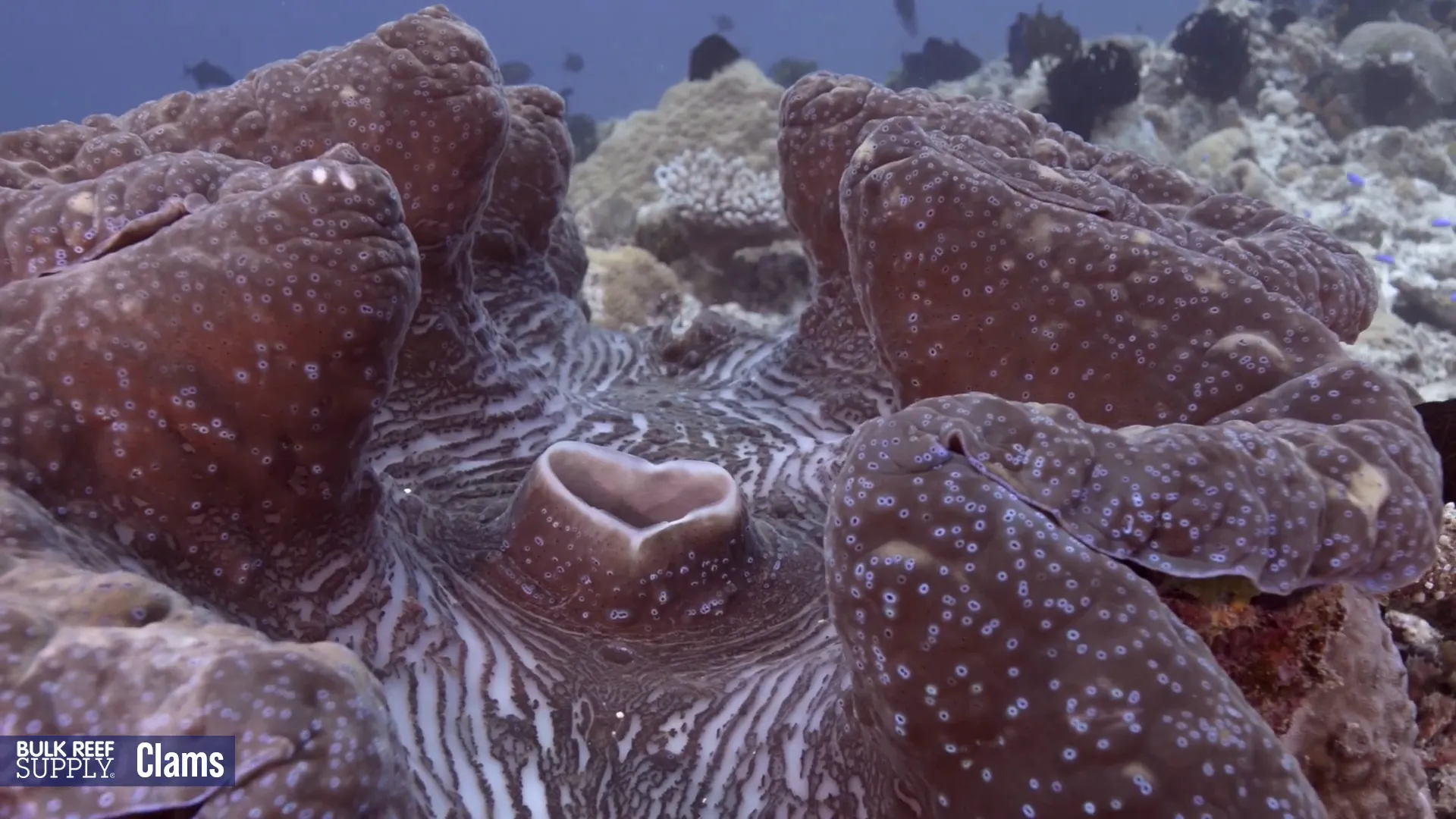
Beyond photosynthesis, these clams are also natural filter feeders. As water flows across their gills, they pull nutrients and tiny particles directly from the water column, helping improve water clarity and quality in your reef tank. This dual functionality of energy production and filtration makes clams a valuable addition to any marine aquarium.
Placement and Growth Habits: Where to Put Your Clams
Once a Tridacna clam finds a comfortable spot, it generally attaches itself permanently, often to live rock or hard surfaces. This anchoring behaviour makes them stable showpieces in your aquarium. In contrast, Hippopus clams do not attach but prefer to rest on the substrate, typically settling on the sand bed.
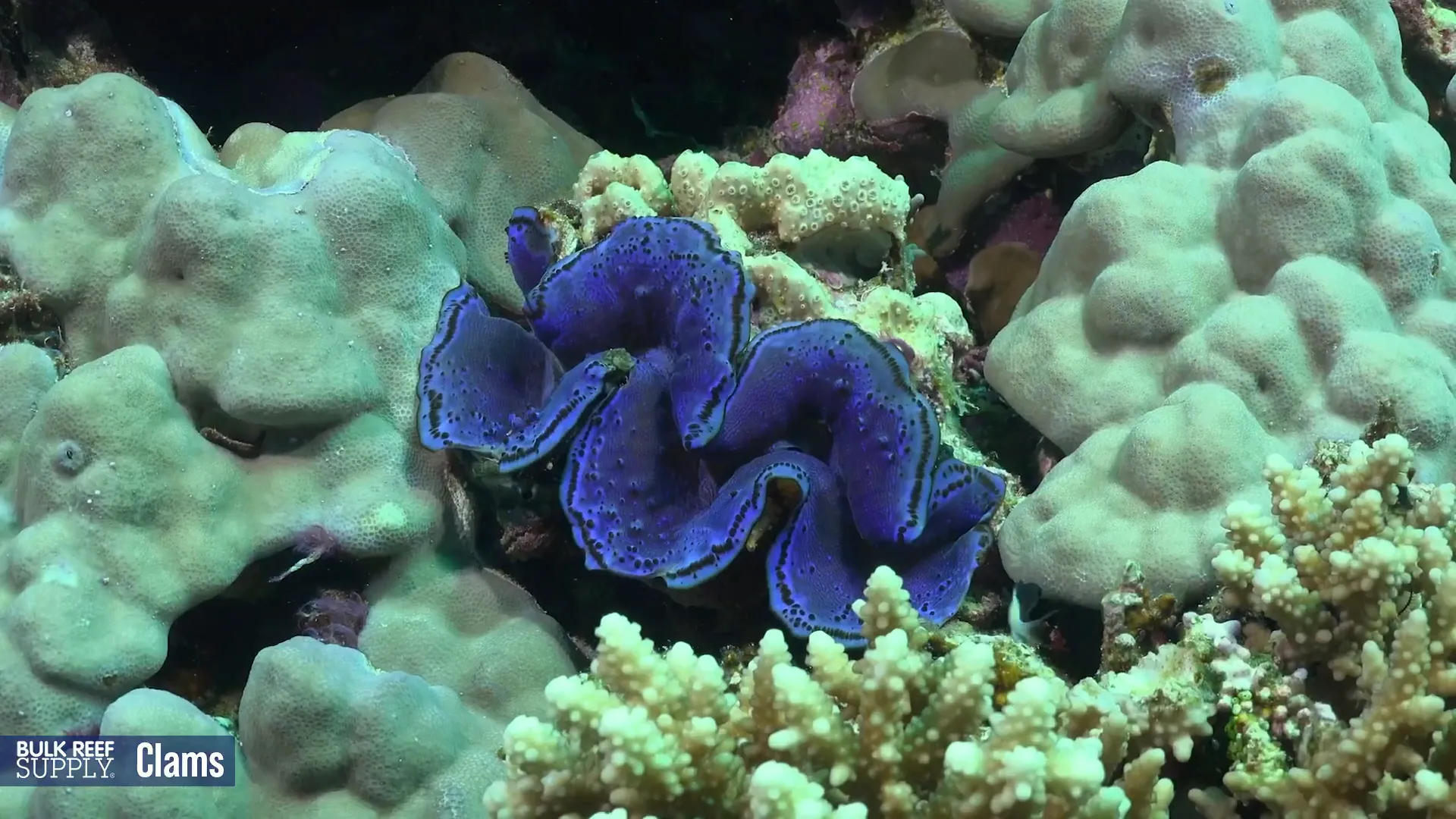
Both genera can grow steadily over time, becoming long-term, relatively low-maintenance highlights of your underwater world. However, the key to successful clam care is ensuring they are placed in a stable position where they aren’t wedged tightly between rocks or exposed to strong currents that might damage their delicate mantles.
Lighting: The Cornerstone of Clam Health
One of the main challenges in clam care is providing the right lighting conditions. Because Tridacna and Hippopus clams rely on photosynthesis, adequate light intensity is crucial.
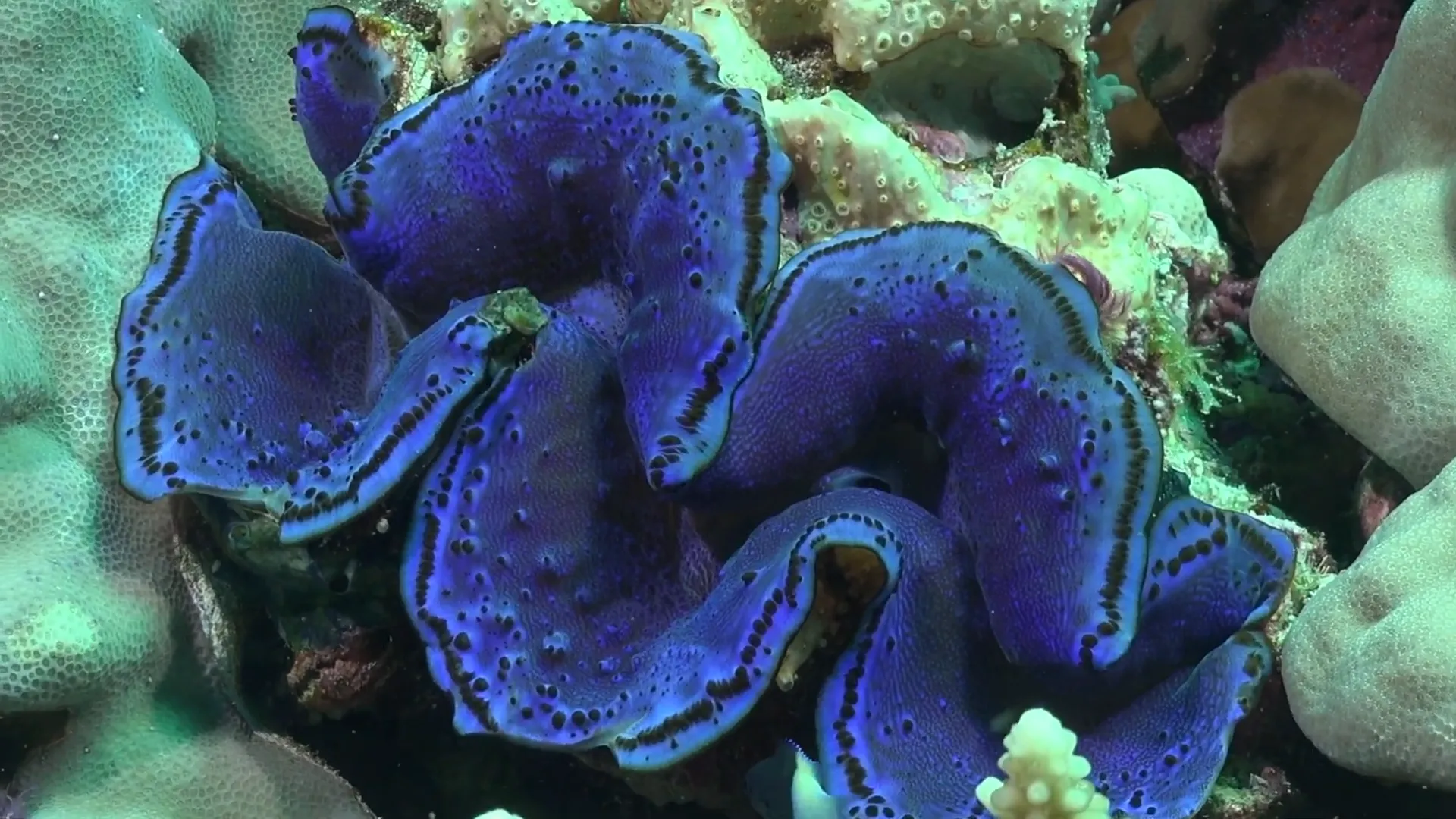
These clams thrive under moderate to high intensity lighting. The light levels should be similar to those used for growing most corals, ensuring the zooxanthellae algae within their mantles can efficiently produce energy. The photosynthetically active radiation (PAR) levels must be sufficient to maintain their vibrant colours and overall health.
Water Flow: Gentle but Consistent
Water flow is another important factor in clam care. Both Tridacna and Hippopus prefer moderate, indirect water flow. Strong, direct currents can harm their delicate mantles, causing stress or physical damage. Position your clams where they receive gentle circulation that helps them filter feed without being blasted by forceful water movement.
Tank Size and Water Parameters: Creating a Stable Environment
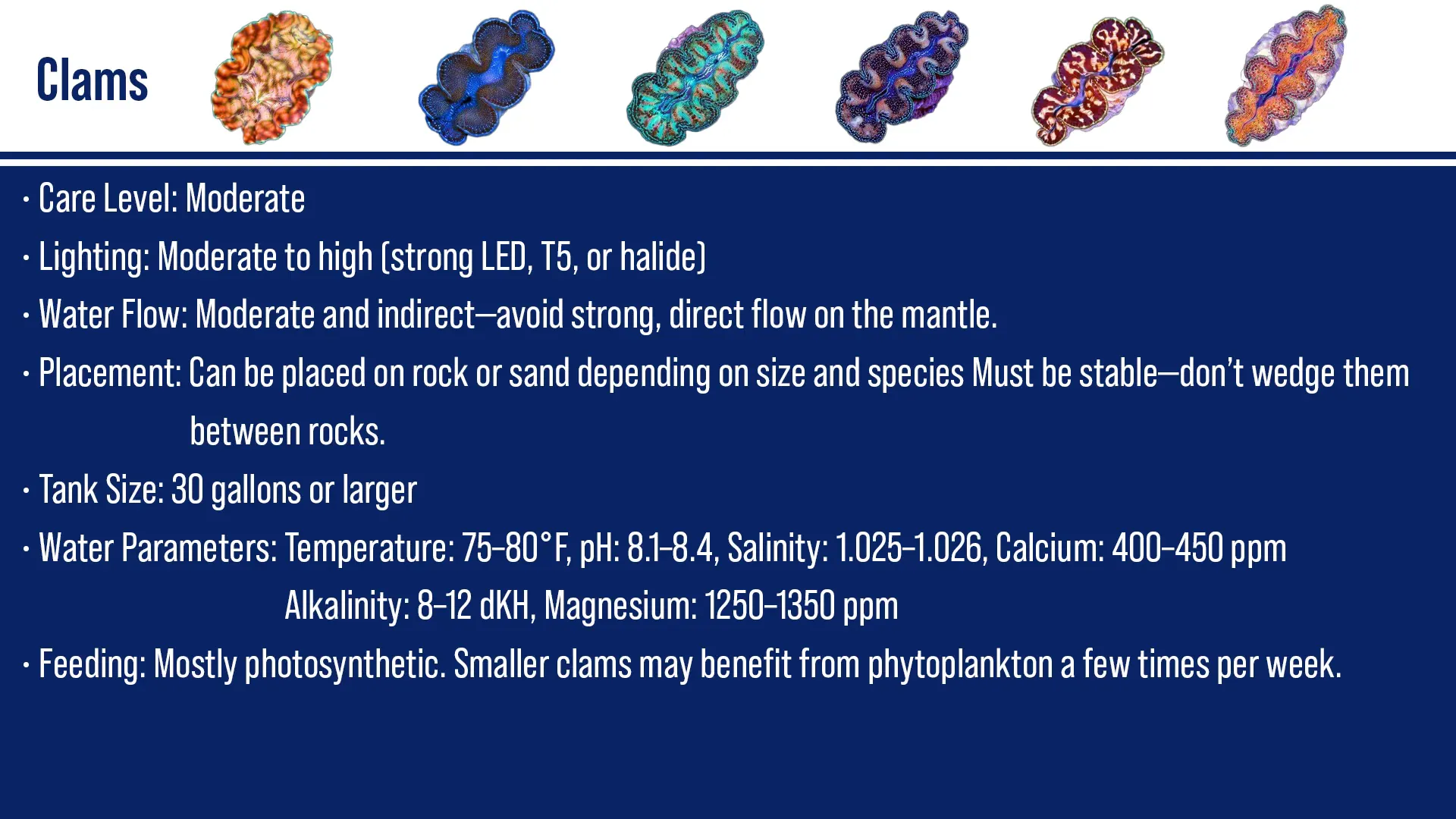
Clams require a stable environment to flourish. Generally, a tank size of 30 gallons or larger is recommended for most Tridacna and Hippopus species to provide ample space and stable water conditions. Of course, larger species will need even bigger setups.
Maintaining consistent water parameters is vital. Aim for the following ideal ranges:
- Temperature: 75–80°F (24–27°C)
- pH: 8.1–8.4
- Salinity: 1.025–1.026 specific gravity
- Calcium: 400–450 ppm
- Alkalinity: 8–12 dKH
- Magnesium: 1250–1350 ppm
These parameters mimic the natural conditions clams experience on coral reefs and help ensure their shells grow strong and their mantles remain vibrant.
Feeding Your Clams: Photosynthesis Plus Supplemental Nutrition
While most Tridacna and Hippopus clams meet the majority of their nutritional needs through photosynthesis, they can benefit from occasional supplemental feeding. Offering phytoplankton a few times per week can provide extra nourishment, especially for younger or growing clams.
Supplemental feeding supports their filter-feeding activity and helps maintain their overall health, particularly in tanks where natural plankton levels might be low.
Exploring Popular Clam Species in the Hobby
There are about ten species of Tridacna and two species of Hippopus, but in the hobby, you’ll mostly encounter five or six species that are commonly available. Each species brings unique traits and care nuances.
Tridacna Species
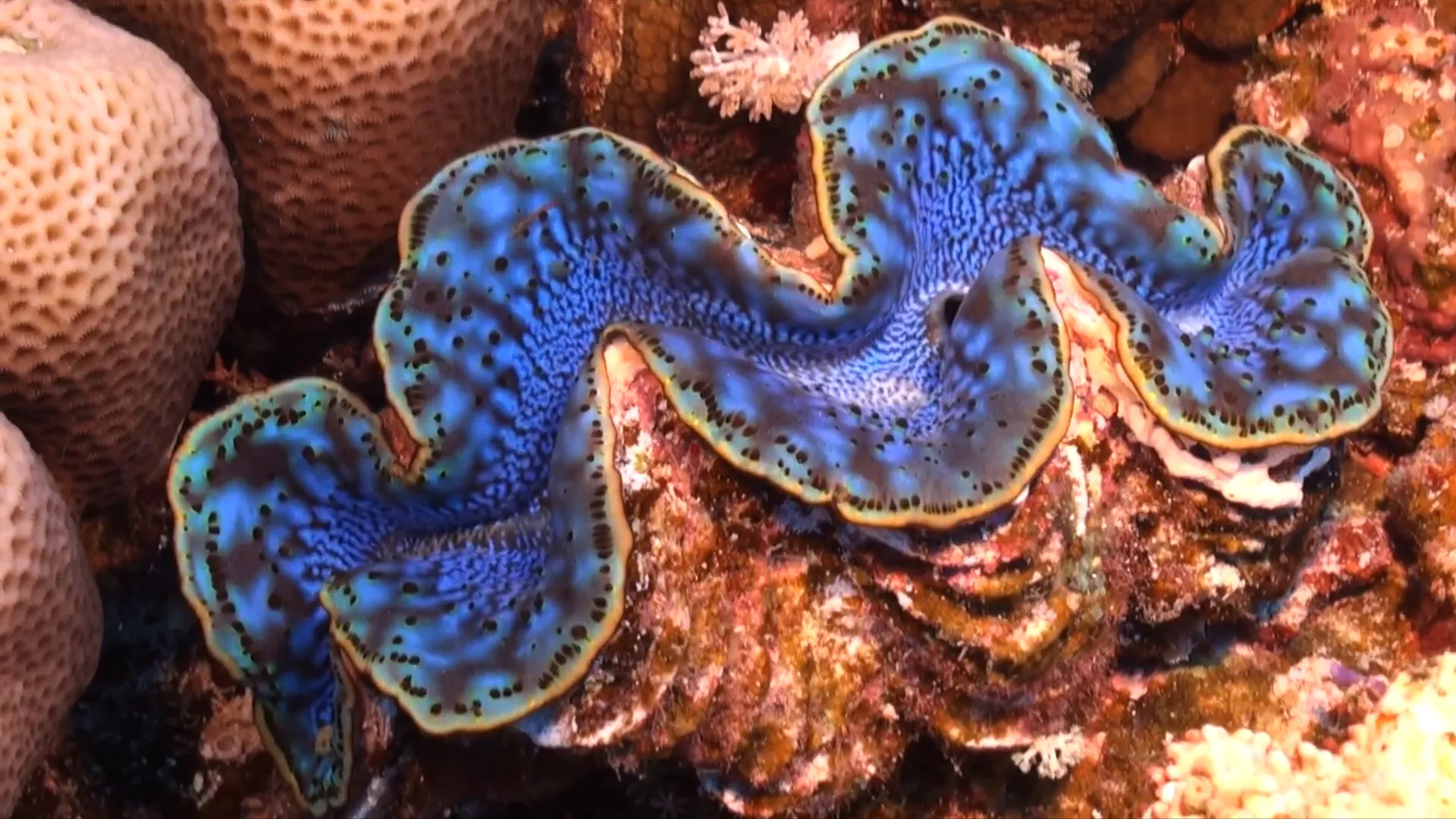
- Tridacna maxima: Known for its incredibly vibrant and diverse colour patterns, the Maxima clam usually attaches to rockwork and stays under 12 inches in size. They make stunning focal points in reef tanks.
- Tridacna derasa: These clams are faster growers with smoother shells. Unlike Maxima, Derasa clams prefer resting on the sand bed and can grow up to 18 inches.
- Tridacna gigantea: The true giant of the genus, these clams can exceed three feet in length and require very large tanks. They are best suited for dedicated reef keepers with appropriately sized systems who want a spectacular centerpiece.
Hippopus Species
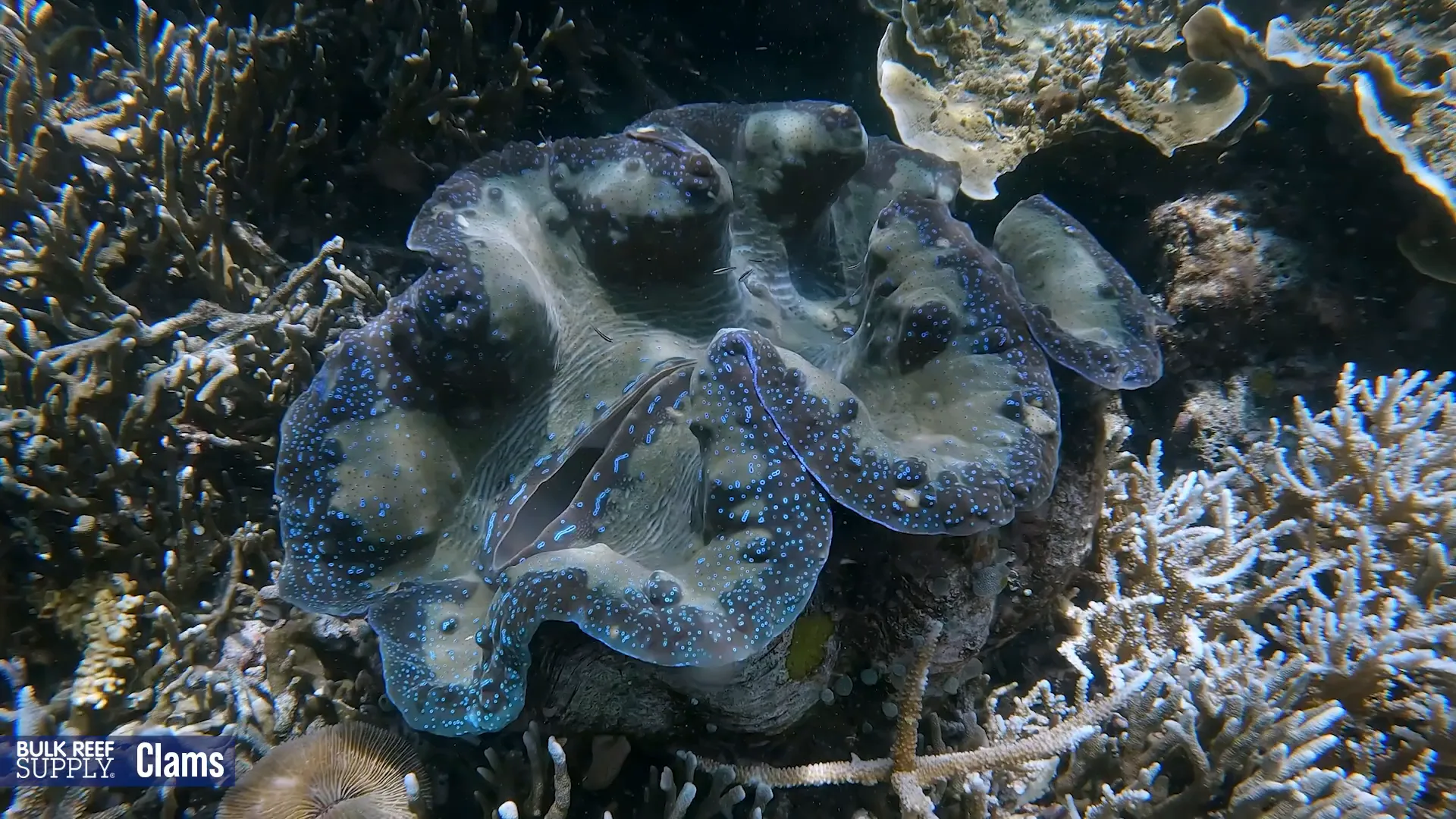
- Hippopus hippopus: This species is recognizable by its tucked-in mantle and scalloped shell. Unlike most Tridacna, Hippopus clams do not attach and always rest directly on the sand bed. Their unique appearance and behaviour add diversity to your reef tank.
Final Thoughts: Why Care for Clams Is Worth the Effort
Whether you’re drawn to the anchoring beauty of a Tridacna clam or the sand-dwelling charm of a Hippopus, giving these bivalves the right care will reward you with some of the most unique and captivating animals you can keep in a reef aquarium.
With proper lighting, moderate water flow, stable water parameters, and occasional feeding, clams can thrive and become a highlight of your underwater world. They not only add stunning colour and natural movement but also actively contribute to water filtration, enhancing the overall health of your reef tank.
For those looking to add these functional and beautiful clams to their aquarium, be sure to explore reputable sources and stay updated on availability. Your reef system—and your eyes—will thank you.
Frequently Asked Questions (FAQ) About Care for Clams
Q: What lighting intensity is best for Tridacna and Hippopus clams?
A: Both genera thrive under moderate to high intensity lighting similar to that required for most corals, ensuring their symbiotic algae can photosynthesise effectively.
Q: Do Hippopus clams attach to rocks like Tridacna?
A: No, Hippopus clams do not attach. They prefer to rest directly on the sand bed, unlike many Tridacna species which anchor themselves to rockwork.
Q: How large should my tank be for keeping clams?
A: A minimum of 30 gallons is recommended for most clam species, but larger species like Tridacna gigantea require much bigger tanks to accommodate their size and environmental needs.
Q: Can I feed my clams, or do they only need light?
A: While clams get most of their nutrition from photosynthesis, feeding them phytoplankton a few times per week can support their growth and health.
Q: What water parameters are ideal for clam health?
A: Maintain stable conditions with temperature between 75–80°F, pH 8.1–8.4, salinity of 1.025–1.026, calcium 400–450 ppm, alkalinity 8–12 dKH, and magnesium 1250–1350 ppm.
Happy reefing, and enjoy the beauty and benefits that clams bring to your marine aquarium!
This article was inspired from the video How To Care For Reef Tank Clams. with all credits going to the creator.