Table of Contents
- Introduction
- Where they come from and why it matters
- Three major groups: Mbuna, Peacocks, and Haps
- Tank size, stocking and aquascaping
- Substrate, plants and decor
- Water parameters & filtration
- Feeding and nutrition
- Breeding note — mouthbrooders
- Common mistakes to avoid
- Conclusion
- FAQ
- Further resources
Introduction
This guide is a take on keeping Lake Malawi Cichlids healthy, colourful, and behaving like they should. If you’re setting up your first cichlid tank or just curious about these bold and brilliant fish, read on. Lake Malawi Cichlids are colourful, fast-evolving, and demanding in different ways than many community fish, so a little background and practical advice will go a long way.
Where they come from and why it matters
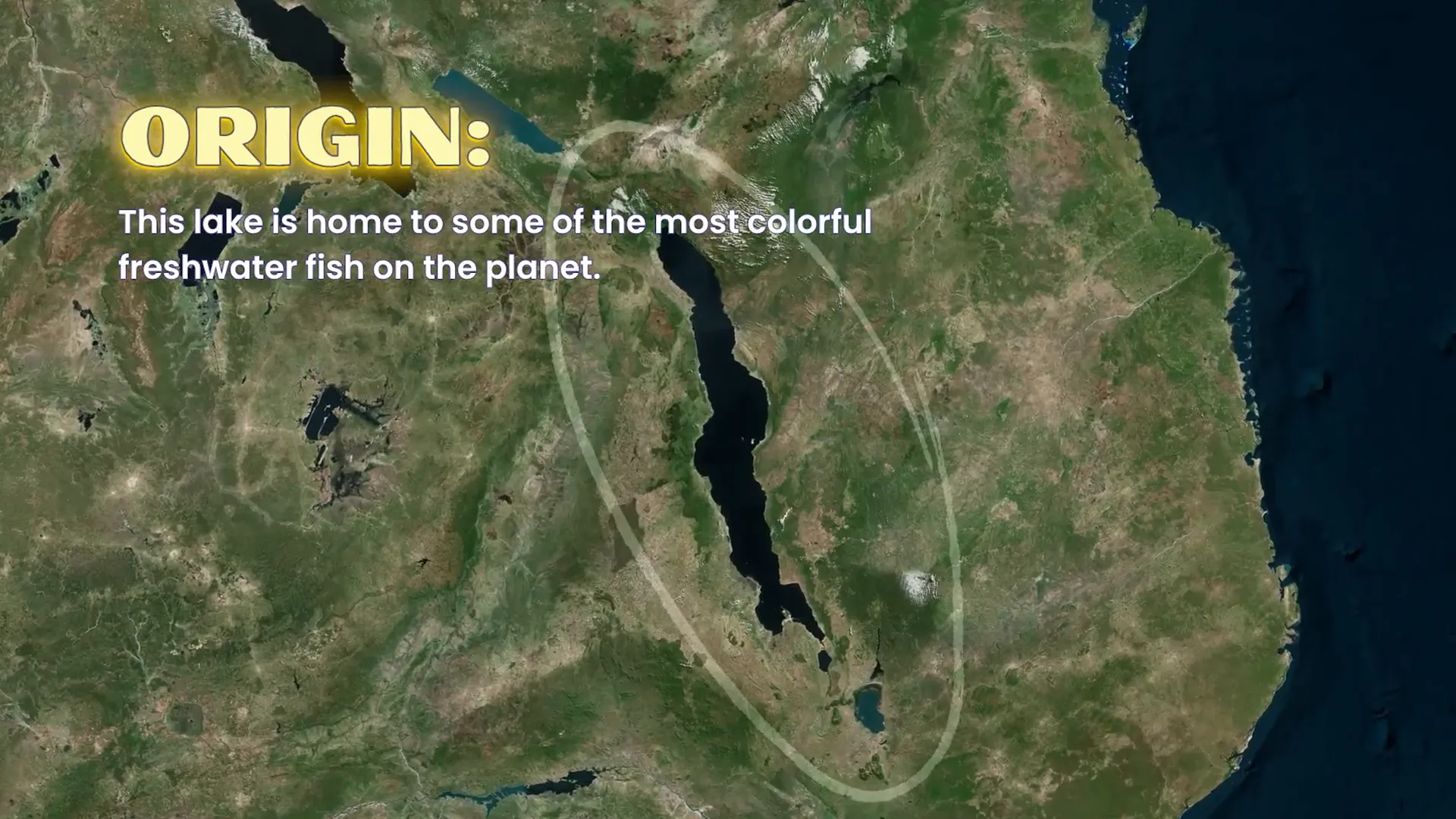
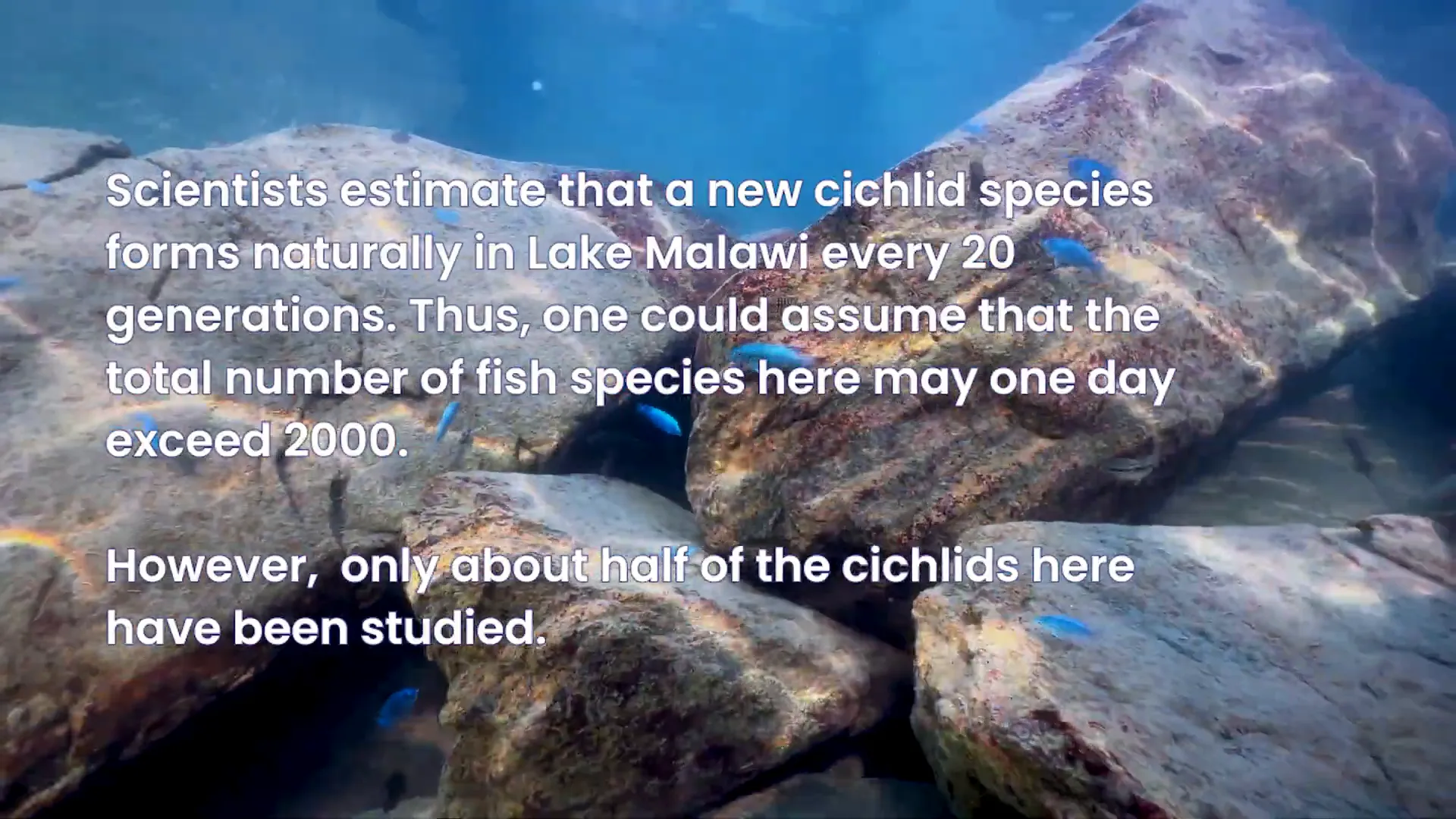
All Lake Malawi Cichlids originate from a single place: Lake Malawi in Africa. These species are endemic to the lake — you won’t find them naturally anywhere else. Lake Malawi is one of the largest and deepest lakes in Africa and has warm, alkaline water with surface temperatures typically between 75°F and 84°F (about 24°C–29°C). The lake is meromictic, which has helped produce an extraordinary diversity of cichlids — roughly 850 described species descended from ancestral cichlids that arrived a million or two million years ago. Scientists estimate new species can form naturally every ~20 generations, which helps explain the staggering variety.
Three major groups: Mbuna, Peacocks, and Haps
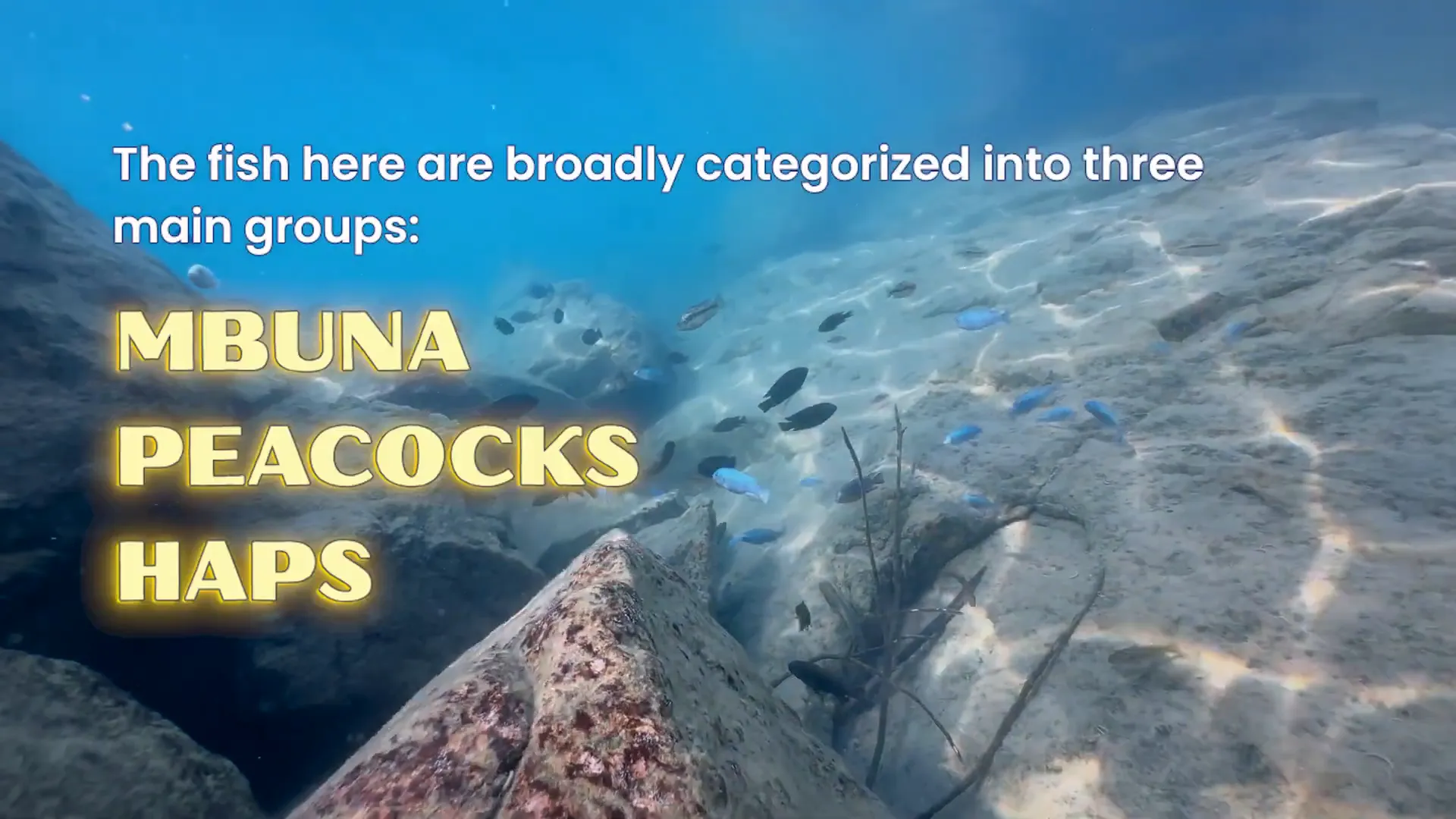
Lake Malawi Cichlids are typically grouped into three broad categories, and understanding their differences is crucial for successful keeping.
- Mbuna — literally “rockfish.” These are rock-dwelling species, highly territorial and aggressive compared with the other groups. They’re often smaller, intensely colourful even when juvenile, and do best in rock-heavy aquascapes with lots of hiding spots. Mbuna tanks are commonly kept more densely stocked to diffuse aggression.
- Peacocks — free-swimming, open-water fish that are often very colourful but usually take longer to show full colour, especially males. They are less aggressive than mbuna and prefer more open swimming space.
- Haps — similar to peacocks in lifestyle: free-swimming, generally larger, and more peaceful. They like open water and typically need bigger tanks.
How to tell them apart
It can be tricky, but there are some reliable cues:
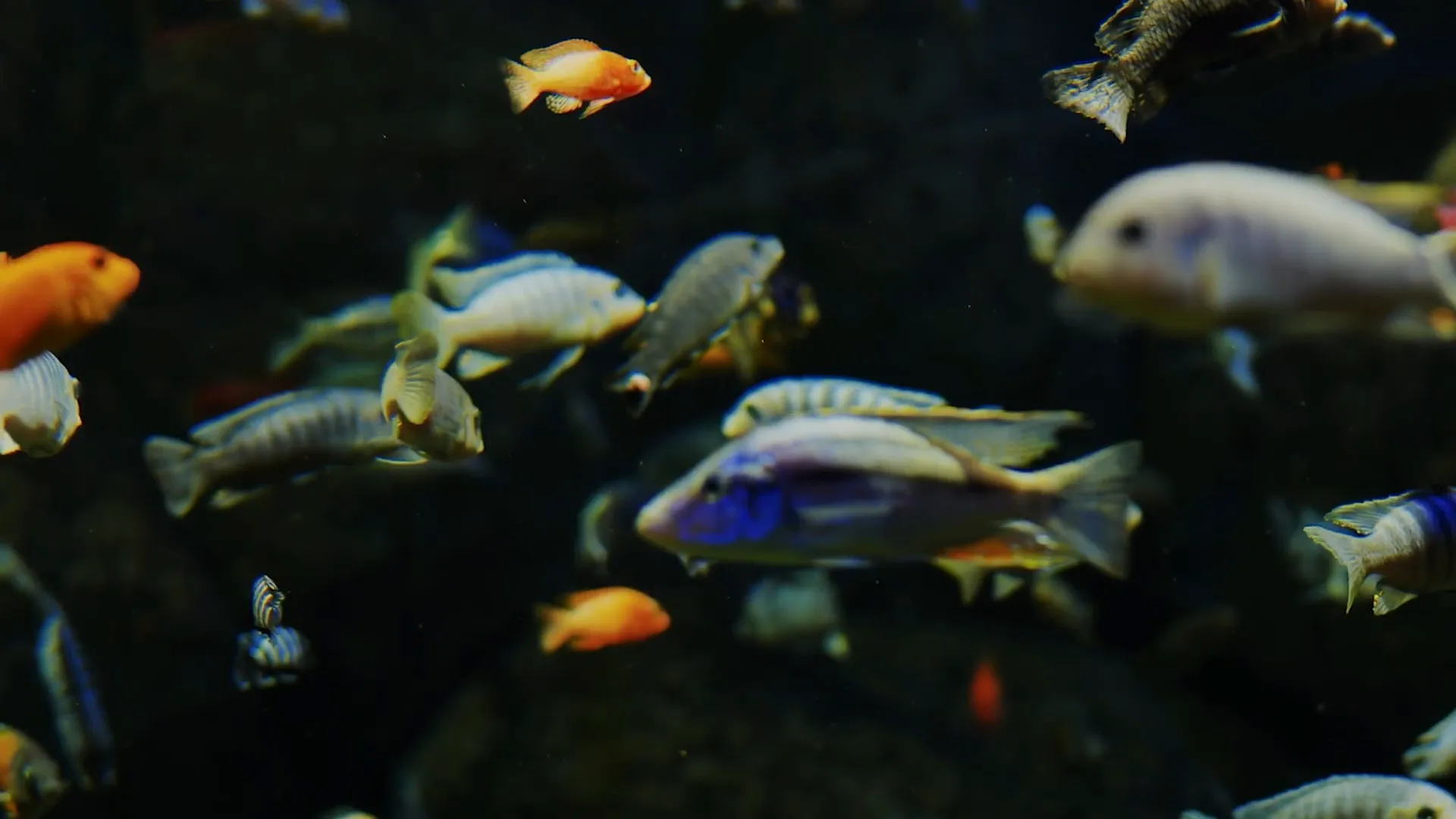
- Mbuna: bright, full colour even at small sizes; stocky, rock-adapted bodies; strong territorial behaviour.
- Peacocks & haps: more torpedo-shaped, take longer to reach peak colour (males especially), and swim more openly.
Tank size, stocking and aquascaping
Tank size recommendations vary by group:
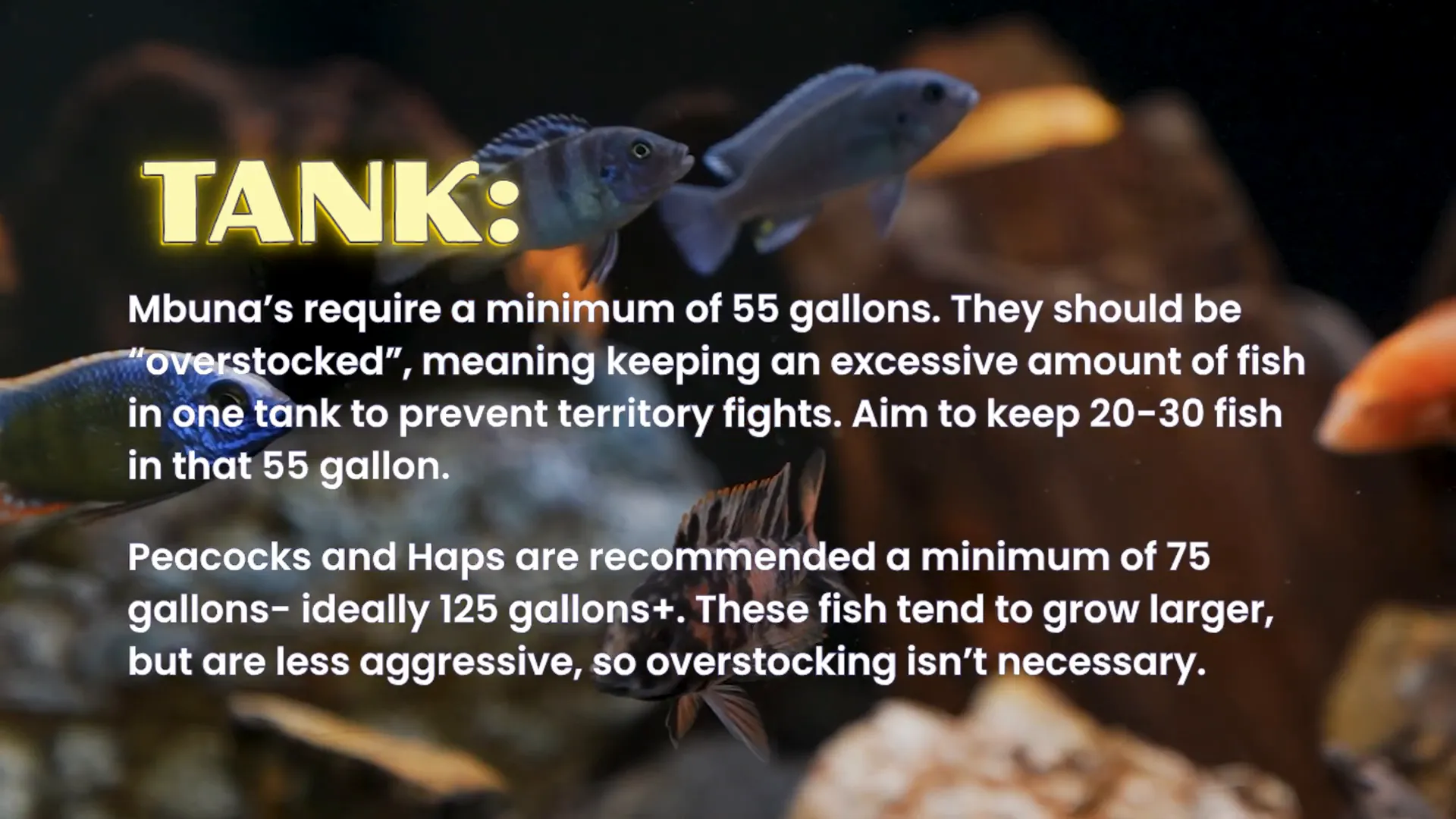
- Mbuna: minimum about 55 gallons, and many hobbyists intentionally overstock to distribute aggression across many individuals.
- Peacocks and haps: minimum 75 gallons, but ideally 125 gallons or larger — they grow bigger and need space to swim.
All Lake Malawi Cichlids thrive with plenty of rockwork and hiding places and a sandy substrate. Rocks and caves give mbuna territories and sight-line breaks (which reduce aggression). Open water swimmers like peacocks and haps appreciate clear midwater space and fewer tight caves.
Substrate, plants and decor
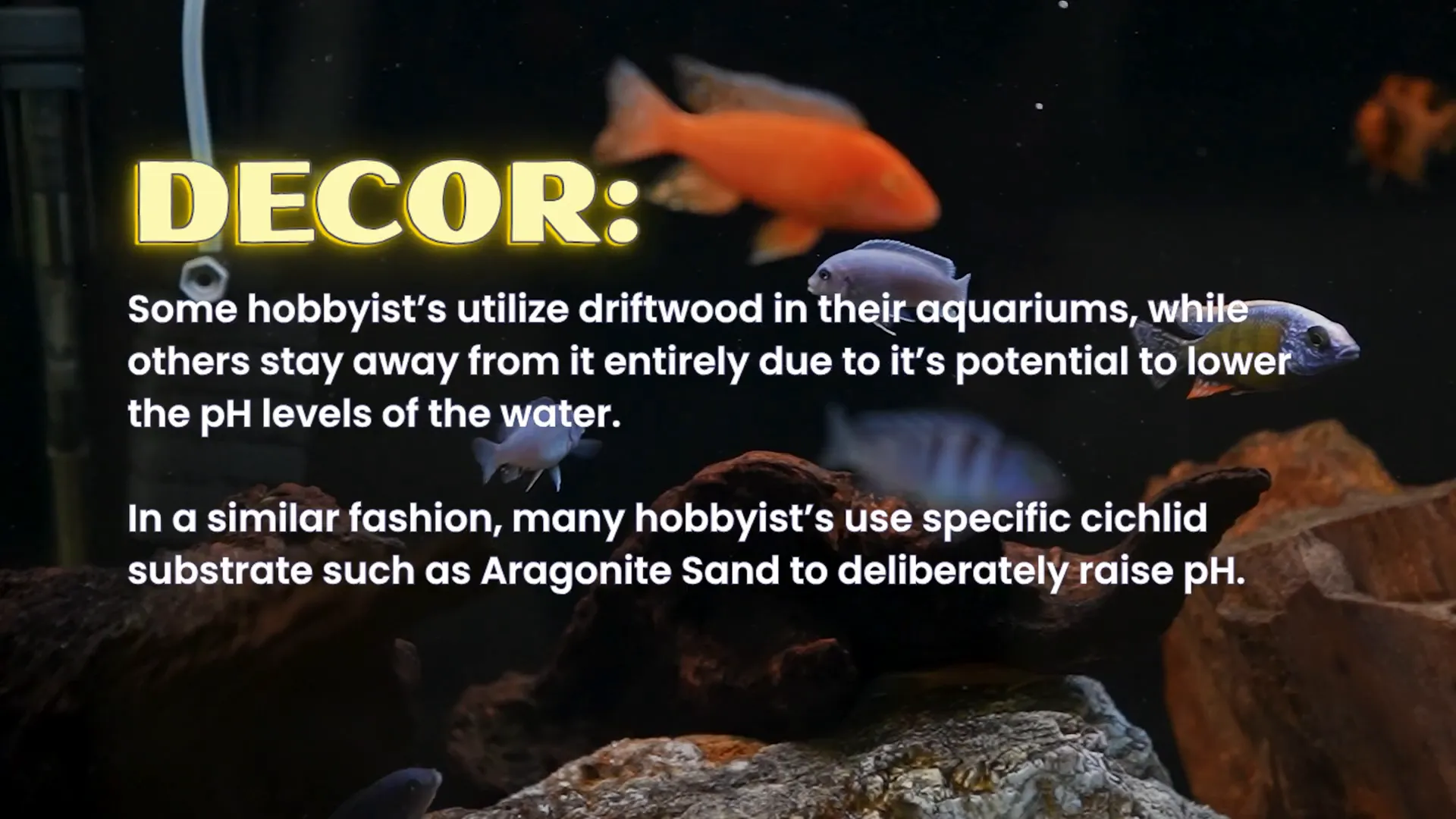
Not all plants survive cichlid tanks — many cichlids uproot, eat, or otherwise destroy plants. If you want live plants, choose robust species or plant them in pots. Many keepers prefer rock-only or sand-only setups. Driftwood can add visual interest but may lower pH, so use it with care. A common alternative is aragonite sand or other cichlid-specific substrates that help buffer and maintain higher pH (which suits Malawi species).
Water parameters & filtration
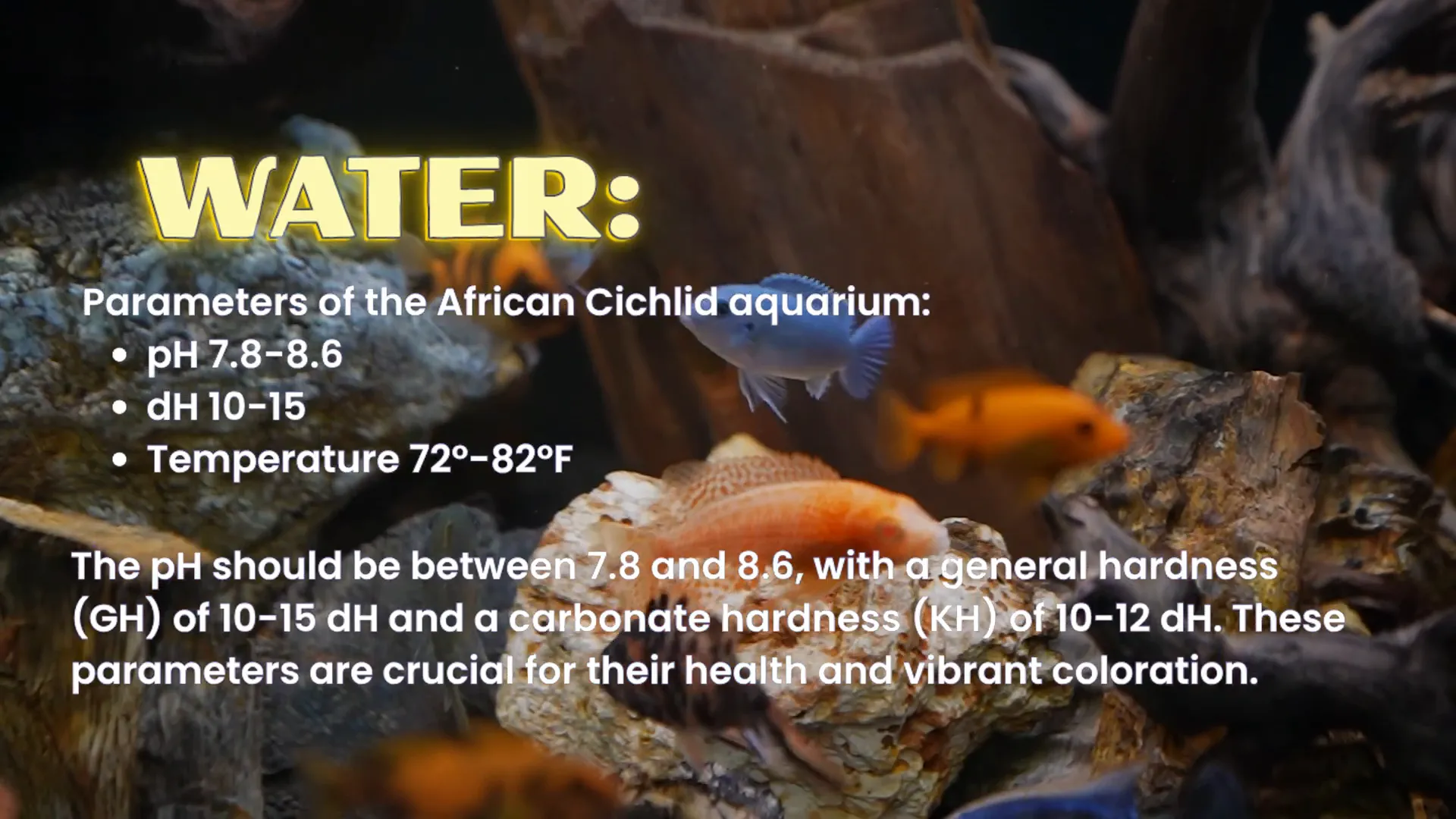
Lake Malawi Cichlids need alkaline, hard water and stable conditions. Surface temperatures in their native lake range from 75–84°F, so aim for that warmer spectrum. While I don’t list specific pH numbers here, the general rule is hard, alkaline water that you maintain consistently. Many hobbyists use aragonite substrates and trace mineral supplements to support hardness and pH.
Because these fish generate a large bioload (especially in intentionally overstocked mbuna tanks), powerful filtration and frequent water changes are essential. Test your tap water first — it may already be suitable — but regular testing and maintenance matter most.
Feeding and nutrition
Diet depends on the group:
- Mbuna: omnivores that require a higher proportion of vegetable matter. Too much protein can lead to Malawi bloat — a serious, often fatal condition — so provide algae-based foods, spirulina, vegetable flakes, and high-quality herbivore formulas.
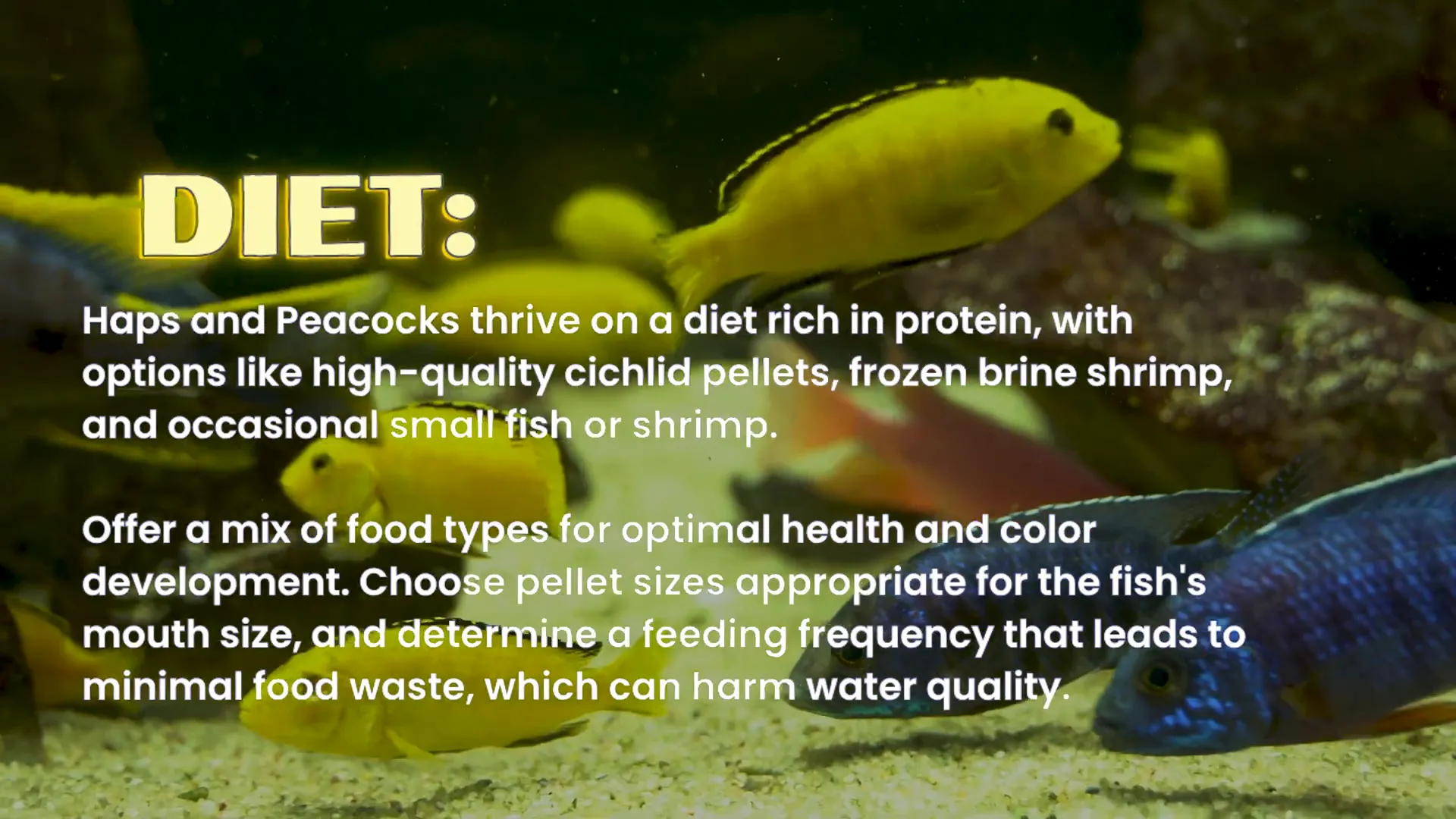
- Peacocks and haps: generally do well on protein-rich foods; quality pellets and frozen meaty foods help growth and colour.
- All groups benefit from a varied diet to support health and colour development.
Breeding note — mouthbrooders
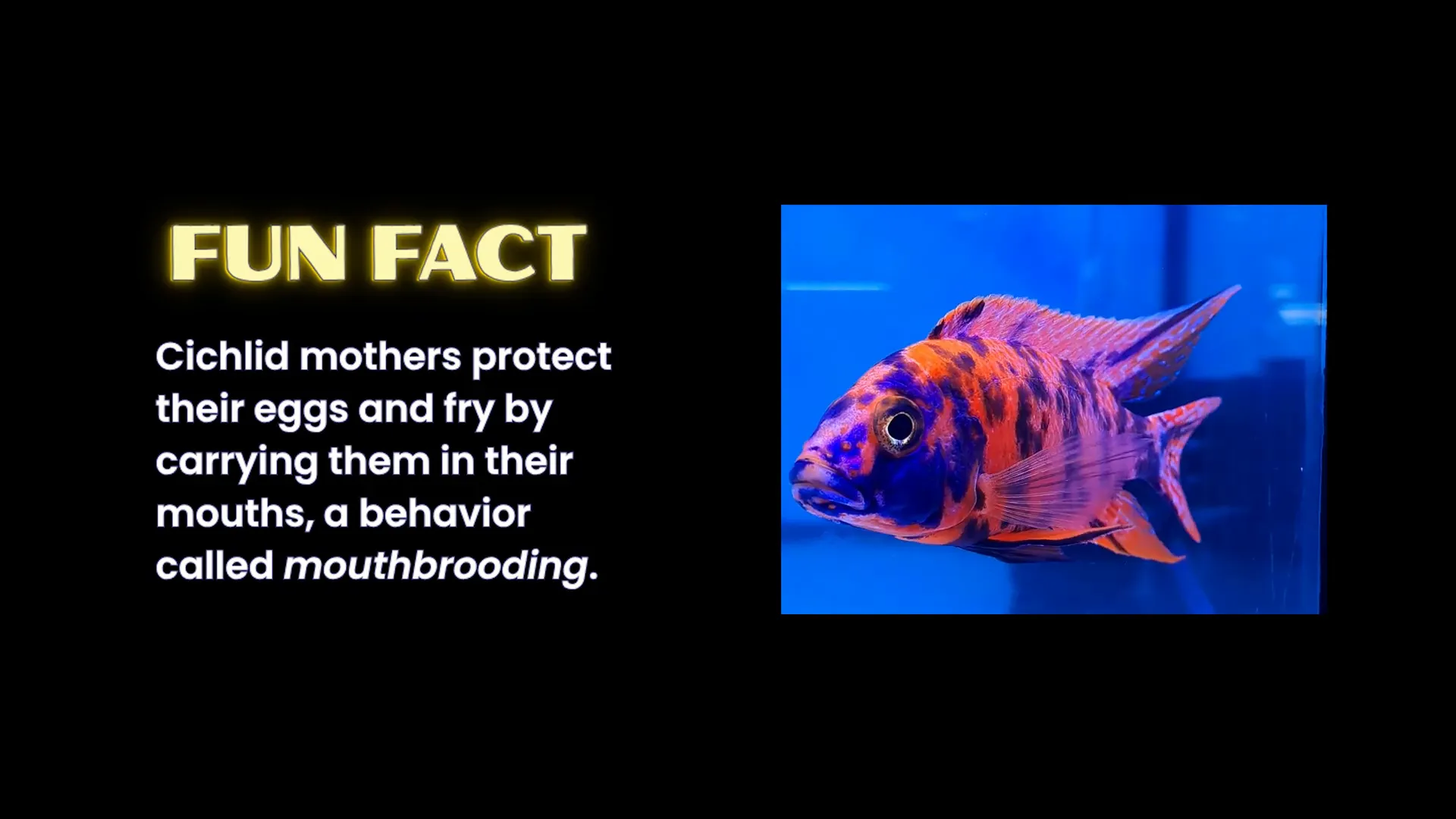
A fun and important natural behaviour: many Lake Malawi Cichlids are maternal mouthbrooders. Mothers carry eggs and fry in their mouths for protection. This affects how you manage breeding — parent fish often stop eating while brooding and need a stress-free environment.
Common mistakes to avoid
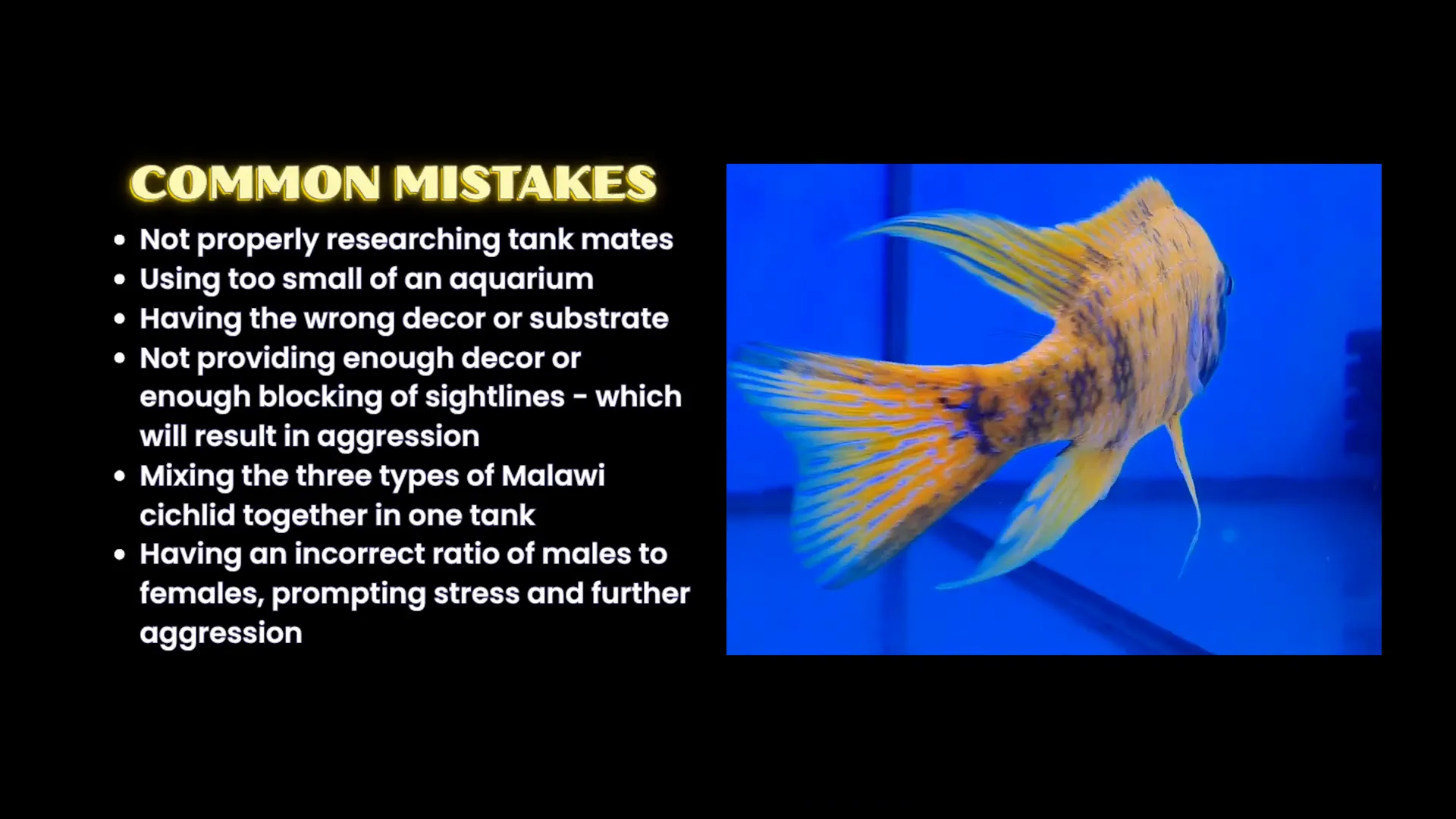
The most frequent problems stem from mismatched research or setups. Avoid these mistakes:
- Not researching tankmates carefully — don’t mix mbuna, peacocks, and haps in one tank unless you know what you’re doing.
- Using tanks that are too small for the species or stocking level.
- Wrong decor or substrate — insufficient rockwork or insufficient sight-line blocks increases aggression.
- Incorrect male-to-female ratios — too many males generates stress and fighting.
- Poor water quality or infrequent water changes — these fish need stable, clean water.
Conclusion
Lake Malawi Cichlids are rewarding and spectacular, but they’re not always the best “easy” beginner fish unless you follow group-specific rules. Understand whether you’re keeping mbuna, peacocks, or haps; plan tank size and aquascape accordingly; manage diet carefully to avoid bloat; and prioritise stable, alkaline, hard water with frequent maintenance. With the right setup and care, these fish will display amazing colours and fascinating behaviours.
FAQ
-
Are Lake Malawi Cichlids good for beginners?
Yes — with caveats. They’re ideal for beginners who read up, choose a single group, and commit to proper tank size, aquascape, and water maintenance. Mbuna can be more challenging because of aggression; peacocks and haps need bigger tanks.
-
How warm should my tank be?
Aim for the lake’s surface range: about 75–84°F (24–29°C).
-
Can I keep plants with Malawi cichlids?
Some hardy plants may survive, but many cichlids uproot or eat plants. Many keepers use rock and sand-only layouts or potted plants.
-
What is Malawi bloat and how do I prevent it?
Malawi bloat is often caused by improper diet (too much protein for herbivorous mbuna) or poor water quality. Prevention: feed appropriate vegetable-rich foods to mbuna, maintain water quality, and avoid overfeeding.
-
Do they need special substrate?
Not strictly, but aragonite and other cichlid-specific substrates help buffer pH and mimic natural conditions.
Further resources
Above all, test your water, plan the aquascape around the type of Malawi cichlids you’ll keep, and be deliberate about stocking and diet.
This article was inspired from the video Lake Malawi Cichlids - Beginner's Care Guide | Drop a like and subscribe to show your support!