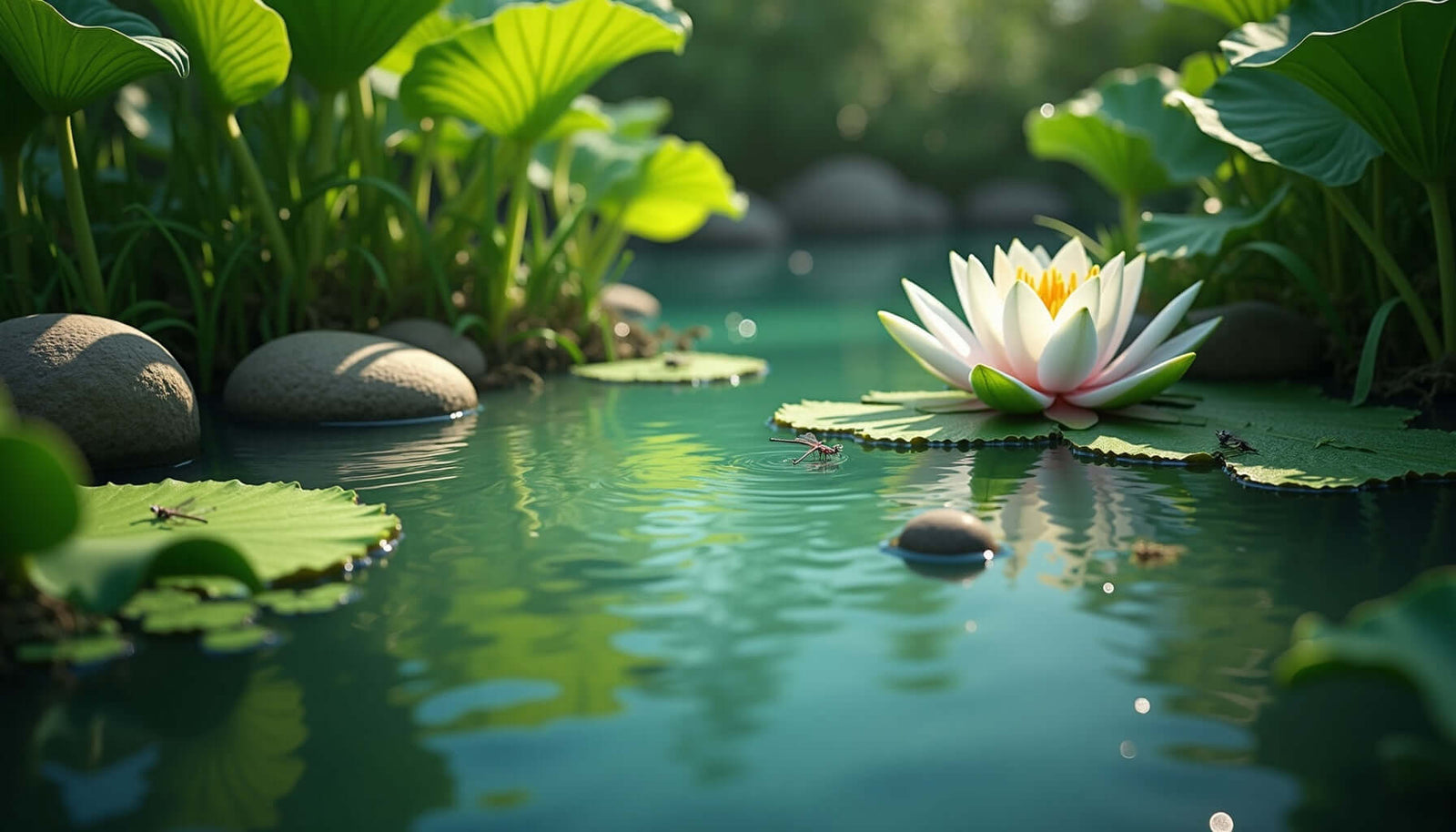
Pond Plants That Reduce Algae Naturally
Want clearer water without harsh chemicals? The right mix of aquatic plants can help. They compete with algae for nutrients, cast shade that limits sunlight, and support helpful microbes that keep water balanced. In this guide, you’ll learn how floating, submerged, and marginal plants work together to manage algae and improve clarity—plus practical tips for choosing, planting, and caring for them year-round.
Aquatic vegetation offers a proven form of ecofriendly algae control by competing with algae for nitrogen and phosphorus—the two nutrients most linked to fast growth. This natural pond filter effect is strongest when you use a mix of nutrient uptake species that combine phosphorus absorbing roots with shade providing foliage to limit sunlight.
Pairing ornamental water lilies with submerged oxygenators supports algae bloom prevention by moderating water temperature and encouraging aquatic ecosystem balance.
Research and real-world results suggest that diverse pondfriendly plant varieties help stabilize water clarity through the seasons, especially during high-sun summer months.
- Reduce excessive light with floating leaf cover and shade providing foliage.
- Absorb nutrients via rooted aquatic plants and marginal wetland plants.
- Support beneficial microbes through oxygen released from submerged stems.
Tip: Combining floating rosette plants, aquatic nitrogen sink species, and sediment trapping roots forms a complete biological filtration system for long-term organic algae management.
Water garden flora also acts as fish shelter plants, giving shade and cover for koi and goldfish, while boosting pond clarity improvement through natural filtration.
How Does Aquatic Vegetation Limit Algae
Water garden flora limits algae by intercepting nutrients, reducing light, and supporting beneficial microbes. When aquatic vegetation dominates nutrient pathways, algae nutrient competition increases, leaving less nitrogen and phosphorus for algae. Submerged oxygenators like hornwort directly absorb nutrients from the water column while raising oxygen levels that fuel microbial communities which naturally slow algae reproduction.
Nutrient Absorption and Competition
Pickerelweed cluster with its extensive phosphorus absorbing roots supports pond clarity improvement. Willow moss mat acts as a natural water purifier plant, trapping fine particles and helping reduce dissolved nutrients. These nitrogen reduction plants create conditions where algae struggle to thrive.
Shading and Temperature Regulation
Floating leaf cover from ornamental water lilies forms a sunlight blocking canopy that can lower water temperature by up to about 5–6°C (10°F), an effective pond shading solution. Less light and cooler water slow algae photosynthesis—key goals for sunlight limiting water plants.
Habitat Support and Filtration
Crystal confetti plant adds aquatic biodiversity enhancement while softening light in small ponds. Crowsfoot water buttercup and other clear water plants aid invasive algae suppression by forming dense underwater plant beds and offering fish shelter plants. Sediment trapping roots and a shoreline vegetation buffer also help control erosion and nutrient runoff.
- Emergent shoreline plants serve as riparian edge planting that filters runoff.
- Low light aquatic zone flora provides year-round algae growth inhibitors.
- Biofiltration plants support a balanced aquatic habitat restoration.
Insight: The most effective aquatic landscaping plants pair aquatic root filtration with oxygenating stems, delivering both green water treatment plants capability and habitat protection.
By mixing aquatic plant diversity—from aquatic weed alternatives to ornamental pond species—you build a self-sustaining biological filtration system that supports stable aquatic ecosystem balance.
Choosing Water Garden Flora for Algae Control
Aquatic vegetation offers an ecofriendly algae control solution by competing with algae for nutrients and shaping conditions that discourage excess growth. These plants act as a natural pond filter, using nutrient uptake species such as nitrogen reduction plants with phosphorus absorbing roots to limit the resources algae use.
Select species to match pond size, depth, and sun exposure so they support aquatic ecosystem balance and pond clarity improvement. Submerged oxygenators like hornwort suit small ponds, while pickerelweed cluster and other marginal wetland plants fit medium ponds.
For larger water bodies, ornamental water lilies and floating rosette plants add broad shade providing foliage for temperature moderation.
Seasonality matters—rooted aquatic plants and low light aquatic zone species handle cooler months well, while floating leaf cover and strong algae nutrient competition species shine in summer.
Key Criteria for Plant Selection
- Aquatic landscaping plants with strong algae growth inhibitors help with invasive algae suppression.
- Emergent shoreline plants like crowsfoot water buttercup support habitat enhancement and riparian edge planting.
- Biofiltration plants with sediment trapping roots back pondfriendly plant varieties and aquatic biodiversity enhancer goals.
- Freshwater plant species such as willow moss mat and crystal confetti plant act as natural water purifier plants.
Organic algae management works best when you combine multiple plant types, promoting aquatic habitat restoration and long-term eco pond care.
Maintenance for Optimal Results
Pond shading solutions work best with routine care: prune, skim decaying material, and manage excess koi pond greenery to prevent nutrient spikes. Oxygenating stems and beneficial microbes improve water quality, while a shoreline vegetation buffer reduces nutrient runoff. Together, underwater plant beds, sunlight limiting water plants, and aquatic root filtration promote clear water plants and dissolved oxygen booster plants for healthier ponds.
Can Floating Leaf Cover Block Sunlight Effectively

Floating leaf cover strongly supports algae bloom prevention by cutting the light that reaches submerged algae. Dense shade providing foliage forms a sunlight blocking canopy over the pond, acting as both a natural pond filter and a practical shading tool. By limiting direct sun, these aquatic shade plants slow photosynthesis, aid water temperature regulation plants, and create better conditions for fish and beneficial microbes.
Examples include ornamental pond species like water lettuce and duckweed, both helpful for algae nutrient competition. Mini ornamental water lilies add beauty while acting as sunlight limiting water plants that support biofiltration plants.
Notable Floating Plant Varieties
- Water lettuce – A floating rosette plant with sediment trapping roots and strong aquatic nitrogen sink function.
- Duckweed – A fast-growing freshwater plant species suited for ecofriendly algae control and aquatic weed alternatives.
- Mini water lilies – Provide algae bloom prevention, aquatic plant diversity, and act as algae growth inhibitors in low light aquatic zones.
Aquatic root filtration from floating plants not only shades the surface but also strengthens a biological filtration system, improving pond clarity improvement while enhancing biodiversity.
Maintenance to Prevent Overgrowth
Eco pond maintenance includes thinning excess floating rosette plants to prevent oxygen dips and keeping oxygenating stems and rooted aquatic plants in balance. This supports aquatic habitat restoration, avoids crowding issues, and protects healthy pondfriendly plant varieties. Check coverage often so algae nutrient competition stays effective without stressing other freshwater plant species.
Summary: Water Garden Flora for Algae Control
- Aquatic vegetation competes with algae for nutrients, acting as a natural pond filter.
- Floating leaf cover (water lettuce, duckweed, lilies) reduces sunlight and slows algae growth.
- Mixing plant types promotes aquatic habitat restoration and long-term eco pond care.
- Regular pruning and removal of decay prevent nutrient spikes that trigger blooms.
Benefits of Submerged Oxygenators in Ponds
Aquatic vegetation also works below the surface as submerged oxygenators. These dissolved oxygen booster plants steadily release oxygen, supporting beneficial microbes that process organic waste—key for algae bloom prevention.
Through nutrient uptake species functions, they absorb excess nitrogen and phosphorus—the main fuels for rapid algae growth.
Their oxygenating stems help steady pH by moderating carbon dioxide, which supports pondfriendly plant varieties and overall eco pond care.
Natural pond filter systems created by rooted aquatic plants improve clarity and provide habitat for fish and invertebrates, forming a core part of any aquatic biodiversity enhancer plan.
Key freshwater plant species here include the hornwort habitat, which offers algae nutrient competition and fish cover; the crowsfoot water buttercup, a clear water plant that likes flowing water; the willow moss mat, a low light aquatic zone stabilizer; and the crystal confetti plant, a compact aquatic nitrogen sink. These underwater plant beds support ecofriendly algae control while adding decorative interest.
- Hornwort (Ceratophyllum demersum) – fast growing, effective nitrogen reduction plant, useful for organic algae management.
- Water Crowfoot (Ranunculus aquatilis) – an oxygenating stem species ideal for moving water.
- Willow Moss (Fontinalis antipyretica) – forms dense mats in low light aquatic zones, aiding invasive algae suppression.
- Crystal Confetti (Callitriche spp.) – compact nutrient uptake species helpful for small-pond clarity.
While submerged oxygenators improve water quality from below and serve as natural water purifier plants, marginal wetland plants protect the edges with sediment trapping roots and shoreline stability for aquatic landscaping plants.
Marginal Wetland Plants for Natural Filtration
Marginal wetland plants enhance aquatic habitat restoration by forming a living shoreline vegetation buffer. Their sediment trapping roots slow water, reduce erosion, and prevent nutrient-rich runoff that could otherwise feed algae. With phosphorus absorbing roots and strong aquatic root filtration, these plants actively remove nutrients from shallow soils and inlets, aiding pond clarity improvement and eco pond care.
Key Shoreline Plant Species
Recommended emergent shoreline plants include pickerelweed cluster (adds shade providing foliage for fish), soft rush (noted for algae growth inhibitors), and cattails (useful as green water treatment plants). Together they build a biological filtration system and support habitat enhancement for biodiversity.
Planting Considerations for Effective Filtration
Aquatic landscaping plants do well in 0–15 cm (0–5.9 in) of water—deep enough to root but not block views. Provide spacing for floating rosette plants and emergent growth to maintain effective sunlight limiting water plants coverage and pond shading solutions for algae nutrient competition. Regularly remove decaying material for organic algae management, while riparian edge planting stabilizes sediments and promotes freshwater plant species diversity.
Strategic use of marginal wetland plants works with submerged oxygenators to create an integrated biofiltration plants system, maximizing natural pond filter efficiency and reducing reliance on chemicals.
| Submerged Oxygenators | Marginal Wetland Plants |
|---|---|
| Release dissolved oxygen to support beneficial microbes and prevent algae blooms | Trap sediment and reduce nutrient-rich runoff to prevent algae growth |
| Absorb excess nitrogen and phosphorus for nutrient control | Absorb phosphorus and filter nutrients from shallow soils and inflow channels |
| Help steady pH by moderating carbon dioxide | Provide shoreline stability and reduce erosion |
Why Ornamental Water Lilies Improve Clarity
Aquatic vegetation such as ornamental water lilies offers more than looks. Lilies support pond clarity improvement through shade, nutrient uptake, and temperature regulation. Broad floating leaf cover creates a sunlight blocking canopy at the surface, reducing light and slowing algae photosynthesis.
This shade providing foliage also acts as one of the most effective pond shading solutions to limit rapid temperature swings, creating a low light aquatic zone that is less favorable to algae.
Role in Water Temperature and Nutrient Balance
Natural pond filter benefits increase with the lilies’ sediment trapping roots and phosphorus absorbing roots, which capture nutrients from fish waste and decay.
By providing both algae bloom prevention and strong nutrient uptake species function, lilies compete with algae for nitrogen and phosphorus, supporting long-term aquatic ecosystem balance.
This fits an organic algae management approach that reduces the need for chemical algaecides.
Cultivation and Care Guidelines
- Plant rooted aquatic plants like lilies in weighted baskets placed about 45–75 cm (18–30 in) underwater.
- Keep decorative pond flora healthy by pruning damaged leaves for steady eco pond maintenance.
- Combine lilies with submerged oxygenators to raise oxygen and support beneficial microbes.
- Integrate with marginal wetland plants and emergent shoreline plants for fuller aquatic habitat restoration.
Aquatic landscaping plants like lilies also serve as fish shelter plants that offer cooling shade for koi, goldfish, and other species. They support aquatic plant diversity and act as a natural water purifier plant within the pond. This connects neatly to the benefits of the hornwort habitat, another reliable algae growth inhibitor.
Hornwort Habitat as Algae Growth Inhibitor
Water garden flora like hornwort supports ecofriendly algae control with several wins for pond health and clarity. As a submerged oxygenator, its oxygenating stems encourage beneficial microbes that aid nitrogen reduction plants while providing fish shelter plants for small aquatic life.
Allelopathic Properties
Hornwort habitat produces allelopathic polyphenols—natural compounds that act as algae growth inhibitors—hindering algae cell division without harming the wider aquatic biodiversity enhancer community.
This allelopathy complements its role in a biological filtration system and aquatic root filtration, supporting overall aquatic ecosystem balance.
Water Oxygenation
Freshwater plant species like hornwort enrich oxygen as true dissolved oxygen booster plants. This supports beneficial microbes that reduce nutrient availability for algae—making hornwort a natural teammate for algae nutrient competition alongside ornamental water lilies.
Planting and Floating Methods
- Pondfriendly plant varieties like hornwort can be anchored in substrate for underwater plant beds or left free-floating as aquatic weed alternatives.
- Combine with habitat enhancement vegetation such as pickerelweed cluster or willow moss mat for varied aquatic shade plants coverage.
- Mix with clear water plants like crowsfoot water buttercup or crystal confetti plant for stronger invasive algae suppression.
Natural water purifier plants like hornwort operate as an aquatic nitrogen sink and aid organic algae management, offering a proven, nature-based path for green water treatment plants. Together, ornamental pond species such as lilies and hornwort form a layered biofiltration plant system that supports eco pond maintenance and lasting pond clarity improvement.
Pond Plants for Clarity
- Ornamental water lilies provide shade that reduces algae photosynthesis and stabilizes temperature.
- Hornwort releases natural compounds that inhibit algae without harming other species.
- Both absorb excess nitrogen and phosphorus, limiting algae blooms.
- These plants create habitat and oxygenate water, supporting microbes and biodiversity.
Creating Aquatic Ecosystem Balance with Diverse Species
Aquatic vegetation helps maintain aquatic ecosystem balance by cycling nutrients, improving clarity, and building stable habitat. Water garden flora such as ornamental water lilies forms a shade providing foliage canopy that limits sunlight and supports algae bloom prevention.
Submerged oxygenators like hornwort habitat, willow moss mat, and crowsfoot water buttercup release oxygenating stems and boost beneficial microbes that compete with algae for nitrogen and phosphorus.
Marginal wetland plants, including pickerelweed cluster, act as a natural pond filter with sediment trapping roots, cutting nutrient runoff before it reaches open water.
Mixed aquatic plant diversity builds a layered biological filtration system.
Rooted aquatic plants such as crystal confetti plant and other nutrient uptake species possess phosphorus absorbing roots that act as algae growth inhibitors. These species serve aquatic biodiversity enhancer goals by encouraging organic algae management through natural competition.
Together, floating rosette plants, submerged oxygenating stems, and emergent shoreline plants offer an integrated solution for eco pond care.
Layered Planting Strategies for Algae Control
- Floating layer: Floating rosette plants supply pond shading solutions and steady temperatures by forming a sunlight blocking canopy.
- Submerged layer: Underwater plant beds of hornwort habitat and willow moss mat provide aquatic root filtration and act as dissolved oxygen booster plants.
- Marginal layer: Riparian edge planting with emergent shoreline plants absorbs nutrients and helps with invasive algae suppression.
Decorative pond flora with multi-layer coverage enhances habitat, supports koi pond greenery, and clarifies water through sediment trapping roots. Using multiple pondfriendly plant varieties—instead of a monoculture—helps stabilize pond health across the seasons.
Tips for Sustaining Biodiversity Year-Round
- Rotate freshwater plant species to keep organic algae management effective and maintain habitat quality.
- Remove decaying foliage so nutrients don’t re-enter the water and overwhelm your aquatic nitrogen sink.
- Balance sun and shade with shade providing foliage to regulate temperature and reduce algae-friendly conditions.
- Pair nitrogen reduction plants with clear water plants for better pond clarity improvement and invasive algae suppression.
- Add aquatic weed alternatives that tolerate low light aquatic zones to strengthen biofiltration plants function.
Combining robust aquatic landscaping plants with strong riparian edge planting creates a network of natural water purifier plants that both filter water and maintain algae nutrient competition. As plantings mature, aquatic root filtration gets stronger, offering steady ecofriendly algae control and lasting clarity. Together, floating leaf cover, underwater plant beds, and emergent shoreline plants produce a balanced, self-maintaining pond ecosystem.
| Plant Layer | Main Function |
|---|---|
| Floating layer | Provides shade to block sunlight, regulate water temperature, and limit algae growth. |
| Submerged layer | Boosts dissolved oxygen, filters water through roots, and offers shelter for fish. |
| Marginal layer | Absorbs excess nutrients, traps sediment, and suppresses invasive algae. |
FAQs
How much surface cover should I aim for?
A common guideline is 40–60% floating shade providing foliage during summer. This balances shade, oxygen exchange, and viewing space.
Can plants fully replace a filter?
Plants are a strong natural pond filter, but most ponds still benefit from mechanical filtration and gentle circulation to remove debris.
Will floating plants steal oxygen at night?
All plants respire at night, but problems usually happen only when coverage is excessive. Thin floating rosette plants if fish gasp at the surface or if oxygen drops in heat waves.
Do I need to fertilize lilies?
Use slow-release aquatic tablets sparingly in baskets. Avoid loose fertilizers in the pond, which can spike nutrients and feed algae.
Conclusion
Clear, healthy ponds rely on balance. Mix floating leaf cover for shade, submerged oxygenators for oxygen and nutrient uptake, and marginal wetland plants for shoreline filtration. With routine pruning and smart spacing, this layered approach delivers reliable organic algae management and long-lasting pond clarity improvement—naturally.