In the captivating world of aquascaping, few names resonate as profoundly as Hiten Goolab. A passionate aquascaper and the proud owner of Epic Aquatics, Hiten brings to life underwater landscapes that echo the beauty and tranquility of nature. Inspired deeply by the legendary Master Amano, Hiten has embraced the philosophy of Nature Aquarium, transforming aquatic hobbyist landscapes with finesse and storytelling. This article delves into the meticulous process behind Hiten’s latest masterpiece—a stunning willow tree aquascape created within a 360° rimless aquarium. Join us as we explore his artistic vision, technical expertise, and the intricate details that make this aquascape a true work of art.

Table of Contents
- Introduction to Hiten Goolab and His Aquascaping Philosophy
- Setting the Stage: The Aquascaping Workshop and Aquarium Specs
- Hardscape Construction: Bringing the Willow Tree to Life
- Substrate System: Foundation for Plant Growth
- The Willow Tree: Inspiration and Artistic Vision
- Detailing: Plant Selection and Placement
- Terrestrial Planting: Extending the Aquascape Beyond Water
- Final Touches and Aquascape Completion
- Conclusion: The Art and Science of Aquascaping with Hiten Goolab
- Frequently Asked Questions About Hiten Goolab’s Aquascaping Techniques
Introduction to Hiten Goolab and His Aquascaping Philosophy
At 38 years old, Hiten Goolab has carved a niche as one of the foremost aquascaping artists globally. His journey began long before he became the official distributor of ADA (Aqua Design Amano) products in South Africa—a company founded by the iconic Takashi Amano, whose influence on the Nature Aquarium movement is unparalleled. Hiten’s respect for Amano’s vision is evident in his work, which consistently embodies natural flow, story, and harmony with Mother Nature.
For Hiten, aquascaping is more than just arranging plants and stones; it is about capturing the essence of natural environments underwater. His designs tell stories—moments frozen in time, like a broken willow tree resting by a riverbank, leaves gently touching the water’s surface. This philosophy guides every decision he makes, from the selection of hardscape materials to the choice of plants and layout.
Setting the Stage: The Aquascaping Workshop and Aquarium Specs
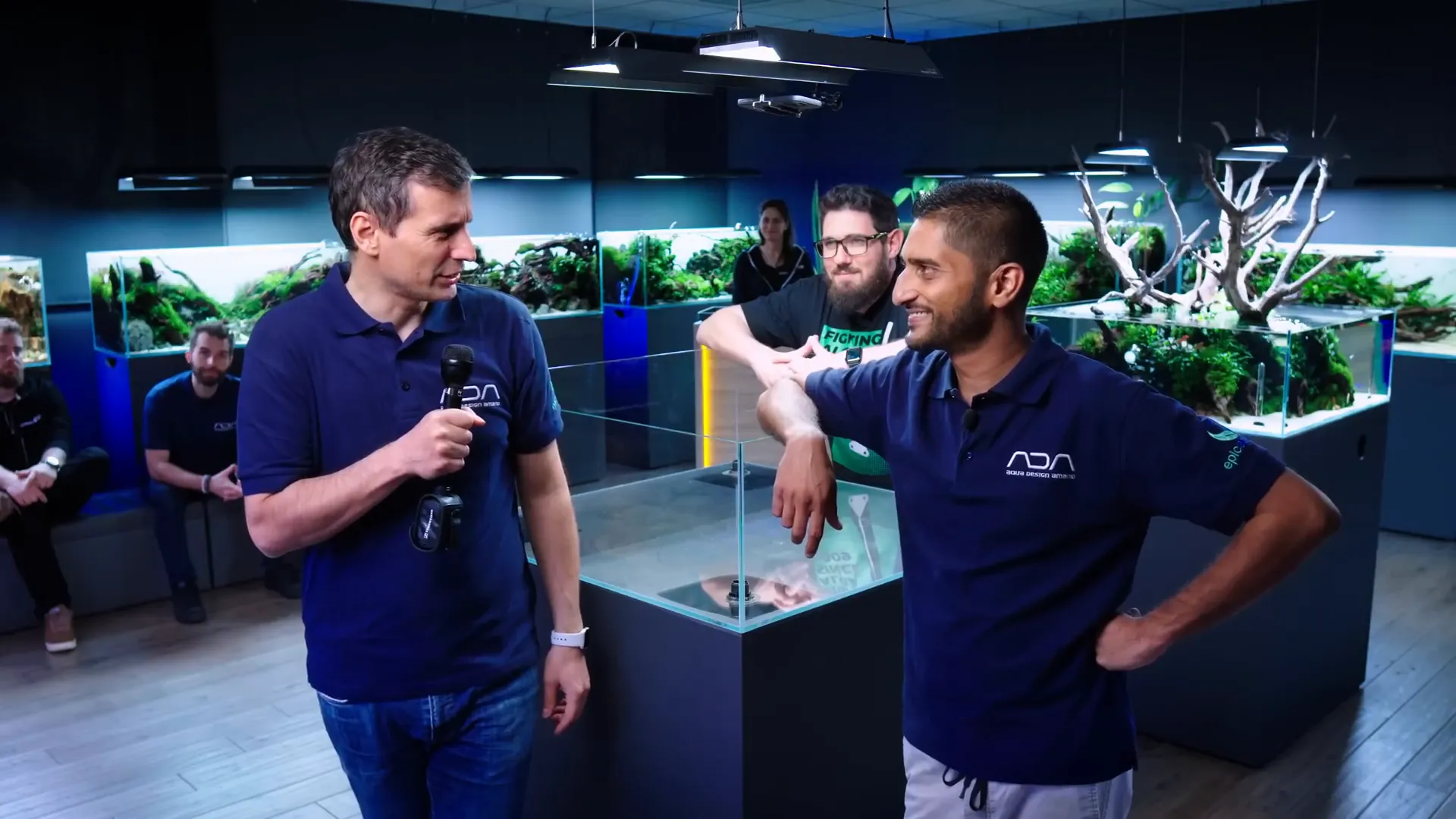
The creation of this mesmerizing willow tree aquascape took place during an exciting workshop hosted by Green Aqua, a respected name in the aquascaping community. The project was long in planning, initiated from a meeting with Hiten at ADA’s headquarters in Japan. The tank chosen for this build is a 90x90x30 cm rimless Opti-White glass aquarium, providing a clear and expansive viewing experience from all angles—perfect for showcasing a 360° aquascape.
The aquarium cabinet is a premium model measuring 90x90x80 cm, designed to support the tank’s weight and complement the aesthetic. Filtration is handled by an Eheim Professionel 3 - 2080 external filter, enhanced with Seachem Matrix and Purigen media to maintain crystal-clear water quality. Lighting is provided by two Chihiros RGB Vivid 2 LED lights, enabling vibrant plant growth and stunning visual effects. The CO2 system includes an Aqua Medic 1000 External CO2 Reactor, essential for maintaining optimal levels for aquatic plant health.
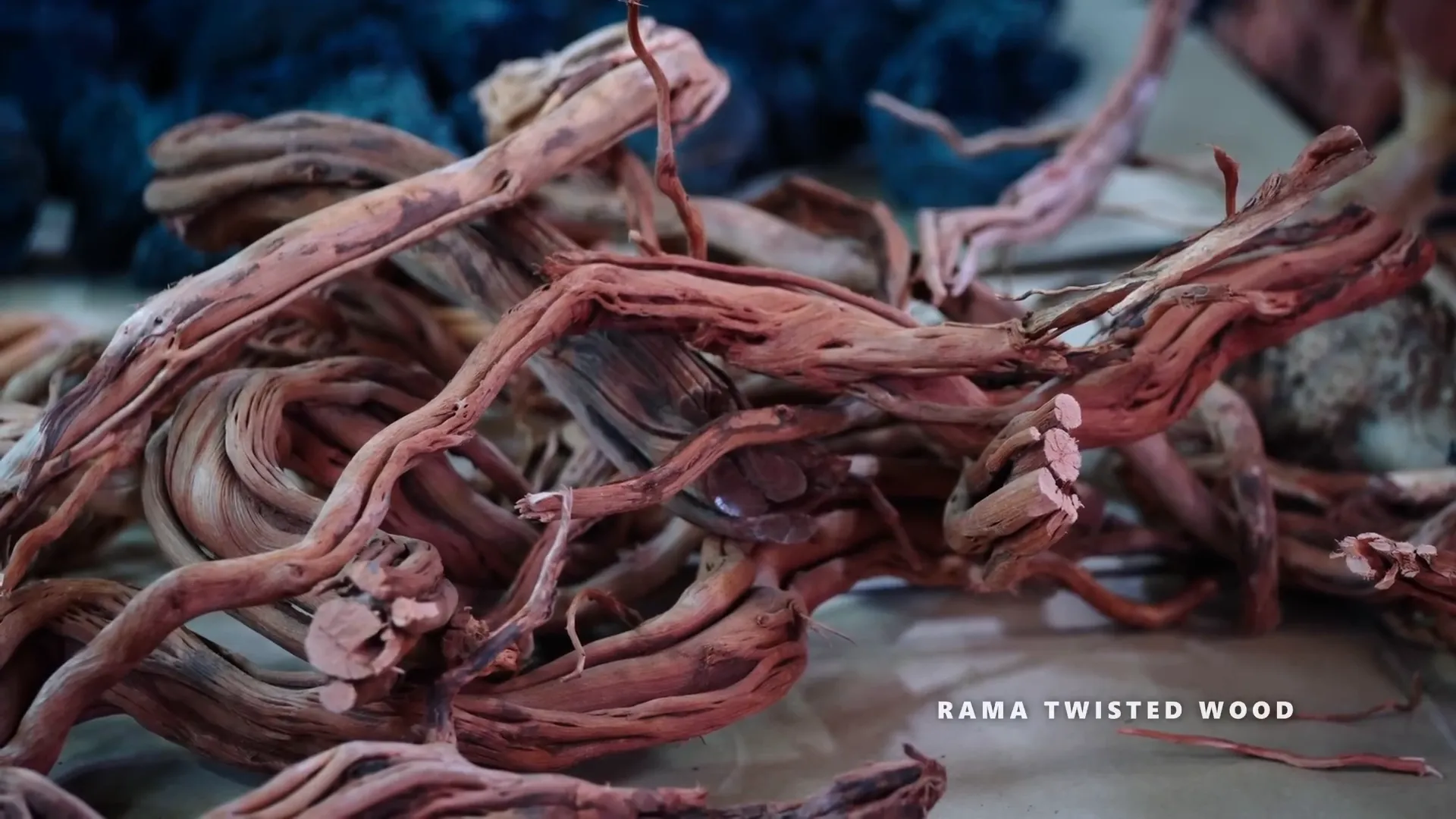
The substrate system is a layered combination of ADA Power Sand Advance M, ADA Aqua Soil Amazonia, ADA Colorado Sand, and ADA Aqua Gravel. This setup ensures a nutrient-rich, stable environment that supports both plant growth and the hardscape’s integrity. The hardscape consists primarily of 15kg of Rama Twisted Wood and 25kg of lava stone, materials carefully selected for their natural appearance and textural contrast.
Hardscape Construction: Bringing the Willow Tree to Life
The heart of this aquascape is the representation of a broken willow tree lying beside a riverbank. Hiten’s concept is inspired by a recent walk near a local river, where he observed an old willow that had fallen after heavy rains. This natural scene influenced the design, where the tree’s trunk and branches appear to be gently submerged, with leaves drifting into the water.
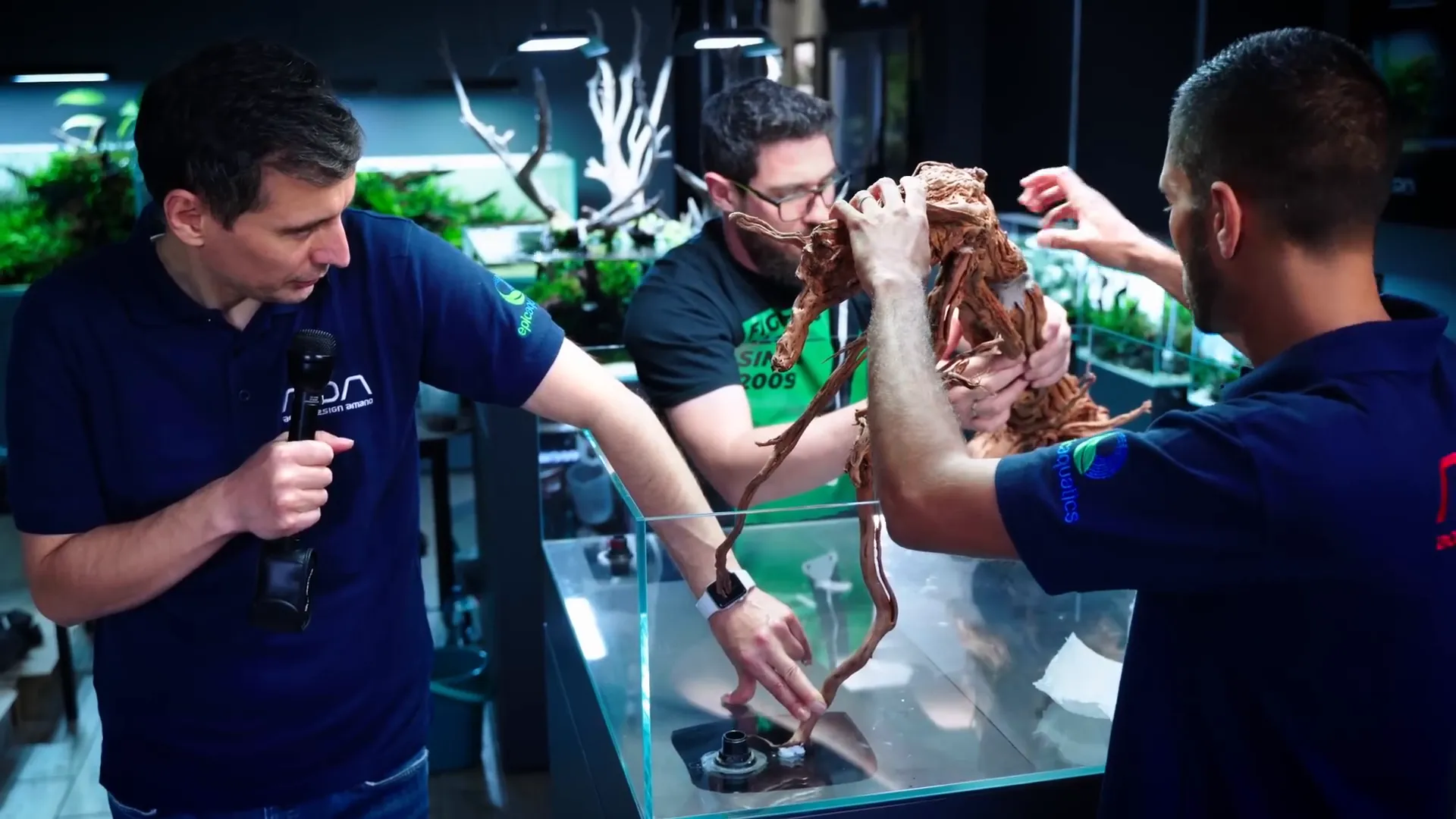
To construct this vision, Hiten began with the twisted Rama wood, known for its beautiful, natural curves that mimic tree branches. The wood was carefully stabilized using Impa glue and paper towels to hold pieces together securely. Balancing the hardscape was critical; large lava stones were positioned strategically to create a natural root structure at the base of the trunk. Hiten uses an odd number of stones for authenticity, often favoring odd numbers to enhance the natural flow and balance of the composition.
He also emphasized the importance of following the grain and lines of the wood to maintain a natural downward flow, reflecting the way branches and roots would settle in a real environment. The use of super glue in combination with paper towels allowed precise placement while ensuring the structure’s stability against water pressure and substrate movement.
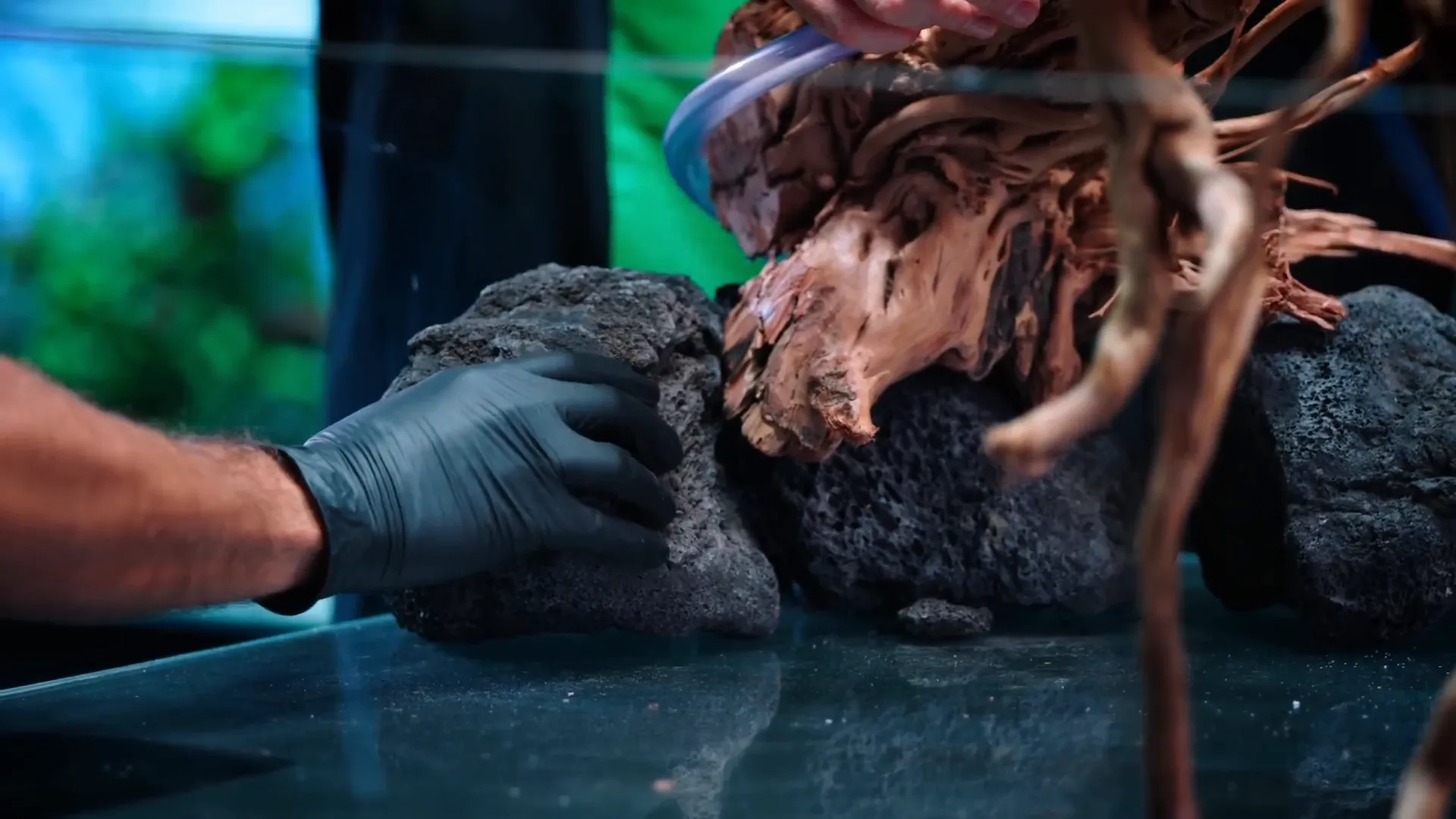
Hiten’s attention to detail extends to the orientation and angles of the stones and wood. He often incorporates a triangular format in his layouts, ensuring that the visual apex of the composition aligns with a 45-degree angle from the aquarium’s top view, creating a pleasing perspective and flow. This technique guides the viewer’s eye naturally through the aquascape.
Stabilizing and Securing the Hardscape
Securing the hardscape is a technical challenge in aquascaping. The wood and stones must be anchored to withstand water currents and prevent sinking or shifting over time. Hiten explained that placing the main stones directly on the aquarium glass provides a firm foundation. This method prevents the wood from moving and breaking apart as the substrate settles.
He also addressed the problem of pressure points, noting that some areas require additional support to prevent collapse. Extra pieces of wood and stone were added as braces, and glue was applied in layers to strengthen weak points. This process ensures the longevity of the aquascape’s structure, allowing plants to root and grow without disturbing the hardscape.
Substrate System: Foundation for Plant Growth
Hiten is a strong advocate for the ADA substrate system, particularly the Power Sand Advance M and Aqua Soil Amazonia combination. He considers it one of the best substrates available, citing its active nutrient release, bacterial activity, and ability to maintain a healthy substrate environment over extended periods.
The Power Sand layer contains beneficial bacteria and minerals like tourmaline, which promote microbial health and oxygen flow beneath the substrate. This active layer supports root development and nutrient uptake, essential for aquatic plants with higher demands. Above this, a layer of Amazonia soil provides a rich source of nutrients, gradually releasing them to sustain plant growth.
On top of these nutrient layers, Hiten uses Colorado sand as a cosmetic layer. This sand not only enhances the natural look of the riverbank but also helps to stabilize the substrate, preventing the Amazonia soil from floating when filling the tank with water. The sand’s colour and texture complement the hardscape and plant selection, contributing to the overall aesthetic harmony.
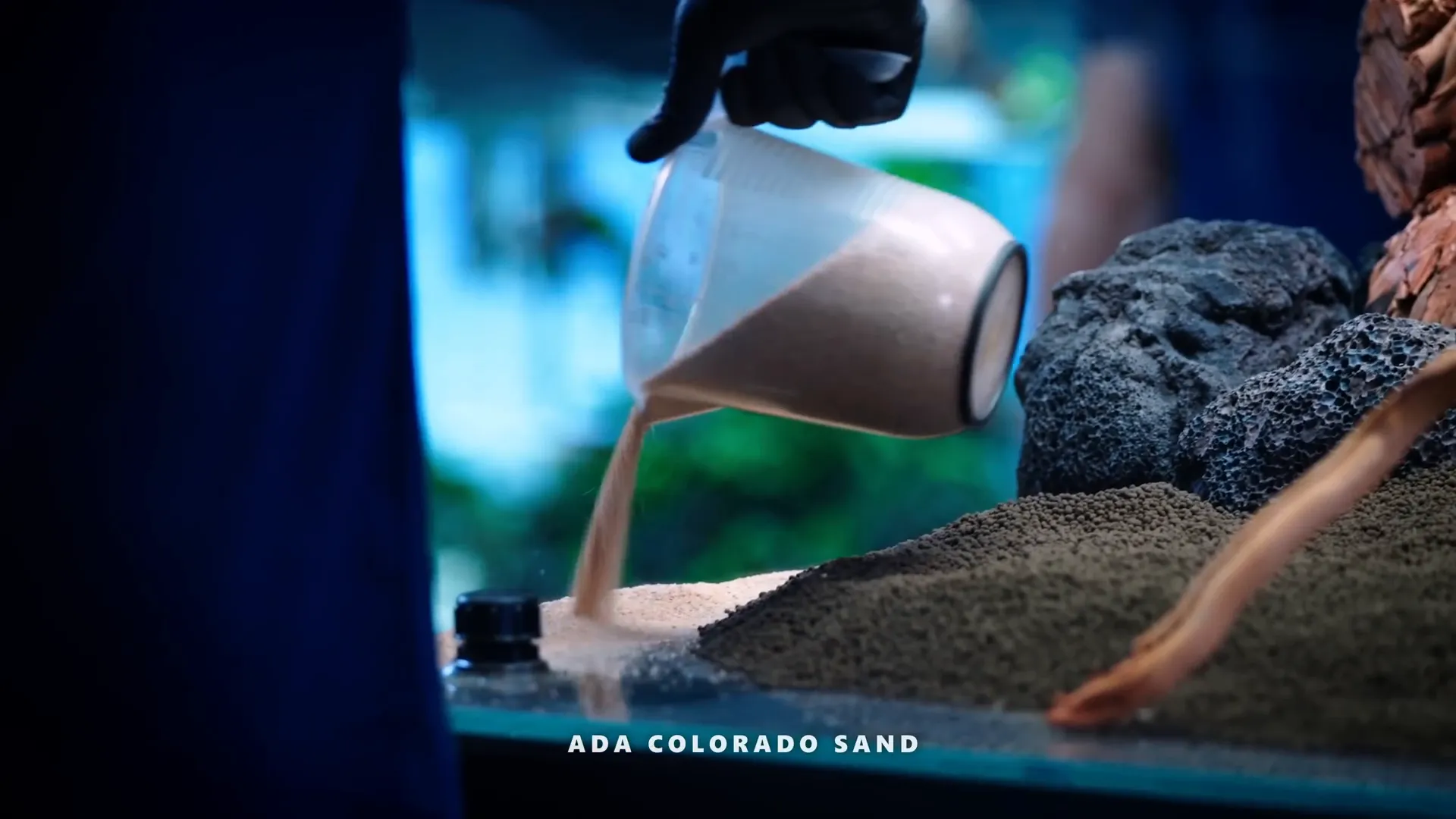
Practical Tips for Substrate Preparation
- Always bury the nutrient-rich soil layers first before adding decorative sand to prevent disturbance.
- Pour water gently during tank filling to avoid substrate displacement.
- Regular water changes help maintain water quality and prevent substrate cloudiness.
- Use a thin layer of decorative gravel or aqua gravels for additional texture and detail.
The Willow Tree: Inspiration and Artistic Vision
The central theme of the aquascape is the willow tree, broken and fallen beside a river. Hiten’s inspiration came from a personal experience walking his dog near a small river, where he observed a willow tree that had recently fallen due to heavy rains. This scene stuck with him and became the foundation for the tank’s narrative.
Hiten’s goal was to capture the tranquility and subtle melancholy of the fallen tree, with leaves and branches gently touching the water’s surface. The 360° aquarium format allows viewers to appreciate the scene from every angle, immersing them in the story. The trunk and branches are wrapped in moss and other plants to simulate natural decay and regrowth, enhancing the realism.
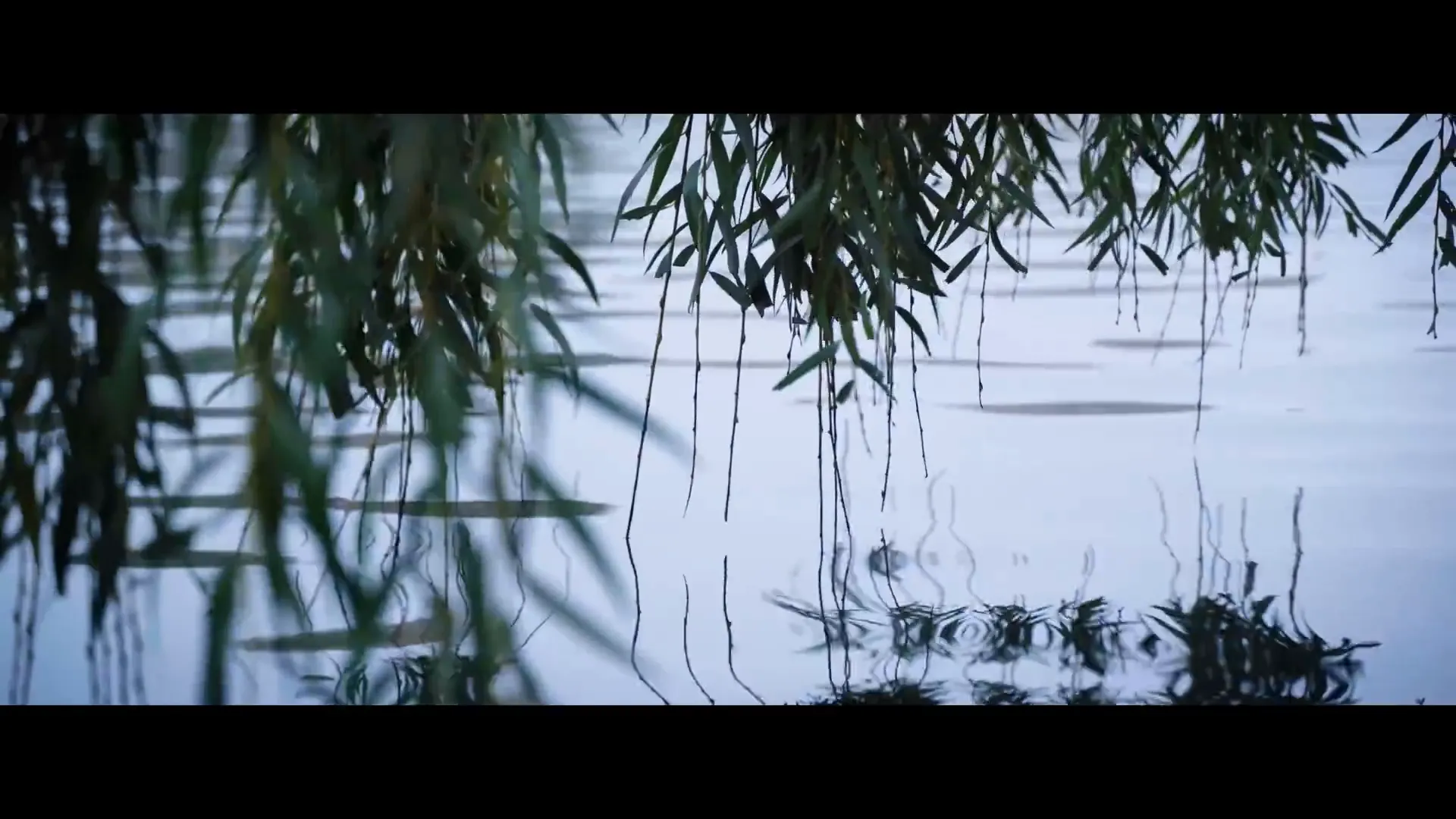
Creating Movement and Flow
To evoke a sense of natural movement, Hiten carefully positioned the branches and roots to suggest they were gently drifting or settling in the water. The downward lines of the twisted wood, combined with the placement of stones and plants, guide the eye through the aquascape in a flowing motion. This technique brings the scene to life and invites viewers to explore every detail.
Detailing: Plant Selection and Placement
Plant selection is crucial in realizing Hiten’s vision. The aquatic plants chosen not only complement the hardscape but also support the narrative of a willow tree by a river. The planting process is layered and strategic, balancing colours, textures, and growth rates to create a dynamic yet harmonious environment.
Hiten uses a mixture of Anubias varieties, including Anubias nana ‘Pinto’, Anubias barteri var. nana ‘Petite’, and Anubias sp. ‘Mini Coin’. These hardy plants are perfect for attaching to wood and stones, and their varying leaf shapes and sizes add visual interest. The Anubias species serve as the main foliage around the tree trunk, simulating willow leaves.
Other plants include Bucephalandra ‘Mini Red’ and ‘Sintang’, which add subtle red hues and contrast. Hydrocotyle verticillata and Hydrocotyle tripartita ‘Mini’ introduce delicate round leaves, mimicking smaller plants near the riverbank.
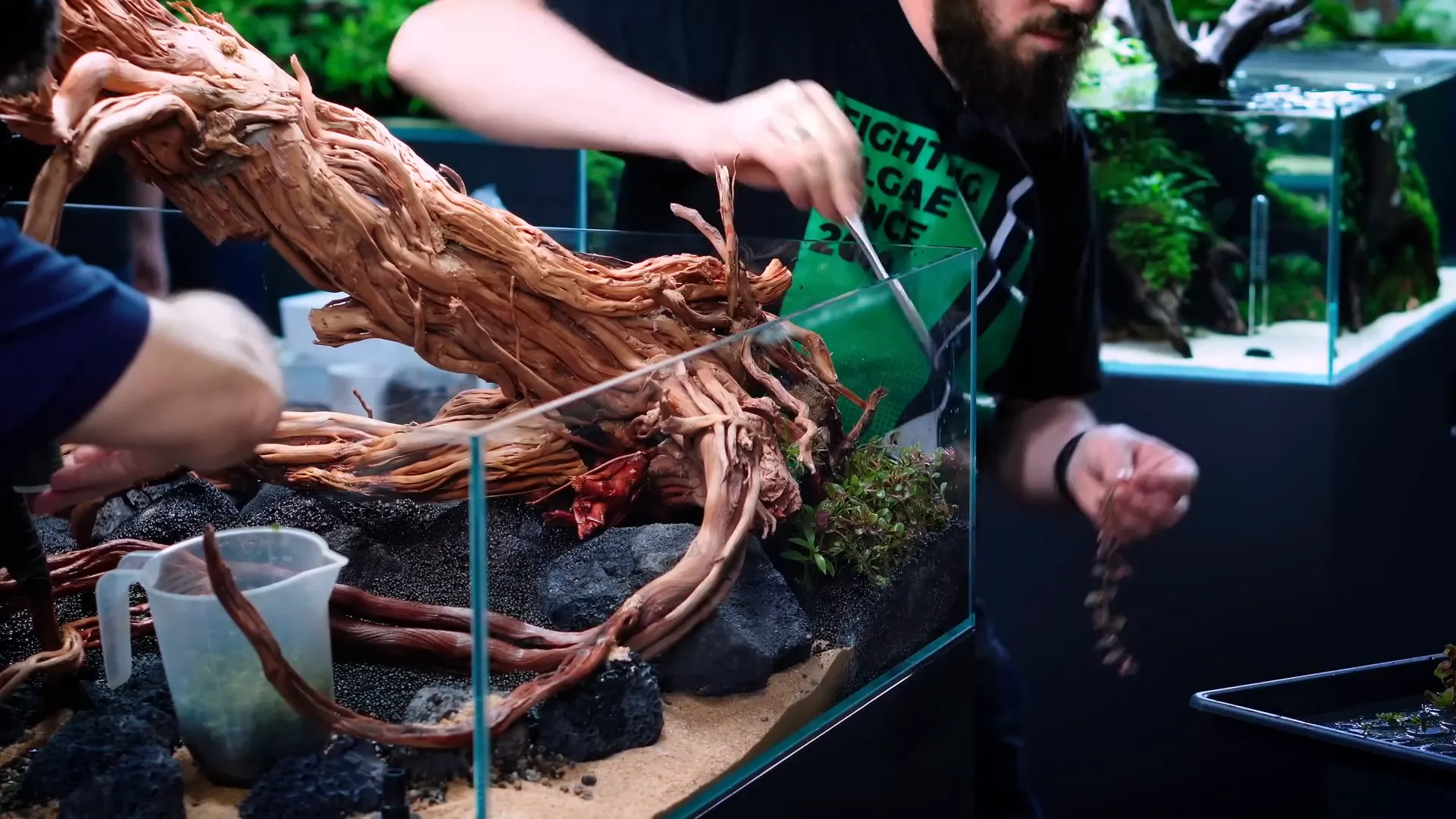
Using Mosses and Ground Cover
Mosses play a vital role in creating a natural look. Hiten uses various moss types, including Riccardia chamedryfolia, Vesicularia ferriei ‘Weeping’, and Callicostella prabaktiana. These mosses are wrapped around branches and roots using ADA’s DOOA Terra Tape, which absorbs water and facilitates moss attachment underwater.
The mosses soften the hard edges of the wood and stones, creating a sense of age and natural decay. Additionally, they provide hiding places for shrimp and small aquatic creatures, contributing to a healthy ecosystem.
Ground cover plants like Staurogyne repens and Cryptocoryne parva are planted in clusters to create lush green carpets. Alternanthera reineckii ‘Mini’ adds vibrant red patches, offering striking contrast against the green foliage.
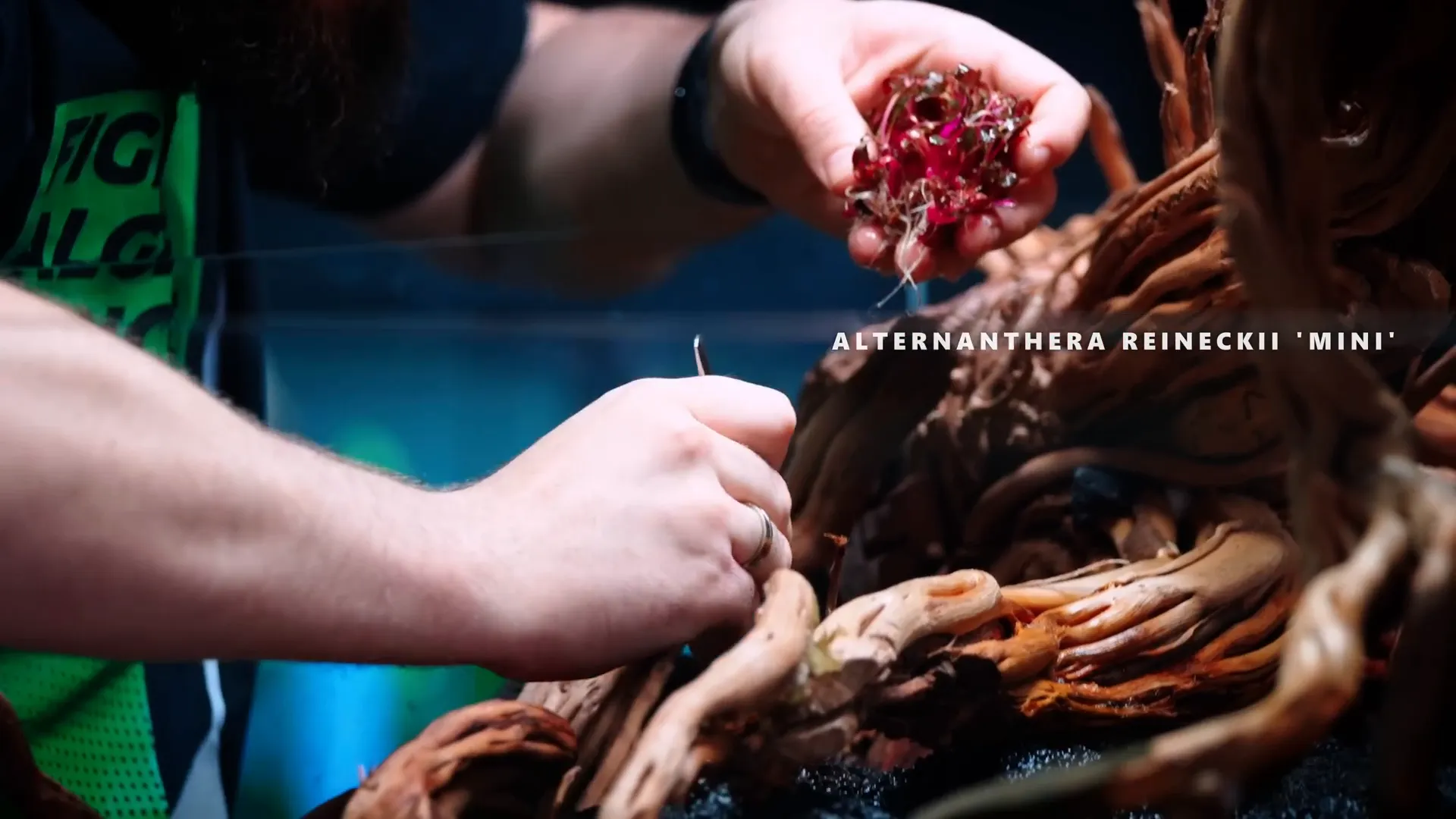
Planting Techniques and Visual Balance
Hiten employs deliberate planting patterns to enhance visual flow and balance. He prefers planting in rows to create structured lines, which contrasts with the more random natural look often favored by European aquascapers. This approach mimics how plants grow along riverbanks in nature, with different species occupying distinct zones.
Colour contrast is carefully managed, with red and green plants positioned side by side to create dynamic visual interest. Height variation is also a key consideration; taller plants are placed towards the back and center, while lower-growing species form the foreground and edges. This layering effect adds depth and perspective to the aquascape.
Terrestrial Planting: Extending the Aquascape Beyond Water
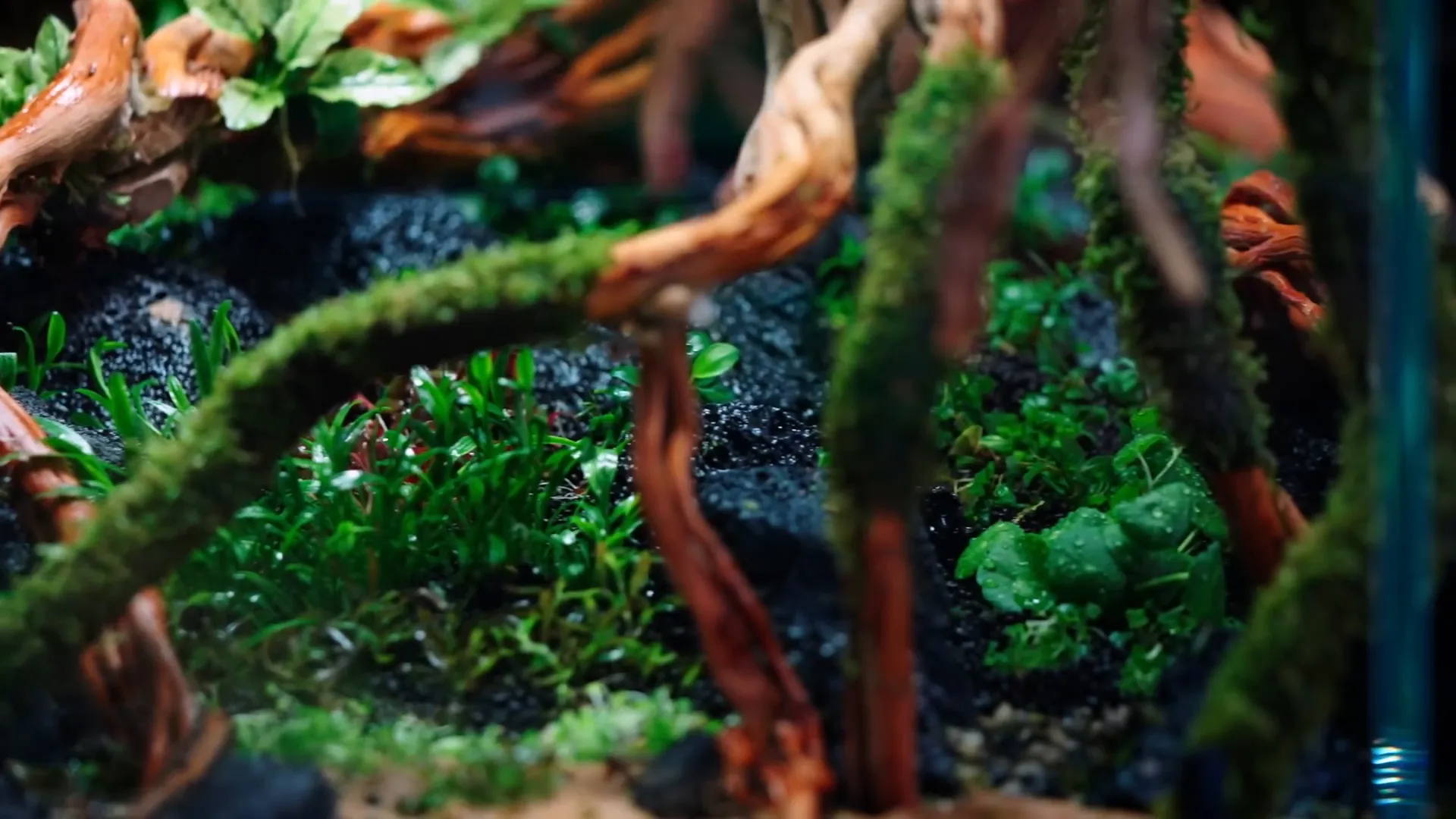
Adding a terrestrial element to the aquascape, Hiten incorporates plants such as mosses and small terrestrial species around the base of the aquarium. This technique bridges the aquatic and terrestrial worlds, enhancing the natural feel of the scene. It also adds texture and complexity to the overall design.
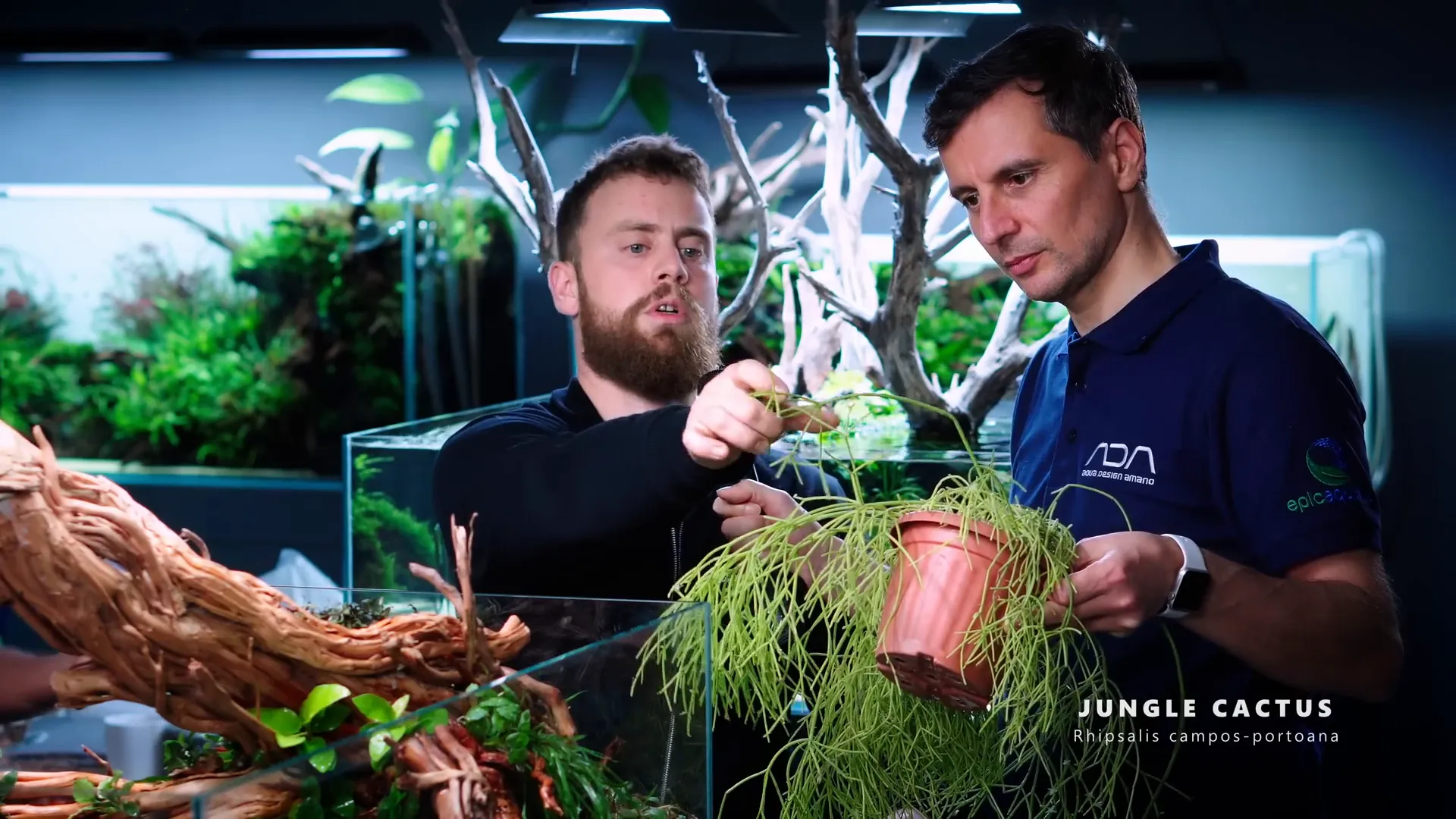
One special addition is a large, natural-looking moss-covered willow branch brought in by Huba, Green Aqua’s terrestrial plant expert. This branch emulates the willow tree perfectly, with aerial roots and bark texture that complement the aquatic hardscape.
Myshk Sphagnum moss is used extensively to wrap around branches and trunks, facilitating root growth and moisture retention. This moss is easy to maintain and keeps the terrestrial plants healthy and vibrant.
Maintaining Moisture and Growth
Maintaining the right moisture level is essential for terrestrial plants and mosses in an aquarium setup. Hiten uses techniques such as wrapping moss tightly and ensuring it remains damp without becoming waterlogged. The use of geotextile sheets embedded with moss also helps retain moisture and provides a natural substrate for growth.
Final Touches and Aquascape Completion
As the build nears completion, Hiten adds ADA Aqua Gravels around the base of the stones to simulate broken lava rock fragments, enhancing the natural riverbank illusion. These small details elevate the realism and provide subtle texture contrasts.
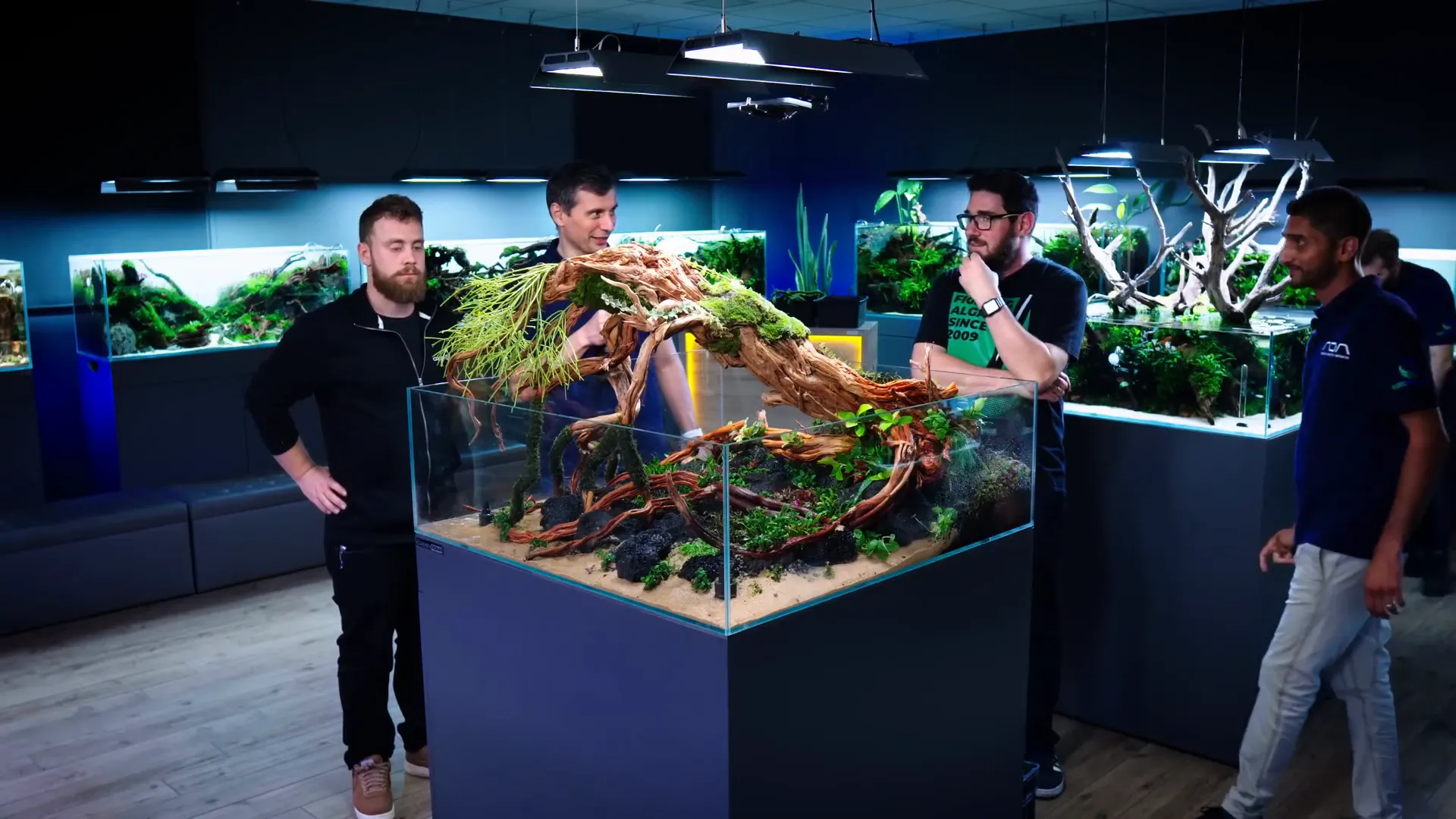
He also addresses any visible glue or structural elements by covering them with moss or plants, ensuring nothing disrupts the natural flow. The final layout is a harmonious blend of wood, stone, plants, and substrate that tells the story of a willow tree’s quiet fall by the water’s edge.
Lighting and Viewing Experience
The use of Chihiros RGB Vivid 2 LED lights enhances the colours of the plants and hardscape, bringing vibrancy to the scene. The rimless glass tank provides unobstructed 360° viewing, allowing the observer to appreciate the aquascape from multiple perspectives. This immersive setup invites viewers to lose themselves in the tranquil underwater forest.
Conclusion: The Art and Science of Aquascaping with Hiten Goolab
Hiten Goolab exemplifies the perfect blend of artistry and technical mastery in aquascaping. His willow tree aquascape is a testament to his dedication, creativity, and respect for nature’s beauty. From the careful selection of materials and plants to the intricate detailing and structural engineering, every element is thoughtfully considered to create a living, breathing underwater landscape.
This aquascape is not just a visual delight but a narrative piece—a moment captured in time that evokes emotion and wonder. Whether you are an aspiring aquascaper or an enthusiast, Hiten’s approach offers valuable lessons in patience, observation, and the pursuit of harmony with nature.
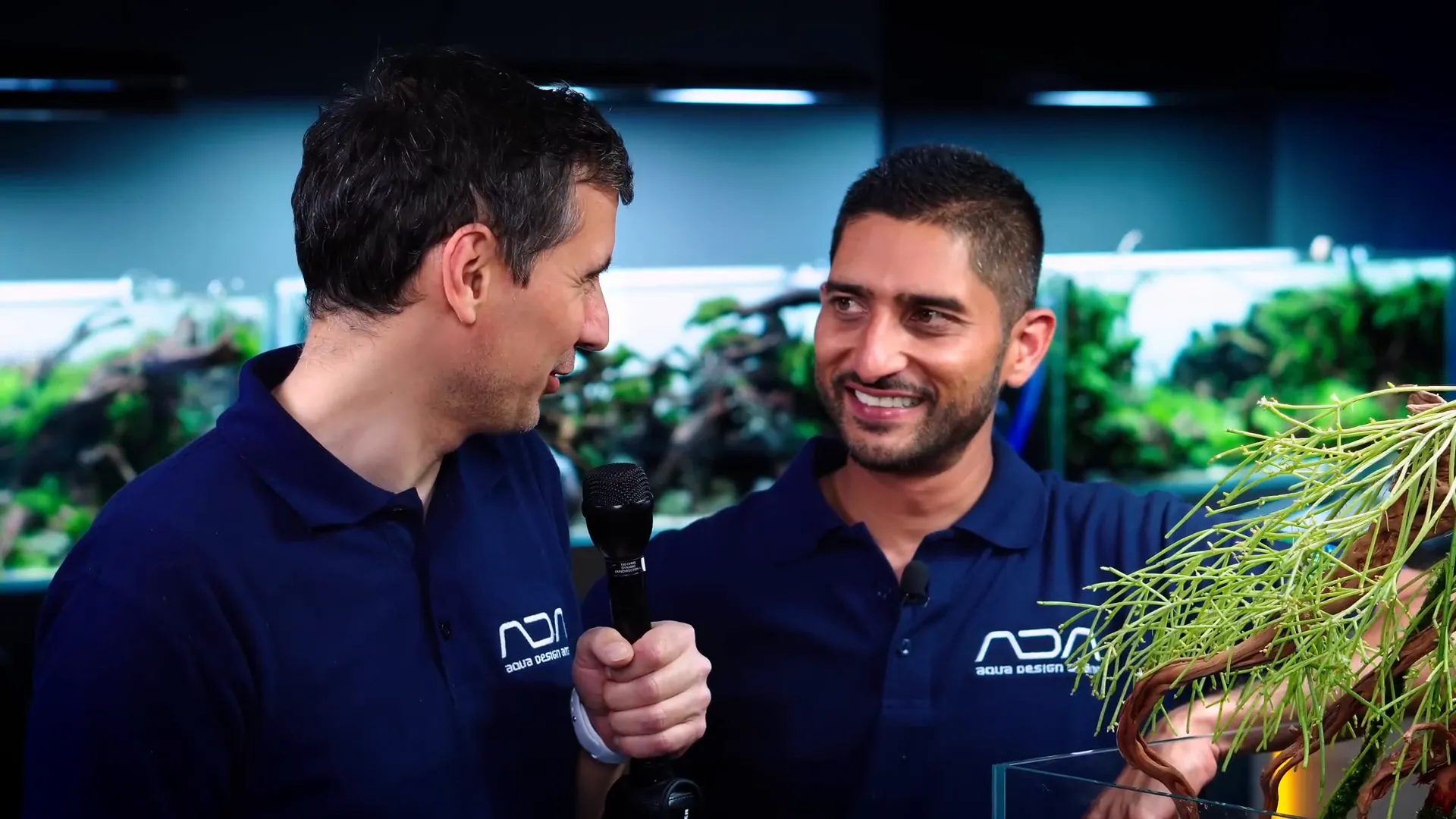
For those interested in exploring more of Hiten’s work and insights, following his Instagram and watching his detailed podcasts offers a deeper dive into his aquascaping philosophy and techniques. His collaboration with Green Aqua continues to inspire hobbyists worldwide to push the boundaries of aquatic art.
Frequently Asked Questions About Hiten Goolab’s Aquascaping Techniques
Q1: What inspired Hiten Goolab’s willow tree aquascape design?
A1: The design was inspired by a broken willow tree that Hiten observed near a river during a walk with his dog. The natural scene of the fallen tree and its branches touching the water influenced the concept and storytelling of the aquascape.
Q2: What substrate system does Hiten prefer for aquascaping?
A2: Hiten prefers the ADA substrate system, particularly the combination of Power Sand Advance M and Aqua Soil Amazonia. He values its active nutrient release, bacterial activity, and ability to maintain a healthy substrate environment over long periods.
Q3: How does Hiten stabilize his hardscape structures?
A3: He stabilizes hardscape elements by placing main stones directly on the aquarium glass and using super glue combined with paper towels and additional wood pieces to secure the structure. This prevents movement and sinking, ensuring long-term stability.
Q4: What is the purpose of using mosses in the aquascape?
A4: Mosses like Riccardia chamedryfolia and Callicostella prabaktiana soften hard edges, simulate natural decay, and provide hiding places for aquatic creatures. They also enhance the natural appearance and texture of the aquascape.
Q5: How does Hiten balance visual elements in his planting?
A5: Hiten balances visual elements by planting in rows to create structured lines, using colour contrast with red and green plants, and varying plant heights to add depth and perspective. He focuses on creating a natural flow that guides the viewer’s eye through the aquascape.
Q6: What lighting setup is used for this aquascape?
A6: Two Chihiros RGB Vivid 2 LED lights are used, providing vibrant and adjustable lighting that enhances plant growth and highlights the colours and details of the aquascape.
Q7: Where can I learn more about Hiten Goolab’s aquascaping work?
A7: You can follow Hiten on Instagram at Epic Aquatics Instagram and watch his detailed podcasts and workshops available through Green Aqua’s channels.
This article was inspired from the video MESMERIZING Willow Tree Aquascape in a 360° Aquarium | HITEN GOOLAB WORKSHOP | Drop a like and subscribe to show your support!