A planted aquascape can make a standard aquarium feel natural, intentional, and far more interesting without requiring an elaborate design or advanced skills. The essential approach is simple: replace artificial décor with nutrient-rich substrate, natural wood and stone, then add live plants in a layout with a clear focal point.
This beginner-friendly guide explains how to plan and build a low-maintenance planted aquarium using a single-island aquascape design.
Table of Contents
- What Is an Aquascape?
- Start by Removing Artificial Décor
- Choose a Plant-Friendly Aquarium Substrate
- Use Hardscape to Create the Aquarium Layout
- Try a Single-Island Aquascape Design
- How to Keep Aquarium Wood From Floating
- Easy Live Plants for This Type of Aquascape
- A Simple Planting Strategy for Beginners
- Common Beginner Aquascaping Mistakes to Avoid
- Planted Aquarium Supplies Checklist
- Final Takeaway
- Frequently Asked Questions
What Is an Aquascape?
An aquascape is an aquarium designed around an underwater landscape. Rather than relying on colourful gravel, plastic plants, and novelty ornaments, it uses natural materials to create structure, depth, and a more organic look.
The main building blocks are:
- Substrate: The growing medium at the bottom of the aquarium.
- Hardscape: Natural stone and wood that form the structure of the design.
- Live aquatic plants: Plants that soften the hardscape and add a living layer to the layout.
Aquascaping does not need to be expensive or overly complicated. A modest aquarium can look dramatically different when the materials are chosen carefully and arranged with a simple plan.
Start by Removing Artificial Décor
The cleanest way to transform a basic aquarium is to remove artificial gravel, plastic plants, and decorative objects before building the new layout. This creates a blank canvas and makes it easier to establish a cohesive natural style.
Natural materials do more than change the appearance of the aquarium. Wood, stone, and live plants create areas of shelter and visual variety while giving the tank a more believable landscape-like composition.
Choose a Plant-Friendly Aquarium Substrate
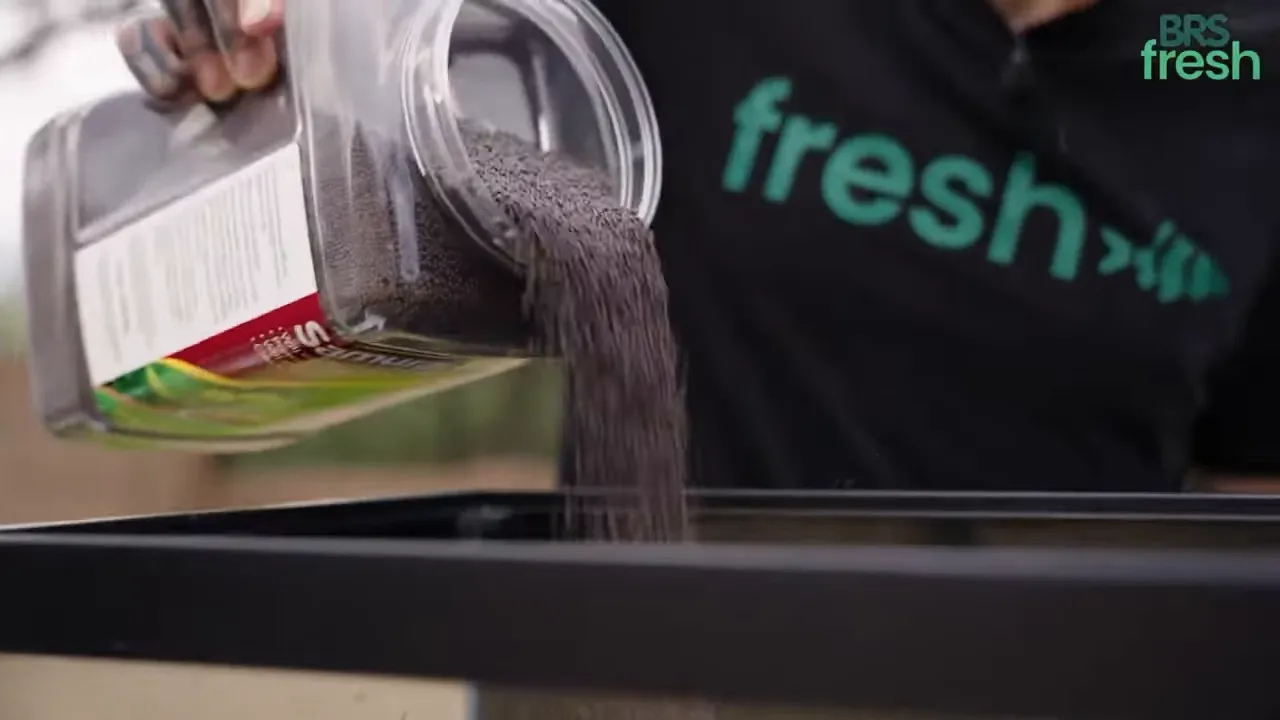
For a planted aquarium, the substrate is not just a decorative layer. It is where many plants establish their roots, so it should provide enough depth for planting and support long-term growth.
A planted soil such as Samurai Soil can provide nutrients and minerals for aquatic plants. Its granular structure also leaves spaces around the roots, helping root systems establish within the substrate.
How deep should planted aquarium substrate be?
A practical starting point is a substrate base of roughly 2 to 3 inches. This gives root-feeding plants room to anchor and grow while still leaving enough open swimming space above the layout.
Shape the soil before adding hardscape. A gentle rise around the focal area can add height and make the final planting look fuller. Avoid making every area perfectly level if the goal is a more natural composition.
Use Hardscape to Create the Aquarium Layout
Hardscape refers to the non-living natural materials in the aquarium, mainly wood and stone. It establishes the structure that plants grow around and gives the aquascape its main visual identity.
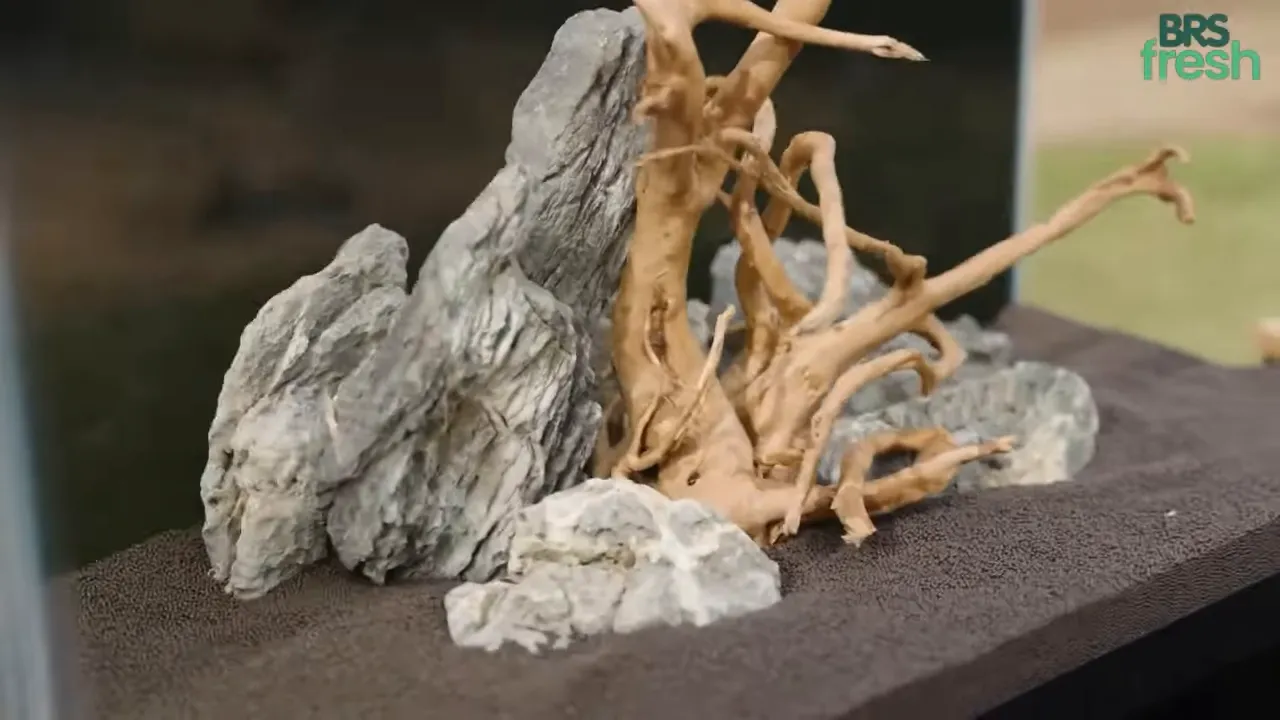
For a simple beginner design, use one major piece of wood as the focal point, then support it with a small group of stones.
Spider wood for natural height and movement
Spider wood is well suited to planted aquariums because its branches and roots create an intricate, tree-like shape. A larger piece can form the central visual feature, while its thinner branches leave spaces for plants and create an impression of movement.
Position the wood first. Rather than trying to perfect every angle outside the tank, place it in the aquarium and assess how it looks through the front glass. Small adjustments can make a large difference.
Seiryu stone and textured aquarium rock
Textured stone such as Seiryu stone can give the layout weight, height, and contrast. Place larger rocks near the base of the wood to make the hardscape look grounded, then use smaller stones as supporting details.
Pay attention to the lines and texture of each rock. If several stones appear to flow in a similar direction, preserve that visual direction in the aquarium. This helps the arrangement feel connected rather than randomly assembled.
Try a Single-Island Aquascape Design
A single-island aquascape is one of the easiest layouts for a first planted aquarium. It uses a central mound or island made from soil, stone, and wood, with open space surrounding it.
The island becomes the focal point, so the aquarium feels organised even when the materials themselves are irregular and natural.
Basic single-island layout checklist
- Build a deeper substrate area where the island will sit.
- Place one characterful piece of wood as the main focal point.
- Add larger stones around the wood base for stability and height.
- Use smaller rocks sparingly to connect the larger pieces.
- Leave open substrate around the island so the design does not feel crowded.
- Plant around the stone and wood rather than hiding all hardscape immediately.
Natural landscapes are not symmetrical or perfectly even. Odd groupings, varied stone sizes, and slight imperfections can make the aquarium feel more convincing. The goal is balance, not exact symmetry.
How to Keep Aquarium Wood From Floating
Fresh wood often contains trapped air, which makes it buoyant when first placed underwater. If the wood is not secured, it may shift or float out of position.
Aquarium-safe cyanoacrylate super glue gel can be used to attach wood to rock or stabilise key contact points in the hardscape. Cyanoacrylate becomes inert when it contacts water, allowing it to be used for aquarium hardscape and plant attachment.
Tips for securing wood safely
- Test the final wood position before applying glue.
- Glue at stable contact points where the wood touches stone.
- Use enough stone around the base to support the intended position.
- Do not rely on a loose placement if the wood is clearly buoyant.
- Keep the adhesive limited to areas that will be concealed by the layout where possible.
Securing the hardscape before planting prevents later disruption to roots and keeps the layout from changing once the aquarium is filled.
Easy Live Plants for This Type of Aquascape
Once the wood and stone are stable, plants can make the hardscape look established and natural. A nutrient-supporting planted substrate gives rooted plants a suitable foundation throughout the layout.
Three plants that can be used in this style of planted aquarium are:
- Eleocharis acicularis Mini: A compact grass-like plant that can be planted around open substrate areas.
- Hydrocotyle tripartita Mini: A small-leaved plant that can add a soft, detailed look around hardscape.
- Juncus repens: An upright plant that can introduce a vertical accent among rocks and wood.
Where to place aquatic plants
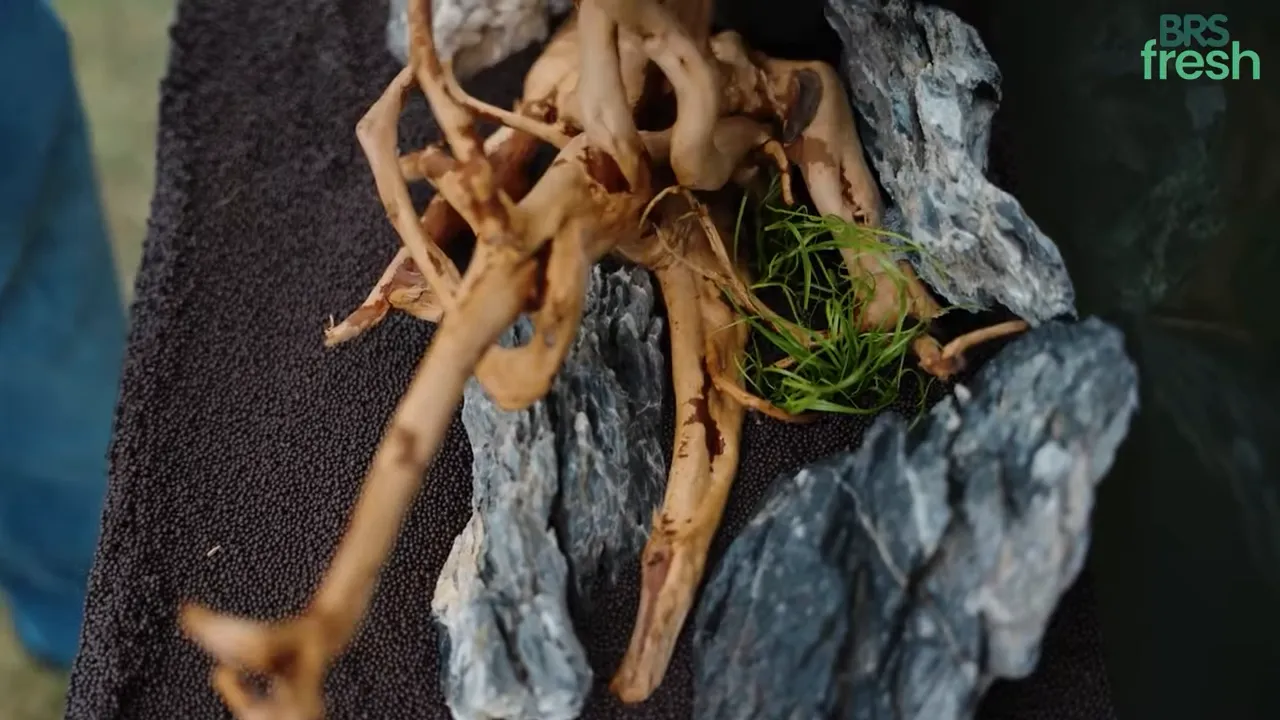
Plant placement should support the shape of the hardscape rather than cover it completely. Shorter grass-like plants work well in open foreground areas and at the base of stones. Small-leaved plants can fill pockets around wood and rock. Taller, more upright plants can reinforce the height of the central composition.
Use planting tweezers to position small plant portions precisely in the soil. This is especially useful around narrow gaps between stones and beneath wood branches.
A Simple Planting Strategy for Beginners
A common mistake is trying to fill every empty space at once. Start with intentional groups that support the structure of the design.
- Plant the base first. Add low plants around the rock and wood foundations.
- Use gaps purposefully. Open substrate creates contrast and keeps the island shape visible.
- Repeat plants in small clusters. Grouped planting looks more deliberate than isolated single plants scattered throughout the tank.
- Protect the focal point. Do not bury the most interesting branches, rock faces, or texture immediately.
- Assess from the front. The aquarium should be arranged primarily for its front-facing view.
Common Beginner Aquascaping Mistakes to Avoid
Overthinking the first layout
It is easy to spend too long trying to find a perfect arrangement before placing anything in the aquarium. Begin with the main wood piece, look at it through the front glass, and adjust from there. A practical starting arrangement is often more useful than waiting for a flawless plan.
Using too many unrelated materials
One wood type and one stone type are enough to build a cohesive beginner layout. Adding too many decorative objects or competing colours can distract from the natural design.
Making every rock face the same direction
Stones should feel related, but not mechanically identical. Follow their natural grain and contours while allowing variation in angle and height.
Forgetting that wood can float
Unsecured wood can disturb the entire aquascape. Stabilise it before filling the aquarium or planting heavily around it.
Hiding all of the hardscape with plants
Plants should enhance wood and stone, not erase them. Leave visible rock surfaces and branches so the aquarium retains its underlying composition as plants establish.
Planted Aquarium Supplies Checklist
- Empty aquarium
- Planted aquarium soil with enough depth for rooted plants
- Natural aquarium wood, such as spider wood
- Natural aquarium stone, such as Seiryu stone
- Aquarium-safe cyanoacrylate super glue gel for stabilising hardscape
- Live aquatic plants
- Planting tweezers for accurate placement
Final Takeaway
The most effective way to upgrade a basic aquarium is to focus on the essentials: a supportive planting substrate, one clear hardscape focal point, natural stone, and carefully placed live plants. A single-island layout keeps the process approachable while delivering a strong, balanced result.
Start simple, keep the hardscape visible, and allow the plants to develop around the structure over time. A beautiful planted aquarium does not require perfection. It requires a clear focal point and natural materials arranged with purpose.
Frequently Asked Questions
What is hardscape in an aquarium?
Hardscape is the non-living natural structure in an aquarium, usually wood and stone. It forms the framework of an aquascape and helps create height, texture, shelter, and a focal point.
How much substrate does a planted aquarium need?
A planting depth of about 2 to 3 inches provides a useful base for rooted aquatic plants. Deeper areas can be used beneath the main hardscape island to add elevation.
Why does aquarium wood float?
Wood floats because it can contain trapped air and is naturally buoyant. Securing it to stone with aquarium-safe cyanoacrylate glue gel helps keep the hardscape in position.
What is a single-island aquascape?
A single-island aquascape places the main wood, rocks, and plants into one central composition, leaving open space around it. It is a simple layout that creates an obvious focal point.
Should aquarium rocks be placed symmetrically?
No. Natural layouts usually look better when rocks vary in size, height, and position. Follow the rock texture and directional lines while keeping the group visually connected.