A pistol shrimp is a small snapping shrimp in the family Alpheidae, best known for an oversized claw that creates an extraordinarily fast jet of water and a collapsing cavitation bubble. In a saltwater aquarium, many species are also valued for an unusual partnership with gobies: the shrimp builds and maintains a burrow while the fish acts as a lookout.
These animals are fascinating, but they are not passive clean-up crew. A pistol shrimp is an active excavator that can shift sand, rubble, coral frags, and parts of an aquascape. Understanding its powerful claw, its goby relationship, and its construction habits is essential before adding one to a reef tank.
Table of Contents
- What is a pistol shrimp?
- How does a pistol shrimp make its snap?
- Can pistol shrimp regrow their snapping claw?
- Why pistol shrimp and gobies live together
- What to expect when keeping a pistol shrimp in a reef tank
- Are all snapping shrimp suitable aquarium pets?
- Pistol shrimp vs mantis shrimp
- Do pistol shrimp inspire fusion research?
- Common pistol shrimp mistakes to avoid
- Is a pistol shrimp right for your aquarium?
- Frequently asked questions
- Key takeaway
What is a pistol shrimp?
Pistol shrimp, also called snapping shrimp, belong to the family Alpheidae. They are named for the sharp report made when they fire their enlarged snapping claw. This claw is not primarily used as an ordinary pinching tool. It is a specialised spring-loaded mechanism designed to produce a high-speed water jet.
Many pistol shrimp live hidden lives in sand, rubble, and crevices. In the aquarium trade, colourful goby-associated species are the most familiar. The tiger pistol shrimp, Alpheus bellulus, is one commonly recognised example. Another frequently paired species is Alpheus randalli.
Important distinction: pistol shrimp and mantis shrimp are not the same animal. Both have dramatic defensive or hunting adaptations, but their anatomy, behaviour, eyesight, and aquarium needs are very different.
How does a pistol shrimp make its snap?
The famous pistol shrimp snap starts with an enlarged claw that stores energy before firing. One part of the claw contains a plunger-like structure, while the other has a socket. When the claw shuts, the plunger drives into the socket and forces water forward at extreme speed.
Rather than merely striking a target with the claw, the shrimp produces a water jet. The jet displaces water so rapidly that it forms a low-pressure cavity, known as a cavitation bubble. When surrounding water rushes back in, the bubble collapses with intense force.
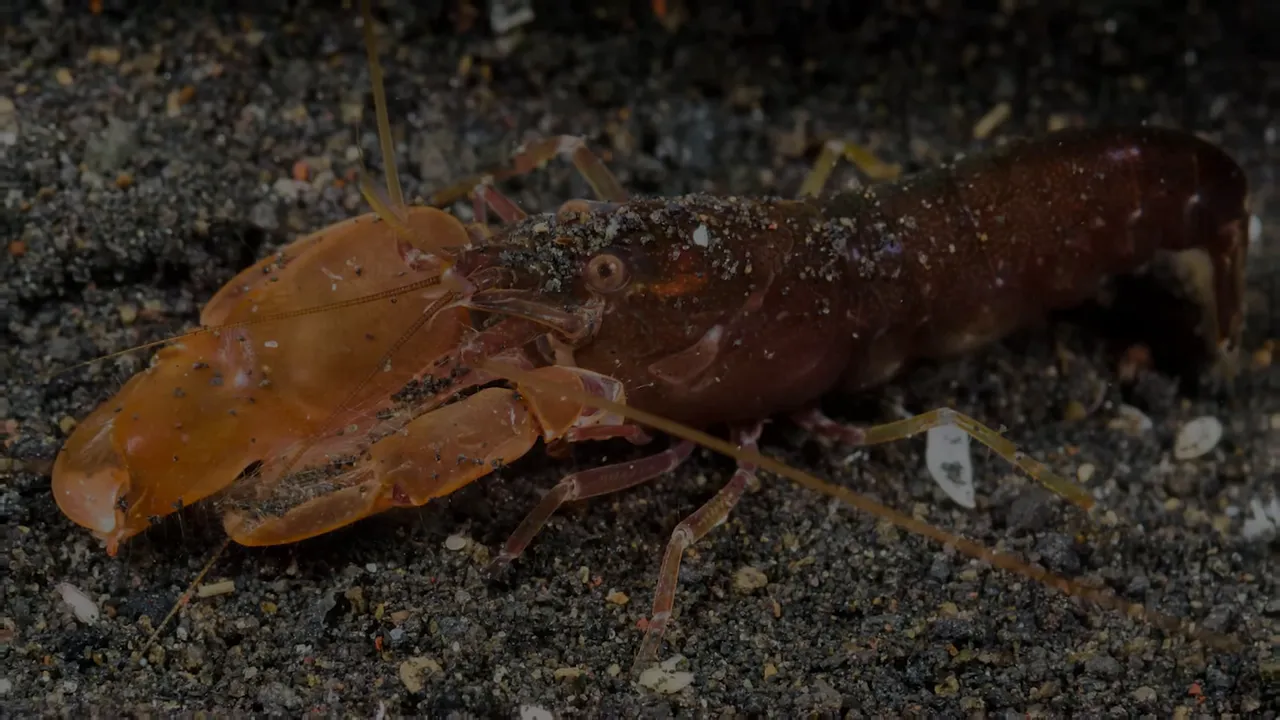
Cavitation, heat, and light
The collapse of the cavitation bubble creates a tiny, brief zone of very high temperature. It can also produce a flash of light, a phenomenon referred to as shrimpoluminescence. The flash is not the claw itself glowing. It results from the rapid physical conditions created as the bubble collapses.
The water jet has been described at roughly 60 miles per hour. The shrimp therefore attacks through water movement and cavitation rather than by physically touching prey with its claw.
How loud is a pistol shrimp?
A single snap has been reported at around 218 decibels in water. Colonies can create a persistent underwater crackling soundscape. During World War II, dense beds of snapping shrimp were significant enough to interfere with sonar conditions, and submarine crews could use that noise as acoustic cover.
This does not mean a home aquarium will sound like a battlefield. It does explain why an established pistol shrimp may occasionally produce a noticeable clicking or snapping sound from within the tank.
Can pistol shrimp regrow their snapping claw?
Yes. A pistol shrimp can sacrifice a claw if seized by a predator, then regenerate its weapon. The smaller claw on the opposite side can enlarge and become the new snapping claw. A replacement small claw subsequently develops where the original large claw was lost.
This ability means the shrimp can effectively switch its snapping side as it recovers. It is an impressive adaptation, but it also means a shrimp recovering from a lost claw may look temporarily asymmetrical or different from how it appeared when first acquired.
Why pistol shrimp and gobies live together
One of the most compelling reasons to keep a pistol shrimp is its mutualistic relationship with a goby. Pistol shrimp have limited vision, while gobies can act as alert sentries near the entrance of the shared burrow.
The roles are clear:
- The shrimp excavates. It moves sand and rubble, extends the burrow, and maintains the structure.
- The goby keeps watch. It stays near the entrance and monitors potential danger.
- They communicate by contact. The shrimp often keeps an antenna against the goby. When the goby suddenly retreats, the shrimp follows.
- They shelter together. At night, the pair may close off or retreat into the burrow.
Burrows can be extensive, reaching more than a foot and sometimes approaching two feet in length. This is not a loose association between two animals using the same part of the tank. It is a functioning partnership in which each species contributes something the other lacks.
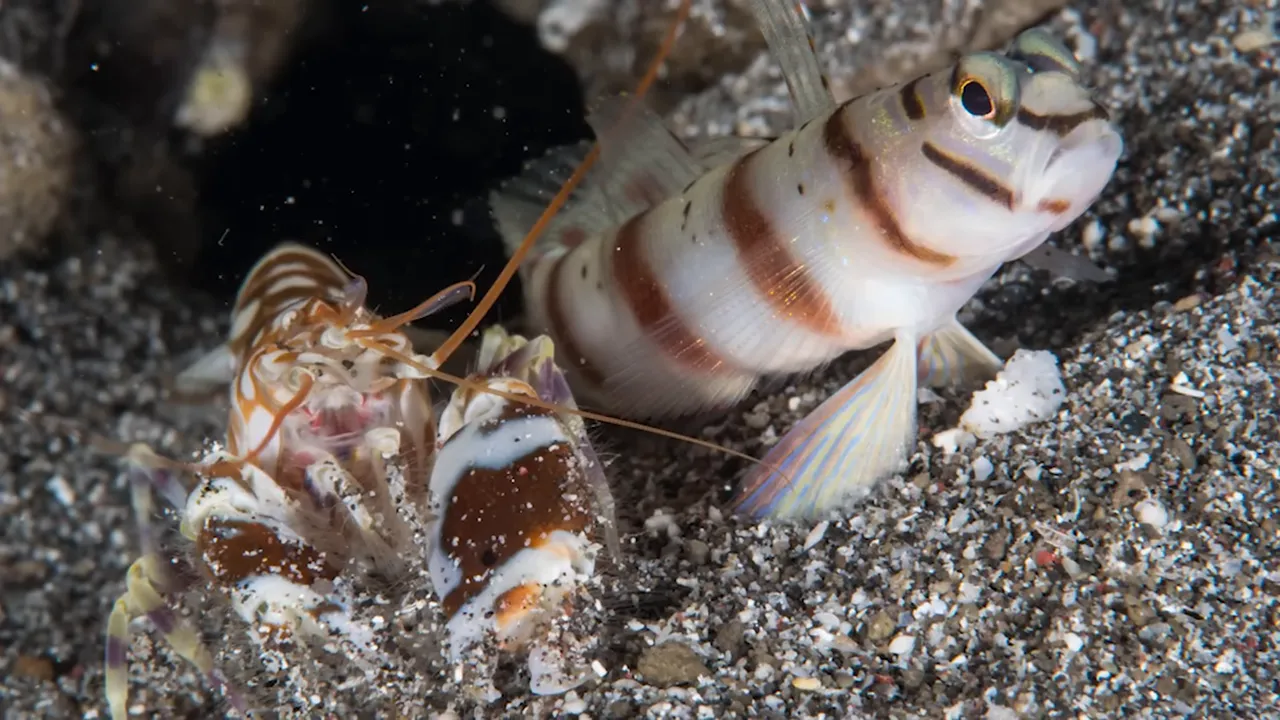
Compatible goby groups
Goby-associated pistol shrimp are commonly paired with gobies from groups such as Amblyeleotris, Stonogobiops, and Cryptocentrus. A retailer may offer an established shrimp and goby pair, which can make it easier to begin with a recognised compatible combination.
Pairing does not guarantee instant cohabitation. The shrimp and fish still need time and suitable substrate to settle. A burrow-dwelling arrangement is much more likely to succeed when the aquarium provides sand, rubble, and stable rockwork.
What to expect when keeping a pistol shrimp in a reef tank
Pistol shrimp are entertaining because they are industrious. They are also disruptive in ways that can surprise new keepers. Before choosing one, plan the lower section of the aquarium around its digging behaviour.
They will rearrange the substrate
A pistol shrimp may repeatedly move sand and rubble from one location to another. It can change the shape of a burrow entrance overnight, clear sand from beneath a rock, or create new tunnels according to its own preferences.
This activity is natural, not a sign that the shrimp is misbehaving. The practical question is whether the aquarium has been arranged safely enough to accommodate it.
They can bury or move coral frags
Loose coral frags, small decorative pieces, and unsecured rubble can be relocated or covered by sand. A shrimp may also excavate beside hardscape that appeared stable before it started digging.
Use this practical checklist before introducing a pistol shrimp:
- Secure the aquascape. Ensure rocks are stable and cannot shift if sand is moved from beneath them.
- Protect loose frags. Avoid leaving newly placed or unsecured corals in the shrimp's preferred work zone.
- Provide sand and rubble. A shrimp that builds burrows needs materials it can manipulate.
- Expect visible changes. The layout at the bottom of the aquarium may not stay exactly as arranged.
- Observe the goby. A goby spending time near a new burrow is often a positive sign that the partnership is developing.
Are all snapping shrimp suitable aquarium pets?
No. The best-known aquarium pistol shrimp are generally the colourful goby-associated varieties sold through marine aquarium shops. Other snapping shrimp are wild mud or reef species that are not regularly produced for display aquariums.
For example, a larger American snapping shrimp with an especially large claw occurs from the Carolinas through Florida and across the Gulf region. It is not generally offered as a standard ornamental aquarium animal. Its drab appearance, muddy habitat, and lack of captive availability make it very different from the colourful pistol shrimp commonly sold with gobies.
Choose livestock based on whether it is responsibly available and appropriate for the aquarium, not simply because a species has a larger claw or a more dramatic reputation.
Pistol shrimp vs mantis shrimp
Pistol shrimp and mantis shrimp are often compared because both are famous for fast, forceful strikes. However, they should not be treated as interchangeable aquarium animals.
| Feature | Pistol shrimp | Mantis shrimp |
|---|---|---|
| Primary striking method | Snapping claw produces a fast water jet and cavitation bubble | Delivers a direct, high-speed strike |
| Eyesight | Limited vision and may rely on a goby lookout | Highly complex visual system with roughly 12 to 16 photoreceptors, depending on species |
| Typical aquarium appeal | Gobies, burrows, excavation, and mutualism | Colour, predatory behaviour, and powerful striking ability |
| Key aquarium concern | Rearranging substrate and destabilising unsecured items | Potentially damaging tankmates and, in some cases, aquarium glass |
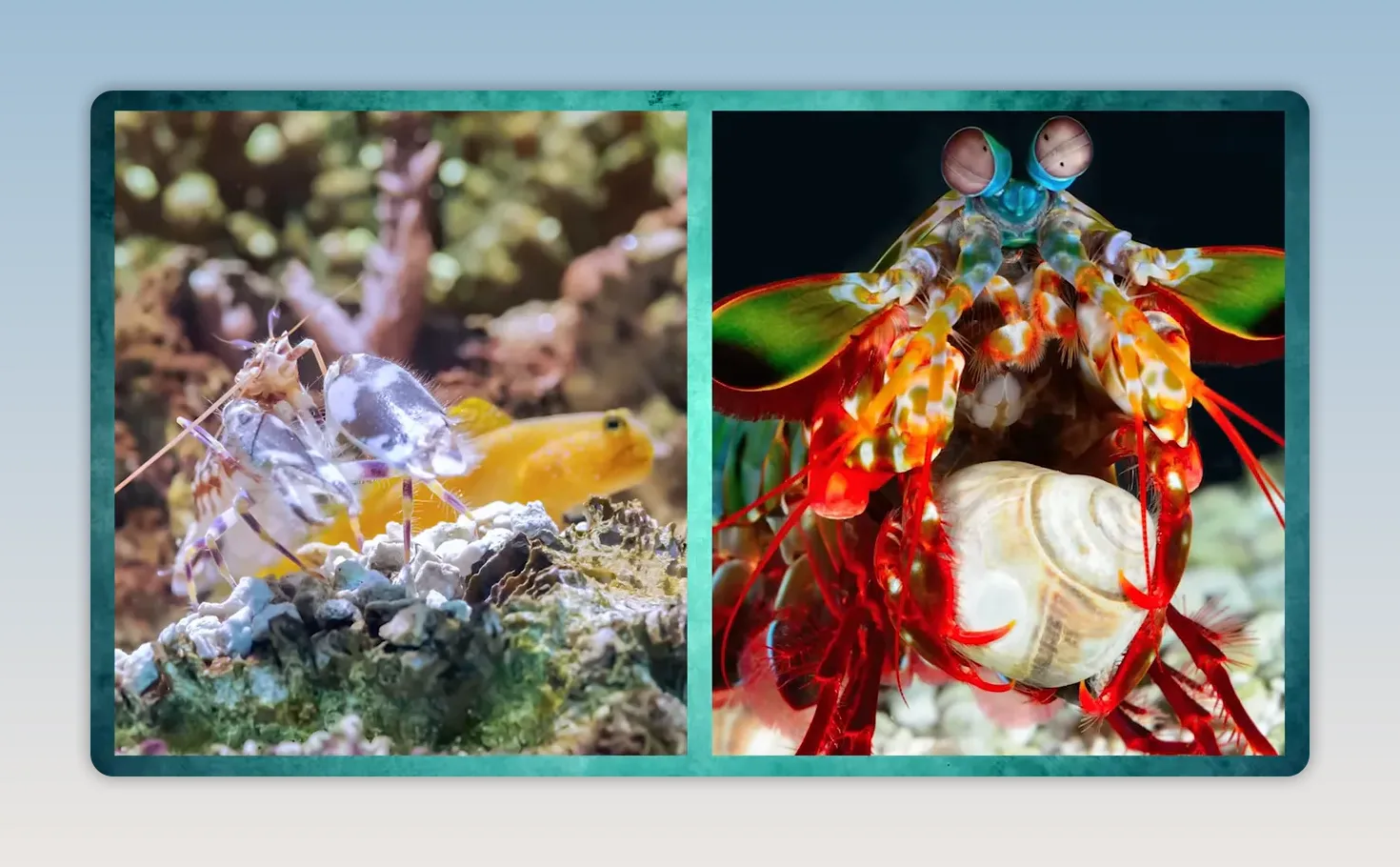
Why mantis shrimp require different planning
A mantis shrimp does not fire a cavitation-producing claw in the same way as a pistol shrimp. It attacks with a powerful physical strike. Reports describe forces around 1,500 newtons from an animal roughly six inches long, enough to break hard-shelled prey and, on occasion, damage glass aquariums.
Mantis shrimp are also notable for extraordinary eyes. Their visual system can include ultraviolet and polarised-light detection, with approximately 12 to 16 photoreceptors depending on species. By contrast, the pistol shrimp's partnership with a goby compensates for its limited sight.
For a community reef built around a visible shrimp and fish interaction, a goby-associated pistol shrimp is generally the more natural fit. A mantis shrimp demands species-specific consideration and should not be added casually to a mixed display.
Do pistol shrimp inspire fusion research?
The shrimp's cavitation mechanism has attracted attention as an example of how extreme conditions can arise from rapidly collapsing bubbles. First Light Fusion, a company spun out of Oxford, has pursued a fusion approach involving a projectile-driven collapse process. The comparison is based on the same broad physical idea: concentrating energy through rapid collapse.
The shrimp is not generating fusion. Its biological mechanism is an example of cavitation physics, while fusion research seeks to produce and control a fundamentally different nuclear reaction.
Common pistol shrimp mistakes to avoid
Assuming it is just a decorative invertebrate
A pistol shrimp actively changes its environment. Treat it as a burrowing engineer, not as a static addition to the clean-up crew.
Placing unstable rocks directly on loose sand
Because the shrimp digs, it may remove supporting sand from around rockwork. A stable aquascape matters before the shrimp arrives, not after excavation begins.
Leaving coral frags unsecured
Anything small enough to move, bury, or undermine can become part of the shrimp's construction project.
Expecting the goby to do the digging
The shrimp performs the heavy construction work. The goby's main value is awareness and warning at the entrance.
Confusing a pistol shrimp with a mantis shrimp
The names are sometimes used loosely, but they describe very different animals. Identify the species before purchasing and plan the aquarium around its actual behaviour.
Is a pistol shrimp right for your aquarium?
A pistol shrimp can be an excellent choice for a saltwater aquarium that has a secure foundation, an appropriate sandy area, and room for burrowing behaviour. It is particularly rewarding for keepers interested in observing a shrimp and goby partnership rather than maintaining a perfectly fixed substrate layout.
Choose one if you are comfortable with routine excavation, shifting sand, and a little controlled chaos at the bottom of the aquarium. Avoid one if your aquascape depends on loose rocks, unprotected frags, or an untouched sand bed.
Frequently asked questions
Can a pistol shrimp hurt a person?
Pistol shrimp use their snapping claw to create a water jet and cavitation bubble. Their reputation comes from the remarkable physics of this mechanism, but the aquarium appeal of common goby-associated species is their behaviour and partnership with fish, not their danger to people.
Why does a pistol shrimp need a goby?
The shrimp has limited vision. A goby can act as a lookout while the shrimp maintains the burrow. The shrimp often keeps an antenna in contact with the goby and retreats when the fish signals danger.
Will a pistol shrimp move corals?
It can. Pistol shrimp excavate constantly and may bury coral frags under sand or move loose pieces of rubble and decoration. Secure frags and stabilise the aquascape before adding one.
Does a pistol shrimp really make a flash of light?
Yes. The collapse of the cavitation bubble can create a tiny flash of light, known as shrimpoluminescence. It is associated with the extreme conditions produced by bubble collapse.
Are pistol shrimp and mantis shrimp related?
They are different types of crustaceans with different striking mechanisms and aquarium behaviour. A pistol shrimp uses a snapping claw to launch a water jet, while a mantis shrimp produces a direct high-speed strike.
Key takeaway
The pistol shrimp is one of the most unusual invertebrates available for a marine aquarium. Its snapping claw uses cavitation to create a powerful acoustic and physical effect, while its partnership with a goby turns a simple burrow into a coordinated two-species home. Build a stable aquascape, secure anything loose, and make room for excavation. In return, a pistol shrimp and goby pair can provide one of the most distinctive natural behaviours in the reef hobby.