Carbon dioxide, usually written as CO2, is essential for aquarium plant growth. However, adding a pressurised CO2 system is not a requirement for every planted aquarium. The right choice depends largely on the plants you want to grow and the growth rate and appearance you expect.
Low CO2 aquarium plants can thrive using the limited carbon dioxide already available in typical tap water. More demanding carpeting plants and advanced aquascaping species generally perform much better with supplemental CO2 injection.
Table of Contents
- What does CO2 do for aquarium plants?
- Why aquatic plants may need added CO2
- Can you have a beautiful planted tank without CO2 injection?
- Best easy aquarium plants for low CO2 tanks
- When should you inject CO2 into an aquarium?
- How a pressurised aquarium CO2 system works
- When should aquarium CO2 turn on?
- Common mistakes when choosing CO2 for a planted tank
- Choosing between a low-tech and CO2-injected aquarium
- Frequently asked questions
- Key takeaway
What does CO2 do for aquarium plants?
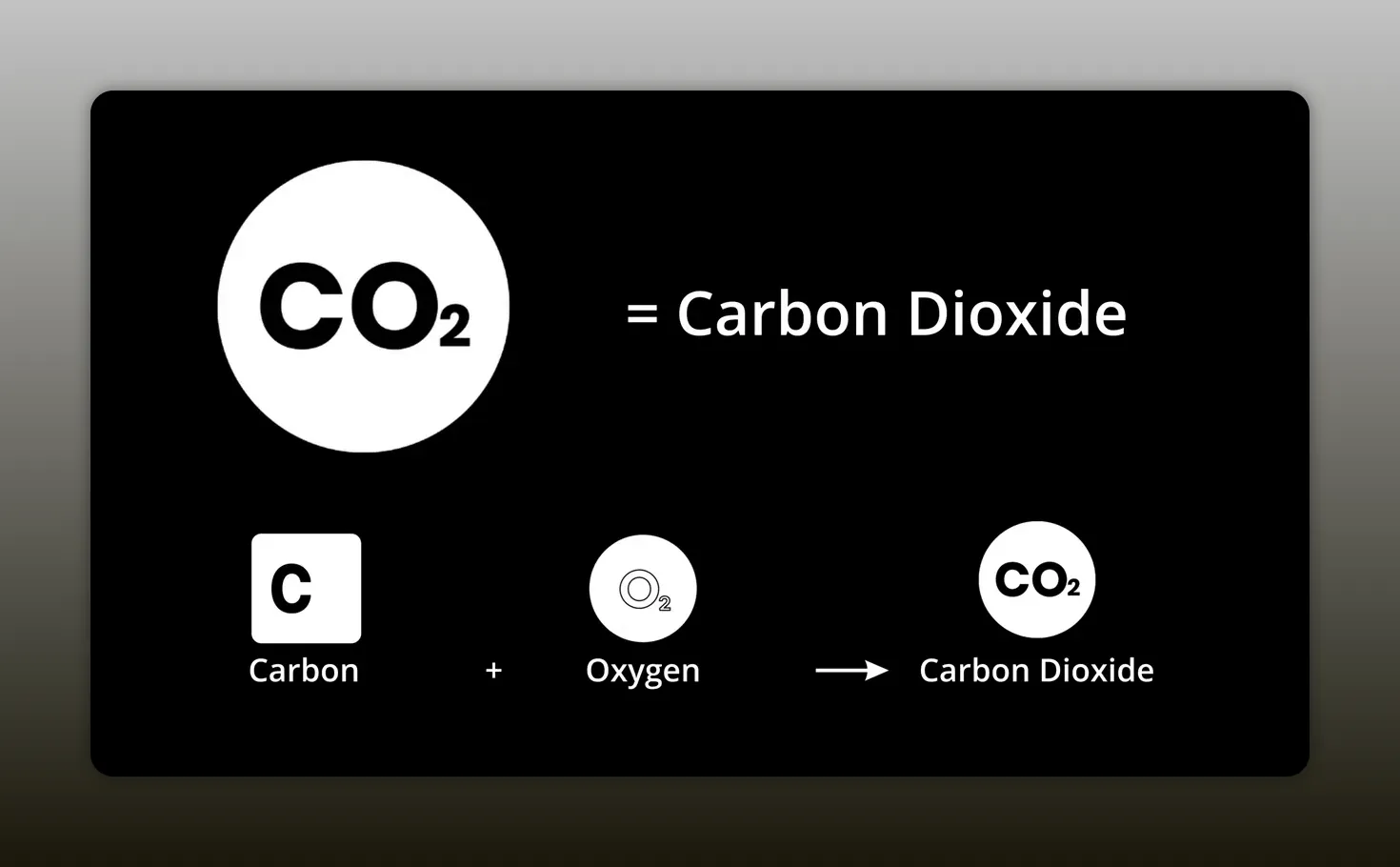
CO2 is carbon dioxide, a compound made from carbon and oxygen. Aquatic plants use it during photosynthesis, the process that creates the energy they need to grow.
For photosynthesis to take place, a plant needs three main inputs:
- Light
- Water
- Carbon dioxide
Using these inputs, the plant produces sugars for growth and releases oxygen. In a planted aquarium, CO2 is therefore not simply an optional additive. It is a fundamental building block of healthy plant development.
Why aquatic plants may need added CO2
Houseplants have access to abundant carbon dioxide in the air. Submerged aquarium plants are in a different situation because CO2 concentrations in water are much lower.
Regular tap water is not completely free of CO2, but it typically does not contain a large amount. That available amount can be sufficient for many easy aquatic plants. It may be limiting for plants that need stronger, faster, or more consistent growth.
Adding CO2 gives plants more of the carbon source they use to make energy. This can help increase growth and makes it possible to keep a broader range of demanding aquarium plants.
Can you have a beautiful planted tank without CO2 injection?
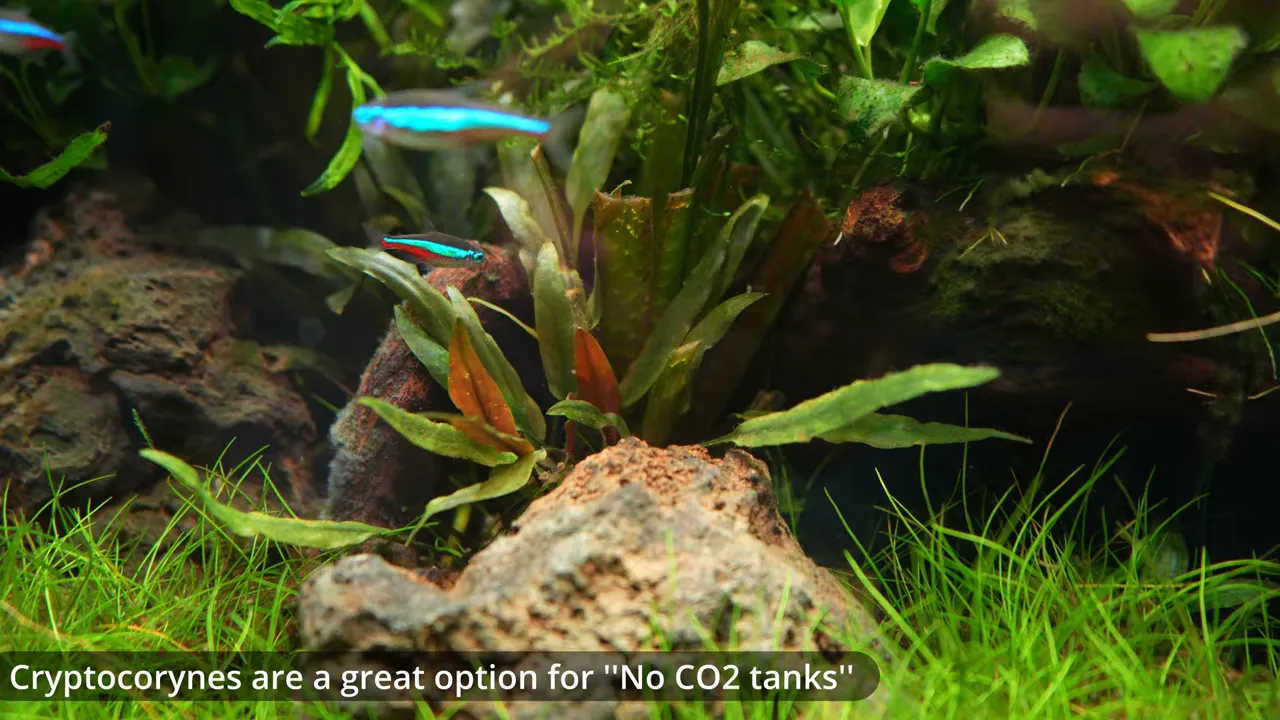
Yes. A planted aquarium can look healthy, full, and attractive without injected CO2. The key is choosing plants that tolerate low CO2 conditions rather than trying to force advanced plants into a low-tech setup.
Aquarium plants are often grouped into three broad levels:
- Easy plants: Usually grow successfully with the limited CO2 available in tap water.
- Medium plants: May grow without injection, but can struggle or fail to show their best form.
- Advanced plants: Usually do poorly when CO2 levels remain low.
For a no-CO2 planted tank, start with easy species and build the layout around them. This approach is usually more practical than selecting plants solely for appearance and hoping they adapt to low carbon dioxide availability.
Best easy aquarium plants for low CO2 tanks
There are many low CO2 aquarium plants for foreground, midground, background, and hardscape planting. Choosing several plant types can still create depth, texture, and a dense aquascape without a CO2 injection system.
Foreground plants
- Helanthium quadricostatus
- Helanthium tenellum
- Marsilea crenata
- Marsilea hirsuta
- Micro sword, Lilaeopsis novaezelandiae
- Lobelia cardinalis
- Cryptocoryne parva
Midground plants
- Cryptocoryne species
- Hydrocotyle tripartita
- Hydrocotyle leucocephala
- Giant baby tears, Micranthemum umbrosum
- Banana plant, Nymphoides aquatica
- Helanthium vesuvius
- Sagittaria subulata
- Najas indica
- Bacopa monnieri
- Echinodorus magdalenensis
- Potamogeton gayi
- Water wisteria, Hygrophila difformis
- Water sprite, Ceratopteris siliquosa
Background plants
- Bacopa australis
- Pearl weed, Micranthemum micranthemoides
- Ludwigia natans Super Red
- Egeria densa
- Bacopa caroliniana Red
- Mayaca fluviatilis
- Tiger lotus, Nymphaea
- Heteranthera zosterifolia
- Cabomba aquatica
- Hornwort, Ceratophyllum demersum
- Rotala rotundifolia
- Nomaphila stricta siamensis
- Myriophyllum matogrossense Green
Plants for wood and rock
Epiphyte plants are useful in low-tech layouts because they can be attached to hardscape rather than planted into the substrate. Good options include:
- Anubias species
- Many Bucephalandra varieties
- Most mosses
- African water fern, Bolbitis heudelotii
- Java fern, Microsorum pteropus
When should you inject CO2 into an aquarium?
CO2 injection is worth considering when your goal is to grow medium or advanced aquarium plants, increase plant growth, or create an aquascape that depends on demanding species.
It is especially relevant when a chosen plant can survive at low CO2 but is likely to look weaker, grow slowly, or struggle to establish itself. A plant's ability to remain alive is not always the same as its ability to thrive.
For example, low CO2 conditions can support many easy plants, while dwarf hairgrass is likely to grow better when CO2 is injected. HC Cuba, commonly called dwarf baby tears, is a much more demanding carpeting plant and is unlikely to make meaningful growth with low CO2 levels.
How a pressurised aquarium CO2 system works
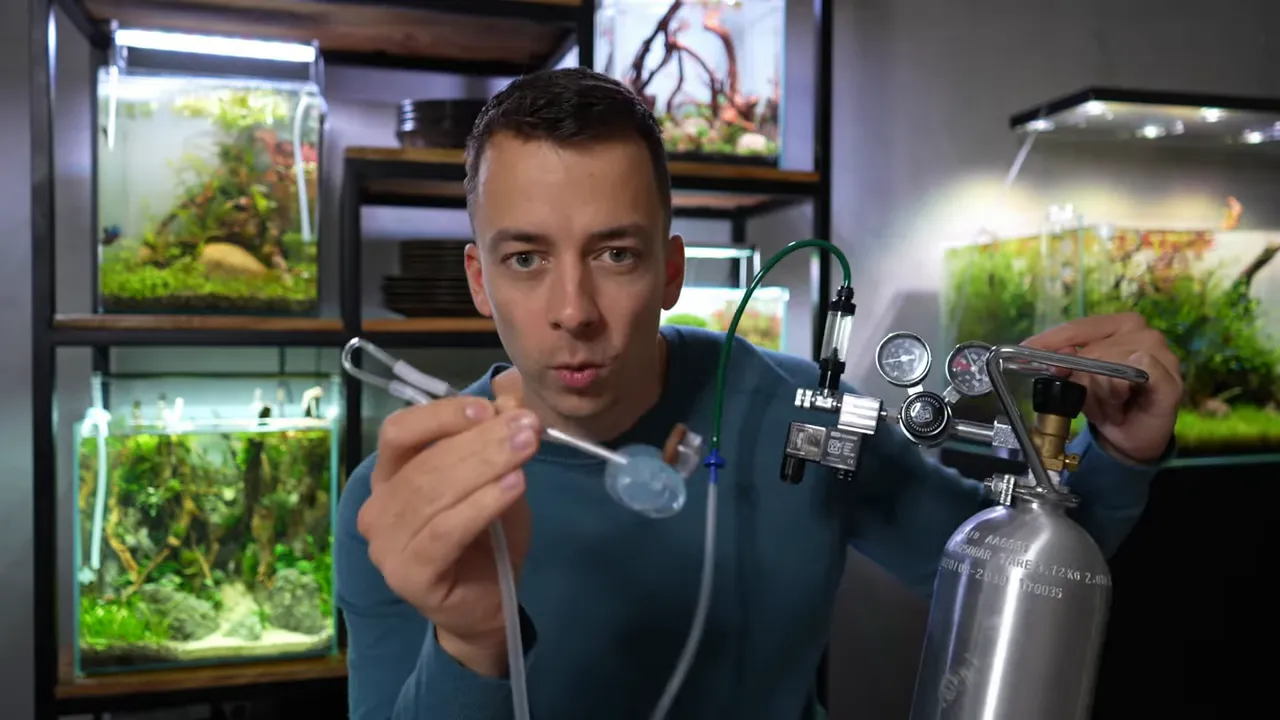
There are different ways to add CO2 to a planted tank, but a pressurised CO2 system is the most reliable approach. Its basic purpose is simple: store CO2 safely in a cylinder, lower the pressure to a controllable level, and dissolve the gas into aquarium water.
1. CO2 cylinder
The cylinder holds a large quantity of CO2 at high pressure. That pressure keeps the gas in a compact liquid form inside the cylinder. A valve at the top controls whether CO2 can leave the cylinder.
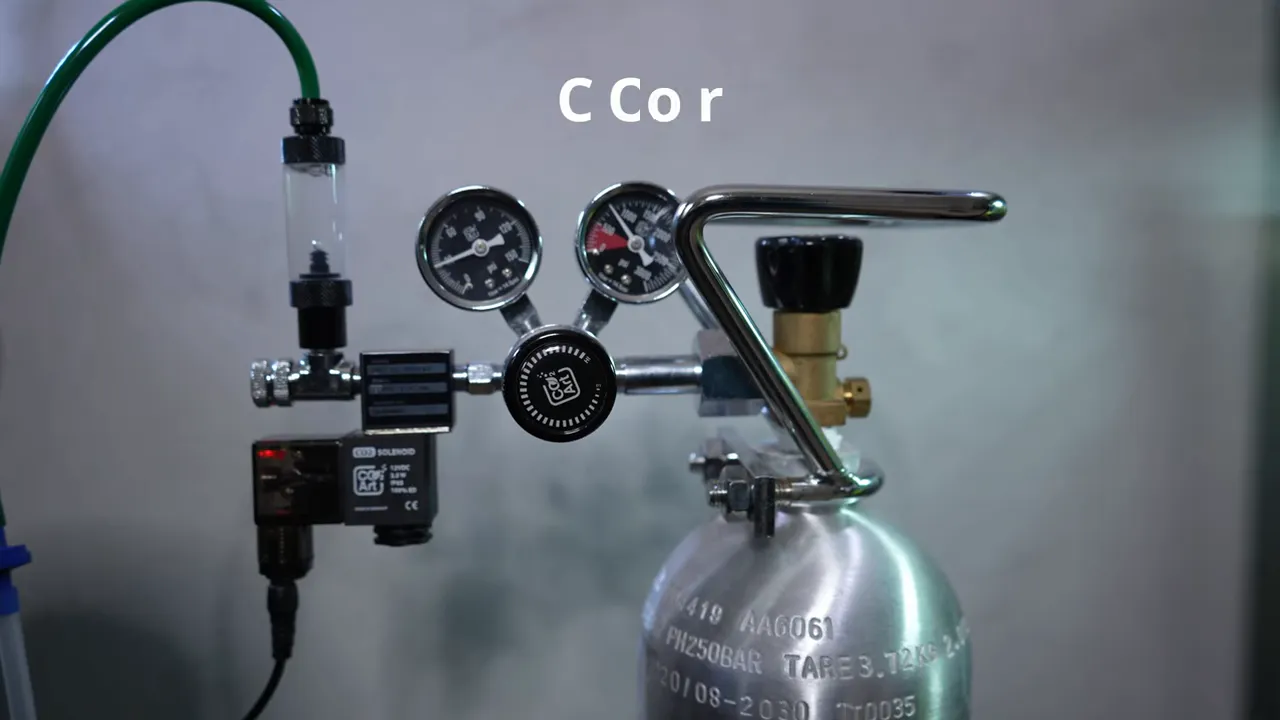
2. CO2 regulator
A regulator attaches to the cylinder and reduces its very high pressure to a lower, manageable output pressure. The adjustment knob allows the output to be increased or decreased.
Many regulators also include gauges. These generally indicate pressure and can provide an indication of how much CO2 remains in the cylinder. A good-quality regulator is an important long-term component because it controls how the system delivers CO2.
3. In-tank diffuser
The diffuser is the component that introduces CO2 into the aquarium. CO2 is pushed through a thin membrane, producing very small bubbles in the water.
Smaller bubbles are desirable because they dissolve more easily, making the CO2 more available for plants to use. An in-tank diffuser is a straightforward way to deliver CO2 into a planted aquarium.
When should aquarium CO2 turn on?
A pressurised CO2 system can be connected to a timer. A useful general rule is to switch CO2 on one hour before the aquarium lights turn on.
This timing aligns CO2 availability with the period when plants have light for photosynthesis. It also makes the system more consistent from day to day.
Common mistakes when choosing CO2 for a planted tank
- Assuming every plant needs injected CO2: Easy aquatic plants can grow using the limited CO2 in tap water.
- Expecting demanding plants to thrive in a low-tech tank: Medium plants may struggle without injection, and advanced plants usually need more available CO2.
- Choosing plants before deciding on the system: Select plants that match whether you intend to run a low CO2 or injected CO2 aquarium.
- Overlooking the regulator: The regulator is central to managing pressure and CO2 delivery, so build a pressurised system around a dependable one.
- Using a timer without considering the lighting schedule: CO2 timing should support the plant's illuminated growth period.
Choosing between a low-tech and CO2-injected aquarium
Use this quick checklist to make the decision:
- Choose a low-tech, no-CO2 aquarium if you want to use easy plants and are happy to design around species that tolerate low CO2.
- Choose pressurised CO2 injection if faster plant growth or medium and advanced plants are important to your intended aquascape.
- Choose plants first by their CO2 needs, then match the equipment to that plan.
The best planted tank approach is not automatically the one with the most equipment. It is the one where plant selection and CO2 availability are compatible.
Frequently asked questions
Do all aquarium plants need CO2?
All plants need CO2 for photosynthesis. However, not all aquarium plants require injected CO2. Many easy plants can use the small amount available in typical tap water.
Is CO2 injection necessary for a planted aquarium?
No. A beautiful planted aquarium can be created without CO2 injection by choosing easy, low CO2 plants. Injection becomes more useful for improving growth and keeping medium or advanced plants.
Which aquarium plants grow without CO2 injection?
Examples include Cryptocoryne species, Anubias, Java fern, Bucephalandra, mosses, water wisteria, water sprite, hornwort, Bacopa species, and several Helanthium and Marsilea species.
What are the main parts of an aquarium CO2 system?
A basic pressurised system has three key components: a CO2 cylinder, a regulator, and a diffuser. The cylinder stores CO2, the regulator manages its pressure, and the diffuser introduces fine CO2 bubbles into the tank.
How long before the lights should aquarium CO2 start?
A general timing guideline is to turn CO2 on one hour before the aquarium lights come on.
Key takeaway
CO2 supports healthy aquarium plant growth because it is necessary for photosynthesis. A no-CO2 aquarium can be highly successful with easy plants, while injected CO2 opens the door to stronger growth and more demanding species. Match the plants to the level of CO2 you can provide, and use a dependable cylinder, regulator, and diffuser setup when supplemental CO2 is part of the plan.