Learning How to Clean your Aquarium Filter properly is one of the most important parts of fish tank maintenance. A filter does more than collect visible debris. Its sponge, biological media and cartridge surfaces support beneficial bacteria that help keep the aquarium healthy.
The goal is not to make every filter component look brand new. The goal is to remove enough trapped waste to restore water flow while preserving as much established biological media as possible. For a hang-on-back filter, this means using aquarium water, avoiding soap and tap water, and replacing only the media that is genuinely spent.
Table of Contents
- Why aquarium filter cleaning needs a gentle approach
- What you need before cleaning a hang-on-back filter
- How to Clean your Aquarium Filter step by step
- Never use soap or tap water on filter media
- When should you clean an aquarium filter?
- What to do with activated carbon cartridges
- Best media order for a simple HOB filter
- Common aquarium filter cleaning mistakes
- Quick checklist for How to Clean your Aquarium Filter
- Frequently asked questions
- Takeaway
Why aquarium filter cleaning needs a gentle approach
Beneficial bacteria live on the surfaces inside an established aquarium filter, including sponges, cartridges and porous biological media. These bacteria are a valuable part of the tank’s filtration system, so aggressive cleaning can remove more than dirt.
When considering How to Clean your Aquarium Filter, think of the filter media as a working habitat, not a household item that needs to be sanitised. A light rinse and squeeze in old aquarium water removes accumulated debris while helping retain the bacteria already living in the media.
What you need before cleaning a hang-on-back filter
- A clean bucket to hold water removed from the aquarium
- Old aquarium water for rinsing reusable media
- Replacement filter floss, cut to fit if needed
- Biological media, such as media balls, if your filter has room for it
- The existing sponge or reusable media from the filter
Set aside a bucket of aquarium water before handling the filter media. This water is used only as a gentle rinse bath. It may look dirty after cleaning, but that is expected because it is carrying away trapped debris.
How to Clean your Aquarium Filter step by step
1. Remove the filter cartridge or media basket
Carefully lift out the cartridge, basket or media holder from the hang-on-back filter. Different filter models may arrange media differently, but the same principle applies: remove the media gently and keep reusable pieces together.
2. Rinse reusable media in aquarium water
Place the sponge, cartridge or biological media into the bucket of removed tank water. Swish it gently to loosen dirt and trapped debris. A sponge can be lightly squeezed in the bucket rather than scrubbed until it appears spotless.
For How to Clean your Aquarium Filter, this is the key step. Use water from the aquarium, not fresh water from the tap. The aim is a modest clean that keeps the established filter media functioning.
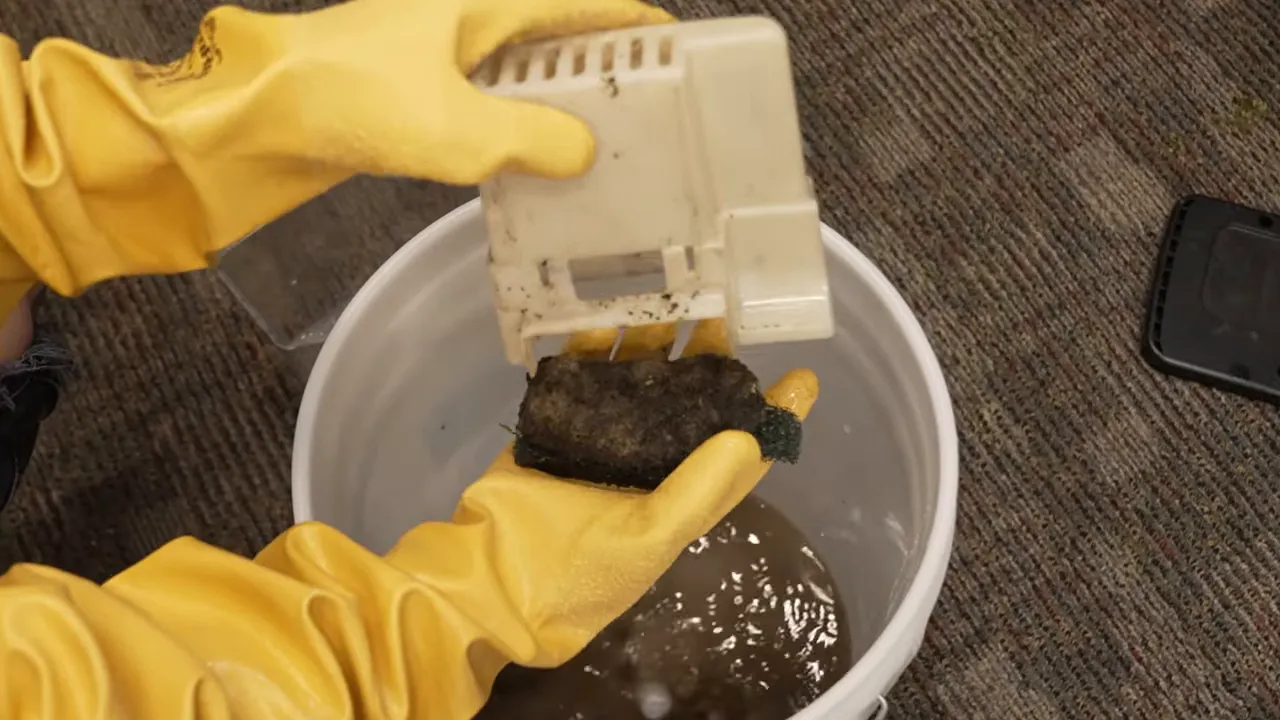
3. Remove spent filter floss
Filter floss is mechanical media. It collects fine particles and can eventually become heavily clogged. When it is full of debris and restricting flow, discard it and replace it with fresh floss.
Cut new filter floss to fit the available space, then place a few layers into the media basket. Do not pack it so tightly that water cannot move through the filter.
4. Keep the old sponge
A reusable sponge should generally be retained after its gentle aquarium-water rinse. It provides a surface for beneficial bacteria and continues to catch debris. Replacing every piece of media at the same time can unnecessarily reduce the established biological filtration in the filter.
5. Add or return biological media
If the filter has enough room, porous media balls can be placed in the middle portion of the basket. New biological media can be dusty, so rinse it in the bucket of aquarium water before adding it.
Position the media so it stays contained and does not interfere with the sponge or water path. Then tuck the rinsed sponge back into place.
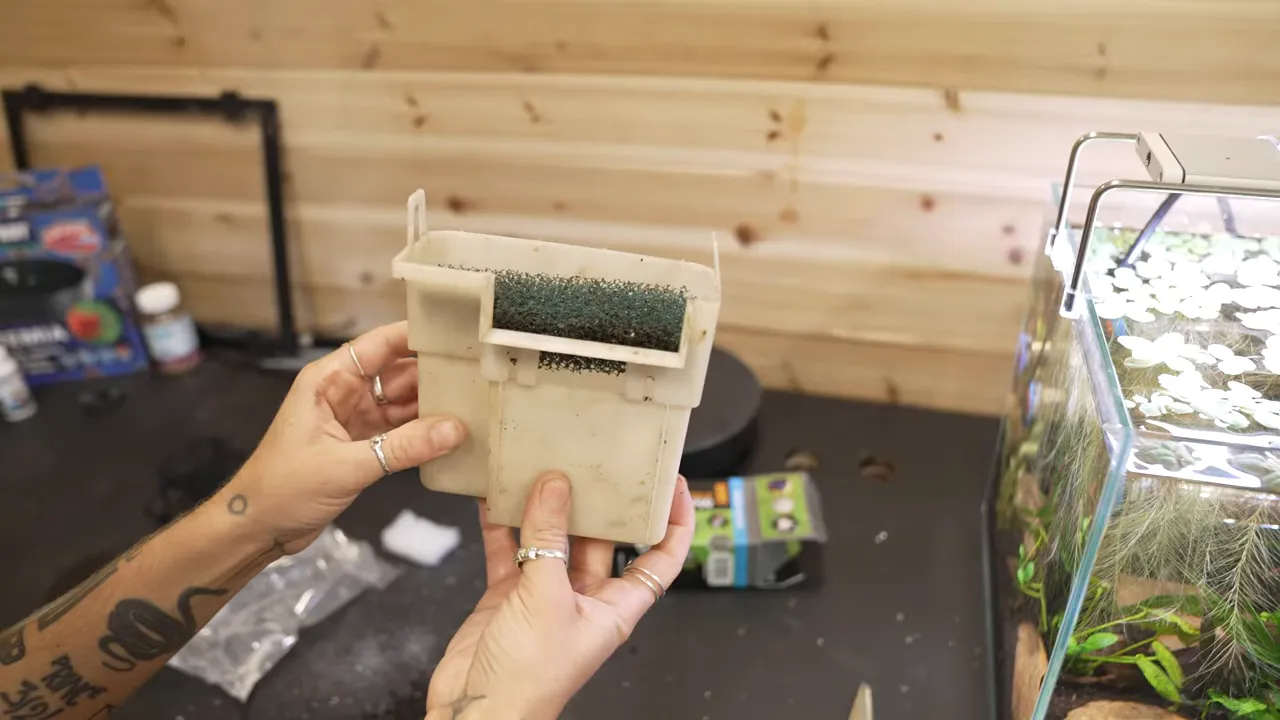
6. Reinstall the media and restart the filter
Return the loaded basket or cartridge to the hang-on-back filter and fit the lid back on. Once it is running, confirm that water is flowing normally into the aquarium.
A restored flow is the main sign that the maintenance has removed the blockage that was slowing the filter down.
Never use soap or tap water on filter media
Two common mistakes can undermine an otherwise simple cleaning routine:
- Do not use soap. Filter media does not need household-style cleaning or sanitising.
- Do not rinse the media under tap water. Instead, use removed aquarium water from the tank.
These rules apply whether the media is in a removable cartridge, a sponge compartment or a basket containing biological media. When working out How to Clean your Aquarium Filter, gentle cleaning is safer than trying to make every component perfectly clean.
When should you clean an aquarium filter?
Do not clean a filter simply because a calendar says it is time. The most useful practical trigger is reduced water flow. A weaker return flow usually means debris has built up in the floss, sponge or other media.
Clean the filter when flow has noticeably slowed, then replace the clogged mechanical floss and rinse the reusable components in aquarium water. This approach avoids unnecessary disturbance while addressing the actual problem.
What to do with activated carbon cartridges
Some hang-on-back filter cartridges include activated carbon, while others use floss, sponge and biological media without carbon. If your filter uses carbon, it needs periodic replacement because it does not absorb contaminants indefinitely.
A useful benchmark is to replace carbon at roughly 45-day intervals. Treat the rest of the cartridge carefully: rinse reusable portions in aquarium water and avoid replacing all established media at once.
Best media order for a simple HOB filter
The exact layout depends on the filter model, but a practical arrangement can include the following:
- Filter floss to catch fine debris and provide a replaceable mechanical layer.
- Biological media in the middle, where it can remain secure and accessible.
- A reusable sponge to provide long-lasting mechanical and biological filtration.
Water must still be able to pass through the basket freely. If media is crammed in too tightly, the filter may lose flow again quickly.
Common aquarium filter cleaning mistakes
- Replacing all media at once: Keep reusable sponge and established biological media whenever possible.
- Throwing away a reusable sponge because it looks dirty: Rinse it gently in aquarium water instead.
- Using tap water: Use a bucket of aquarium water for rinsing.
- Using soap: Never treat filter media like kitchen or bathroom equipment.
- Cleaning before there is a reason: Slowed flow is a better reason to service the filter than routine over-cleaning.
- Overfilling the media basket: Leave enough room for water to travel through the media.
Quick checklist for How to Clean your Aquarium Filter
- Remove aquarium water into a clean bucket.
- Lift out the cartridge or media basket.
- Swish and gently squeeze reusable media in the bucket water.
- Discard clogged filter floss when it is heavily loaded with debris.
- Add fresh floss cut to the correct size.
- Rinse new biological media in aquarium water before use.
- Return the sponge and media to the filter.
- Restart the filter and check that the flow has improved.
Frequently asked questions
Can I rinse an aquarium filter sponge under tap water?
No. For How to Clean your Aquarium Filter, rinse the sponge in a bucket of removed aquarium water. This removes debris without treating the sponge as something that needs to be fully sterilised.
Should I replace my aquarium filter sponge when it looks dirty?
Not necessarily. A dirty sponge can usually be gently rinsed in aquarium water and returned to the filter. Replace disposable filter floss when it is clogged, but retain reusable sponge media where possible.
Why has my hang-on-back filter flow slowed down?
Reduced flow usually indicates accumulated debris in the filter media. Rinsing reusable media in aquarium water and replacing heavily clogged floss can restore the water flow.
How often should activated carbon be replaced?
If activated carbon is part of the filter setup, replace it at about 45 days because its ability to absorb contaminants does not last indefinitely.
Takeaway
How to Clean your Aquarium Filter comes down to one simple principle: remove trapped waste without stripping away the filter’s useful biological life. Use old aquarium water, avoid soap and tap water, replace clogged floss rather than every component, and service the filter when flow slows down. This keeps a hang-on-back filter moving water effectively while protecting the established media that supports a healthier tank.