Heater mistakes in aquariums can cause uneven water temperatures, dangerous overheating, broken equipment, and serious risk to fish. Because aquarium heaters can fail, a safe setup depends on more than simply choosing a heater and plugging it in. Placement, wattage, temperature checks, dry-run prevention, and backup protection all matter.
This guide covers the most important heater mistakes in aquariums and the practical safeguards that help keep a freshwater tank at a stable temperature.
Table of Contents
- Why aquarium heater safety matters
- 1. Placing the heater away from water flow
- 2. Assuming the heater display or setting is always correct
- 3. Using a heater that is too powerful for the tank
- 4. Letting an aquarium heater run dry
- 5. Having no alarm, controller, or replacement heater
- Common misconceptions about aquarium heaters
- Quick checklist for avoiding heater mistakes in aquariums
- Frequently asked questions
- Takeaway
Why aquarium heater safety matters
An aquarium heater is responsible for maintaining a livable temperature, but it is also a potential point of failure. A heater may stop heating, run continuously, or produce inaccurate results. The risk increases when warm water is not circulating properly, the heater is oversized for the aquarium, or there is no independent way to check the actual water temperature.
The goal is not merely to heat the aquarium. It is to maintain consistent, measurable, and appropriately distributed heat throughout the whole tank.
1. Placing the heater away from water flow
One of the most common heater mistakes in aquariums is poor placement. Heat leaves the heater first, so it needs water movement to carry that warmth through the aquarium. A heater placed in a stagnant corner can create warmer and cooler areas instead of a stable overall temperature.
Position the heater near the filter outflow or another area with strong circulation. The moving water spreads the warmed water through the tank more evenly.
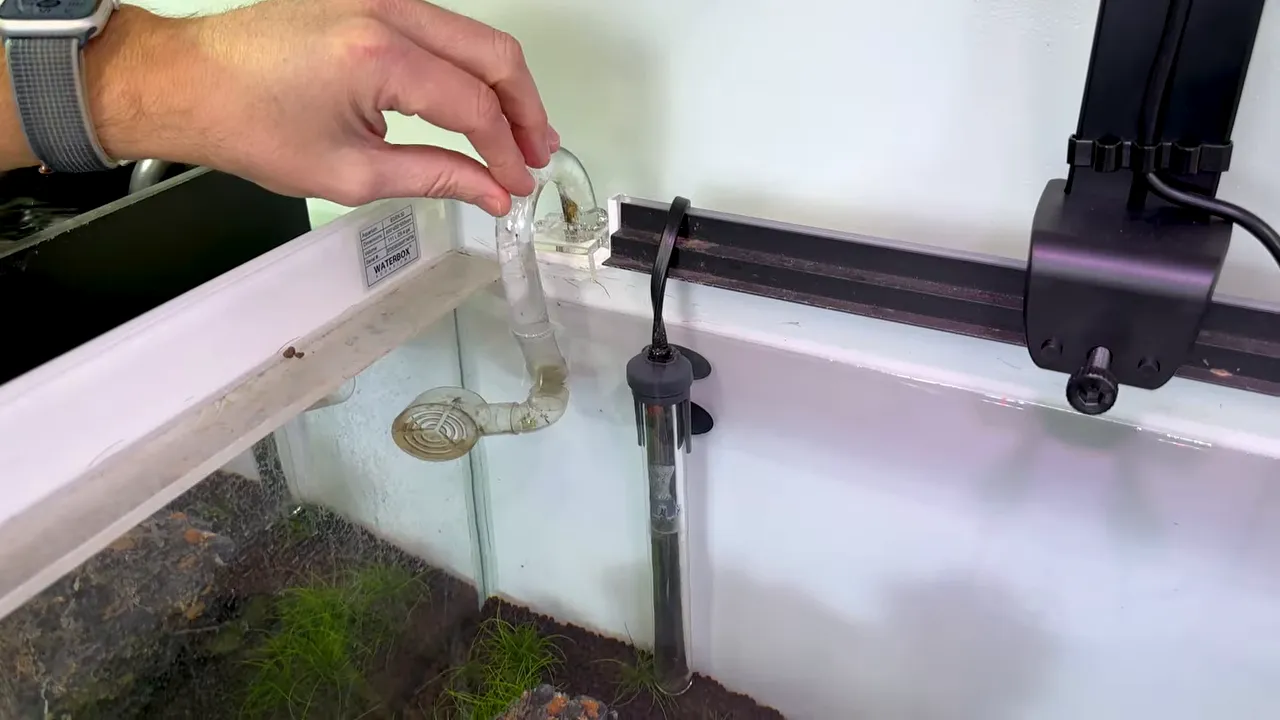
Use more than one heater in a large aquarium
A single heater may not distribute heat evenly across a large tank. Using two heaters helps spread the heating load and improves temperature distribution from one end of the aquarium to the other.
This also reduces dependence on one device. If one heater stops working, the other heater is still present rather than leaving the aquarium with no heat source at all.
- Place heaters where circulating water can carry heat throughout the tank.
- For a larger aquarium, use two heaters rather than relying on one unit.
- Check temperature away from the heater, not only beside it.
2. Assuming the heater display or setting is always correct
Another major source of heater mistakes in aquariums is failing to independently verify the water temperature. A heater can fail without obvious warning, and its temperature dial or internal control should not be the only measurement used to judge tank conditions.
Use a separate thermometer to check the water regularly. Options include a temperature meter, a kitchen meat thermometer, or an inexpensive stick-on temperature strip. For a meaningful reading, place an external temperature strip on the opposite side of the aquarium from the heater.
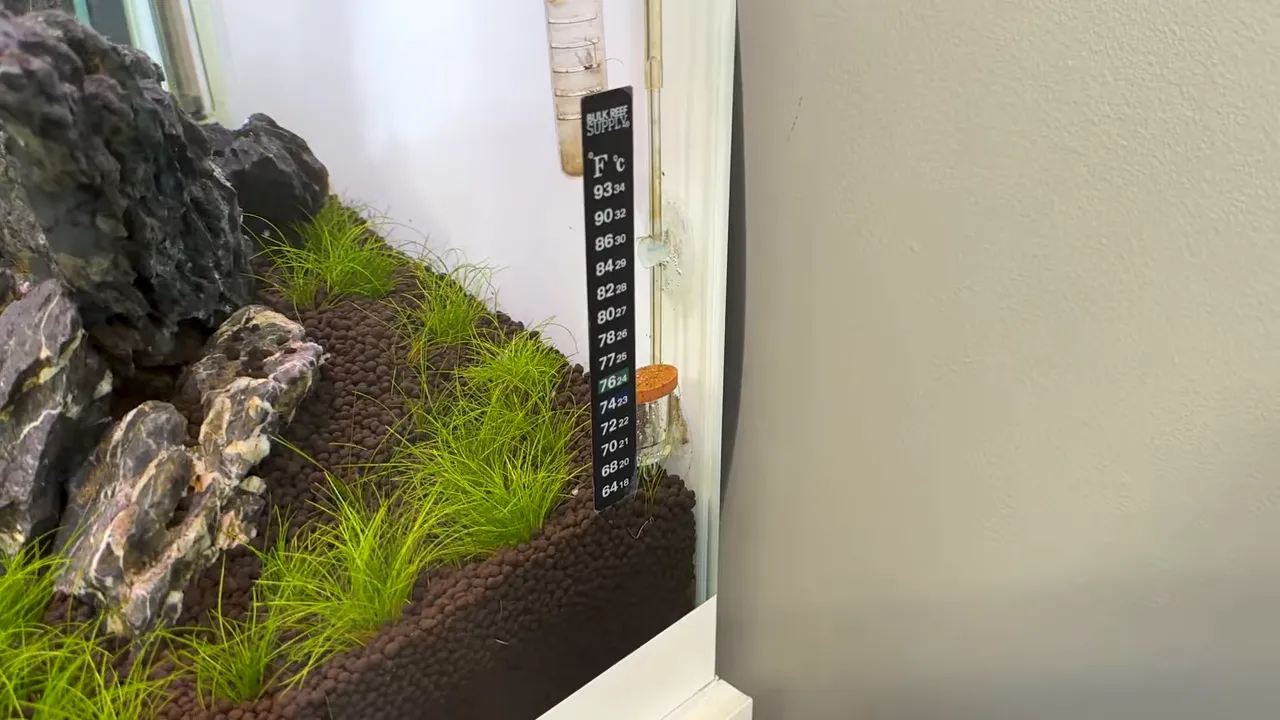
What to check
- Check the actual water temperature as part of routine aquarium care.
- Compare the measured temperature with the temperature intended for the aquarium.
- Look for unexpected temperature increases or drops.
- Measure away from the heater to identify poor heat distribution.
Independent monitoring turns an unseen heater problem into a problem that can be noticed early.
3. Using a heater that is too powerful for the tank
Oversizing is one of the heater mistakes in aquariums with the most serious consequences. If a non-preset heater is too powerful for the amount of water in the tank and becomes stuck in the on position, the water temperature can continue rising instead of regulating normally.
A high-wattage heater can warm a smaller volume of water quickly. If it fails in the on position, that excess heating capacity can become dangerous to fish.
Choose a heater that is appropriately sized for the aquarium. A preset heater is also a useful option because it is designed around a fixed operating temperature rather than requiring ongoing dial adjustment.
Heater selection checklist
- Match the heater's wattage to the aquarium size.
- Avoid using excessive wattage simply to heat water faster.
- Consider a preset heater for a smaller aquarium where excessive heating can become a problem quickly.
- Do not treat the heater's own control as a replacement for external temperature measurement.
4. Letting an aquarium heater run dry
Letting a heater run outside the water is one of the most avoidable heater mistakes in aquariums. It can happen during a water change when the water level drops below the heater. It can also happen when the heater is removed during substrate work or other maintenance.
A heater operating dry can become a fire hazard if it is placed on the floor or another surface. It may also be damaged by the lack of surrounding water. Returning an overheated heater to the aquarium can lead to sudden equipment failure.
Before lowering the water level or removing equipment for maintenance, make sure the heater will not be left operating without water around it. Treat heater position and water level as part of every water-change plan.
5. Having no alarm, controller, or replacement heater
The most effective response to heater mistakes in aquariums is to assume a heater can eventually malfunction and build in early warning. A temperature controller provides an additional layer of protection by monitoring a chosen temperature range.
If the temperature rises above or falls below that range, a controller can sound an alarm. Wi-Fi models can also send a notification to a phone. This is particularly valuable when an aquarium is not checked constantly.
Keep a backup heater available as well. A replacement heater helps when the installed unit fails to heat, needs to be removed, or cannot safely remain in service.
A simple heater failure plan
- Use a correctly sized heater in a high-flow area.
- Verify water temperature independently with a thermometer or temperature strip.
- Set a temperature controller's high and low range if one is available.
- Keep a spare heater ready for replacement.
- Prevent the active heater from operating without water during maintenance.
Common misconceptions about aquarium heaters
“One heater is enough for every aquarium.”
Not necessarily. Large aquariums can benefit from two heaters so heat is distributed more evenly and the tank is not entirely dependent on a single unit.
“If the heater light is on, the temperature must be safe.”
The heater can be operating while the aquarium temperature is still not where it should be. Always confirm the actual water temperature with a separate measuring tool.
“A more powerful heater is always safer.”
No. Excessive wattage creates more risk if a heater becomes stuck on. Proper sizing is safer than simply choosing the strongest available unit.
“A heater only needs attention when it stops heating.”
Failure can also mean overheating. Regular checks and a controller with high and low limits can help identify either problem.
Quick checklist for avoiding heater mistakes in aquariums
- Place the heater near the filter outflow so warm water circulates.
- Use two heaters in a large aquarium to improve heat distribution.
- Measure temperature separately with a meter, thermometer, or external strip.
- Choose appropriate wattage for the volume of water.
- Use preset heating where suitable to reduce the risk associated with adjustable high-wattage heating.
- Never allow the heater to run dry during water changes or maintenance.
- Use a temperature controller for alarms or remote alerts.
- Keep a backup heater for equipment failure.
Frequently asked questions
Where should an aquarium heater be placed?
Place the heater near the aquarium filter outflow or another source of water movement. Circulation helps distribute warmed water evenly through the tank.
Why should a large aquarium have two heaters?
Two heaters can distribute heat more evenly across a larger tank. They also reduce reliance on one heater if a unit fails.
How can I tell if my aquarium heater is working correctly?
Check the water with an independent thermometer, temperature meter, or temperature strip. Do not rely only on the heater's setting or indicator.
What happens if an aquarium heater runs dry?
A dry-running heater can become dangerously hot, create a potential fire risk, and suffer damage that may cause it to fail when returned to the aquarium.
Is a temperature controller worth using on an aquarium?
A controller adds a warning system for temperatures that move above or below a chosen range. Some models can also send phone notifications, helping identify heater problems sooner.
Takeaway
The safest way to avoid heater mistakes in aquariums is to combine good placement, suitable wattage, external temperature checks, dry-run prevention, and failure backups. A heater should never be treated as a set-and-forget device. Regular verification and a plan for failure help protect both the aquarium's temperature and the fish that depend on it.