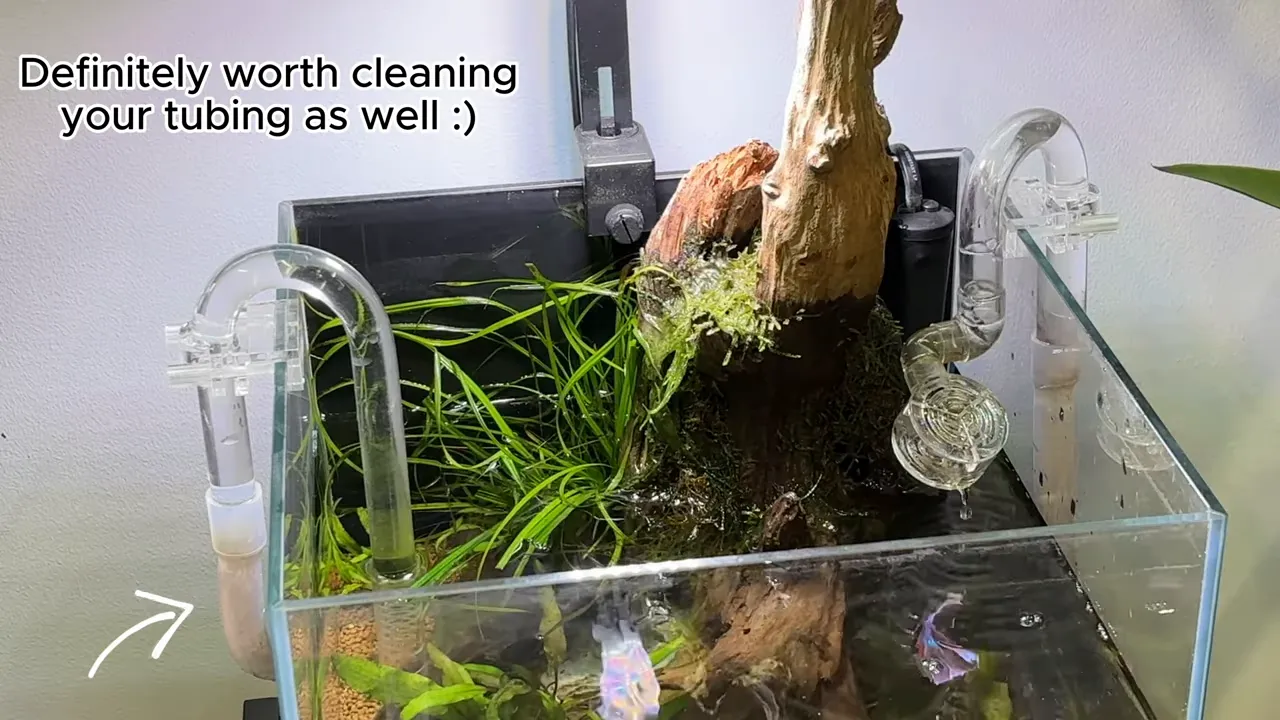
Clear glass lily pipes give planted aquariums an uncluttered look and help create gentle filter flow. Their transparency also makes algae, brown buildup, and trapped debris highly visible. The challenge is cleaning them without releasing that loosened waste straight back into the aquarium.
The most effective approach is to clean the return lily pipe while it drains into a bucket. This turns the job into part of a water change and keeps dislodged grime out of the tank. The inlet can then be cleaned in place, allowing the filter to capture any loose debris when it restarts.
Table of Contents
- Why Lily Pipes Need Cleaning
- The Key Difference Between Cleaning the Intake and Return
- What You Need to Clean Lily Pipes
- How to Clean the Return Lily Pipe During a Water Change
- How to Clean the Intake Lily Pipe
- Reassemble, Restart, and Refill
- Common Lily Pipe Cleaning Mistakes to Avoid
- A Simple Lily Pipe Cleaning Checklist
- Frequently Asked Questions
- Takeaway
Why Lily Pipes Need Cleaning
Lily pipes are commonly used with external canister filters, especially on planted tanks. Their smooth curves and clear material provide a subtle intake and return setup, but algae and organic debris can build up inside the pipes over time.
This buildup affects more than appearance. A dirty pipe can make a carefully maintained aquarium look neglected and may interfere with the clear, open circulation path the pipes are meant to provide.
Two parts need attention:
- Return or outflow pipe: The pipe that sends filtered water back into the aquarium.
- Inlet or intake pipe: The pipe that draws aquarium water toward the filter.
They should not be cleaned in exactly the same way, because debris moves in opposite directions when the filter is running.
The Key Difference Between Cleaning the Intake and Return
The intake can send debris into the filter
After scrubbing the intake, some loosened debris may remain inside it. Once the filter is switched back on, that material is drawn through the intake and into the filter. This makes in place cleaning practical, provided the pipe is scrubbed thoroughly.
The return can blow debris into the aquarium
Cleaning the return pipe in the tank creates the opposite problem. If loose algae and grime remain inside the outflow, restarting the filter can push that waste directly into the aquarium.
For this reason, remove the return pipe and clean it over a bucket before restarting the filter. The pipe can drain aquarium water into the bucket while debris is brushed out, preventing the mess from returning to the tank.
What You Need to Clean Lily Pipes
- A bucket large enough to collect aquarium water
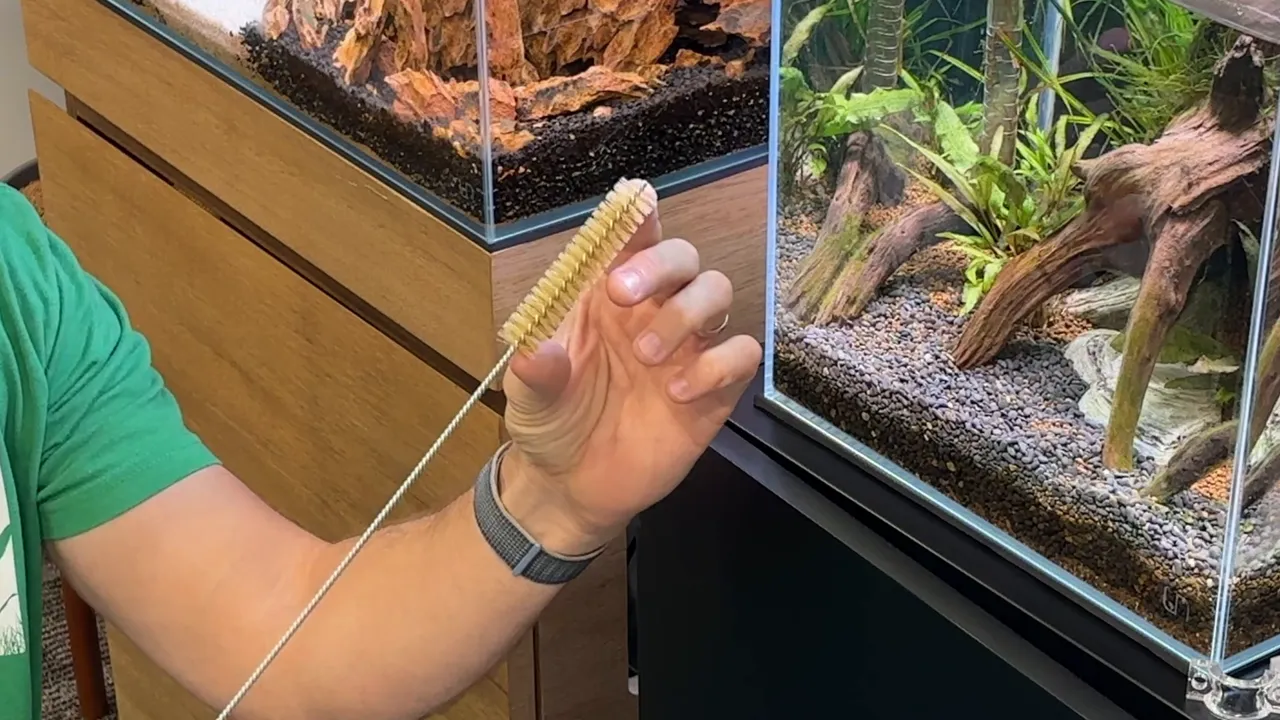
- A long flexible pipe brush
- An algae pad for removable flow accessories
- New remineralised water for refilling after the water change
A purpose made lily pipe brush is useful because it needs both firmness and flexibility. Long bristles reach the inside surface of the pipe, while a flexible wire lets the brush move through bends and curved sections without requiring the pipe to be detached from its hose.
How to Clean the Return Lily Pipe During a Water Change
Cleaning the outflow first is the central part of this method. Work carefully with glass pipes, especially when removing them from the aquarium rim and connected hose.
1. Turn off the filter
Always switch off the filter before handling either lily pipe. This stops water movement while you disconnect and clean the components.
2. Remove the return pipe and any flow accessory
Take the return lily pipe off the aquarium. If the setup includes a removable flow reducer, separate it so it can be cleaned independently. An algae pad can be used to wipe that smaller component in the old aquarium water collected in the bucket.
3. Lower the outflow below the aquarium water level
Place the return pipe over the bucket and lower it below the level of the intake and filter. This creates a siphon, allowing aquarium water to drain through the return line and into the bucket.
The draining water serves two purposes:
- It begins the water change.
- It provides a destination for algae and debris removed from the pipe.
4. Brush the inside of the pipe while it drains
Feed the flexible brush through the return pipe, working it around each curve. The water draining into the bucket carries away the loosened buildup instead of allowing it to settle in the aquarium.
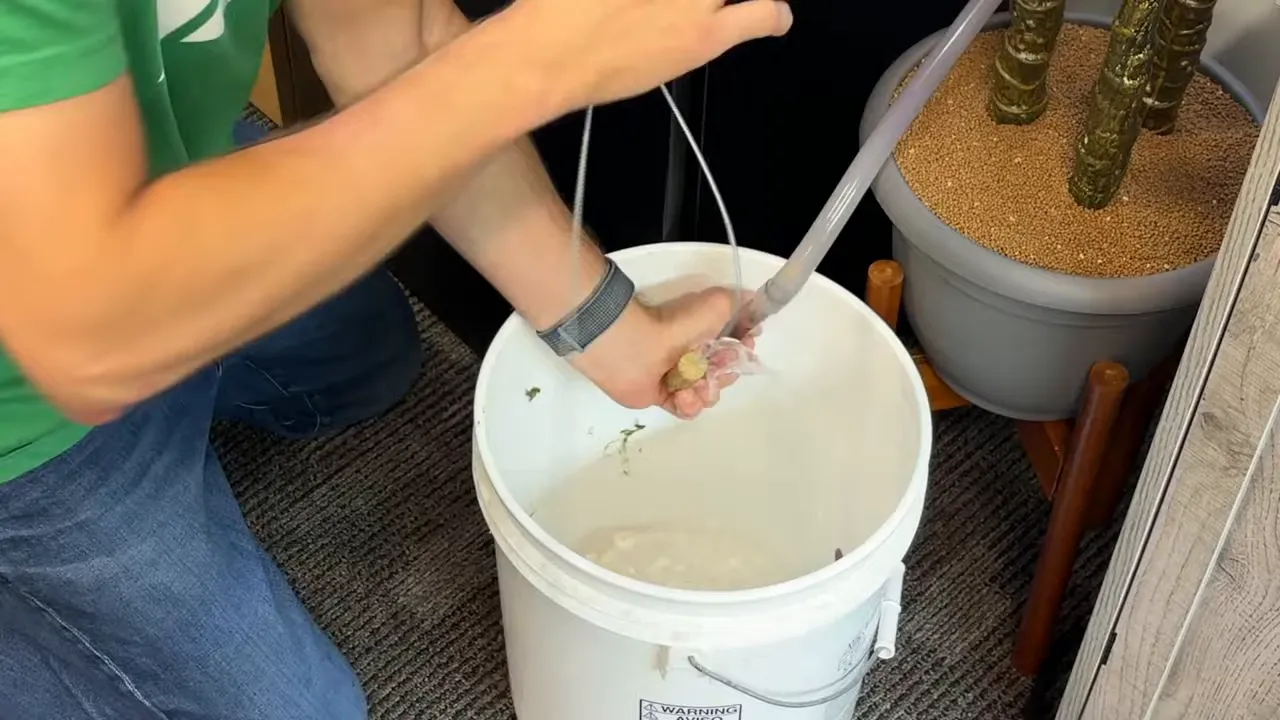
Continue until the internal surface looks clear. The bucket will contain the drained aquarium water and the debris removed during cleaning.
5. Stop the siphon safely
When enough water has drained, kink the hose to stop the flow. This gives you control of the water without needing to rush the remaining cleaning and reassembly steps.
How to Clean the Intake Lily Pipe
The intake does not create the same siphon arrangement during this process. Its advantage is that any residue loosened by brushing can be collected by the filter once it is restarted.
- Inspect the intake for visible algae and trapped debris.
- Run the flexible brush through the pipe and around its curved section.
- Clean the pipe until the interior appears clear.
- Check its position before finishing.
Keep the intake at a sensible height above the substrate. In the demonstrated setup, it is positioned roughly an inch above the substrate, leaving enough clearance to avoid placing it directly against the bottom.
Reassemble, Restart, and Refill
Once both pipes are clean, reinstall the return, intake, and any flow reducer. Plug the filter back in and confirm that water is moving normally through the system.
Any remaining loose material in the intake line is then pulled toward the filter rather than expelled into the aquarium. Finish by replacing the removed water with new remineralised water.
After refilling, check that the pipes are seated securely, the hoses are not kinked, and the return flow is directed as intended.
Common Lily Pipe Cleaning Mistakes to Avoid
Scrubbing the return while it remains in the aquarium
This is the main mistake to avoid. Loosened buildup can remain inside the outflow and be blasted back into the tank when filtration resumes.
Trying to remove every bit of intake debris by hand
The intake does not need to be treated like the return. Once cleaned and reinstalled, the filter can draw remaining loosened particles into its filtration media.
Skipping removable parts
Flow reducers and similar accessories can collect algae too. Take apart components designed to separate, then wipe them with an algae pad in the old tank water.
Forcing a rigid brush through curves
Lily pipes have bends that are difficult to reach with a short or inflexible brush. Use a cleaner that can bend around corners while remaining firm enough to scrub the pipe wall.
Ignoring intake placement after maintenance
Before restarting the filter, verify that the intake is not sitting against the substrate. Maintaining clearance helps preserve the intended placement and makes the completed setup easier to inspect.
A Simple Lily Pipe Cleaning Checklist
- Turn off the external filter.
- Prepare a bucket for drained aquarium water.
- Remove the return lily pipe.
- Lower the return into the bucket to start a siphon.
- Brush the return while water and debris drain into the bucket.
- Clean detachable flow accessories with an algae pad.
- Scrub the intake pipe in place.
- Confirm the intake height above the substrate.
- Reinstall all parts and restart the filter.
- Refill with fresh remineralised water.
Frequently Asked Questions
Why should the return lily pipe be cleaned over a bucket?
Brushing the return loosens algae and debris inside the pipe. If that material remains in the return line, it can be pushed into the aquarium when the filter restarts. Cleaning it while it drains into a bucket removes the waste from the system.
Can cleaning lily pipes count as a water change?
Yes. Lowering the detached return pipe into a bucket creates a siphon that drains aquarium water. The water removed during this process can form part of the water change, after which the aquarium is refilled with remineralised water.
Should the intake lily pipe also be removed for cleaning?
The intake can be scrubbed without using the same bucket draining method. When the filter is restarted, loose residue from the intake is drawn into the filter rather than discharged back into the aquarium.
What brush works best for curved lily pipes?
Use a long pipe brush with firm bristles and a flexible wire or shaft. It needs enough structure to scrub buildup while bending through the curved sections of the glass pipe.
Takeaway
The easiest way to keep aquarium lily pipes clear is to treat the return and intake differently. Drain and brush the return over a bucket so the dirty water and debris leave the aquarium. Then scrub the intake, reassemble the system, and let the filter capture any residue drawn from that side. This simple sequence keeps the glass clear while avoiding an unnecessary cloud of debris in the tank.