Choosing the right plants makes a beginner planted aquarium much easier to set up and maintain. The best starting choices are hardy species that tolerate low to medium light, do not require added CO2, and can be planted according to how they take up nutrients.
This guide covers six beginner-friendly freshwater aquarium plants: Anubias nana, Anubias barteri, Java fern, Amazon sword, Cryptocoryne wendtii brown, and Moneywort. It also explains the most important distinction for planting success: rhizome plants attach to hardscape, while root-feeding plants belong in substrate.
Table of Contents
- Start by identifying how your aquarium plant feeds
- The 6 best easy aquarium plants to start with
- How to remove rock wool from aquarium plants
- Do you need nutrient-rich soil or root tabs?
- Where should mid-ground and background plants go?
- Beginner planted tank mistakes to avoid
- A simple beginner planting layout using all six plants
- FAQ
- Key takeaway
Start by identifying how your aquarium plant feeds
Many planting problems happen because a plant is placed correctly in terms of appearance but incorrectly in terms of its growth form. Before choosing a spot in the aquarium, determine whether the plant is a rhizome plant or a root feeder.
Rhizome plants
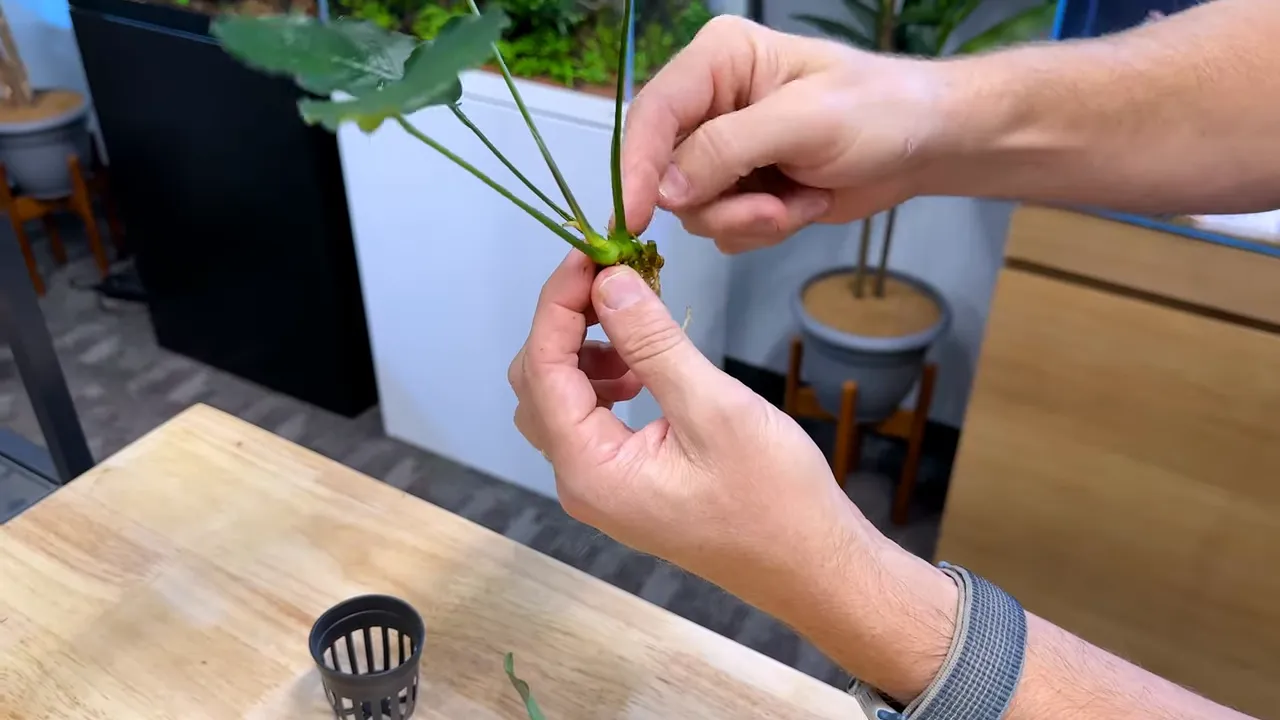
Rhizome plants take much of their nutrition from the water column. They have a thick, firm horizontal stem called a rhizome, with leaves growing upward and roots growing downward.
The rhizome must stay exposed. If it is buried in substrate, it can be starved of oxygen, rot, and eventually die. Instead of planting these species in soil or gravel, attach or position them on rock and driftwood.
- Anubias nana
- Anubias barteri
- Java fern
Root-feeding plants
Root feeders need nutrients at their roots. They perform best in a nutrient-rich planted substrate. If the aquarium uses inert gravel or sand, place root tabs close to the plant roots to provide the nutrients they need.
- Amazon sword
- Cryptocoryne wendtii brown
- Moneywort
For all root feeders, bury the roots but avoid covering the point where leaves emerge from the base of the plant.
The 6 best easy aquarium plants to start with
1. Anubias nana: a compact plant for wood and rock
Anubias nana is a compact, thick-leaved rhizome plant that works especially well in the foreground to mid-ground of a planted tank. Its sturdy green leaves create a strong visual contrast against finer-leaved plants, driftwood, and stone.
It is also available in a smaller form, Anubias nana petite, which is useful when a full-sized Anubias would overwhelm a nano aquarium or detailed aquascape.
Best placement: Foreground, mid-ground, or attached to low hardscape.
Light requirement: Low to medium light.
CO2 requirement: No added CO2 required.
How to plant Anubias nana
- Remove the plant from its pot and carefully take away the rock wool around the roots.
- Locate the thick rhizome beneath the leaf stems.
- Keep the rhizome fully above the substrate.
- Place the roots in a crevice in wood or rock, or attach the rhizome lightly to hardscape.
A small amount of gel super glue can be used along the edge of the rhizome to secure the plant to wood or rock. Do not coat or bury the entire rhizome. Once established, the roots can grow onto the hardscape and help hold the plant in place.
2. Anubias barteri: an easy larger background accent
Anubias barteri has the same fundamental care needs as Anubias nana but develops larger leaves and a more substantial presence. It is a strong choice for the mid-ground or background, particularly when attached to a prominent piece of driftwood or rock.
Use it to give an aquascape broad-leaved texture and visual weight without needing intense lighting or CO2 injection.
Best placement: Mid-ground or background, especially on tall wood and rock.
Light requirement: Low to medium light.
CO2 requirement: No added CO2 required.
3. Java fern: ideal for filling gaps in hardscape
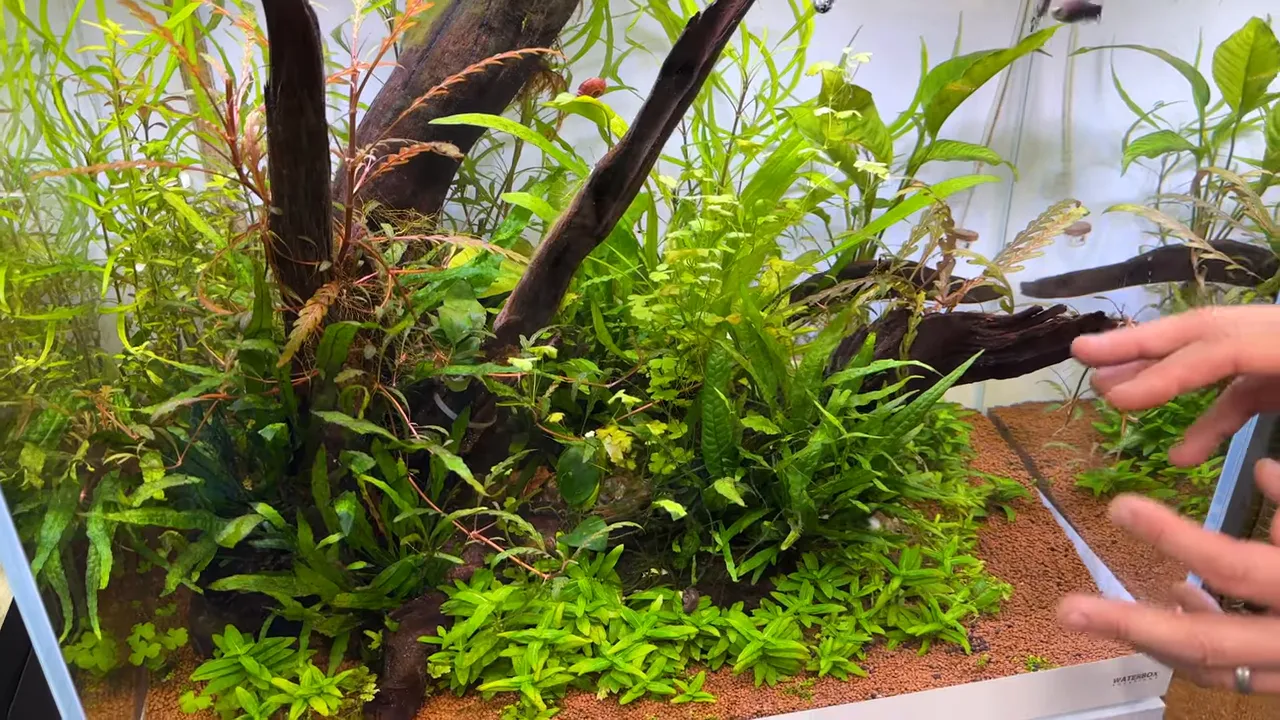
Java fern is one of the most useful beginner aquarium plants for filling open pockets around driftwood and rocks. Its longer leaves give a natural riverbank or stream-like appearance, particularly when grouped around hardscape.
Like Anubias, Java fern is a rhizome plant. It should never be planted with its rhizome buried in the substrate.
Best placement: Mid-ground and background, or in gaps between hardscape.
Light requirement: Low to medium light.
CO2 requirement: No added CO2 required.
Ways to place Java fern
- Glue it gently to a rock.
- Attach it to the back or side of driftwood.
- Wedge the roots into a natural crack or pocket in hardscape.
- Allow its roots to gradually grip the wood or stone on their own.
Positioning Java fern in crevices is a simple alternative to glue. As long as the plant is stable and the rhizome remains exposed, its roots can attach naturally over time.
4. Amazon sword: a bold background plant
Amazon sword is a classic background aquarium plant with long, broad leaves. It can grow to around 20 inches and spread, making it useful when you want to create a lush green backdrop or screen part of the rear glass.
One potted Amazon sword may contain several individual plants. Separating these can provide enough plants to form a background cluster or a fuller planted section.
Best placement: Background.
Light requirement: Suitable for moderate light rather than intense lighting.
CO2 requirement: No added CO2 required.
Feeding style: Root feeder.
How to plant an Amazon sword
- Remove the pot and carefully remove or rinse away the rock wool.
- Separate individual plants if the clump contains more than one crown.
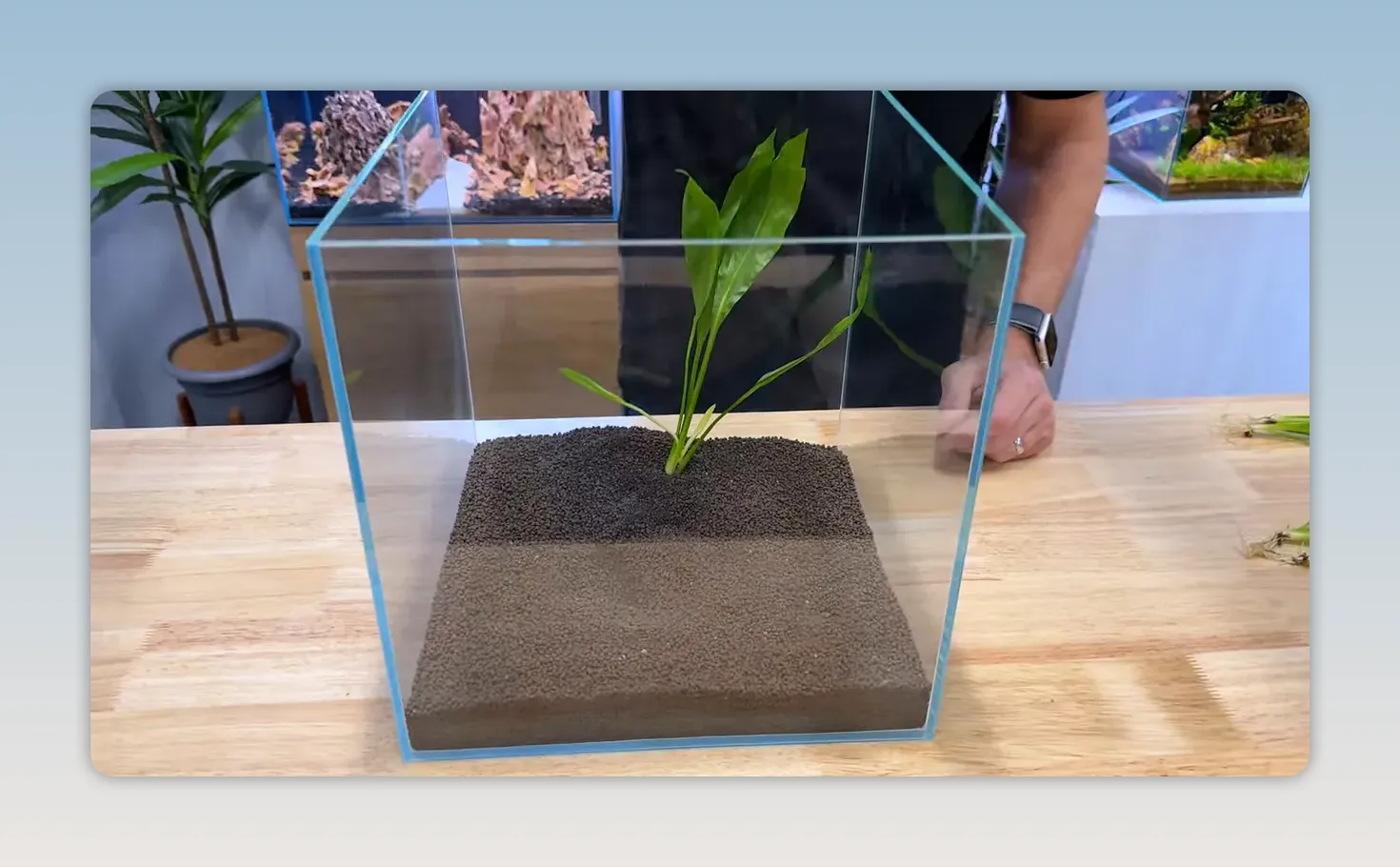
- Place the roots fully into nutrient-rich substrate.
- Keep the crown, where the leaves emerge, above the substrate surface.
- Plant several specimens along the rear of the aquarium for a fuller background effect.
How to trim Amazon sword leaves
When an Amazon sword becomes too large, trim individual leaves at their base rather than cutting across the middle of a leaf. Curved aquarium scissors make it easier to reach the base cleanly. New growth can then emerge from the plant.
5. Cryptocoryne wendtii brown: a reliable mid-ground plant
Cryptocoryne wendtii brown, often called a crypt, is a versatile root-feeding plant with a different leaf shape and colour from the larger Amazon sword. It is a useful mid-ground choice because it does not grow into the large, dominant form of a sword plant.
Crypts come in many shapes and sizes, but this variety is particularly well suited to a low-maintenance planted aquarium. It can also be positioned closer to the front glass if that suits the layout.
Best placement: Mid-ground, with flexibility toward the foreground.
Light requirement: Medium light. Very intense lighting is not necessary.
CO2 requirement: No added CO2 required.
Feeding style: Root feeder.
How to plant crypts
Remove the rock wool from the roots, then place the roots into the substrate. Keep the upper portion of the plant, including the leaf base, above the soil line. Give crypts room around their leaves so they can become an attractive clump rather than being crowded by larger plants.
6. Moneywort: an easy stem plant with a different texture
Moneywort is an easy, beginner-friendly stem plant that adds a lighter, upright texture to a planted aquarium. It does not need CO2 or highly intense light, making it a practical choice for low-tech layouts.
It is commonly supplied as a bundle held together by a flexible metal plant weight. The weight keeps the stems grouped for transport and makes them easier to handle.
Best placement: Mid-ground or background.
Light requirement: Does not require intense light.
CO2 requirement: No added CO2 required.
Feeding style: Root feeder.
Should you leave the plant weight on Moneywort?
Moneywort can be planted as a clump after removing the plant weight, or the weight can be left in place to keep the stems together. Removing the weight allows more natural spacing and easier arrangement. Keeping it on can make the bundle easier to plant as one group.
Whichever approach you use, ensure the stems are positioned in the substrate and stand upright once the aquarium is filled.
How to remove rock wool from aquarium plants
Many aquarium plants sold in pots are held in rock wool. Rock wool is made from spun basalt fibres and retains moisture while allowing air movement. It is not inherently harmful in aquarium water, but it is generally better to remove it before permanently planting a root feeder in substrate.
Leaving rock wool tightly packed around the roots can reduce the oxygen available around the planted area. It can also make it harder to separate plants and position their roots properly.
Safe rock wool removal steps
- Remove the plant from its plastic pot.
- Find a seam in the rock wool and gently pull it apart instead of tearing through the middle.
- Peel the material away from the roots as carefully as possible.
- Rinse remaining fibres away in a bowl of water if needed.
- Inspect the plant before positioning it in the aquarium.
If you need to temporarily hold a plant before aquascaping, it can remain in its pot and rock wool in aquarium water while you decide where to place it. For final planting, remove the material where practical.
Do you need nutrient-rich soil or root tabs?
Root-feeding plants need nourishment at their roots. A nutrient-rich planted substrate provides this directly, making it a strong option for Amazon swords, crypts, and Moneywort.
Inert sand and gravel can still be used, but they do not provide the same plant nutrition. In that case, add root tabs into the substrate close to the plant roots.
Using root tabs in gravel or sand
- Push the root tab into the substrate next to the root zone.
- Use them for plants that feed primarily through their roots.
- Replace them regularly because they are not permanent nutrient sources.
- Plan on renewing root tabs at roughly six-week intervals.
Rhizome plants such as Anubias and Java fern do not need to be planted in nutrient-rich substrate because they draw nutrition from the water column and remain attached above the substrate.
Where should mid-ground and background plants go?
Foreground, mid-ground, and background labels are useful guidelines, not strict rules. The key principle is simple: avoid placing tall plants where they block the plants, fish, or hardscape you want visible behind them.
A simple placement plan
- Foreground: Keep the lowest areas open and avoid using tall, broad plants that obstruct the view.
- Mid-ground: Use compact Anubias, Java fern, and crypts to soften wood and stone while adding depth.
- Background: Use Amazon sword, taller Java fern, Anubias barteri, and Moneywort to build height.
Place plants according to the visual result you want. A Java fern can bridge an empty hardscape gap, a group of crypts can create a dense mid-ground, and several Amazon swords can produce a living green wall across the rear of the tank.
Beginner planted tank mistakes to avoid
Burying a rhizome
This is the most important mistake to avoid with Anubias and Java fern. The roots can be tucked into a crevice or allowed to rest on substrate, but the thick rhizome must remain exposed.
Covering the crown of a root feeder
Amazon swords and crypts need their roots buried, but the crown where leaves emerge should stay above the substrate. Planting too deeply can prevent healthy growth.
Using a tall plant in front of shorter plants
Plant size matters more than rigid placement labels. Put larger background plants behind smaller plants when you want to preserve depth and visibility.
Leaving dense rock wool around the roots for permanent planting
Rock wool is useful for holding plants during sale and transport, but remove it or rinse it away before final placement where possible. This gives roots better contact with the surrounding substrate.
Expecting inert gravel to feed root feeders
Plain gravel or sand does not provide the nutrients that root-feeding plants need. Use planted substrate or supplement the root zone with root tabs.
Trimming Amazon sword leaves in the middle
For an Amazon sword, remove unwanted leaves at their base. Cutting through the middle of a leaf is not the preferred way to manage its size.
A simple beginner planting layout using all six plants
A practical mixed planting plan can include all six species without making the aquarium complicated:
- Place Amazon swords along the back for height and a green backdrop.
- Add Moneywort toward the rear or side for a finer upright texture.
- Plant groups of Cryptocoryne wendtii brown in the mid-ground.
- Attach Java fern to driftwood and larger rocks to fill open gaps.
- Use Anubias barteri on larger hardscape as a broad-leaved focal point.
- Position Anubias nana or nana petite on lower rocks and wood near the front.
This combination gives an aquarium height, leaf-shape contrast, and layered depth while staying suitable for low to medium lighting and no added CO2.
FAQ
Do these beginner aquarium plants need CO2?
No. Anubias, Java fern, Amazon sword, Cryptocoryne wendtii brown, and Moneywort can all be grown without added CO2.
Can Anubias and Java fern be planted in gravel?
Do not bury their rhizomes in gravel. Attach them to rock or driftwood, wedge them into hardscape crevices, or let their roots anchor naturally while the rhizome remains exposed.
Which plants are best for an aquarium background?
Amazon sword is a strong background choice because it can grow tall and spread. Moneywort, Java fern, and larger Anubias barteri can also add height in the rear of the aquarium.
Which beginner plant works best in the mid-ground?
Cryptocoryne wendtii brown is especially useful in the mid-ground because it remains more compact than an Amazon sword. Anubias nana and Java fern are also adaptable mid-ground options when attached to hardscape.
How often should root tabs be replaced?
Root tabs used in inert sand or gravel should be renewed at roughly six-week intervals to continue feeding root-feeding plants.
Key takeaway
For an easy low-tech planted tank, focus less on complicated equipment and more on planting each species correctly. Keep Anubias and Java fern rhizomes above the substrate, give Amazon swords, crypts, and Moneywort nutrients at their roots, and arrange taller plants behind shorter ones. These six plants provide a reliable foundation for a lush freshwater aquascape without added CO2.