A canister filter works best when its media is arranged according to the actual direction of water flow. The goal is simple: trap large debris first, protect the biological media from clogging, then use optional chemical media and fine polishing filtration before water returns to the aquarium.
Getting this order wrong can reduce filtration efficiency and leave beneficial bacteria exposed to unnecessary detritus. The layout inside different canister filters may look very different, but the filtration sequence remains the same.
Table of Contents
- Quick Answer: The Best Canister Filter Media Order
- Why Water Flow Direction Matters Most
- What Each Type of Canister Filter Media Does
- How to Build a Canister Filter Media Stack
- Example: Bottom-to-Top Water Flow
- Can You Customise Canister Filter Media?
- Common Canister Filter Setup Mistakes
- Canister Filter Media Setup Checklist
- FAQ
- Key Takeaway
Quick Answer: The Best Canister Filter Media Order
Follow the water from the filter’s inlet to its outlet:
- Coarse mechanical filtration
- Medium or finer mechanical filtration
- Biological filtration
- Chemical media and fine filter floss, if needed
In shorthand, the recommended sequence is:
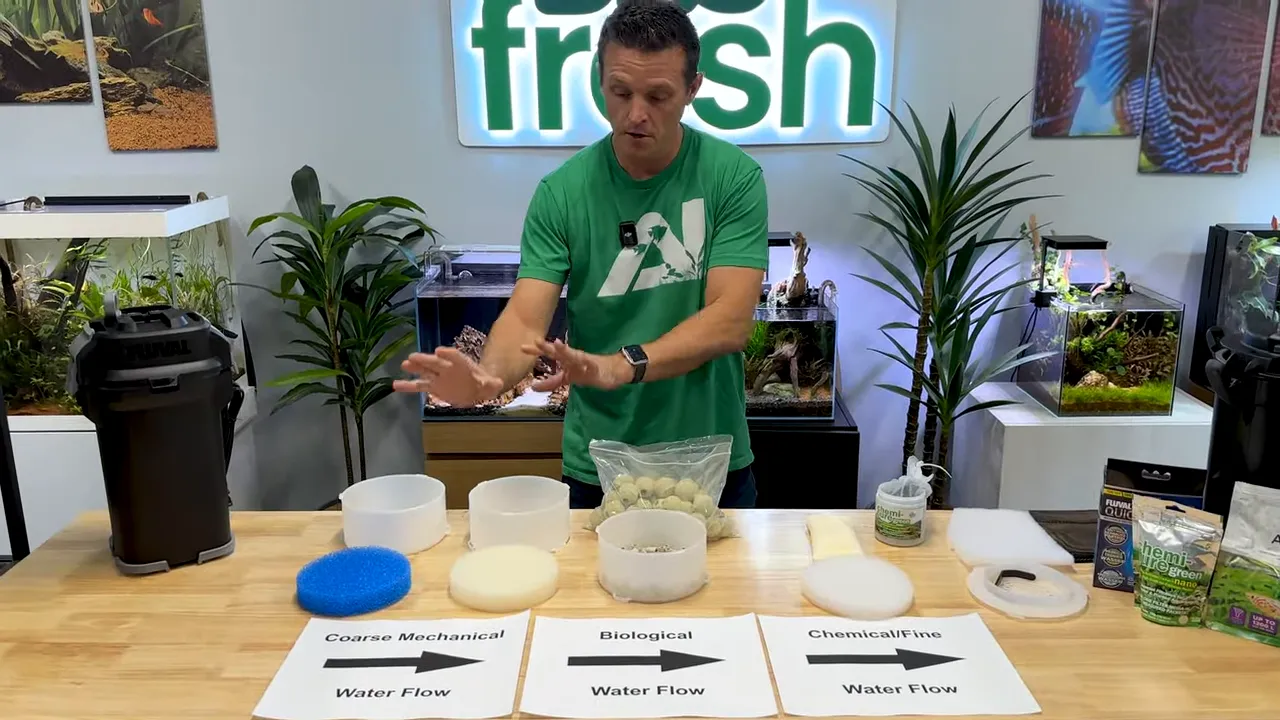
Coarse mechanical → medium mechanical → biological → chemical/fine
Why Water Flow Direction Matters Most
Before placing or changing any media, identify where water enters the canister and where it exits. Water may travel from bottom to top, top to bottom, around the outside of a basket stack, or through a central chamber. The tray nearest the lid is not automatically the last filtration stage.
Follow the route water takes through the specific filter model. Product instructions and the canister’s inlet and outlet markings can help establish that path.
Once the route is clear, place each type of media in filtration order along that route. This approach works whether the canister uses stacked trays, media baskets, a removable cartridge assembly, or side-mounted mechanical sponges.
What Each Type of Canister Filter Media Does
1. Coarse mechanical media catches the biggest debris
Coarse mechanical media is the first barrier for incoming aquarium water. It catches large particles such as fish waste, uneaten food, and other visible detritus before they can move deeper into the filter.
Common examples include coarse foam pads or thick, porous sponges. Because this media has relatively open pores, it can collect larger debris while allowing water to continue moving through the filter.
Placement: Put coarse foam at the first point water reaches after entering the canister.
2. Medium mechanical media captures smaller particles
After the coarse sponge, use a denser mechanical layer to catch particles that escaped the first stage. A medium-density sponge provides this second level of debris removal.
This progressive approach prevents finer media and biological media from becoming clogged with large waste. It also helps keep the rest of the canister cleaner.
Placement: Directly after the coarse sponge and before biological media.
3. Biological media provides surface area for beneficial bacteria
Biological media is where beneficial bacteria establish themselves. These bacteria are an essential part of a healthy aquarium filtration system.
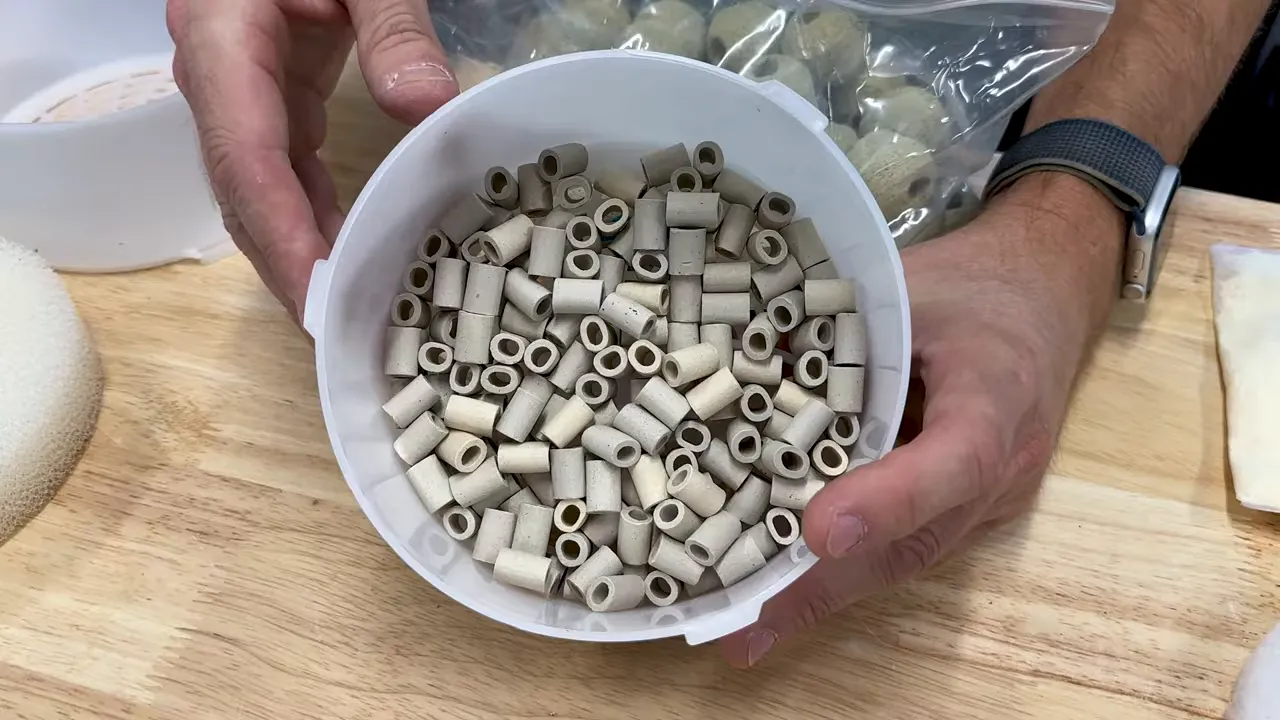
Biological media can take many forms, including rings, spheres, and other porous materials. The important feature is surface area. A material with more accessible internal and external surface area can support more beneficial bacteria.
Biological media should receive water that has already passed through the mechanical stages. Keeping detritus away from this section helps make biological filtration the primary job of the media rather than turning it into another debris trap.
Placement: After coarse and medium mechanical filtration.
4. Chemical media and fine filtration finish the process
The final section of a canister filter can be used for optional chemical filtration, fine polishing filtration, or both.
Fine filter floss captures very small suspended particles that passed through earlier mechanical stages. It can help polish the water before it returns to the aquarium.
Chemical media is selected based on a specific need. It is not a mandatory layer for every aquarium.
- Activated carbon and resin media can be used to remove odours or help remove medication after treatment is complete.
- Purigen and Chemi-Pure type media can be used when the goal is to remove tannins, such as the brown tint that may be released by driftwood.
- Phosphate-removing media may also be included in some factory filter configurations.
Placement: Put chemical media and fine floss after biological media, as the last stages before the water leaves the canister.
How to Build a Canister Filter Media Stack
Use this practical setup process when assembling a new filter or rearranging an existing one.
- Trace the water path. Locate the inlet and outlet, then determine which basket or chamber water reaches first.
- Install coarse mechanical media first. Use the coarse foam or sponge in the first section of the flow path.
- Add a medium mechanical stage. Place denser foam after the coarse stage.
- Fill the next stage with biological media. Use the supplied biological media or a suitable alternative with substantial surface area.
- Add chemical media only when it serves a purpose. Use a media bag or the filter’s intended basket arrangement where appropriate.
- Finish with fine floss. Place fine mechanical media near the outlet to capture the smallest particles before the water returns to the tank.
- Reassemble carefully. Confirm baskets, covers, seals, and impeller-related components are positioned as intended for the specific filter.
Example: Bottom-to-Top Water Flow
Many canister filters direct water around the outside of the media assembly, then pull it upward through stacked trays before returning it to the aquarium. In this design, the lowest tray in the upward path receives water first.
A bottom-to-top stack would typically be arranged like this:
- Bottom tray: coarse mechanical foam
- Next tray: medium mechanical foam
- Next tray or trays: biological media
- Top tray: chemical media and/or fine filter floss
The physical position of the trays is less important than the flow sequence. If a different canister moves water in another direction, reverse the tray placement as needed while keeping the same filtration stages in order.
Can You Customise Canister Filter Media?
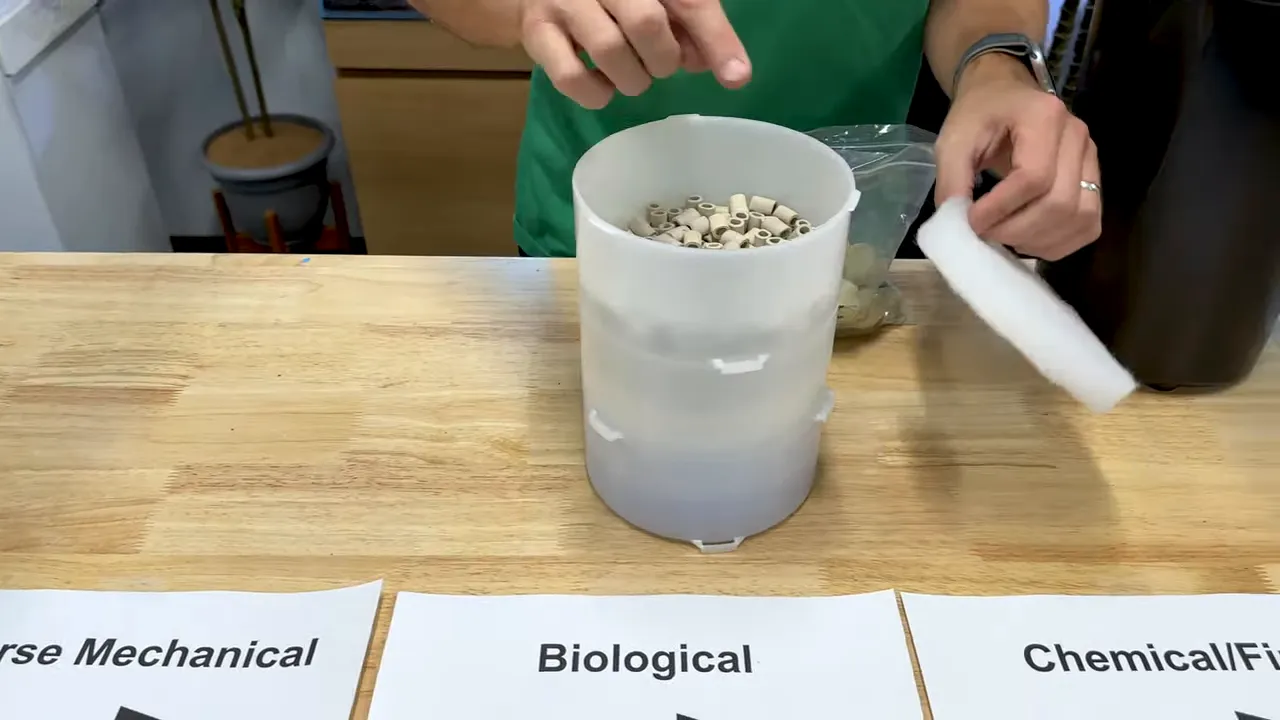
Yes. Many canister filters include media that can be replaced or rearranged. The supplied configuration is a workable starting point, but the media can be customised once the water flow direction and purpose of each stage are understood.
For example, biological spheres can be swapped for another biological media style, and chemical media can be changed to suit a particular aquarium need. The key rule is to preserve the sequence:
Mechanical media protects biological media, and chemical or fine media comes afterward.
Avoid treating media baskets as fixed categories simply because of where they were placed at the factory. Confirm how water actually moves through the filter before making changes.
Common Canister Filter Setup Mistakes
Putting biological media before mechanical media
This allows large debris and detritus to hit the biological media first. The biological section then becomes dirty and less focused on supporting beneficial bacteria.
Installing fine floss too early
Fine filtration placed before coarse and medium media can clog quickly. Use progressively finer mechanical filtration instead.
Assuming the top tray is always the last tray
Some filters flow upward through baskets, while others use a different internal route. Always trace inlet to outlet rather than guessing based on tray position.
Using chemical media without a reason
Chemical media is useful for specific issues, such as removing odours, medication, or unwanted tannins. It is an optional filtration stage, not a replacement for appropriate mechanical and biological media.
Leaving packaged media sealed in bags
When a filter is purchased, inspect its contents before setup. Some media may be packaged for shipping and needs to be removed from its packaging before it can function in the filter.
Failing to rinse media before installation
Rinse filter media before placing it in the canister. This is especially important for carbon and resin products.
Canister Filter Media Setup Checklist
- Identify the inlet and outlet.
- Confirm the real water-flow route through the canister.
- Place coarse mechanical media first.
- Use medium mechanical media after coarse media.
- Place biological media after the mechanical stages.
- Add chemical media only for a defined purpose.
- Use fine floss near the outlet as the final polishing stage.
- Remove shipping packaging from media before operation.
- Rinse media before installation, particularly carbon and resins.
FAQ
What order should canister filter media go in?
Arrange media in the direction of water flow: coarse mechanical media first, then medium mechanical media, biological media, and finally optional chemical media or fine filter floss.
Should biological media go before or after filter foam?
Biological media should go after coarse and medium filter foam. Mechanical stages remove debris first so the biological media receives cleaner water.
Should filter floss go before or after biological media?
Fine filter floss is best placed after biological media, near the outlet. Coarse and medium mechanical media should handle larger debris earlier in the flow path.
Do all canister filters use the same media arrangement?
The tray layout may differ by model, but the effective filtration sequence is the same: mechanical filtration first, biological filtration next, then chemical and fine filtration if used.
Do I need chemical media in a canister filter?
No. Chemical media is optional and is most useful when addressing a particular need, such as odours, medication removal, or tannins from driftwood.
Key Takeaway
The best canister filter media setup is not about copying a particular basket layout. It is about following the water path. Start with coarse and medium mechanical media, protect biological media by placing it afterward, and reserve the final section for fine polishing and any chemical media your aquarium needs.
When each stage is placed in the correct order and the media is rinsed before installation, the canister filter can operate as efficiently as intended.