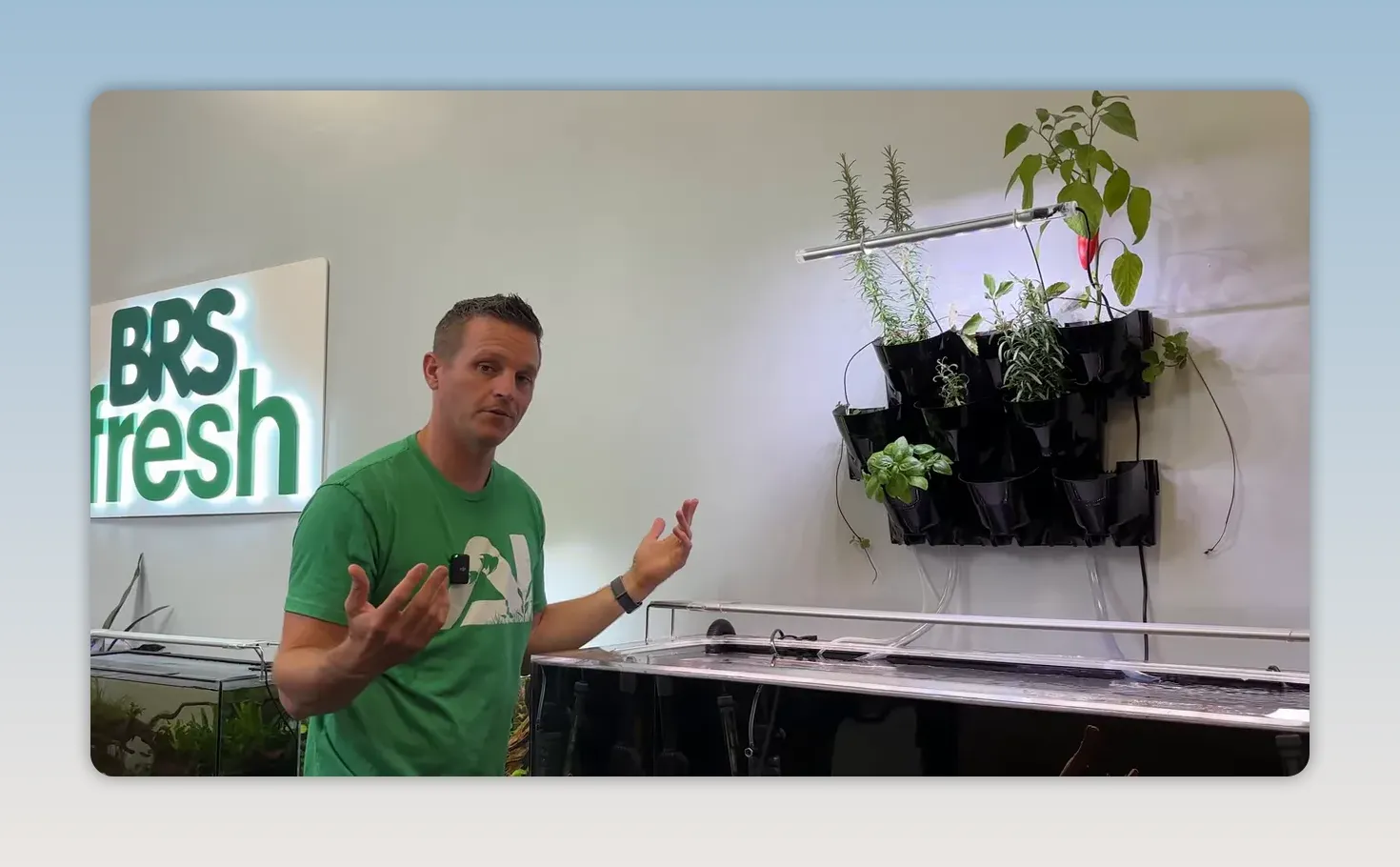
A wall-mounted hydroponic garden above an aquarium creates a practical way to grow herbs, edible plants, and ornamentals using nutrient-rich aquarium water. A small pump lifts water from the tank to the top of the planter, where it flows through each growing section before draining back into the aquarium.
This setup is best suited to an established aquarium with an active nitrogen cycle and enough fish waste to provide plant nutrients. With secure mounting, clean roots, free-draining growing media, and correctly placed tubing, it can turn unused wall space into a compact aquarium-powered garden.
Table of Contents
- How an Aquarium Hydroponic Garden Works
- Start With an Established Aquarium
- What You Need for a Wall-Mounted Aquarium Garden
- Best Plants to Grow Above a Fish Tank
- How to Prepare Plants for Hydroponic Growing Media
- How to Mount the Planter Safely
- Set Up the Water Flow
- Install a Grow Light Above the Garden
- Common Aquarium Hydroponic Setup Mistakes
- Simple Setup Checklist
- Frequently Asked Questions
- Key Takeaway
How an Aquarium Hydroponic Garden Works
An aquarium hydroponic garden combines a fish tank, a water pump, plant containers, growing media, drainage tubing, and lighting. The pump sends aquarium water up to the highest planter. From there, the water trickles through the connected planters in a cascading path and returns to the aquarium.
Fish waste supports the aquarium nitrogen cycle, producing nitrates that can be used by plants. The plants grow with their roots in a porous medium rather than conventional potting soil, allowing water to move through the root zone without becoming blocked.
The result is a recirculating arrangement in which aquarium water feeds the plants and the planted section becomes part of the overall filtration approach.
Start With an Established Aquarium
Do not set up this type of garden over a brand-new aquarium. Plants rely on nutrients already present in the water, particularly nitrates created by the tank’s established nitrogen cycle. A mature aquarium with a meaningful fish load is a more appropriate starting point.
Before installing anything, confirm that the aquarium has:
- An established nitrogen cycle that is already producing plant-available nutrients.
- Stable, active filtration to handle normal aquarium debris.
- A suitable location above the tank for the wall-mounted planter and return tubing.
- Enough clearance to work around the aquarium lid, lights, cords, and other equipment.
A planted aquarium can also support an overhead garden. An aquarium without submerged plants can be equally suitable if it is established and has sufficient bioload.
What You Need for a Wall-Mounted Aquarium Garden
A basic system requires a set of connected planter sections and a way to circulate aquarium water through them. The featured setup uses three wall-mounted planter rows, with multiple planting spaces in each row.
Core components
- Wall-mounted planter modules: These hold the plants and create the path for cascading water.
- Plant cups or inserts: These sit inside the planter openings and support the root zone.
- LECA growing media: Lightweight expanded clay aggregate holds roots in place while allowing water to pass through.
- Aquarium-safe pump: This raises water from the aquarium to the top planter.
- Supply tubing: This carries water from the pump to the upper section.
- Drainage tubing: This returns water from the lower planter to the aquarium.
- Wall anchors, hooks, and a level: These provide secure and aligned installation.
- Grow light: Useful for providing light directly over the plants.
Why LECA is important
LECA is particularly useful in this setup because it provides root support without compacting like ordinary soil. Water can flow through the clay balls, helping the planted sections drain and preventing one area from becoming clogged.
Rinse the LECA before placing it near the aquarium. This reduces the amount of loose material that could otherwise enter the tank during setup.
Best Plants to Grow Above a Fish Tank
Herbs are a common choice for aquarium hydroponic gardens because they are useful indoors and fit well into small planting spaces. A mix of edible and ornamental plants can also make the garden more visually interesting.
Suitable examples demonstrated in this type of system include:
- Basil
- Rosemary
- Lavender
- Strawberries
- Pepper plants
Consider the mature shape of each plant when deciding where it belongs. Trailing strawberries, for example, can look especially effective in an upper or exposed position where their runners can hang freely. Taller plants such as rosemary and peppers may need placement that gives them room to grow upward toward the light.
How to Prepare Plants for Hydroponic Growing Media
Plants bought in potting mix need preparation before their roots are placed in LECA. The goal is to remove as much soil as possible while handling the root system gently.
1. Loosen the soil carefully
Remove the plant from its nursery container and gently work away the bulk of the potting soil. Avoid aggressively pulling apart healthy roots, as some minor root disturbance is possible but should be minimised.
2. Rinse the remaining soil from the roots
Rinse the root ball until the roots are mostly free of soil. The ideal result is a visible, relatively clean root structure that can sit naturally in the growing media.
3. Place the plant in its cup
Position the roots in the planting cup, then add rinsed LECA around them. Cover and stabilise the roots without packing the media so tightly that it prevents water movement.
4. Plan the layout before hanging
Prepare and plant each section before placing it on the wall. This makes it easier to adjust plant placement and reduces the chance of spilling media or water over the aquarium.
How to Mount the Planter Safely
The planter must be mounted level and firmly anchored because it will hold plants, growing media, and circulating water. Measure before drilling, and use the supplied anchors and hooks where applicable.
Mark the first row
Use a level to mark the two mounting points for the first planter row. Mounting the first section straight gives the remaining rows a reliable reference point.
Add the upper rows
Install the additional planter rows above the first one, leaving the intended spacing for water to cascade from one row to the next. The three sections should connect in a layout that lets water flow from the top down.
Install drainage tubing before final mounting
Attach the return or drainage tubes to the underside of the planter sections before securing the entire planted assembly to the wall. Trying to push tubing into place after installation can create unnecessary spills and may require taking the planters down again.
Trim the drainage tubes so they reach into the aquarium without extending farther than necessary. Shorter, neatly routed return lines are less visually distracting and easier to manage.
Set Up the Water Flow
The water path should be simple: aquarium to pump, pump to the top planter, planter to planter, then back to the aquarium. Every part of that route should remain secure and unobstructed.
Place the pump in the aquarium
Position the pump in or on the aquarium as its design allows. An adjustable-height hanging arrangement can help place the pump appropriately on the tank. A small filter on the pump helps keep debris from entering the supply line.
Run the supply line to the upper planter
Route the pump tubing behind or alongside the aquarium and secure it into the upper planter’s inlet or hose loop. The exact top planter can vary because each section may include a similar attachment point.
Check the cascade route
When the pump is running, water should enter at the top, trickle through the planted area, move downward through the connected sections, and return through the lower drainage tube. Check for loose tubing, poor alignment, or water escaping from an unintended area.
Keep cords and tubes tidy
Use available gaps behind planter rows to conceal lighting cords where possible. Keep water lines and electrical cords organised so the installation remains accessible for ongoing maintenance.
Install a Grow Light Above the Garden
Indoor herbs and fruiting plants need a dependable light source. A purpose-built LED grow light can be mounted above the planter assembly, with its support fitting into the designated mounting points.
Position the light so it covers the full garden rather than concentrating only on one plant. Taller plants may need occasional adjustment to avoid crowding the light, while lower herbs should still receive adequate coverage.
Common Aquarium Hydroponic Setup Mistakes
Using an unestablished aquarium
A new tank may not yet provide the nitrate levels that plants need. Set up the garden only after the aquarium is mature and the nitrogen cycle is established.
Leaving potting soil on plant roots
Heavy soil can enter the planter and aquarium, creating unwanted mess. Remove the majority of soil and rinse the roots before planting.
Skipping the LECA rinse
Unrinsed growing media can carry loose particles into the system. Rinse it before adding it around the roots.
Mounting first and connecting drainage later
Drainage tubes are easier to attach before the planter system is on the wall. Fit them first, then hang the planted sections.
Using tubing that is too long
Return lines need to reach the aquarium, but excessive tubing is more noticeable and harder to manage. Measure the route and cut the tube to a practical length.
Packing growing media too tightly
Water must move through the root zone. Keep the clay media supportive but open enough for the cascading water to pass through.
Simple Setup Checklist
- Choose an established aquarium with an active nitrogen cycle.
- Measure and level the wall-mounting position above the tank.
- Install anchors and hooks securely.
- Rinse LECA before use.
- Remove and rinse potting soil from plant roots.
- Plant roots in cups with porous growing media.
- Arrange plants by expected size, height, and trailing growth.
- Attach drainage tubes before hanging the planters.
- Mount the planter sections in a top-to-bottom cascade layout.
- Place the pump and connect its supply tube to the upper planter.
- Route the return tubes into the aquarium.
- Install the grow light and organise the cords.
- Turn on the pump and inspect the complete water path.
Frequently Asked Questions
Can a hydroponic garden be placed above any fish tank?
It should be placed above an established aquarium that has a functioning nitrogen cycle and enough fish waste to produce nitrates for plant growth. The wall and mounting hardware must also be able to support the planter system securely.
Do plants need soil in an aquarium hydroponic garden?
No. The plants can be grown in rinsed LECA, a porous clay growing medium that supports roots while allowing water to flow through the planter.
What can be grown in a fish tank hydroponic system?
Herbs are a common option. Basil, rosemary, lavender, strawberries, and pepper plants are examples that can be arranged in a wall-mounted aquarium garden.
Where does the water return to the aquarium?
Water drains from the lower portion of the planter system through return tubing that runs back into the aquarium. The tubing should be attached securely and trimmed to a suitable length.
Why is a grow light useful for an aquarium hydroponic garden?
A grow light provides direct illumination to the plants, making the wall-mounted garden more practical for indoor placement above the aquarium.
Key Takeaway
A hydroponic garden above a fish tank is most successful when treated as a complete recirculating system, not simply as a collection of plants on a wall. Begin with a mature aquarium, use clean roots and rinsed porous media, secure the planter carefully, connect drainage before mounting, and verify that water flows cleanly from the top planter back into the tank.
With those essentials in place, an aquarium can support a compact indoor garden of herbs, strawberries, peppers, and other suitable plants while adding a distinctive living feature above the tank.