Neon tetras are among the most recognisable freshwater aquarium fish, valued for their electric blue stripe, red colouring and peaceful nature. They can be hardy additions to a community aquarium, but they do best when their social needs, water stability and natural preference for cover are taken seriously.
This neon tetra care guide explains how to set up the right aquarium, keep a healthy school, choose food, recognise major health concerns and avoid the mistakes that leave these fish stressed and faded.
Table of Contents
- Quick Neon Tetra Care Sheet
- Are Neon Tetras Good for Beginners?
- Setting Up the Best Neon Tetra Tank
- Neon Tetra Water Parameters
- What Do Neon Tetras Eat?
- Compatible Neon Tetra Tank Mates
- Neon Tetra Disease: Signs and Prevention
- Common Neon Tetra Care Mistakes
- Frequently Asked Questions
- Key Takeaway
Quick Neon Tetra Care Sheet
- Scientific group: Small freshwater tetra from the Amazon basin
- Origin: Peru, Colombia and Brazil
- Minimum group: 6 neon tetras
- Ideal group: 10 to 15 neon tetras
- Minimum aquarium size: 10 gallons
- Preferred aquarium size: 20 gallons or larger
- Temperature: 70 to 81°F, or 21 to 27°C
- pH: 6.0 to 7.0
- Water hardness: Soft to moderately hard water
- Flow: Gentle, with a sponge filter being an ideal option
- Diet: Micro pellets, quality flakes, and frozen or live foods
- Lifespan: Up to eight years in captivity with proper care
Are Neon Tetras Good for Beginners?
Neon tetras can suit beginners who are prepared to maintain a stable, established aquarium. Their needs are straightforward, but they are not fish to add casually to an unfinished setup or keep as a pair or trio.
The most important success factors are simple:
- Keep them in a properly sized school.
- Maintain stable temperature and water conditions.
- Provide plants, shade and places to feel secure.
- Feed a varied diet sized for small fish.
- Keep water quality high with regular maintenance.
Although many neon tetras available in shops are captive-bred and farm-raised, their natural habitat still provides a useful model. They come from Amazonian waters and benefit from a planted, calm aquarium with both sheltered areas and room to swim together.
Setting Up the Best Neon Tetra Tank
Choose enough space for a real school
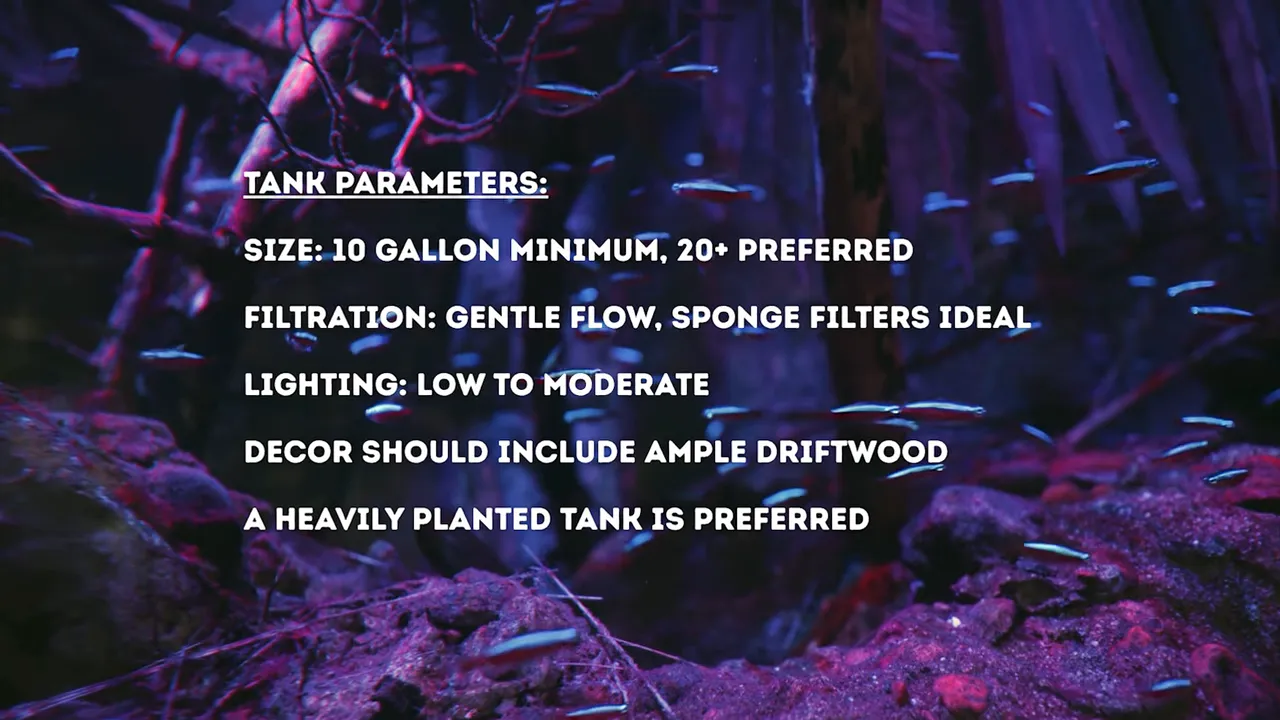
A 10-gallon aquarium is the minimum practical size for neon tetras, while a 20-gallon aquarium is preferred. The additional space allows for a larger school, more stable water conditions, planting and open swimming areas.
Neon tetras are shoaling fish. They rely on the presence of their own species for normal social and physical wellbeing. A group of six is the minimum, but a school of 10 to 15 is a much better target when tank space permits.
Small groups and solitary fish commonly become timid, spend more time hiding and may show weaker colour. Buying a larger group is not merely about creating a more impressive display. It supports more natural behaviour.
Create cover without crowding the aquarium
A successful neon tetra aquarium should combine dense planting with clear swimming lanes. Plants and hardscape give the school shelter, while an open central or front area lets the fish move together freely.
Useful habitat features include:
- Dense live plants: Create visual cover and security.
- Shaded zones: Help recreate a more protected environment.
- Driftwood and natural decor: Add structure and sheltered areas.
- Botanicals: Almond leaves and alder cones can be used for enrichment.
- Low to moderate lighting: Avoid overly bright conditions.
Keep the aquarium calm. Loud disturbances, vibrations and very intense lighting can make a school less comfortable.
Use gentle filtration and flow
Neon tetras are best suited to gentle water movement. A sponge filter is an ideal filtration choice because it provides biological filtration without creating a harsh current. Avoid a setup that forces small fish to constantly fight the flow.
Neon Tetra Water Parameters
Stable water matters more than chasing a perfect number. Sudden shifts in temperature or water chemistry can be more stressful than water that is slightly outside an ideal target.
| Parameter | Recommended range |
|---|---|
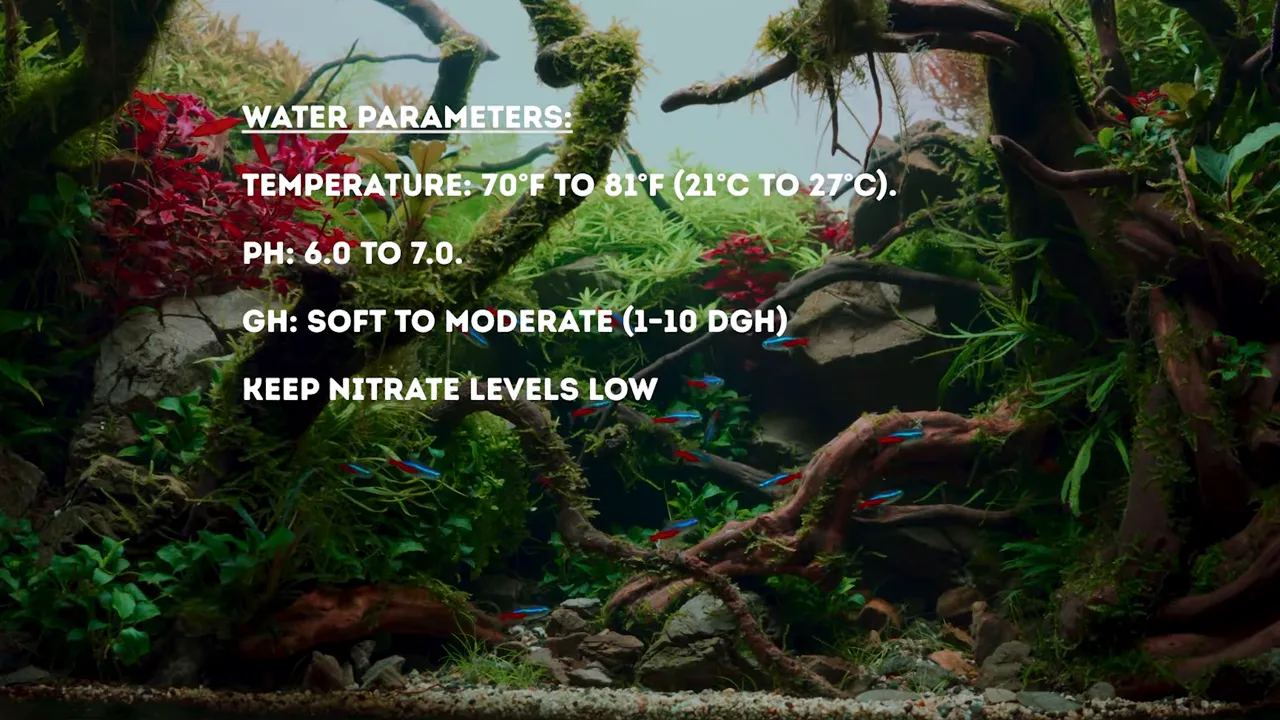
| Temperature | 70 to 81°F, 21 to 27°C |
| pH | 6.0 to 7.0 |
| General hardness | Soft to moderately hard |
| Nitrate | Keep low |
| Water movement | Gentle |
Neon tetras can tolerate slightly harder water in captivity. However, keeping their conditions too far from their preferred soft-water range may compromise breeding and long-term health. Consistency should remain the priority.
Maintenance habits that protect water quality
Use a heater to hold a reliable temperature, test water regularly and perform routine partial water changes. A weekly water change of roughly 25% to 50% helps maintain water quality when matched to the needs and stocking level of the aquarium.
Do not rely on visual clarity alone. An aquarium can look clean while water quality is declining. Keeping nitrate low and maintaining a regular care routine are essential parts of neon tetra husbandry.
What Do Neon Tetras Eat?
Neon tetras are micro-predators. In nature, they feed on small invertebrates, insect larvae and biofilm. In the aquarium, they need foods that are small enough to eat easily and varied enough to provide broad nutrition.
A practical feeding rotation can include:
- High-quality micro pellets
- Finely sized flake food
- Frozen or live daphnia
- Baby brine shrimp
- Bloodworms
Rather than feeding one product exclusively, rotate suitable foods. A varied diet supports colour, immune function and longevity. Make sure all food is appropriately sized for the fish's small mouth.
Compatible Neon Tetra Tank Mates
Neon tetras are peaceful community fish and should be kept with similarly peaceful nano species. Suitable companions include corydoras, small rasboras, dwarf shrimp and other calm small fish.
Avoid fin nippers, large fish and aggressive fish. Even when a larger species does not immediately attack, its size and activity level can keep neon tetras under constant stress.
Community tank checklist
- Choose peaceful tank mates.
- Keep the neon school large enough to feel secure.
- Ensure all species can live within compatible water conditions.
- Provide enough plant cover and open swimming space for every inhabitant.
- Do not add fish that may see neon tetras as prey.
Neon Tetra Disease: Signs and Prevention
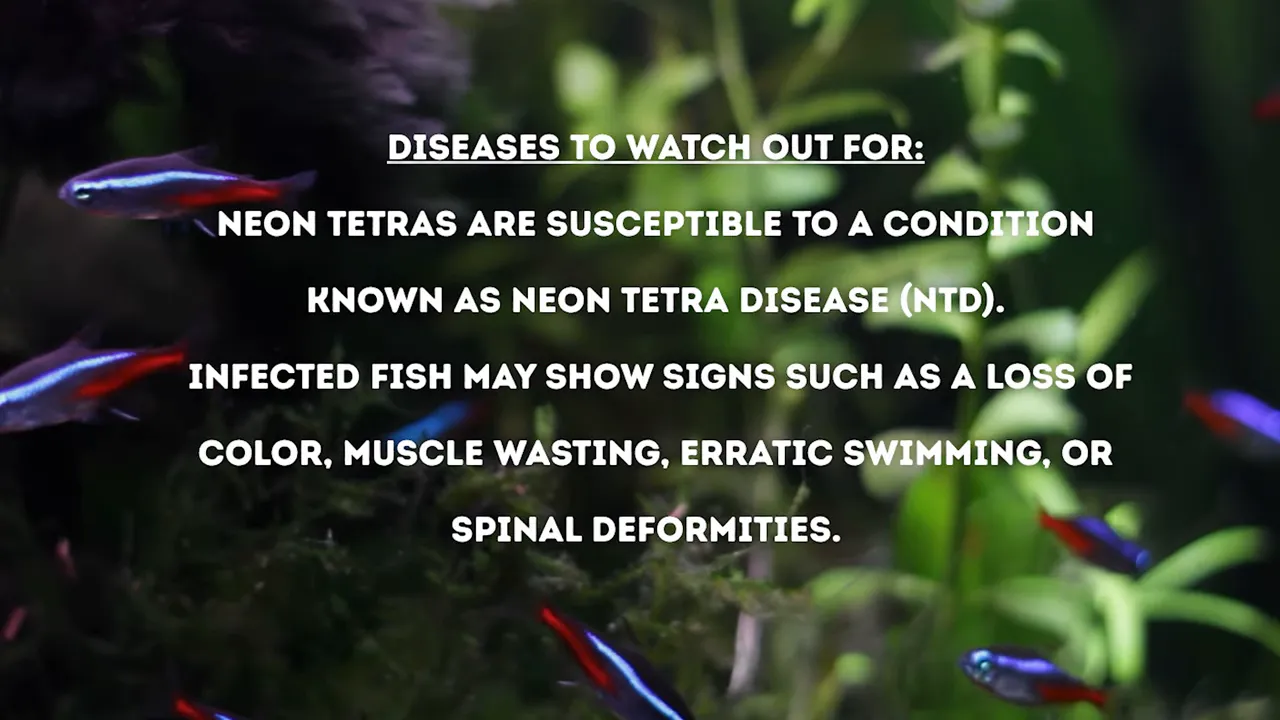
Neon tetra disease, often abbreviated as NTD, is a serious concern because it is highly contagious and has no known cure. Prevention and early caution are therefore important.
Potential signs in an affected fish include:
- Loss of colour
- Muscle wasting
- Erratic swimming
- Spinal deformities
Quarantine new fish for at least two weeks before adding them to an established aquarium. This precaution reduces the chance of introducing contagious illness to the existing school. Maintaining clean, stable water also helps reduce avoidable stress.
Common Neon Tetra Care Mistakes
Keeping too few neon tetras
A small group may look adequate at first, but neon tetras need company from their own kind. Keep at least six, with 10 to 15 providing a better social group where aquarium size allows.
Prioritising exact numbers over stability
Trying to adjust water chemistry constantly can produce more harmful swings. Aim for the recommended ranges, but focus first on reliable temperature, low nitrate and stable conditions.
Using a bare, brightly lit aquarium
Neon tetras need cover and shaded areas. A tank with no planting or shelter can leave them exposed and timid. Use plants, wood and botanicals while retaining open swimming space.
Feeding only one dry food
Flakes or pellets can be part of a good diet, but variety better reflects the species' micro-predatory feeding habits. Add appropriate frozen or live foods as part of a rotation.
Adding unknown fish without quarantine
Because neon tetra disease is contagious and lacks a known cure, placing new fish directly into a community aquarium creates unnecessary risk. Use a dedicated quarantine period before introduction.
Frequently Asked Questions
How many neon tetras should be kept together?
Keep a minimum of six neon tetras, but a school of 10 to 15 is ideal. Larger groups allow more natural shoaling behaviour and can help fish feel more secure.
What size tank do neon tetras need?
A 10-gallon tank is the minimum, while a 20-gallon aquarium is preferred. The larger tank provides more stable conditions and space for a proper school, plants and swimming room.
What temperature is best for neon tetras?
Neon tetras should be kept between 70 and 81°F, or 21 and 27°C. Use a heater where needed to prevent temperature fluctuations.
Can neon tetras live with shrimp?
Dwarf shrimp are listed among compatible peaceful tank mates. Provide plenty of plant cover and ensure the overall community remains calm and appropriately sized.
How can neon tetra disease be prevented?
There is no known cure for neon tetra disease. Quarantine new fish for at least two weeks and maintain pristine water quality to reduce the risk of introducing or encouraging disease problems.
Key Takeaway
Healthy neon tetras come from a stable, planted aquarium and a properly sized school. Start with at least six fish, preferably 10 to 15, keep water calm and consistent, offer varied small foods, and quarantine all new arrivals. With these foundations in place, neon tetras can remain active, colourful and long-lived members of a peaceful freshwater community.