Corydoras catfish, often called cory cats or cories, are peaceful freshwater bottom dwellers that can thrive in a well-maintained community aquarium. Their charming foraging behaviour, social nature and wide variety of species make them a popular choice for beginners, but they are not maintenance-free fish.
Successful Corydoras care depends on providing clean, stable water, a smooth substrate, suitable oxygenation and companionship from their own species. This guide explains how to build a comfortable Corydoras aquarium, what to feed them, why they occasionally rush to the surface and the mistakes that most often cause problems.
Table of Contents
- What are Corydoras catfish?
- Why Corydoras swim to the surface
- Corydoras tank requirements
- How many Corydoras should be kept together?
- What do Corydoras eat?
- Water quality and maintenance for Corydoras
- Can Corydoras breed in a home aquarium?
- Five common Corydoras care mistakes
- Are Corydoras good for beginners?
- Frequently asked questions about Corydoras catfish
- Key takeaway
What are Corydoras catfish?
Corydoras are small South American catfish native especially to the Amazon River Basin. In nature, they inhabit shallow, slow-moving streams, floodplains and oxbow lakes, where the bottom is often covered in fine sediment, leaf litter and other soft natural material.
The name Corydoras means “helmet skin,” a reference to the protective armour-like plates around their head and back. Despite this armour, they have delicate barbels around the mouth and sensitive unprotected skin on their underside. That combination is why their substrate and water quality matter so much.
There are more than 160 described Corydoras species. The right choice should fit the aquarium’s available floor space, water conditions and the needs of the particular species.
Why Corydoras swim to the surface
Corydoras are air-breathing fish. They can take a gulp of air at the surface and absorb oxygen through a specialised part of their intestine. This adaptation comes from their natural experience of low-oxygen environments.
It is normal to see a cory dart to the surface from time to time, particularly when it is settling into a new aquarium. This is not automatically a sign that something is wrong.
However, Corydoras are sensitive to warm, oxygen-poor and polluted water. If surface dashing becomes persistently frequent or is accompanied by lethargy, poor appetite or abnormal behaviour, check the aquarium’s water quality, temperature and oxygenation rather than assuming it is routine behaviour.
Corydoras tank requirements
A good Corydoras aquarium recreates the safety and comfort of a sheltered, soft-bottomed habitat. Their needs are straightforward, but the details are important.
Tank size and footprint
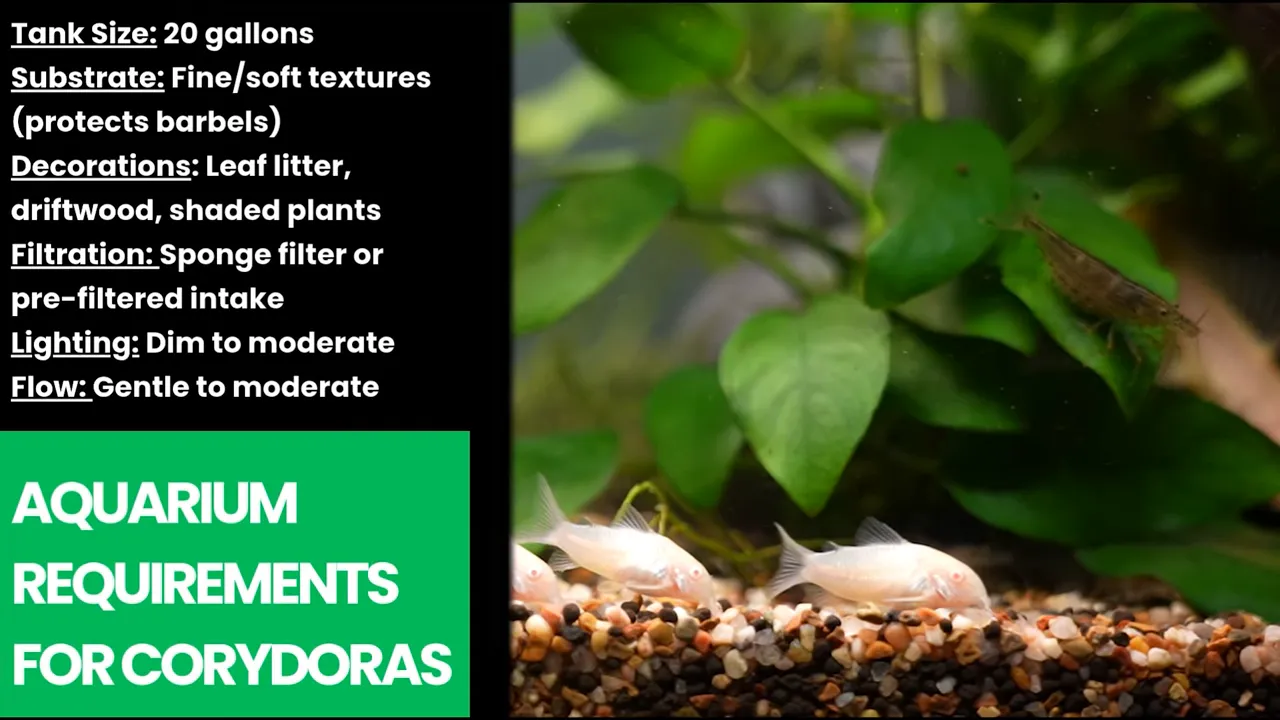
Use an aquarium of at least 20 gallons. A longer tank is preferable to a tall one because Corydoras spend much of their time exploring the bottom. More uninterrupted floor space gives a group room to forage and move naturally together.
The best substrate for Corydoras
Fine sand is the most natural choice. Soft, smooth gravel can also work if it has no sharp edges. Corydoras constantly investigate the bottom with their barbels, so rough gravel, jagged rock and dirty, unsifted substrate can injure their underside or damage those sensitive barbels.
Before adding substrate, rinse it thoroughly to remove dust and debris. Keep the bottom clean through regular maintenance, without treating the fish as a substitute for cleaning.
Plants, wood and shelter
Live plants, driftwood and shaded corners help create a more secure environment. Choose rounded, smooth decorations and avoid hardscape with abrasive or pointed surfaces at the bottom level.
A planted layout with soft sand, driftwood and lower-light resting areas closely reflects the kind of cover these fish use in their native habitat.
Lighting, filtration and flow
- Lighting: Dim to moderate lighting is preferable. In brightly lit aquariums, Corydoras may hide more often.
- Water flow: Gentle to moderate flow is appropriate for a community aquarium. Strong current is not ideal.
- Filtration: A sponge filter, hang-on-back filter or canister filter can all work. Corydoras are not especially messy fish, so choose filtration that keeps the water clean without creating excessive flow.
- Oxygen: Stable, well-oxygenated water is particularly important, especially if the aquarium is warm.
How many Corydoras should be kept together?
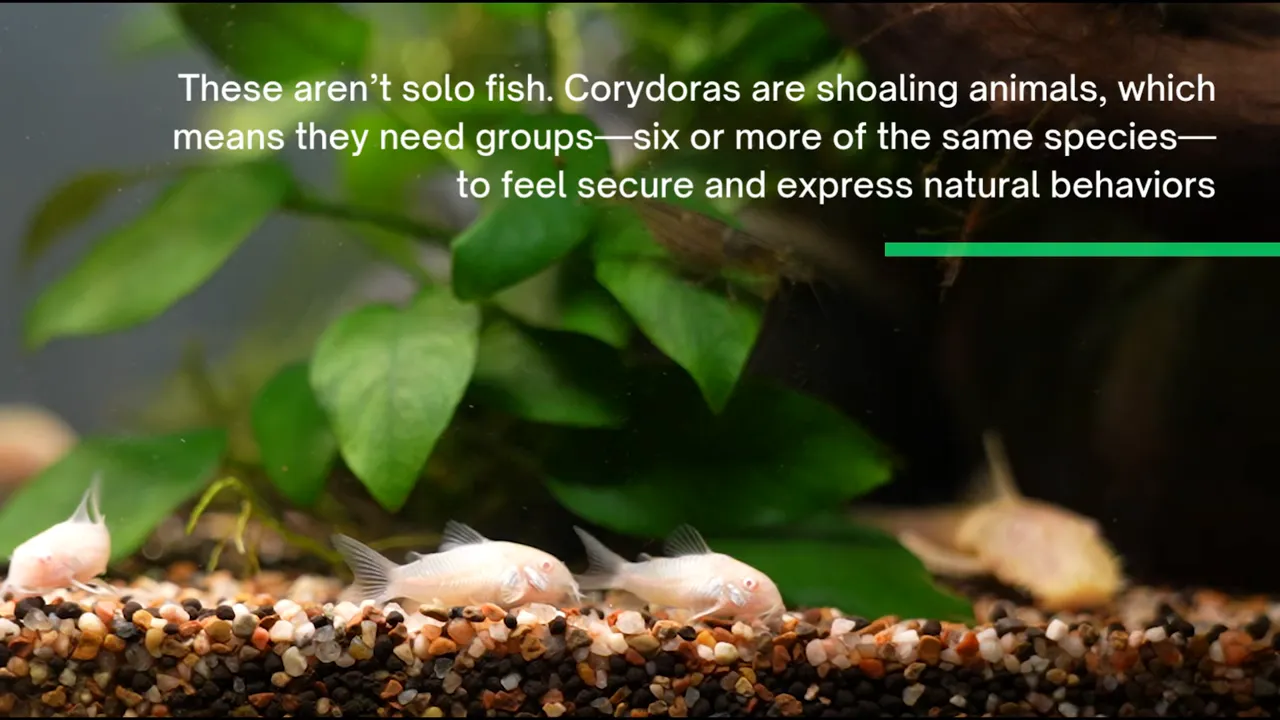
Corydoras are shoaling fish, not solitary bottom cleaners. Keep a group of six or more of the same species so they can feel secure and show normal social behaviour.
In a settled group, cory cats may forage cooperatively, move in synchrony and rest together. Larger groups are generally more active and less shy. A single isolated fish may hide, lose interest in food or stop exploring the aquarium.
What do Corydoras eat?
Corydoras are omnivores. In the wild, they feed on insect larvae, detritus, microorganisms and biofilm. In an aquarium, they need deliberately provided food that reaches the bottom.
Daily Corydoras foods
Build the regular diet around quality prepared foods such as:
- Sinking pellets
- Flake food that reaches the bottom
- Algae wafers
- Shrimp pellets
Feed in a way that ensures the Corydoras actually receive food before faster tank inhabitants consume it. Their willingness to search the substrate does not mean they can live on leftovers.
Protein-rich treats
Offer occasional variety with frozen or live bloodworms, daphnia or baby brine shrimp. These foods complement the everyday staple diet and reflect the animal-based foods Corydoras encounter naturally.
Vegetable options
Blanched zucchini, spinach and similar foods commonly offered to algae-eating fish can be given occasionally.
Avoid overfeeding
Corydoras are enthusiastic eaters, but they have small stomachs. Do not interpret eager feeding behaviour as a reason to continually add more food. Excess food degrades water quality, which is especially risky for these sensitive bottom dwellers.
Water quality and maintenance for Corydoras
Clean, stable water is the foundation of Corydoras health. Their barbels and underside are vulnerable to dirty conditions, ammonia spikes and neglected substrate.
Weekly water changes are essential. Consistent maintenance helps prevent the poor water conditions that can affect sensitive fish, particularly in warm or low-oxygen aquariums.
Practical Corydoras maintenance checklist
- Perform weekly water changes.
- Avoid ammonia spikes and unstable conditions.
- Keep the substrate clean rather than allowing waste to accumulate.
- Use a smooth, well-rinsed bottom substrate.
- Maintain gentle to moderate flow and good oxygenation.
- Remove uneaten food instead of allowing it to decay.
- Check that lighting is not so intense that the fish constantly hide.
Can Corydoras breed in a home aquarium?
Many Corydoras species can breed in a home aquarium when conditions are right. Their natural spawning season is associated with rainforest rains, when the water becomes more oxygenated and temperatures drop rapidly.
To imitate this seasonal cue, lower the aquarium temperature by approximately 2 to 4 degrees Fahrenheit and increase oxygenation with an air stone or bubbler. These changes are intended to simulate rainy-season conditions.
Stable care remains more important than forcing a breeding response. Maintain clean water and avoid abrupt, uncontrolled changes.
Five common Corydoras care mistakes
1. Keeping only one Corydoras
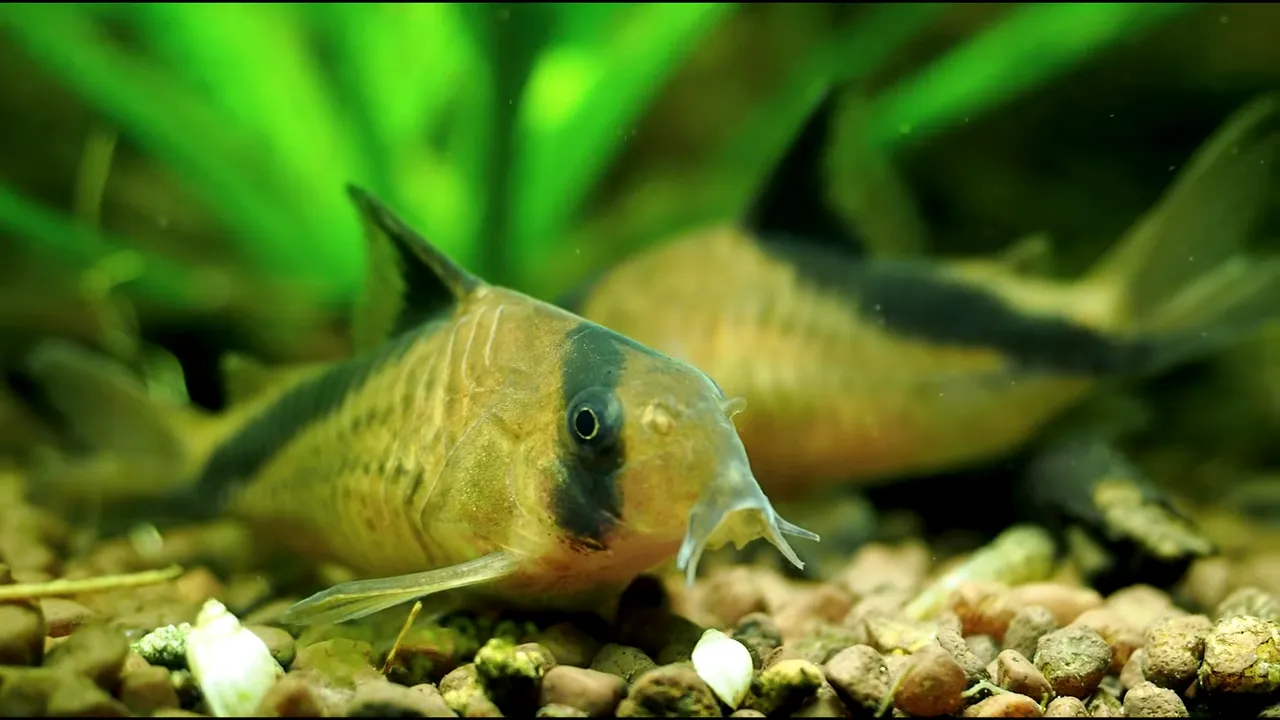
A lone cory lacks the security and social interaction of a shoal. Keep at least six of the same species rather than treating one fish as an individual cleanup crew.
2. Using rough gravel or sharp decorations
Corydoras spend their lives at the bottom, sifting and probing with their barbels. Rough, sharp gravel and abrasive décor can damage their delicate underside and mouth area.
3. Skipping water changes
Corydoras are more sensitive to poor water conditions than many aquarium fish. Regular weekly water changes and a clean substrate are not optional extras.
4. Overfeeding
Overfeeding creates waste and risks poor water quality. Give appropriate portions of sinking food and treats, rather than repeatedly feeding because the fish continue to search for food.
5. Assuming Corydoras will clean the entire aquarium
Corydoras may consume some detritus, but they do not remove algae or solve general aquarium maintenance problems. They require their own balanced diet, and the aquarium still needs normal cleaning and water changes.
Are Corydoras good for beginners?
Corydoras can be an excellent choice for a beginner who is prepared to maintain a stable freshwater aquarium. Their basic needs are easy to understand: a 20-gallon or larger long aquarium, soft substrate, a group of their own species, gentle conditions, proper sinking foods and regular maintenance.
They are not ideal for an aquarium that is newly unstable, neglected or designed around harsh gravel and strong flow. Their peaceful nature should not be mistaken for hardiness in poor water conditions.
Frequently asked questions about Corydoras catfish
Do Corydoras catfish need to be in groups?
Yes. Corydoras are shoaling fish and should be kept in groups of six or more of the same species. Groups help them feel secure and encourage normal foraging and social behaviour.
Do Corydoras eat algae?
Corydoras may eat some detritus and will accept algae wafers, but they are not algae-control fish. They will not clean algae or other growth from the aquarium on their own.
Why does my Corydoras catfish keep swimming to the surface?
Corydoras can gulp air at the surface and absorb oxygen through a specialised part of the intestine, so occasional upward dashes are normal. Frequent surface activity alongside other signs of stress can indicate that water quality, temperature or oxygenation needs attention.
Is sand better than gravel for Corydoras?
Fine sand is the preferred substrate because it is soft and natural for bottom foraging. Smooth, soft gravel may be suitable, but rough or sharp gravel can damage the barbels and underside.
What is the minimum tank size for Corydoras?
A minimum 20-gallon aquarium is recommended. A long footprint is especially useful because Corydoras spend most of their time using the bottom area.
Key takeaway
Healthy Corydoras catfish need more than a place at the bottom of a community aquarium. Give them a proper shoal, a long tank with a smooth substrate, shaded planted cover, gentle flow, quality sinking food and dependable weekly maintenance. When those essentials are in place, Corydoras are active, engaging and rewarding freshwater fish to keep.