A stable aquarium pH is usually more important than hitting a perfect pH number. Many fishkeepers see a reading they do not expect and immediately try to raise or lower it. That approach can create the very water-parameter swings that stress fish.
The more useful starting point is to understand the relationship between pH, carbon dioxide and carbonate hardness, commonly called KH. KH helps water resist rapid pH changes, making it one of the most important parameters to test when aquarium pH seems unstable.
Table of Contents
- What pH Measures in an Aquarium
- Why CO2 Lowers Aquarium pH
- Why pH Can Change Between Day and Night in a Planted Tank
- What Is KH in an Aquarium?
- Why Stable pH Matters More Than a Perfect pH Reading
- How to Increase KH and Buffer Aquarium pH
- How to Test Aquarium KH
- KH, GH and pH: Do Not Confuse Them
- Common Aquarium pH Mistakes to Avoid
- A Practical Plan for Unstable Aquarium pH
- Key Takeaway
- Frequently Asked Questions
What pH Measures in an Aquarium
pH indicates how acidic or alkaline aquarium water is. A pH below 7 is acidic, pH 7 is neutral, and a pH above 7 is alkaline.
It is important to remember that the pH scale is logarithmic, not linear. A one-point pH change represents a tenfold difference in acidity. For example, water at pH 6 is ten times more acidic than water at pH 7. A change from pH 7.5 to 5.5 represents a much larger chemical difference than it may appear at first glance.
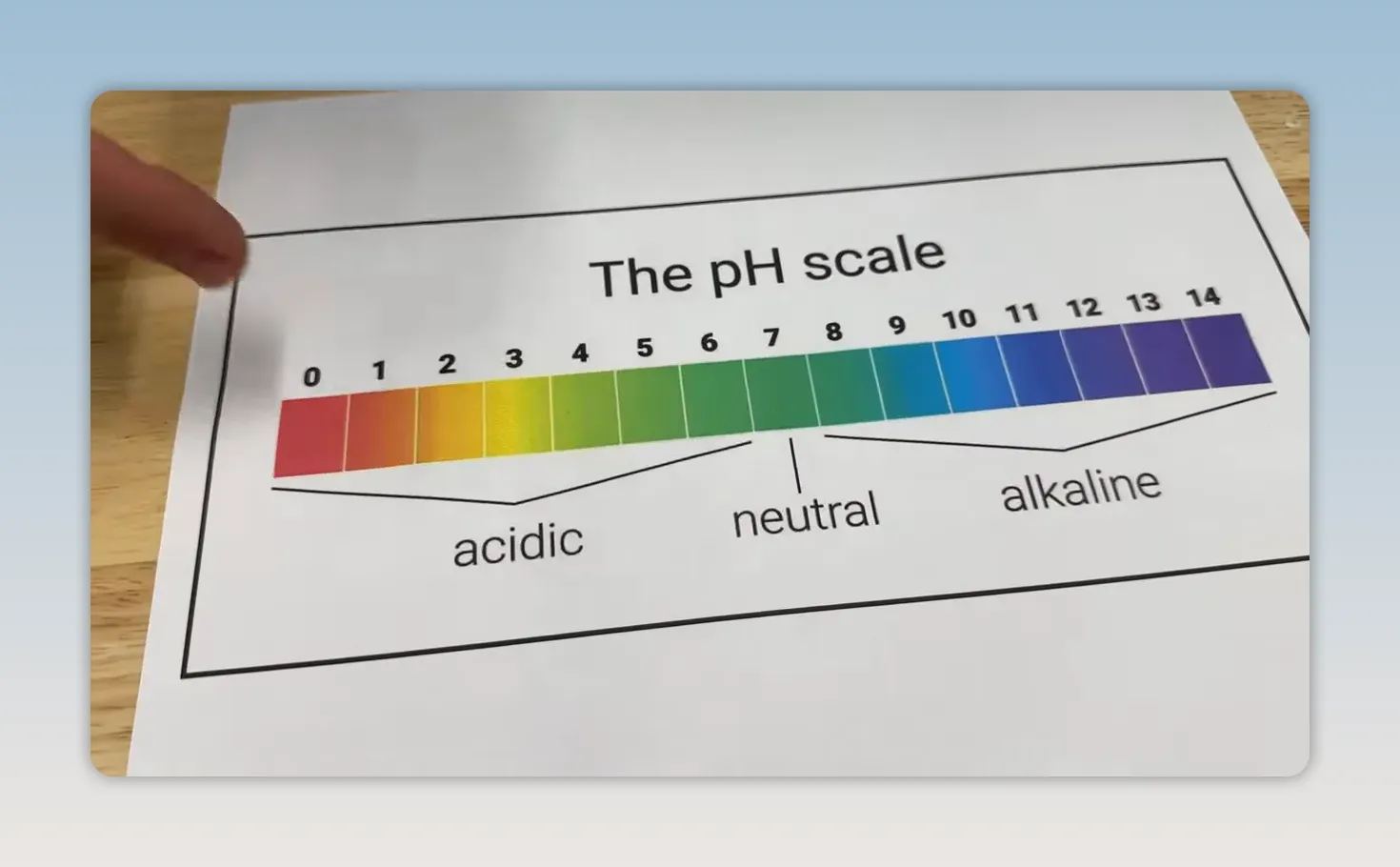
pH is tied to the concentration of free hydrogen ions in water. More free hydrogen ions means more acidic water and a lower pH. Fewer free hydrogen ions means less acidic water and a higher pH.
Why CO2 Lowers Aquarium pH
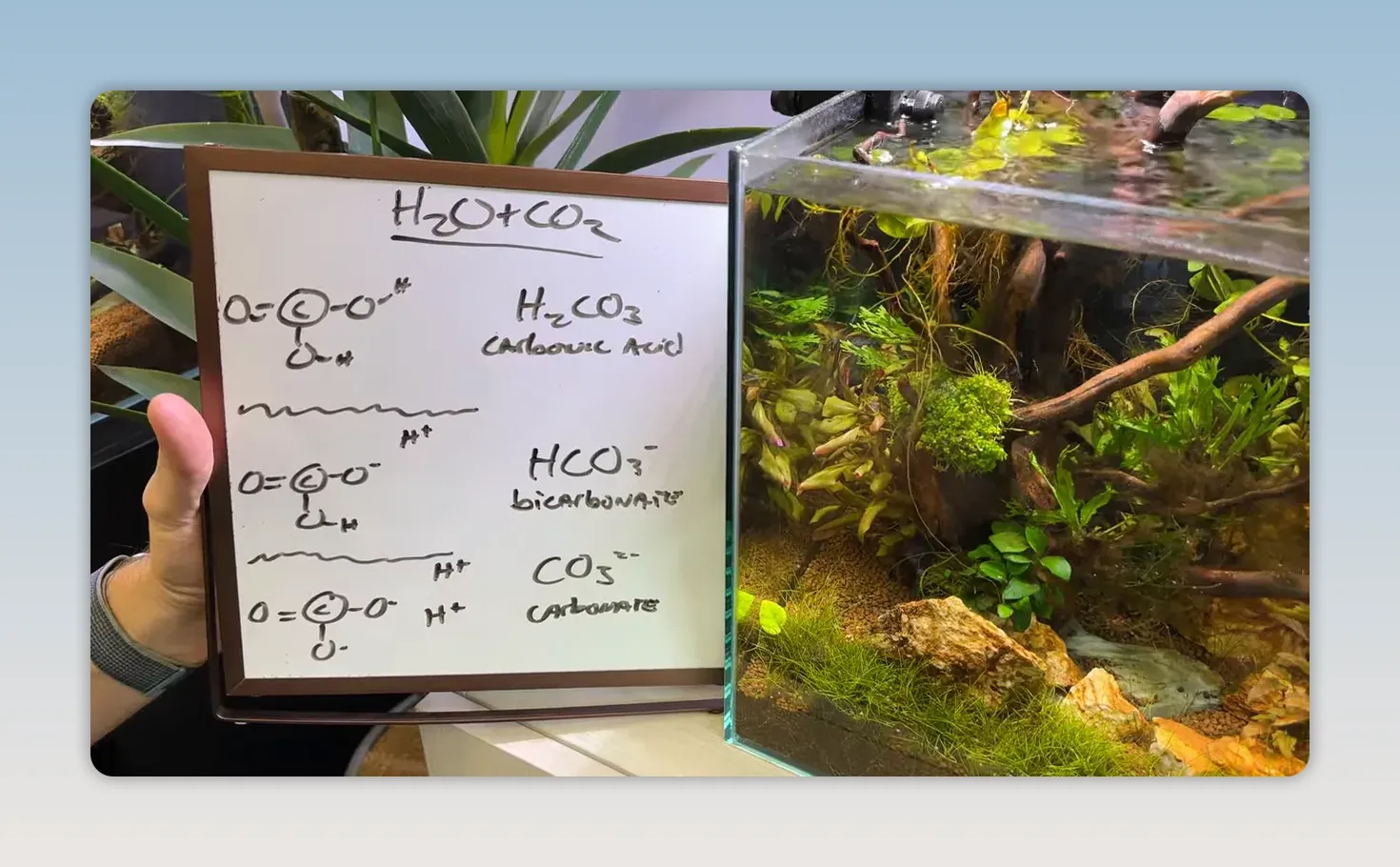
Carbon dioxide dissolves in water and forms carbonic acid. That acid can release hydrogen ions into the water, which lowers pH.
In simplified form, the chemistry follows this sequence:
- Water and dissolved CO2 form carbonic acid, H2CO3.
- Carbonic acid can release a hydrogen ion and become bicarbonate, HCO3-.
- Bicarbonate can release another hydrogen ion and become carbonate, CO32-.
Those released hydrogen ions are the reason pH falls as dissolved CO2 increases. In a simple distilled-water demonstration, introducing a strong dose of CO2 moved the pH from about 7.5 to roughly 5.5. A stocked aquarium does not normally experience that same extreme treatment, but the direction of the effect remains the same: more dissolved CO2 tends to lower pH.
Why pH Can Change Between Day and Night in a Planted Tank
Planted aquariums naturally experience changing CO2 levels across the day.
- When lights are off: Plants are not photosynthesising, so they are not taking up CO2. More CO2 can remain in the water, which can lower pH slightly.
- When lights are on: Plants begin photosynthesising and use CO2. With less dissolved CO2, pH can rise.
This is one reason a single pH test does not always tell the whole story. Testing at different times without considering the light cycle can make normal daily variation look alarming.
CO2 is not the only influence. Aquarium wood, rocks, substrate, soil, plants and routine aquarium changes can all affect pH. The practical goal is not to force every test result to a specific decimal point. It is to prevent large, repeated swings.
What Is KH in an Aquarium?
KH means carbonate hardness. It measures the carbonate and bicarbonate available in aquarium water. These compounds act as a buffer by helping absorb free hydrogen ions.
Think of KH as the water's reserve capacity for resisting sudden acidity changes. When hydrogen ions are released, carbonate and bicarbonate can bind with them. This reduces the amount of free hydrogen ions in the water and helps limit sharp pH movement.
In practical aquarium terms:
- Low KH means less buffering capacity and a greater possibility of pH swings.
- Higher KH means more buffering capacity and greater resistance to rapid pH changes.
- Stable KH supports stable pH, which is generally safer for fish than repeatedly adjusting pH up and down.
KH does not mean every aquarium should have identical water chemistry. Fish have different needs and should be researched individually. The key is to provide water conditions that are suitable and stable for the animals being kept.
Why Stable pH Matters More Than a Perfect pH Reading
Fish and other aquarium inhabitants depend on proteins that function within suitable pH conditions. Sudden water chemistry changes can be stressful. If hydrogen ion levels repeatedly rise and fall, pH can move sharply, increasing the risk of stress, illness and potentially death.
The common mistake is chasing pH: testing water, deciding that a number must change, adding a corrective product, then repeating the process whenever the reading moves again.
A better approach is to ask these questions first:
- Is the pH actually changing significantly over time?
- What is the aquarium's KH?
- Has CO2, lighting, substrate, rock, wood or source water changed?
- Are the fish suited to the existing and stable conditions?
Consistency is generally more valuable than continually forcing water toward an arbitrary target.
How to Increase KH and Buffer Aquarium pH
There are several approaches for adding or maintaining buffering capacity. The right choice depends on the aquarium's livestock, desired conditions and existing water chemistry.
Use an active aquasoil for lower, buffered pH
Some active aquasoils are designed to buffer pH toward a lower range. For example, UNS Controsoil is intended to stabilise pH around 6.8. This type of substrate may suit planted aquariums and setups where that pH range is appropriate for the selected plants, shrimp and fish.
Active soil is not simply a way to change a number. Its value is in helping maintain more consistent conditions.
Use crushed coral to add carbonate
Crushed coral is calcium carbonate. As water passes over it, it adds carbonate to the water, improving buffering capacity over time. The calcium component can also support fish skeletal development.
Crushed coral can be placed in a mesh media bag and added to a canister filter or hang-on-back filter tray. Filter flow continually moves water across the media, allowing the material to influence the water gradually.
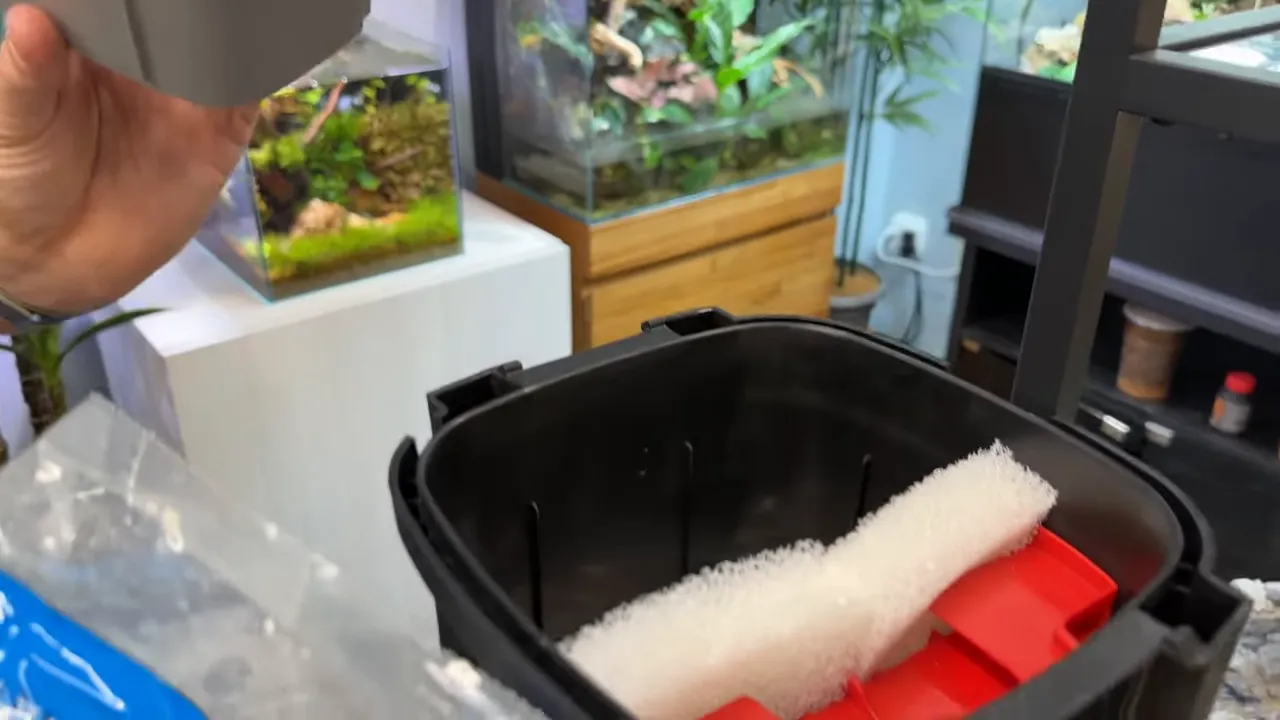
Adding carbonate does not eliminate all pH movement. Instead, it helps establish an equilibrium where the water can better resist abrupt swings as acids and hydrogen ions are introduced.
Use a KH supplement carefully
A KH supplement is another option for increasing carbonate hardness. As with any water adjustment, test first and make measured changes rather than making large corrections without knowing the starting value.
Do not use a buffer merely to force a specific pH result. Consider the fish, plants, shrimp, substrate and source-water chemistry together.
How to Test Aquarium KH
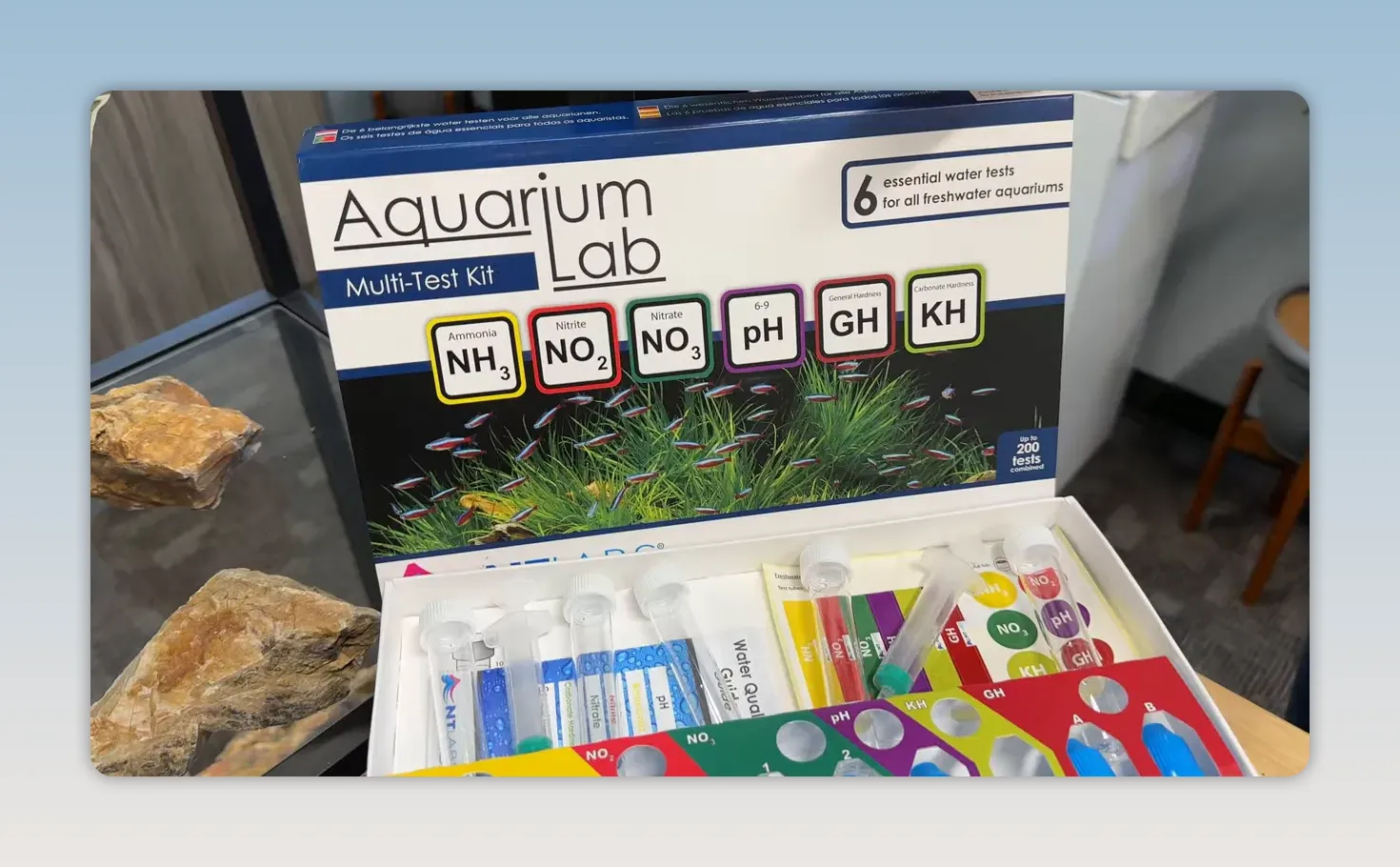
A liquid KH test kit measures carbonate hardness in degrees KH, often shown as dKH. With a common drop-count test, each drop is counted until the test sample reaches the kit's endpoint colour. The number of drops required corresponds to the KH reading.
Follow the instructions for the specific kit because sample volume, endpoint colour and interpretation can vary. The referenced multi-test kit uses a yellow endpoint and provides a result immediately once that colour is reached.
A simple KH testing routine
- Take a water sample using the volume specified by the test kit.
- Add the KH reagent one drop at a time.
- Count every drop and gently mix after each addition.
- Stop when the sample reaches the endpoint colour described in the instructions.
- Record the result and compare it with previous readings, rather than relying on one isolated test.
Trend tracking is especially useful when introducing CO2, changing substrate, adding crushed coral, performing water changes or noticing different pH readings at different times of day.
KH, GH and pH: Do Not Confuse Them
These tests measure related but different properties of aquarium water:
- pH: How acidic or alkaline the water is at the time of testing.
- KH: Carbonate and bicarbonate buffering capacity, which helps stabilise pH.
- GH: General hardness, a measure of dissolved minerals such as calcium and magnesium.
Crushed coral is relevant to both KH and mineral content because it is calcium carbonate. However, KH and GH should not be treated as interchangeable measurements. Test the parameter you need to understand.
Common Aquarium pH Mistakes to Avoid
Trying to correct every minor pH difference
A small variation can occur because of the light cycle, CO2 use by plants or normal changes in the aquarium. Making repeated corrections can turn a manageable variation into an unstable system.
Testing pH but ignoring KH
pH reveals the current condition. KH helps explain how resistant that condition is to change. If pH is fluctuating, KH should be part of the investigation.
Adding crushed coral without considering livestock needs
Crushed coral can increase carbonate availability and make water less acidic. That can be useful, but it must suit the aquarium's intended conditions and inhabitants.
Assuming CO2 causes only problems
CO2 naturally affects pH and is used by aquarium plants during photosynthesis. The concern is not simply the presence of CO2. The concern is large or poorly managed changes that contribute to unstable conditions.
Using distilled water without a mineral and buffering plan
Distilled water has very little dissolved material, making it a useful demonstration medium for showing CO2's effect on pH. In an aquarium, water chemistry must support the needs of fish, plants and other inhabitants, including appropriate mineral and buffering capacity.
A Practical Plan for Unstable Aquarium pH
If pH appears to be moving around, use this process before adding a pH-adjusting product:
- Test pH and KH. Record the values and the time of day.
- Check the light and CO2 schedule. Consider whether plant photosynthesis may explain the change.
- Review aquarium materials. Look at active soil, rocks, wood and filter media that may influence water chemistry.
- Choose a suitable buffering strategy if required. Depending on the aquarium, this may involve active soil, crushed coral or a KH supplement.
- Retest and monitor trends. Avoid reacting to every single reading.
- Prioritise livestock compatibility. Keep fish in water that matches their needs as closely as possible while maintaining stability.
Key Takeaway
pH matters, but it should not be managed in isolation. CO2, plants, substrate and aquarium materials can all influence pH, while KH provides the buffering capacity that helps prevent rapid swings.
Test KH alongside pH, make gradual and informed adjustments, and focus on stable water conditions rather than chasing an exact pH decimal.
Frequently Asked Questions
Does CO2 lower aquarium pH?
Yes. Dissolved CO2 forms carbonic acid in water. That process can release hydrogen ions, which lowers pH. In a planted aquarium, CO2 levels can also vary between the light and dark portions of the day.
What does KH do in an aquarium?
KH measures carbonate and bicarbonate buffering capacity. These compounds help absorb free hydrogen ions, reducing the likelihood of rapid pH swings.
Should I raise my aquarium pH?
Do not raise pH simply because it differs from a preferred number. First assess whether the pH is stable, test KH and confirm the needs of the fish and other inhabitants. Stability and livestock compatibility are the priorities.
Can crushed coral raise KH and pH?
Crushed coral is calcium carbonate. It adds carbonate to the water over time, which can increase buffering capacity and tend to raise or stabilise pH. It should only be used when those effects suit the aquarium's intended water conditions.
When should I test aquarium pH?
For planted or CO2-influenced aquariums, test at consistent times and record the results. Testing at different points in the daily light cycle can help identify whether normal CO2 and plant activity are contributing to pH variation.