Guppies are colourful, active freshwater fish that can be an excellent choice for both new fishkeepers and dedicated breeders. Their popularity comes from more than their striking tails and patterns: guppies reproduce readily, adapt well to many aquarium conditions, and can be kept in carefully planned community or breeding tanks.
Successful guppy care is less about making every aquarium elaborate and more about building a system that is easy to maintain. Stable water, suitable tank mates, fry protection, regular feeding, and a practical water-change routine are the essentials.
Table of Contents
- What Makes Guppies a Good Fish for Breeding?
- Start With a Setup You Can Maintain Consistently
- How to Choose Safe Tank Mates for Guppies
- How to Protect Guppy Fry
- Feeding Guppy Fry With Newly Hatched Brine Shrimp
- Water Quality and Air Management in a Fish Room
- Common Guppy Breeding Mistakes to Avoid
- A Practical Guppy Breeding Checklist
- Frequently Asked Questions About Keeping Guppies
- Key Takeaway
What Makes Guppies a Good Fish for Breeding?
Guppies are livebearers, meaning females give birth to free-swimming fry rather than laying eggs. This makes breeding highly visible and rewarding. A female with fry is often easy to identify because her colour can become more intense, including a noticeably yellow appearance in some strains.
They are also relatively small fish, commonly around 5 cm in length, and are available in a huge variety of colours and fin forms. With a healthy group and appropriate conditions, a guppy aquarium can quickly become a nursery.
Guppies are best suited to fishkeepers who want:
- Colourful fish with active behaviour
- A manageable freshwater breeding project
- Multiple tanks for separating strains, sexes, or generations
- A community aquarium built around peaceful species
- An engaging way to raise fry from birth to adulthood
Start With a Setup You Can Maintain Consistently
A large breeding room may hold dozens of tanks, but the same principle applies to a single guppy aquarium: the setup must make routine care straightforward. If water changes and feeding are difficult, they are more likely to be delayed.
Plan the tank around the fish’s purpose
Before adding guppies, decide what each aquarium is for. A simple label can prevent mistakes when maintaining several groups.
- Display tank: A mixed group kept primarily for colour and activity.
- Breeding group: Selected males and females maintained together.
- Fry tank: A tank devoted to young guppies, where they can feed and grow without predation pressure.
- Grow-out tank: A space for juvenile fish after they outgrow the earliest fry stage.
- Hospital tank: A separate, ready-to-use aquarium for isolating a sick fish quickly.
A hospital tank should not be treated as an afterthought. Keeping one available means a fish can be removed from the main aquarium promptly if a health problem appears.
Make water changes efficient
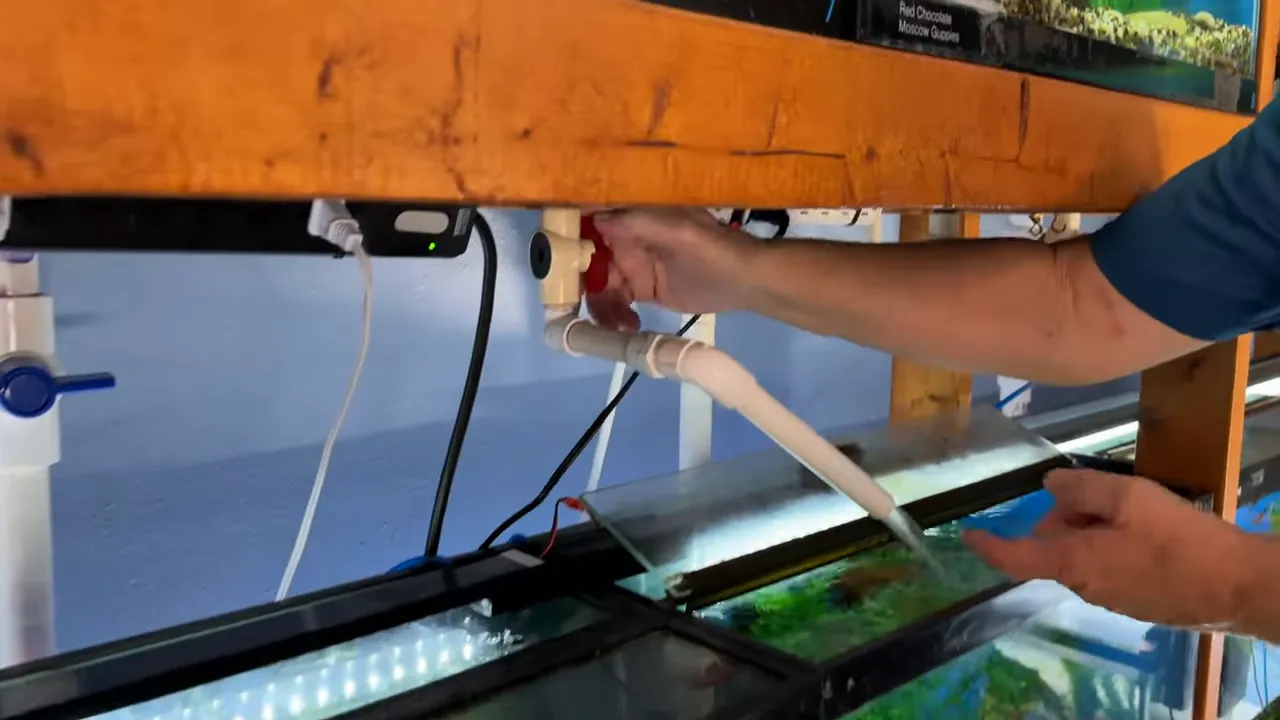
In a multi-tank setup, drilled tanks, drain lines, valves, and dedicated fill lines can turn water changes into a fast repeatable process. Water drains to a central line, then replacement water is added through a distribution system.
That level of plumbing is not necessary for one aquarium. The useful lesson is to reduce friction:
- Keep hoses, buckets, conditioners, and towels in one place.
- Use a consistent maintenance schedule.
- Check each tank for fry, uneaten food, and unusual fish behaviour while servicing it.
- Label tanks clearly when different groups need different care.
For specialised fish collections, separate supplies of softer reverse-osmosis water and regular source water can provide flexibility. These can be used individually or mixed according to the needs of the fish in each tank.
How to Choose Safe Tank Mates for Guppies
Adult guppies are generally peaceful, but they can be vulnerable when housed with larger or more aggressive fish. Fry are at even greater risk. A fish that ignores an adult guppy may still treat tiny newborn fry as food.
For a breeding aquarium, choose companions that are unlikely to hunt guppies or fry. Bottom-feeding species can be especially useful because they help consume food that reaches the substrate. Suitable choices depend on the individual species and aquarium conditions, but peaceful bottom dwellers such as Corydoras catfish, plecos, and bristlenose plecos are commonly considered in a guppy-focused setup.
Avoid adding fish simply because they are attractive or peaceful-looking. Large cichlids and angelfish, for example, can prey on guppies. A breeding tank should prioritise fry survival over a broad species list.
Can guppies be aggressive?
Guppies are not usually regarded as aggressive fish, but individual behaviour can vary. Males may occasionally become unusually combative with one another. If two males persistently fight, separation may be necessary.
A simple divider can create separate territories in the same aquarium when a full additional tank is not available. The divider should be secure and sized appropriately for the tank so fish cannot cross into the other section.
How to Protect Guppy Fry
Breeding guppies is easy compared with raising a high percentage of fry. The key challenge is providing young fish with food, shelter, and protection from predators.
Use dense cover
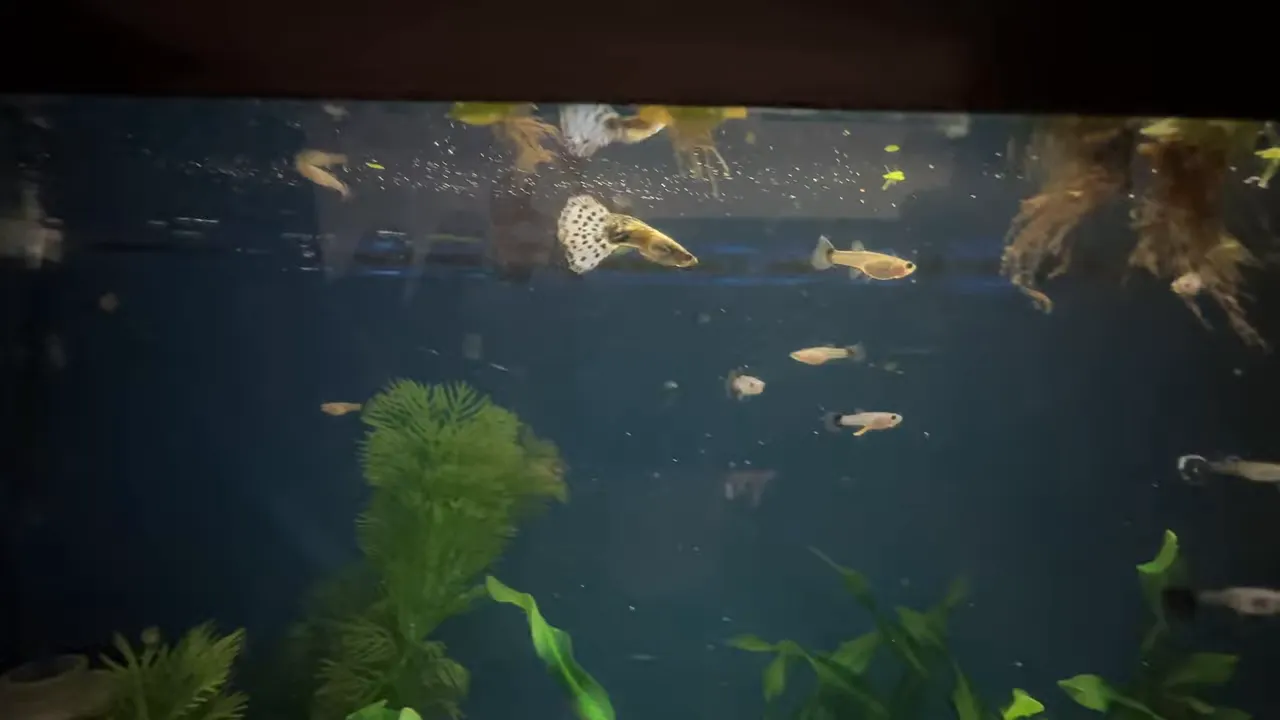
Fry need places to hide, especially near the water surface and around dense planting. A well-planted aquarium gives newborn guppies more opportunities to avoid larger fish.
Dense foliage, floating plant cover, and hardscape with sheltered spaces can all make a fry tank more functional. The goal is not decoration alone. Cover should break lines of sight and give tiny fish a place to rest between feedings.
Separate groups when breeding selectively
When maintaining different guppy types, keeping each strain in its own tank helps prevent accidental crossbreeding. Separate tanks also make it easier to identify which adults produced a particular group of fry.
This does not require a room full of matching glass aquariums. A functional spare tank, refugium-style vessel, or other safely filtered freshwater container can be adapted when more space is needed. The important requirements are filtration, safe water conditions, enough room, and a plan for maintenance.
Use non-predatory cleanup help carefully
Bottom feeders may help consume food that sinks past the guppies, but they are not a replacement for sensible feeding. Add only compatible, non-aggressive species, and continue to observe fry survival after introducing any new fish.
Feeding Guppy Fry With Newly Hatched Brine Shrimp
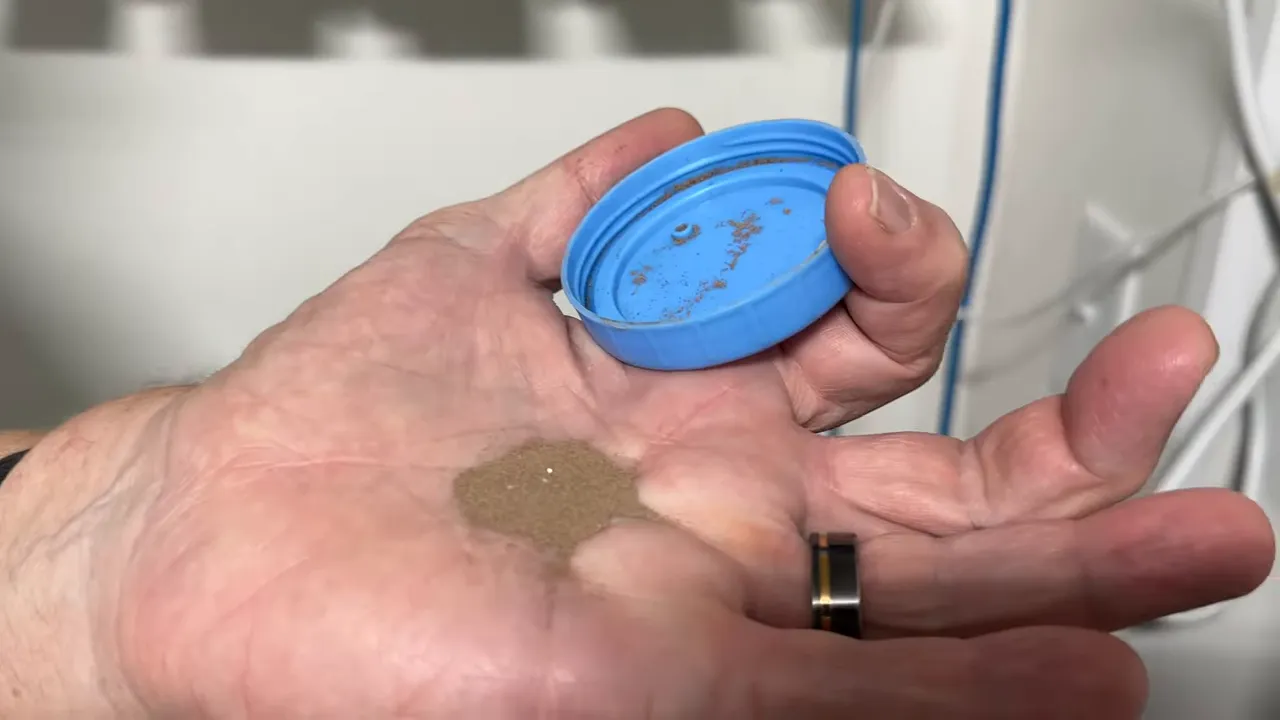
Newly hatched brine shrimp are a useful live food for baby guppies. Brine shrimp eggs are dry cysts that hatch when prepared in saltwater. Once hatched, the tiny shrimp can be collected with a fine net and fed to fry.
This approach provides a practical way to feed a large number of young fish, especially in a dedicated breeding operation.
Basic brine shrimp hatchery workflow
- Measure salt and water for the hatchery container.
- Add the brine shrimp eggs.
- Allow the eggs to hatch, which can occur within about a day in the demonstrated setup.
- Collect the newly hatched shrimp with a fine net.
- Feed the shrimp to guppy fry promptly.
Use measured quantities rather than guessing. A repeatable hatchery routine helps ensure a dependable supply of fry food.
Water Quality and Air Management in a Fish Room
Keeping many aquariums introduces challenges that a single tank may not reveal immediately. Hundreds or thousands of litres of water can add substantial moisture to an enclosed area. Without proper ventilation, mould and mildew can become a concern.
A purpose-built fish room can address this with air-purifying and ventilation systems that bring in fresh outdoor air and remove stale indoor air. Fresh-air intake and exhaust should be positioned separately. In the featured large-scale system, the intake was kept at least 10 feet from the exhaust location.
Heating and air-conditioning equipment can then condition incoming air before it reaches the aquarium room. This helps create a more controlled environment for both the fish and the room itself.
For a smaller home aquarium, the principle remains valuable: pay attention to room humidity, airflow, condensation, and the condition of walls and ceilings around the tank.
Common Guppy Breeding Mistakes to Avoid
Assuming guppies can live with any fish
Guppies may be peaceful, but larger fish can still eat them. Fry are particularly vulnerable. Always assess tank mates based on size, feeding behaviour, and predation risk.
Leaving fry in an exposed aquarium
Newborn guppies need cover. A bare community tank with larger fish may produce fry, but few may survive long enough to grow.
Mixing strains without a plan
If breeding for a particular colour pattern or line, mixing fish freely makes parentage difficult to track. Keep breeding groups separate and label tanks.
Overlooking individual aggression
Even species with a peaceful reputation can produce problem individuals. Persistent male-to-male aggression calls for separation, whether through a divider or another aquarium.
Making maintenance too complicated
A complicated system can work well, but only if it remains easy to use. Build routines around convenient water changes, clear tank identification, accessible equipment, and a reliable feeding process.
A Practical Guppy Breeding Checklist
- Choose a purpose for each tank: display, breeding, fry, grow-out, or hospital.
- Keep a hospital tank available: isolate sick fish quickly when needed.
- Use peaceful companions: avoid species likely to eat adult guppies or fry.
- Provide thick cover: plants and sheltered areas improve fry survival opportunities.
- Separate strains: prevent unintended breeding and simplify record keeping.
- Feed fry appropriately: newly hatched brine shrimp can be a valuable live food.
- Observe behaviour daily: watch for pregnancy, fry, fighting, and health changes.
- Streamline water changes: use tools and routines that make upkeep easy to repeat.
- Manage humidity in large setups: ensure fresh-air exchange and proper ventilation.
Frequently Asked Questions About Keeping Guppies
Are guppies easy to breed?
Guppies are widely known for reproducing readily. Females give birth to live fry, and a healthy breeding group can produce young frequently. Raising the fry successfully requires protection, cover, and appropriate food.
Do guppy fry need a separate tank?
A separate fry tank is not always essential, but it can improve survival by removing the risk posed by larger fish. If fry remain in a shared tank, dense plant cover and carefully chosen tank mates become especially important.
What fish should not be kept with guppies?
Avoid larger or aggressive fish that may regard guppies as prey. Large cichlids and angelfish can be a problem, particularly for guppy fry.
Can male guppies fight?
Most guppies are peaceful, but individual males can occasionally show serious aggression toward one another. If the behaviour is persistent, separate the fish with a secure divider or move one fish to another appropriate aquarium.
Why use brine shrimp for guppy fry?
Newly hatched brine shrimp are a small live food suitable for baby fish. A hatchery can produce a fresh supply from dry brine shrimp eggs prepared in measured saltwater.
Key Takeaway
Keeping guppies like a pro means creating conditions that support both the adults and their fry. Start with peaceful tank mates, dense cover, purposeful tank organisation, and an easy maintenance routine. As the collection grows, separate breeding groups, dedicated fry space, efficient water changes, and good room ventilation become increasingly important.
Guppies may be adaptable, but a thoughtful system is what turns a tank full of fish into a sustainable, successful breeding setup.