An aquarium can look clean and attractive yet still be too empty for its fish. In nature, fish move among plants, roots, rocks, crevices, leaf litter and submerged branches. Those features provide cover, boundaries and places to retreat when they feel threatened.
Adding appropriate fish tank hiding places is not simply an aesthetic choice. Caves, planted areas, driftwood and other sheltered spaces can help fish feel secure enough to explore, forage, interact and display more natural behaviour.
Table of Contents
- Why do fish need hiding spots?
- Benefits of adding caves, plants and cover to a fish tank
- What counts as a good fish hiding place?
- How many hiding spots should a fish tank have?
- How to add hiding places without overcrowding the aquarium
- Fish tank hiding-place mistakes to avoid
- Do plecos need caves?
- Can hiding spots help shy fish become more visible?
- FAQ
- Build an aquarium that gives fish choices
Why do fish need hiding spots?
Fish retain a strong instinct to seek cover. Even species that hunt other animals can also be prey in the wild. An open aquarium with no visual breaks can leave fish exposed with nowhere to retreat.
A well-planned hide gives a fish a smaller safe zone within the larger aquarium. When cover is available, fish can choose when to rest, avoid attention, establish territory or move away from other tank inhabitants.
This produces an important and sometimes surprising result: providing more places to hide can make fish easier to observe. Once fish feel secure, they are often more willing to move through the aquarium rather than remaining withdrawn.
Benefits of adding caves, plants and cover to a fish tank
- Supports natural behaviour: Fish can explore, forage, investigate crevices and use sheltered areas as they would in a more complex habitat.
- Offers a retreat from stress: A fish can move out of sight instead of remaining exposed in open water.
- Creates usable territories: Cover gives fish distinct areas to occupy, which can be especially useful in aquariums with territorial species such as cichlids.
- Makes cohabitation easier: Multiple hiding areas give tank mates more options to avoid one another when needed.
- Encourages a more active display: Secure fish are more likely to explore and interact in the open.
- Can support breeding needs: Some species, including plecos, need an appropriate breeding cave to breed successfully.
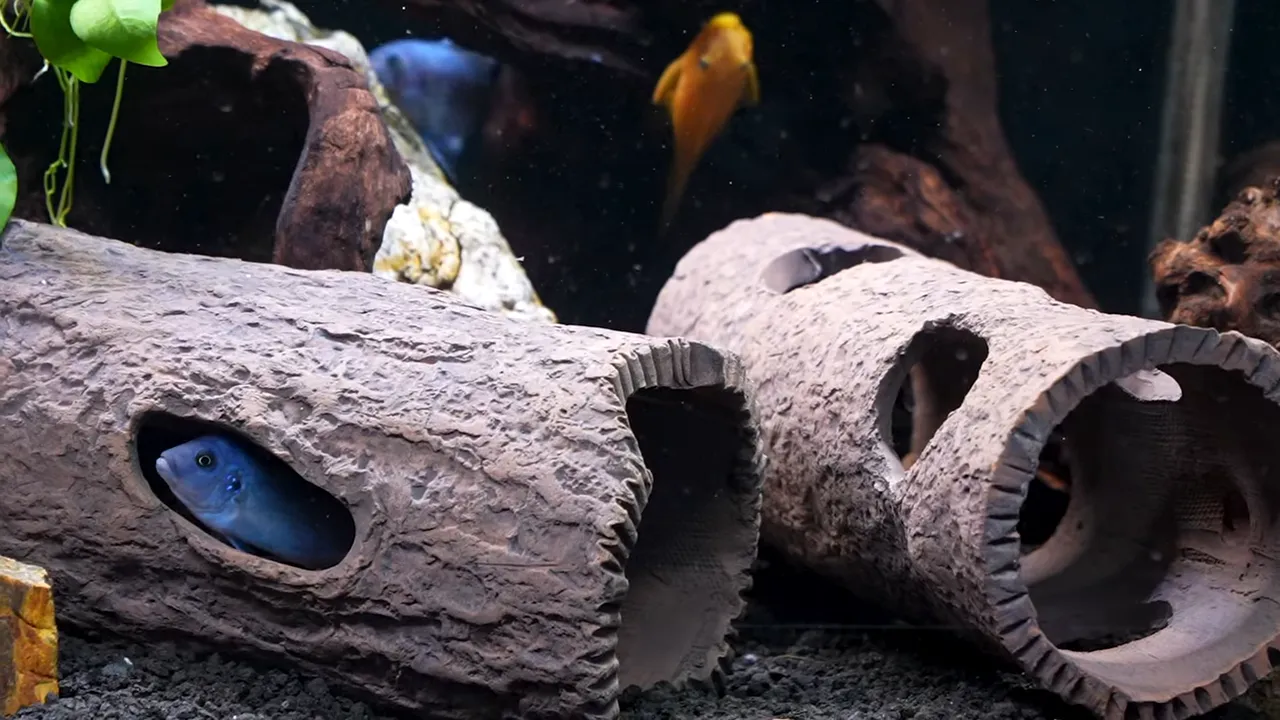
What counts as a good fish hiding place?
The best aquarium cover resembles the variety found in natural aquatic environments. A single decoration may provide a retreat, but a combination of structures creates more useful choices and breaks up open space.
Plants and planted cover
Live plants create shaded areas and visual barriers while softening the aquarium layout. Dense planting can offer cover around the base of the tank and between hardscape features. Plants can also be attached to suitable decorative structures to combine greenery with a secure refuge.
Driftwood, branches and root-like structures
Wood and branch forms add vertical and horizontal complexity. They create routes through the aquarium, shaded pockets underneath and places where fish can pause out of direct view.
Rocks, slate and crevices
Rockwork can create cracks, overhangs and sheltered zones. Slate structures can be arranged to make low-profile refuges that blend into a natural hardscape.
Ceramic caves, logs and tubes
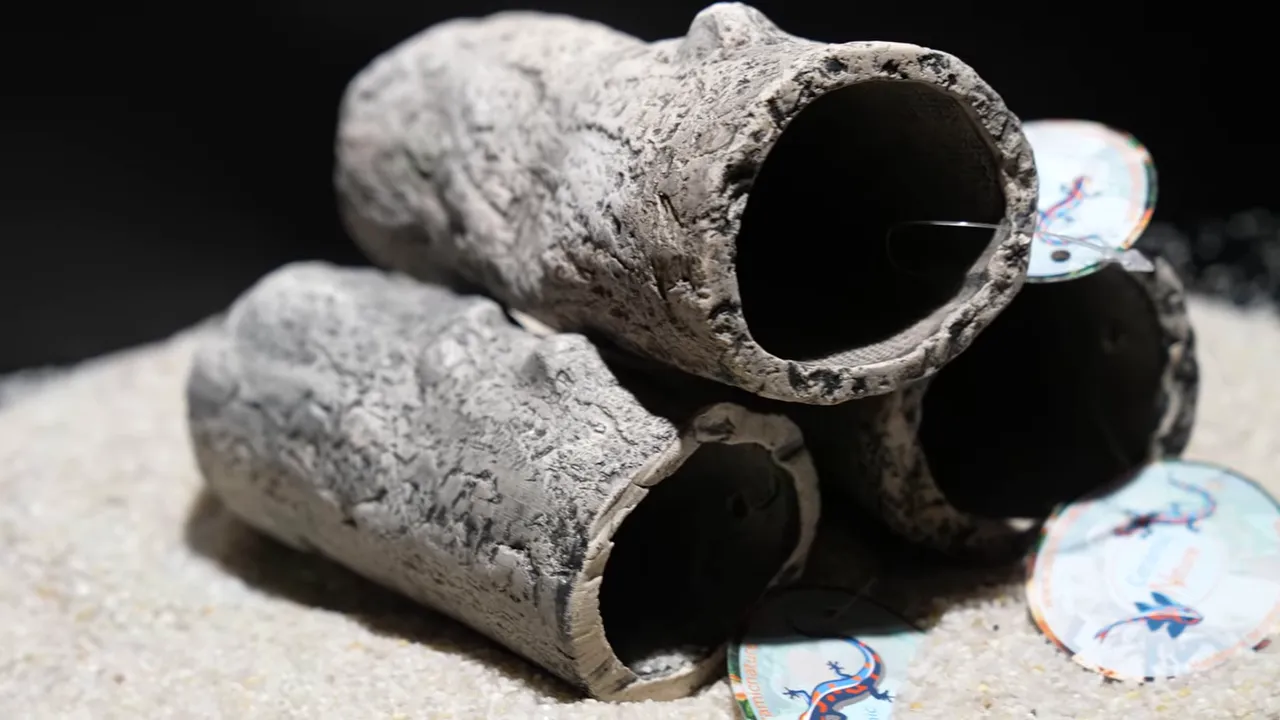
Purpose-made ceramic shelters provide predictable openings and enclosed space. Examples include log-shaped caves, stacked tubes, terracotta caves, turtle-shell-shaped shelters and small shrimp shelters.
Handmade ceramic pieces can also add varied texture and shape. Ceramic hides fired at high temperatures are durable, scratch-resistant and straightforward to clean, while their surfaces can provide a place to attach aquatic plants.
How many hiding spots should a fish tank have?
There is no single number that suits every aquarium. The right amount depends on the species, the number of fish, their size, their social behaviour and whether breeding is a goal.
A practical approach is to avoid designing the tank around one prized cave. Instead, create multiple routes, shelters and visual breaks across the layout. Fish should have more than one direction in which to move away from open exposure or another fish.
Use this aquarium hide checklist
- Include cover at more than one point in the aquarium.
- Mix open-fronted cover, enclosed caves and planted areas where appropriate.
- Provide shelters of a size that suit the animals expected to use them.
- Place some cover near the substrate and, where suitable, use branches or plants to add higher-level structure.
- Leave enough open swimming room for active species.
- Observe how fish use the layout and adjust if one area becomes overly contested.
How to add hiding places without overcrowding the aquarium
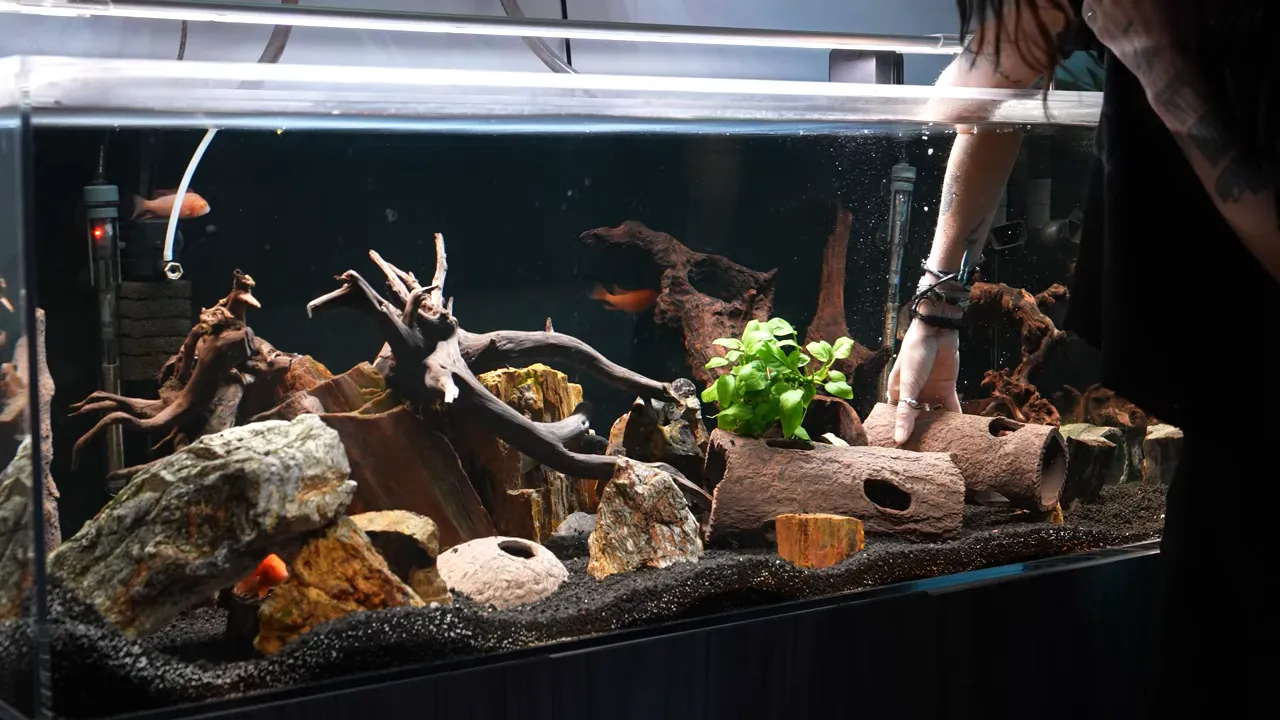
Adding cover does not mean filling every inch with ornaments. The goal is a habitat with choice: open areas for movement alongside sheltered areas for retreat.
1. Start with the needs of the species
Consider whether the fish is likely to use a floor-level cave, a crevice, dense vegetation or overhead cover. Some needs are more specific than others. Plecos, for example, require an appropriate breeding cave if breeding is intended.
2. Build the layout in layers
Begin with larger hardscape such as driftwood, rocks or ceramic logs. Add smaller caves or shelters around those features, then use plants to soften edges and connect the elements visually.
3. Create more than one entrance or escape route
Several shelters spread through the aquarium are generally more useful than one prominent hiding spot. A fish should not need to cross the entire tank to find cover.
4. Keep access clear
Do not bury entrances with substrate or block a cave with another decoration. Check that each opening remains accessible and that the structure stays in its intended position.
5. Observe changes after rearranging
Fish may begin exploring new structures quickly, and territorial fish may establish new boundaries around them. Look for whether fish are using the new cover, moving comfortably through the aquarium and sharing space more effectively.
Fish tank hiding-place mistakes to avoid
Choosing decor only for novelty
Decorative items should do more than occupy space. Prioritise pieces that provide usable shelter, stable placement and an appropriate opening for the fish or invertebrates in the tank.
Offering just one shelter
One cave can become a prized territory. Providing several hiding areas gives more animals access to cover and creates alternatives when a particular space is occupied.
Using a hide that is the wrong size
A shelter should suit its intended resident. Small shrimp shelters, fish caves and larger logs serve different purposes. The opening and internal space should be practical for the species rather than merely visually appealing.
Ignoring the rest of the aquascape
A cave placed in an otherwise bare tank may help, but a varied layout is more effective. Combine caves with plants, wood, rocks, leaf-like cover or other natural-looking structure to reduce empty, exposed areas.
Removing all open space
Cover and swimming room are both important. The aim is not a cluttered aquarium, but an environment where fish can choose between moving openly and retreating to safety.
Do plecos need caves?
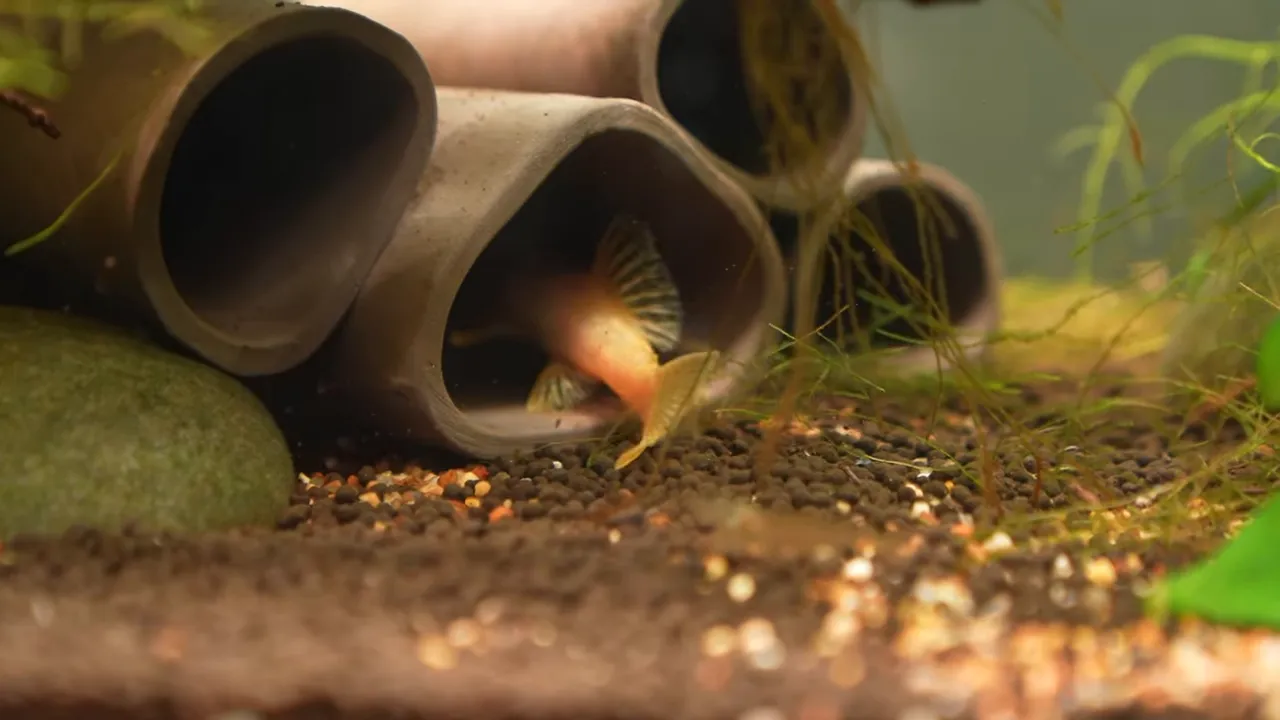
Plecos are a clear example of why species-specific shelter matters. A suitable breeding cave is important for plecos to breed. If breeding is not the goal, caves can still give bottom-oriented fish a sheltered place within the aquarium layout.
Choose a cave arrangement that fits the fish and leaves the entrance unobstructed. Placing several appropriate structures throughout the tank also prevents the entire layout from depending on one occupied hide.
Can hiding spots help shy fish become more visible?
Yes, this is often the outcome of a better-designed aquarium. A fish that knows it can retreat to a safe place is less likely to feel constantly exposed. That sense of security can support more exploration, interaction and activity beyond the shelter itself.
Hiding does not automatically mean a fish is unhappy. Retreating is a normal behaviour. The key is whether the fish has a choice. A healthy layout allows fish to use cover when they want it and emerge when they feel comfortable.
FAQ
Are hiding places necessary in a fish tank?
Yes. Hiding places are an essential part of a fish-friendly environment because they give fish a place to retreat, help support natural behaviour and make the aquarium less exposed.
What are the best hiding places for aquarium fish?
Useful options include live plants, driftwood, branches, rock crevices, slate structures, ceramic logs, caves, terracotta shelters and species-appropriate breeding caves. A mixture is usually more useful than relying on one item.
Can fish hides reduce territorial disputes?
Additional shelter can create separate areas and give fish a way to move away from one another. Territorial species may still establish and defend spaces, so provide several hiding options and observe how the aquarium settles.
Do shrimp need shelters too?
Small, purpose-built shrimp shelters can add protected spaces for shrimp within a larger community aquarium. Choose appropriately sized hides and integrate them with planting and hardscape.
Build an aquarium that gives fish choices
A successful aquarium is more than a tank with water and decorations. It is a usable environment with swimming areas, cover, boundaries and safe retreats. Add shelters that fit the species, distribute them through the layout and combine them with plants and hardscape.
The simplest rule is this: if the aquarium has nowhere for a fish to get out of sight, it likely needs more structure.