Freshwater angelfish are striking, tall-bodied cichlids that can become the focal point of a planted community aquarium. Their graceful shape and range of colours make them popular with beginners, but their size, fins and occasional territorial behaviour mean they need a carefully planned setup.
This guide explains the essential freshwater angelfish care requirements, including aquarium size, temperature, pH, plants, feeding and compatible tank mates.
Table of Contents
- Freshwater angelfish at a glance
- What size tank do angelfish need?
- Best water conditions for freshwater angelfish
- How to set up an angelfish aquarium
- What do freshwater angelfish eat?
- Best tank mates for freshwater angelfish
- Common freshwater angelfish varieties
- Freshwater angelfish care mistakes to avoid
- Freshwater angelfish care checklist
- FAQ
- Key takeaway
Freshwater angelfish at a glance
Freshwater angelfish are cichlids, not marine angelfish. They are easy to recognise by their compressed, triangular bodies, prominent eyes, pointed mouths and extended top, bottom and pelvic fins.
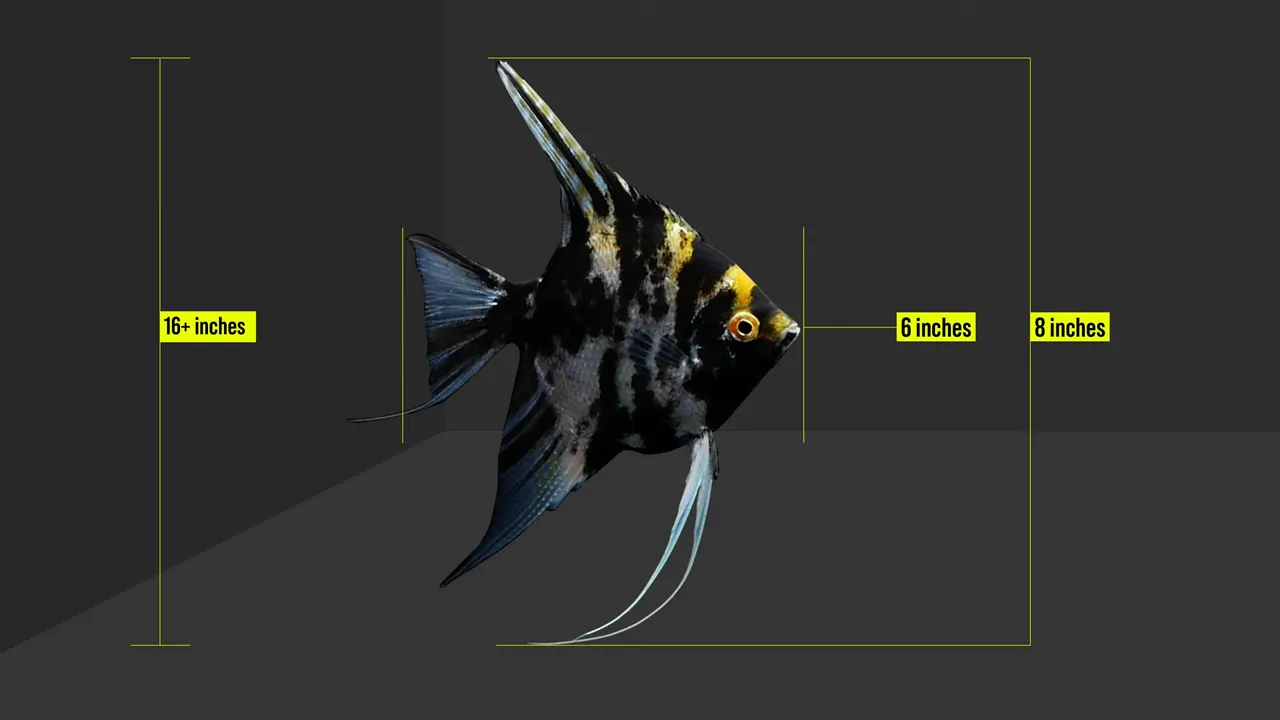
Although their body can reach roughly 6 inches, their full vertical profile, including fins, can approach 8 inches. That height is the reason a tall aquarium matters as much as total water volume.
- Minimum aquarium size for a pair: 30 gallons
- Minimum tank height: more than 16 inches
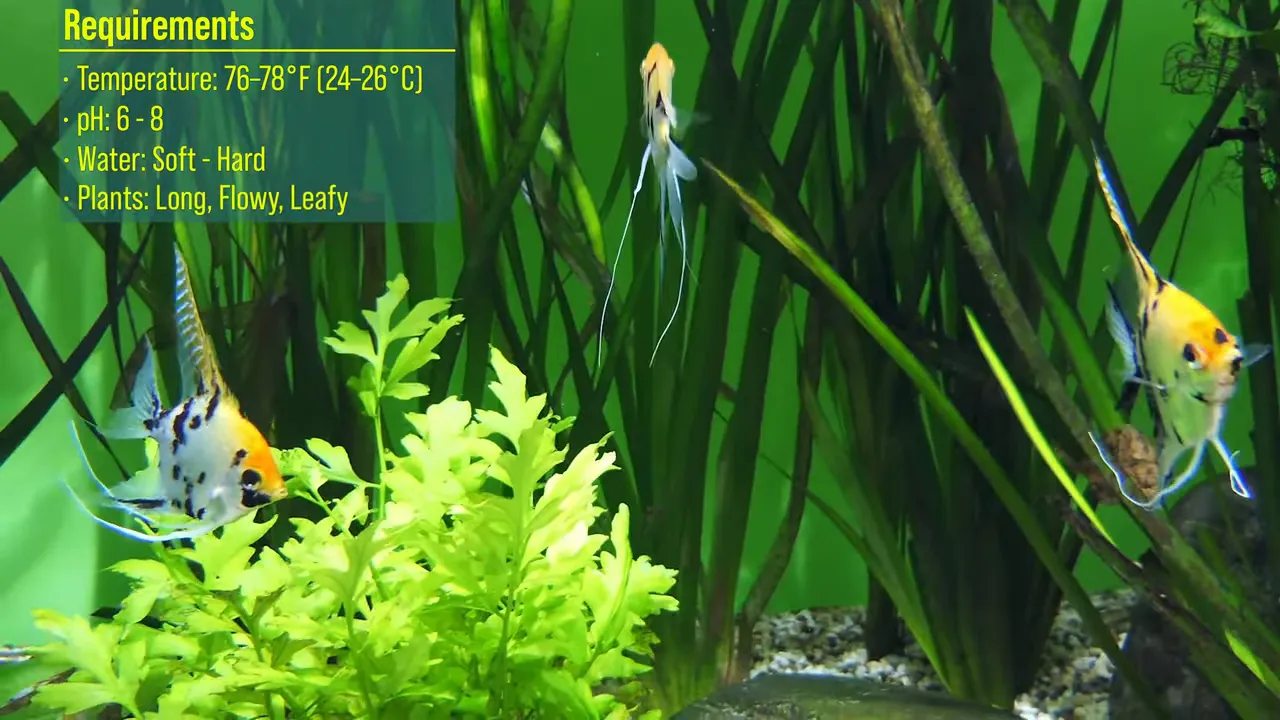
- Recommended temperature: 76 to 78°F, or 24 to 26°C
- Acceptable pH: 6 to 8
- Water hardness: soft through hard water can be suitable
- Temperament: generally manageable, but potentially territorial during breeding
What size tank do angelfish need?
A single pair of freshwater angelfish needs at least 30 gallons of water and an aquarium taller than 16 inches. A tall tank gives the fish enough space to extend their long fins and move naturally without constantly brushing against the substrate, décor or water surface.
Why aquarium height matters
Angelfish do not have the low, horizontal shape of many community fish. Their tall dorsal and anal fins create a vertical silhouette that demands open water above and below them. A short aquarium may have enough litres on paper but still be poorly proportioned for an adult angelfish.
Should you keep one angelfish, a pair or a group?
Angelfish have schooling tendencies, but they are also cichlids. Their social behaviour can become more challenging when pairs form and breeding activity begins. A group therefore requires enough additional space to manage their size and potential aggression.
For a first angelfish aquarium, one fish or a pair is often the simpler choice. Keeping a larger group calls for more room and closer attention to behaviour between fish.
Best water conditions for freshwater angelfish
Freshwater angelfish are hardy and can adapt to a reasonably broad range of water conditions. Consistency is still important, especially when choosing tank mates with their own temperature needs.
| Water parameter | Suitable range | Practical guidance |
|---|---|---|
| Temperature | 76 to 78°F, or 24 to 26°C | Keep the aquarium on the warmer side of a tropical community setup. |
| Temperature tolerance | Up to about 85°F, or 29°C | Higher temperatures are tolerated, but are not the preferred everyday target. |
| pH | 6 to 8 | They can live across a broad pH range. |
| Hardness | Soft to hard water | Choose companions that can thrive under the same conditions. |
Maintaining the water at 76 to 78°F is a sensible target. This moderate warm range is preferable to pushing the temperature high, as warmer conditions can increase metabolism and contribute to more assertive behaviour.
How to set up an angelfish aquarium
A successful angelfish tank balances shelter with open swimming space. These fish appreciate planted surroundings, but the aquarium should not become so crowded that a full-grown angelfish cannot move freely.
Choose tall, soft-looking plants
Long-leaved, flowing plants are particularly suitable for angelfish. They create cover that matches the fish's elegant shape while leaving room for them to pass between leaves.
- Amazon swords
- Java ferns
- Other leafy plants with long, flexible growth
Avoid sharp décor
Angelfish have delicate extended fins that can snag or tear against rough, pointed or sharp-edged decorations. Inspect rockwork, wood and artificial décor for hard protrusions. The goal is an aquascape that looks natural without creating hazards for trailing fins.
Leave open water for swimming
Do not fill every section of the aquarium with plants or ornaments. Angelfish grow into medium-sized fish and need a clear central area to turn and glide. Arrange plants and décor around the edges or in grouped sections, while preserving open water through the middle of the tank.
What do freshwater angelfish eat?
Angelfish readily accept several common aquarium foods. The important point is not to rely on one food alone. A varied diet helps avoid nutrient deficiencies and gives the fish a broader nutritional base.
Suitable food options include:
- Quality flakes
- Frozen mysis shrimp
- Brine shrimp
- Bloodworms
Rotate suitable foods rather than making a single option the entire diet. For example, flakes can be part of regular feeding while frozen mysis shrimp, brine shrimp and bloodworms add variety.
Best tank mates for freshwater angelfish
Angelfish can work well in a community aquarium when companions are chosen for size, behaviour and temperature compatibility. The safest choices are fish that are neither small enough to be mistaken for food nor likely to harass an angelfish's fins.
Compatible tank mate options
Suitable examples include:
- Plecos
- Corydoras
- Appropriately sized tetras
These options occupy different areas of the aquarium or can coexist with angelfish without targeting their fins, provided their temperature requirements also align.
Tank mates to avoid
Avoid species that are known fin nippers. Tiger barbs are a common example: their tendency to nip can damage an angelfish's long fins.
Also avoid adding very small fish. Angelfish are medium-sized cichlids and may eat fish that are small enough to fit in their mouths.
Finally, do not combine angelfish with animals that prefer substantially cooler water. Shrimp and axolotls are poor matches when their preferred temperatures conflict with the warmer conditions angelfish need.
Common freshwater angelfish varieties
Freshwater angelfish are available in several patterns and colour forms. Their care requirements remain centred on adequate vertical space, warm water and thoughtful compatibility, regardless of variety.
- Wild-type silver: silver colouring with dark vertical bars
- Koi angelfish: mixes of red, orange, white and black
- Marble angelfish: marbled black, white and silver patterning
- Black, albino and platinum varieties: alternative colour forms
- GloFish angelfish: brightly coloured angelfish with inherited fluorescent traits
Freshwater angelfish care mistakes to avoid
- Choosing a tank that is too short: Volume alone is not enough. Adult angelfish need a tank taller than 16 inches.
- Overstocking a group: Angelfish can become feisty, particularly when breeding. More fish require more room.
- Using sharp decorations: Long fins can catch on rough or pointed items.
- Overfilling the aquarium with décor: Keep an open swimming area.
- Feeding only one food: Include a range of suitable foods to reduce the risk of nutritional gaps.
- Adding fin nippers: Tiger barbs and similar fish can damage trailing fins.
- Keeping tiny fish with adults: Very small tank mates may be eaten.
- Ignoring temperature compatibility: Choose companions that thrive in the same warm tropical range.
Freshwater angelfish care checklist
- Use an aquarium of at least 30 gallons for a pair.
- Choose a tank taller than 16 inches.
- Keep the temperature around 76 to 78°F, or 24 to 26°C.
- Maintain pH within 6 to 8.
- Use soft, leafy plants such as Amazon swords and Java ferns.
- Remove sharp décor and preserve open swimming space.
- Offer a varied diet of flakes and suitable frozen foods.
- Select tank mates that are large enough, peaceful and comfortable in warm water.
- Avoid tiger barbs, very small fish and cool-water companions.
FAQ
Are freshwater angelfish good for beginners?
They can be a suitable beginner fish when their basic needs are met. A single angelfish or pair is often easier to manage than a larger group, provided the aquarium is tall enough, spacious enough and stocked with compatible fish.
Can a pair of angelfish live in a 30-gallon tank?
Yes. A 30-gallon aquarium is the stated minimum for a pair, but it should also be taller than 16 inches to accommodate their adult height and extended fins.
What temperature is best for freshwater angelfish?
A temperature of 76 to 78°F, or 24 to 26°C, is a strong everyday target. Angelfish can tolerate warmer water, but this range helps keep their metabolism and behaviour more manageable.
Can angelfish live with tetras?
They can live with a range of appropriately sized tetras. Avoid very small fish that could be eaten, and ensure the tetra species is comfortable at the warmer temperature used for angelfish.
Can angelfish live with tiger barbs?
No. Tiger barbs are best avoided because they may nip at an angelfish's long fins.
Key takeaway
Freshwater angelfish thrive when their aquarium is built around their tall body shape and cichlid temperament. Start with a tank of at least 30 gallons for a pair, prioritise vertical height and open water, keep conditions around 76 to 78°F, offer varied foods and avoid fin-nipping or very small tank mates. With these foundations in place, angelfish can be an impressive addition to a warm freshwater aquarium.