Goldfish are among the most widely kept freshwater fish, but they need more space, filtration and routine maintenance than many beginners expect. Proper goldfish care starts with a suitably sized aquarium, cool clean water, a measured diet and tank mates that thrive in the same conditions.
This guide covers the essentials for keeping healthy goldfish, including fancy varieties such as Black Moors, from setting up the tank to recognising common health problems.
Table of Contents
- What do goldfish need to thrive?
- Goldfish types and why variety matters
- Goldfish water requirements
- How big should a goldfish tank be?
- What should goldfish eat?
- Best tank mates for goldfish
- How long do goldfish live?
- Common goldfish diseases and warning signs
- Goldfish care mistakes to avoid
- Simple weekly goldfish care checklist
- Key takeaway
- Goldfish Care FAQs
What do goldfish need to thrive?
Goldfish are cold-water fish that do best in a clean, spacious aquarium with reliable filtration and plenty of open swimming room. They are active eaters that create a considerable amount of waste, so water quality is the foundation of their care.
A successful goldfish aquarium should provide:
- Cool, stable water rather than tropical aquarium temperatures.
- Strong, well-maintained filtration suited to the fish's waste output.
- Adequate tank volume that accommodates present size and future growth.
- Safe décor without sharp edges or narrow gaps.
- Regular partial water changes to remove waste.
- A varied, goldfish-appropriate diet in small portions.
Goldfish types and why variety matters
Goldfish originated in China, where a colour mutation was observed in ordinary silver carp during the Tang dynasty. They later became popular ornamental fish and were introduced to North America in the 1800s.
Generations of selective breeding have produced more than 200 goldfish breeds. Common varieties include fantails, orandas, Black Moors, ryukins, pearlscales, ranchus, bubble eyes, shubunkins, comets, wakins and wakin-like single-tail forms.
Varieties differ in body shape, speed and swimming ability. Fancy goldfish, including Black Moors, have rounded bodies and may be less agile than streamlined single-tail goldfish. This makes a calm environment, open space and safe decorations especially important.
Goldfish water requirements
Goldfish are cold-water fish and should generally be kept at 65 to 75°F. They are not naturally suited to the warmer conditions used for many tropical community aquariums.
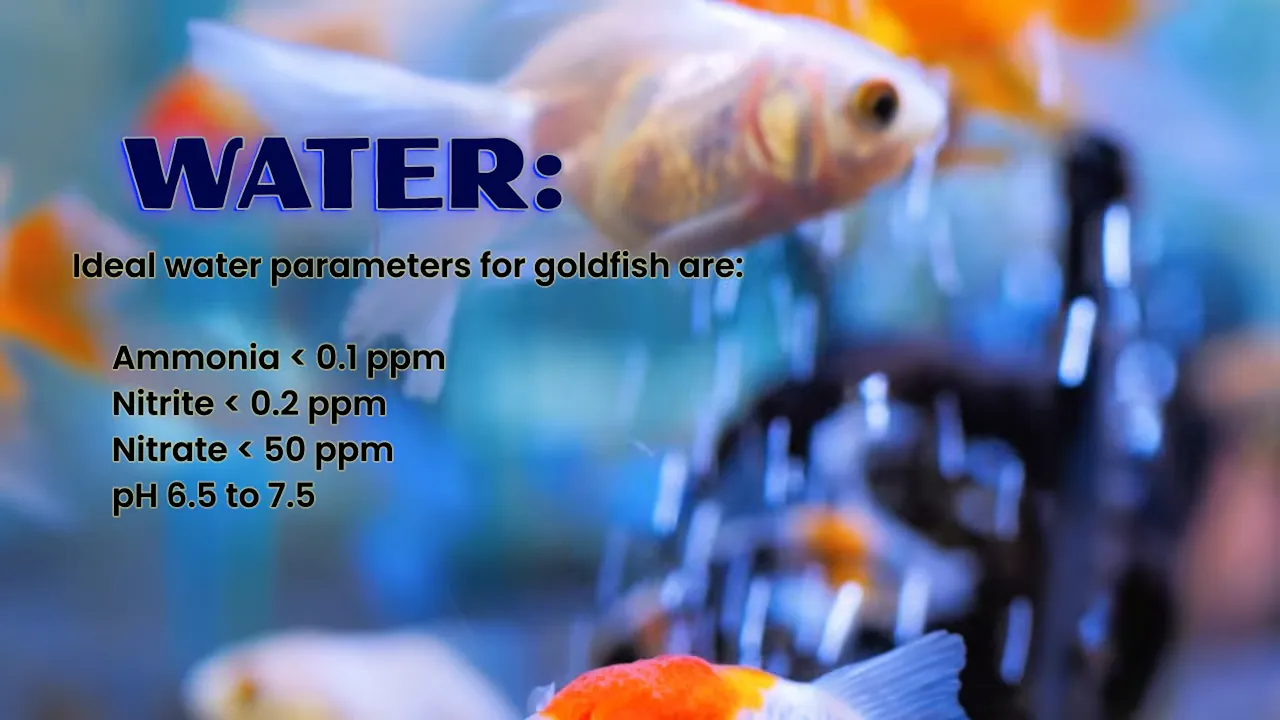
Maintain stable, clean water and test it routinely. Useful target ranges include:
- Ammonia: less than 0.1 ppm
- Nitrite: less than 0.2 ppm
- Nitrate: less than 50 ppm
- pH: 6.5 to 7.5
Why goldfish need powerful filtration
Goldfish are enthusiastic eaters and can produce substantially more waste than a typical tropical fish. A filter must handle that bioload while keeping water moving and oxygenated.
Hang-on-back filters and sponge filters are practical options. Whatever filter is used, ensure it creates enough surface movement to support oxygen exchange. Avoid choosing equipment based only on a general aquarium rating when the tank contains messy, growing goldfish.
Water changes and tap-water safety
Perform weekly partial water changes of 10% to 25% and gravel-clean as needed to remove accumulated waste. Never use soap or household detergents to clean aquarium equipment or surfaces.
Tap water should not be added untreated because chlorine can harm fish. Use a suitable water conditioner before it enters the aquarium. If using reverse osmosis water, remineralise it before use so the water is appropriate for freshwater fish.
A water-change system that connects to a sink can make regular maintenance easier, particularly on larger aquariums.
How big should a goldfish tank be?
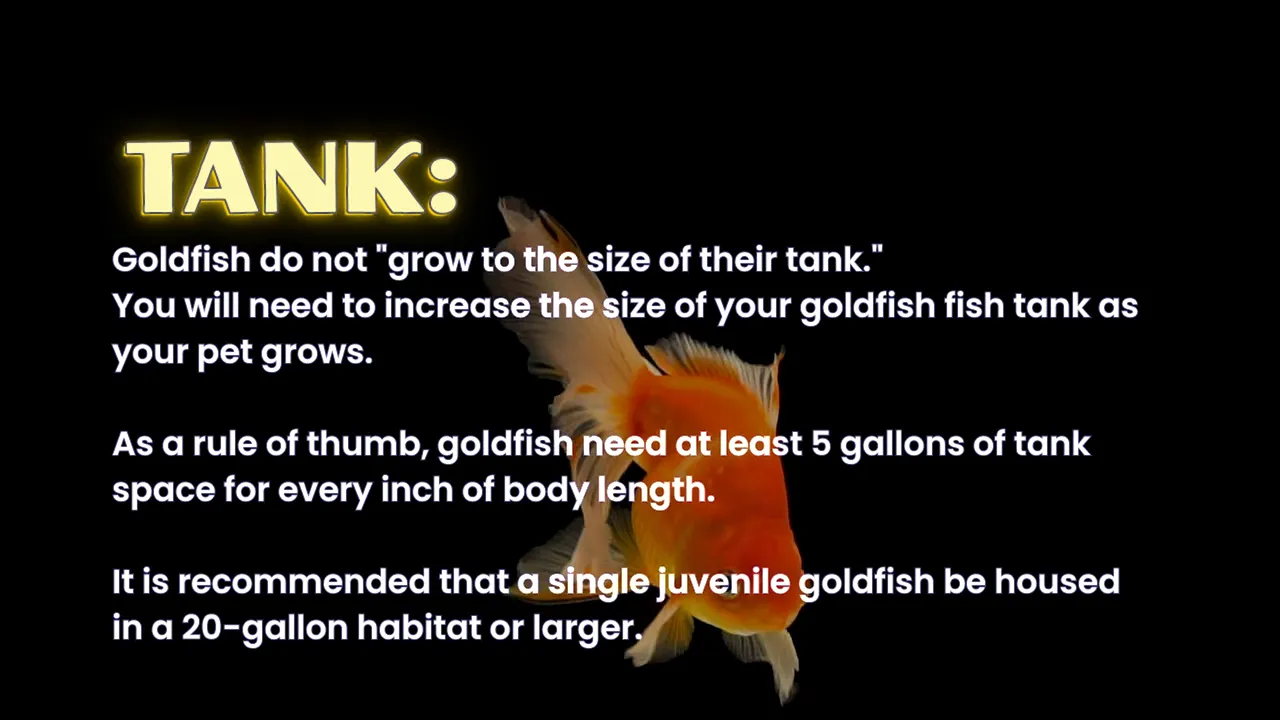
Goldfish do not stay small because they are placed in a small aquarium. They continue to grow, and cramped conditions make it harder to maintain water quality and provide enough swimming area.
A practical rule is to allow at least 5 gallons of tank space for every inch of goldfish body length. A single juvenile goldfish should be housed in a 20-gallon aquarium or larger.
Plan for the adult fish, not just the size at purchase. Larger tanks are easier to keep stable, offer more room for swimming and dilute waste more effectively.
Tank layout and safe décor
Goldfish are relatively slow-moving and are not particularly agile, so prioritise an uncluttered layout with broad areas of open water. Inspect every ornament, rock and piece of wood for sharp or rough edges that could injure fins or the body.
Also avoid small openings where a fish could become trapped as it grows. This is particularly important for round-bodied fancy goldfish and varieties with prominent eyes.
Can goldfish live with live plants?
Yes, but goldfish often eat or disturb plants. Hardy choices such as Java fern and Anubias are useful options for a planted goldfish tank. Goldfish may also nibble floating plants, so floating duckweed can become a supplemental food source rather than a permanent feature.
Secure plants well and expect some grazing. Plants can make an aquarium more natural, but they do not replace filtration, water testing or regular water changes.
What should goldfish eat?
Goldfish benefit from a varied diet that can include flakes, pellets, frozen foods and freeze-dried foods. Choose foods formulated specifically for goldfish because their nutritional needs differ from those of many other freshwater species.
Sinking goldfish foods can be especially useful because they keep feeding closer to the fish rather than leaving food floating on the surface.
How much should you feed a goldfish?
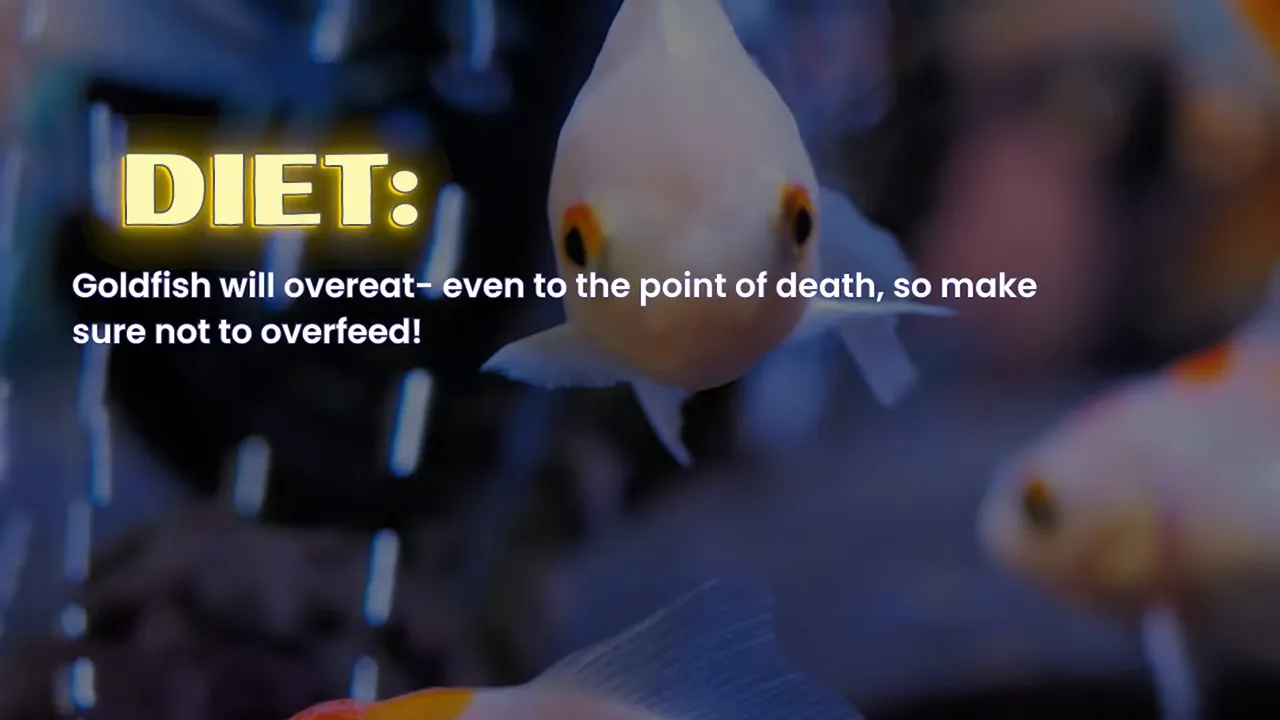
Overfeeding is one of the most common goldfish care mistakes. Goldfish may continue eating beyond what is healthy, and uneaten food quickly adds to water pollution.
Offer only the amount the fish can finish within a couple of minutes. Remove excess food instead of leaving it to break down in the aquarium.
Best tank mates for goldfish
Goldfish are social and can be kept with other goldfish, ideally fish of the same species or similar type. Compatibility matters because tank mates must tolerate cooler water and should not outcompete slower goldfish for food.
Before adding any companion fish, research whether it can thrive at goldfish temperatures. Potential cool-water community species may include white cloud minnows, zebra danios and weather loaches, provided the aquarium is appropriately sized and the needs of every species are met.
Avoid assuming that any peaceful tropical fish is suitable. Temperature requirements are as important as temperament.
How long do goldfish live?
With proper care, most goldfish live about 10 to 15 years. Some have been reported to live 30 years or longer. Their lifespan is one reason to treat a goldfish as a long-term aquarium commitment rather than a short-lived beginner pet.
Common goldfish diseases and warning signs
Many goldfish health problems are closely connected to poor water conditions. Test the water promptly when a fish appears unwell, review recent feeding and maintenance habits, and isolate treatment decisions from guesswork when possible.
Ich
Ich commonly appears as white spots on the fins and body. Affected fish may rub against objects or swim erratically, and rapid breathing can also occur.
Improve water quality and follow the directions for an appropriate commercial ich treatment. Consult a local aquatic specialist or aquatic veterinarian for further guidance, particularly if symptoms persist or affect multiple fish.
Fin rot
Fin rot can show as frayed or deteriorating fins, often with reddened edges. Poor water quality is a key issue to address.
Improve water conditions, consider freshwater aquarium salt where appropriate, and use a suitable commercial remedy according to its instructions.
Bacterial infections
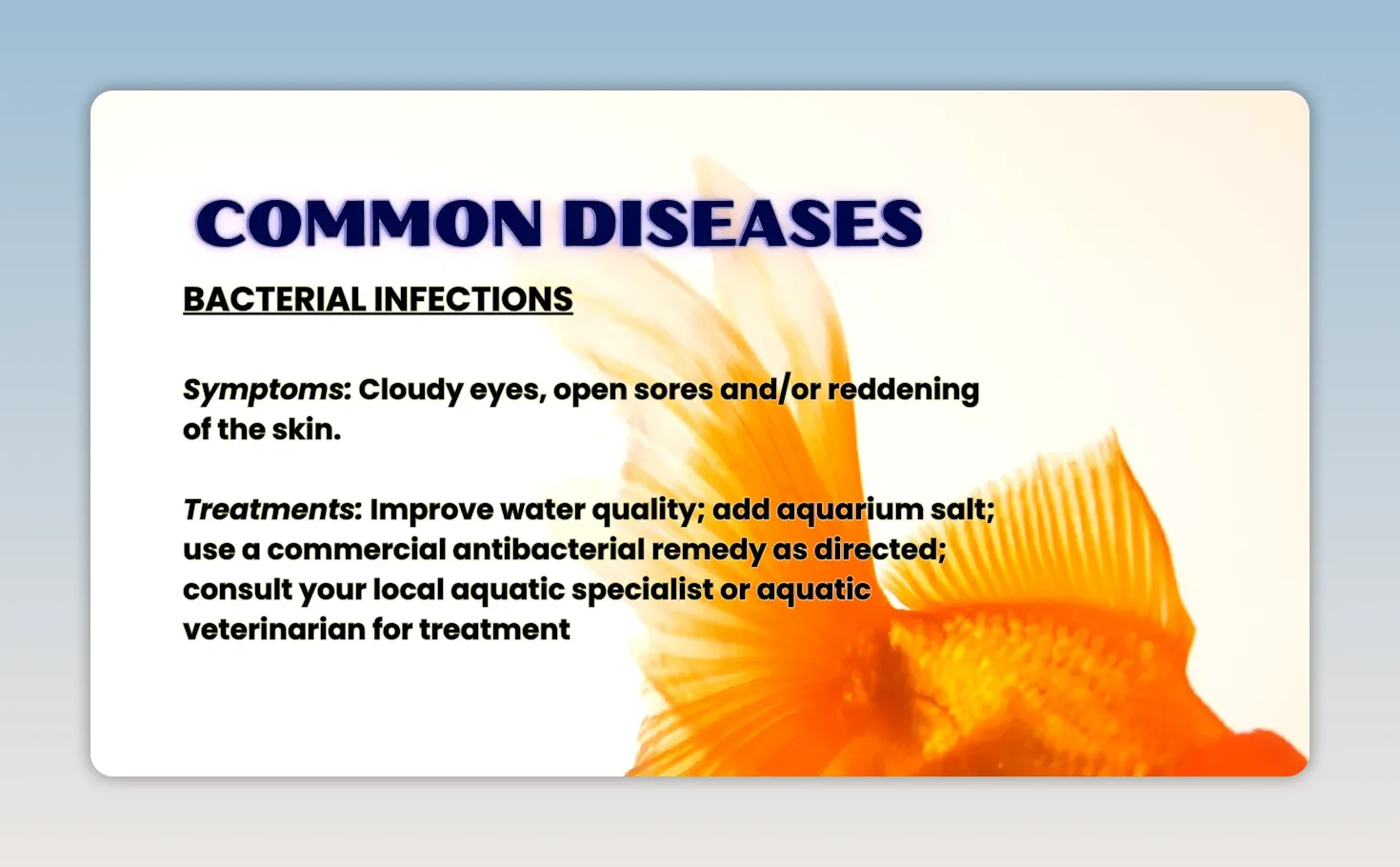
Open sores, ulcers or reddening of the skin can indicate a bacterial infection. These signs warrant careful attention because they may worsen quickly.
Correct water-quality problems immediately, consider aquarium salt where appropriate, and seek advice from an aquatic specialist or veterinarian regarding treatment.
Goldfish care mistakes to avoid
- Using a bowl or undersized tank: Goldfish need space to grow, swim and maintain stable water conditions.
- Keeping goldfish too warm: They are cold-water fish and are not ideal for most tropical community aquariums.
- Underestimating waste: Filtration and maintenance must match their heavy feeding and waste production.
- Skipping water changes: Even a filtered aquarium needs regular partial water changes and waste removal.
- Adding untreated tap water: Always use a water conditioner to neutralise chlorine.
- Overfeeding: Feed only what can be eaten within a couple of minutes.
- Using unsafe decorations: Sharp materials and narrow holes can cause injuries or trapping.
- Choosing tank mates by appearance: Confirm that all fish share compatible temperature and care requirements.
- Cleaning with soap: Soap and detergent residues can be harmful in an aquarium.
Simple weekly goldfish care checklist
- Test the water for ammonia, nitrite, nitrate and pH.
- Change 10% to 25% of the water and remove debris with a gravel cleaner.
- Treat replacement tap water with conditioner before adding it.
- Check the filter flow and confirm there is adequate surface agitation.
- Inspect fish closely for white spots, frayed fins, reddened skin, unusual rubbing or rapid breathing.
- Remove uneaten food and adjust feeding portions if necessary.
- Check décor and plants for loose pieces, sharp edges and hazards as fish grow.
Key takeaway
Healthy goldfish care is built around space, cool clean water and consistency. Start with a properly sized aquarium, provide effective filtration, maintain a weekly water-change routine, feed small varied portions and choose compatible companions. These basics protect water quality and give goldfish the conditions needed for a long life.
Goldfish Care FAQs
Do goldfish need a heater?
Goldfish are cold-water fish and generally do well at 65 to 75°F. A heater may be useful where room temperatures become too cold or fluctuate significantly, but it is not always necessary in a stable indoor environment.
How often should goldfish water be changed?
Perform a partial water change weekly. Changing 10% to 25% of the aquarium water, along with gravel cleaning, helps remove waste and maintain water quality.
Can goldfish live with tropical fish?
Goldfish should not automatically be kept with tropical fish because goldfish prefer cooler water. Only consider tank mates that tolerate the same temperature range and have compatible care needs.
What is the best food for goldfish?
Use a varied diet of foods formulated for goldfish, including suitable flakes, pellets, frozen foods and freeze-dried foods. Feed a small amount that can be eaten within a couple of minutes.
Can goldfish live in a small tank?
No. Goldfish continue growing and create substantial waste. A single juvenile goldfish should have a 20-gallon aquarium or larger, with at least 5 gallons of water volume per inch of body length as it grows.