Hair algae can quickly cover carpeting plants, driftwood, rocks and slow-growing leaves, turning a planted aquarium into a tangled mess. The most effective fix is not a single product or a quick scrub. It is a combination of manual removal, filtration maintenance, a substantial water change and more consistent tank conditions.
This guide explains why hair algae takes over, how to remove it without damaging an aquascape, and how to stop it returning.
Table of Contents
- What is hair algae in an aquarium?
- Why hair algae grows in planted tanks
- How to remove hair algae: a practical recovery plan
- Restoring CO2 after an algae cleanup
- How to prevent hair algae from coming back
- Common hair algae removal mistakes
- Hair algae recovery checklist
- Frequently asked questions
- Final takeaway
What is hair algae in an aquarium?
Hair algae is a long, thread-like type of algae that forms loose green strands across plants, hardscape and equipment. It often catches on fine-leaved plants and carpeting species, where pulling it out by hand can uproot or damage healthy growth.
A small amount of algae is common in freshwater aquariums. A major outbreak usually signals that light, nutrients, carbon dioxide and maintenance are no longer in balance.
Why hair algae grows in planted tanks
Hair algae can develop for several reasons at once. The most important goal is to identify and correct the conditions that allowed it to spread before cleaning begins.
Lighting that runs too long
Excessive photoperiods are a major trigger for algae. Leaving an aquarium light on continuously, or simply forgetting to use a timer, gives algae far more opportunity to grow than plants can handle.
Use a dependable timer so the lighting schedule is consistent every day. Avoid making major, frequent changes to the light duration while the aquarium is recovering.
Unstable or insufficient CO2
In a CO2-injected planted tank, interruptions and fluctuations in CO2 can encourage algae growth. A failed timer or solenoid, an empty cylinder or an inconsistent bubble rate can leave plants without the carbon source they rely on while lighting remains available.
Check that the CO2 system is operating consistently and that the diffuser is positioned low enough in the aquarium to give the gas time to dissolve rather than escape immediately at the surface.
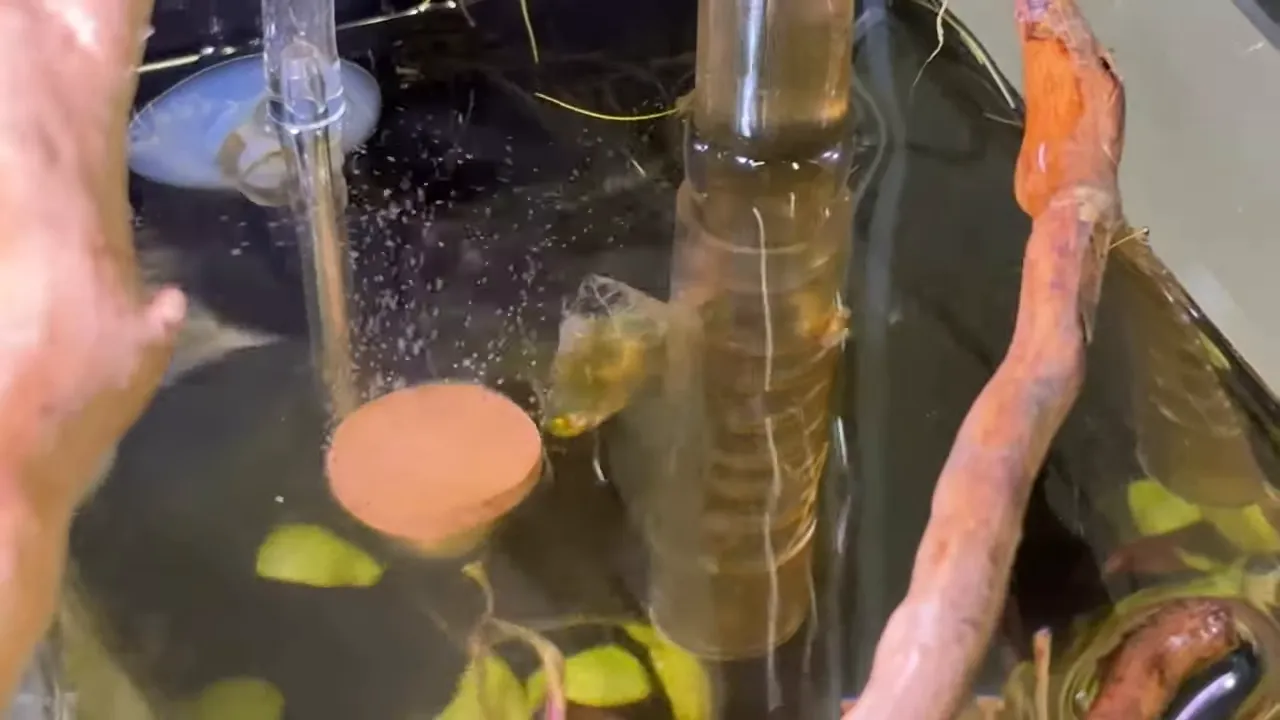
Overfeeding fish
Uneaten food and excess waste add nutrients to the aquarium. Feed only what the fish can consume in about a minute. This is a simple habit that reduces organic buildup and limits an important fuel source for algae.
Skipped water changes
Regular water changes remove dissolved waste and suspended debris. Skipping them for extended periods allows nutrient-rich material to accumulate, especially when overfeeding or heavy plant debris is also present.
Dirty mechanical filtration
A neglected canister filter can hold a surprising amount of decomposing debris. Dark water, chunks of waste and clogged mechanical media indicate that the filter is contributing to the problem instead of efficiently collecting particles.
When hair algae is severe, inspect the filter early rather than treating only what is visible inside the display tank.
Why a low phosphate test does not always rule out excess nutrients
A test may show little or no detectable phosphate even when algae is actively growing. Algae can use available phosphate quickly, so the water test reflects what remains at that moment, not necessarily the total amount being introduced and consumed in the system.
Instead of relying on one result alone, assess the aquarium as a whole: feeding, cleaning schedule, filter condition, plant health, lighting and CO2 consistency.
How to remove hair algae: a practical recovery plan
For a significant outbreak, work in a deliberate order. Start by improving the hidden sources of waste, then physically remove as much algae as possible before it can regrow.
1. Clean the canister filter first
Turn off equipment as appropriate for maintenance and open the filter carefully with towels nearby. Canister filters can spill when hoses or lids are handled incorrectly.
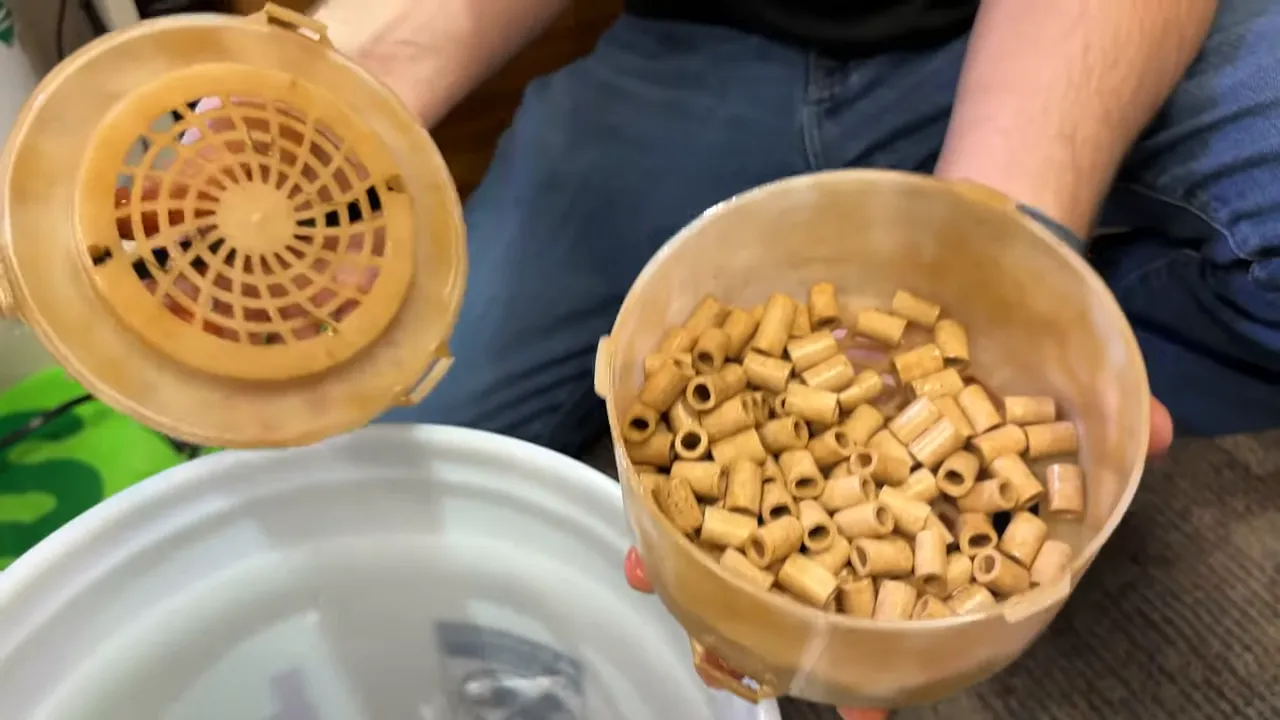
- Remove and discard dirty mechanical media such as exhausted filter floss or fleece.
- Clean accumulated sludge and debris from the filter housing.
- Keep biological media in removed aquarium water while working.
- Do not allow beneficial biological media to dry out.
- Replace mechanical polishing media before reassembling the filter.
Mechanical media captures fine waste, while biological media provides a home for beneficial bacteria. Treat them differently during cleaning. The objective is to remove trapped debris without unnecessarily harming the established biological filtration.
Additional chemical filtration can be used to help polish water and address odours, but it does not replace manual cleaning, water changes or stable aquarium routines.
2. Remove plants that cannot realistically be saved
Do not spend excessive time trying to rescue every plant. If a plant is heavily smothered, deteriorating or covered beyond practical cleaning, remove it. Leaving a badly infested plant in place can make the cleanup harder and leave more algae behind.
Hardier plants with sturdy leaves may be worth saving. Clean the leaves gently and inspect their roots before returning them to the layout.
3. Twist hair algae out with a fine brush
A small, fine-bristled toothbrush or aquarium-safe brush is one of the most useful tools for long strands of hair algae. Rotate or swirl the brush through the algae so the strands wrap around the bristles, then lift the collected algae away.
This method is especially useful around carpeting plants and delicate grasses, where fingers can pull up rooted plants along with the algae.
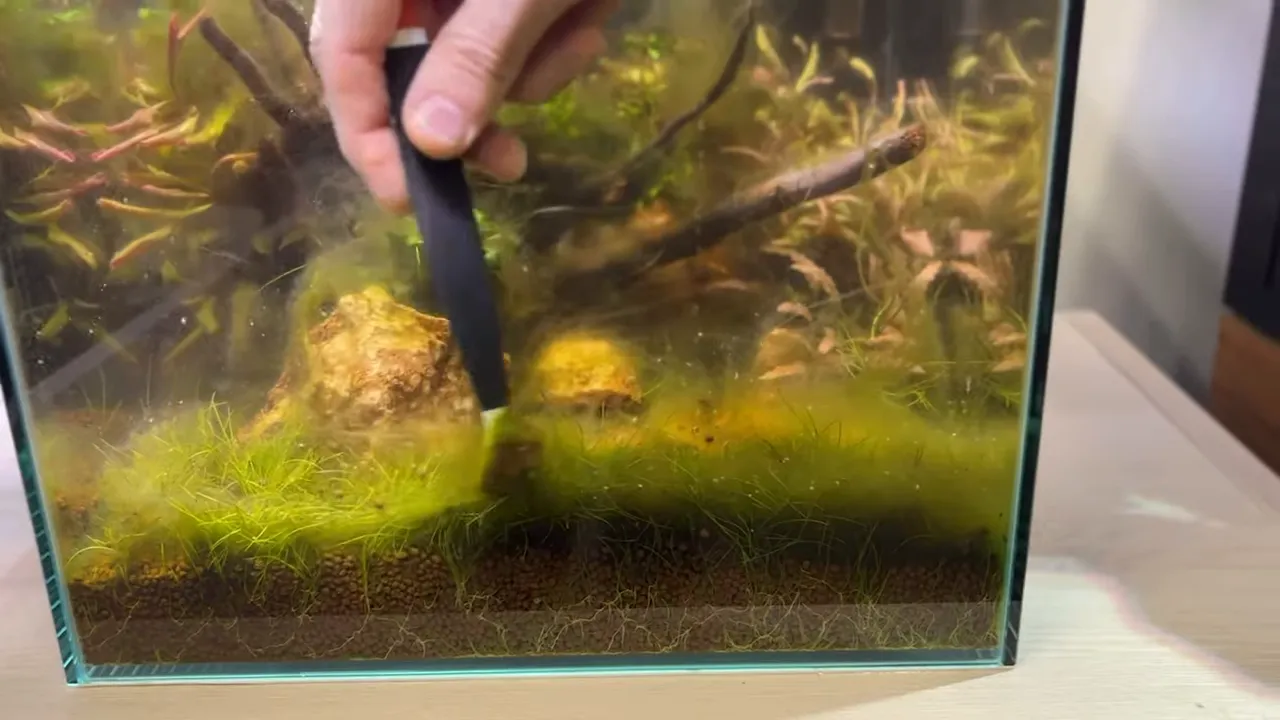
Work slowly around roots and hardscape. A little substrate may move during the process, but that is generally easier to correct than replacing an uprooted carpet.
4. Scrub hardscape and let loose algae enter the water
Brush algae from driftwood, stones and inaccessible plant areas until it becomes suspended in the water column. This may make the aquarium look temporarily messier, but it prepares the debris for removal by siphon.
Do not rush to drain the tank before loosening visible algae. The existing water can help carry detached strands toward the siphon.
5. Siphon out loosened algae and debris
Use a small siphon first when working in a nano aquarium or around a delicate planted foreground. Its slower flow gives more control and removes floating debris without rapidly emptying the tank.
For stubborn algae trapped in hair grass or other dense planting, a larger tube can provide stronger suction. Brush the algae loose immediately beside the intake so the siphon catches it before it settles elsewhere.
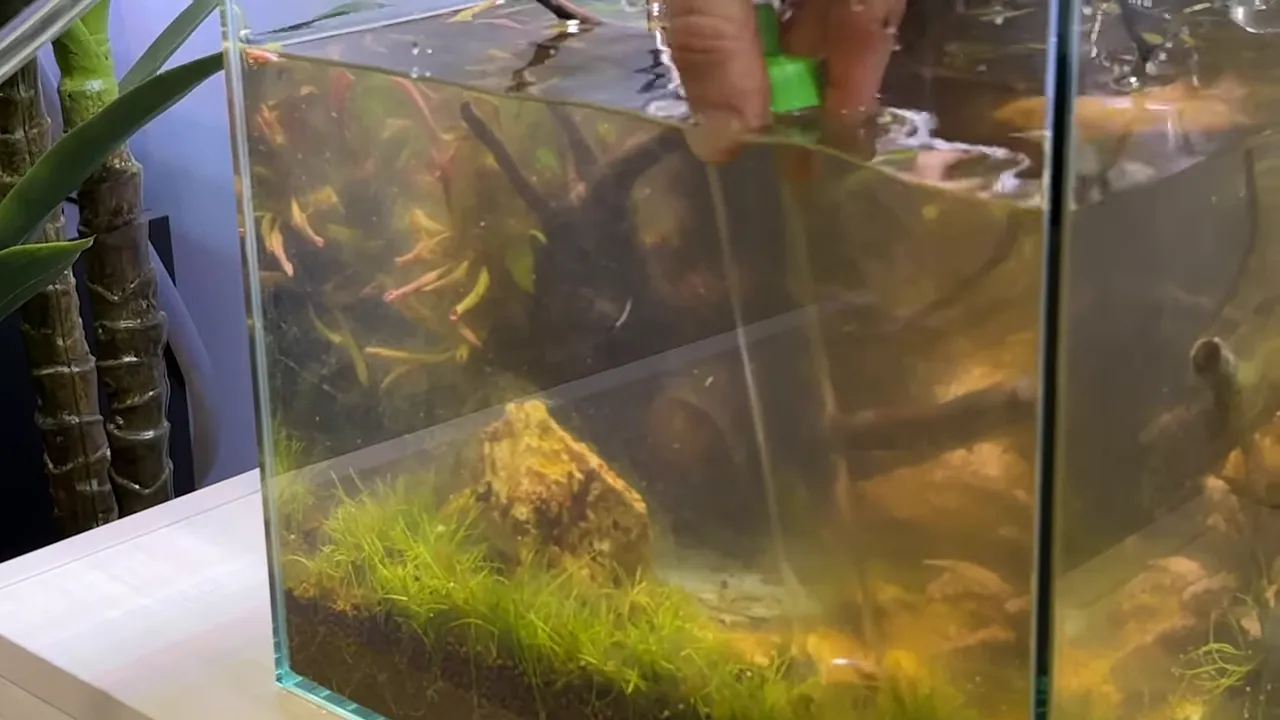
Be cautious around rooted plants. Aggressive gravel vacuuming can pull up substrate from beneath a carpet, leaving it scattered over the plants.
6. Perform a large water change when the outbreak is severe
A major hair algae outbreak can justify a substantial water change. In a heavily affected aquarium, removing roughly 75% of the water helps export suspended algae, debris and dissolved waste after the cleaning work.
Refill the aquarium carefully, then check the plants and hardscape again. Small missed clumps often become obvious once the water is clear and the layout has settled.
7. Clean the aquarium glass and restart equipment
Use an aquarium-safe glass cleaner to remove fingerprints and smudges from the outside of the glass. Once the aquarium has been refilled, restart the filter and heater as needed.
When removing a siphon from the tank, cover the end or tilt it upward. This prevents leftover water from spraying substrate and debris back into the aquarium or onto the surrounding area.
Restoring CO2 after an algae cleanup
If the aquarium uses injected CO2, restore a stable supply after maintenance. Confirm the regulator, solenoid, tubing, bubble counter and diffuser are all functioning correctly.
- Turn the CO2 system back on according to the aquarium's established schedule.
- Set a consistent bubble rate rather than making repeated abrupt adjustments.
- Ensure the diffuser sits sufficiently below the water surface.
- Check for obvious tubing kinks, loose connections or equipment failures.
Consistency matters more than chasing an exact number from a single cleanup session. The aim is to provide plants with dependable conditions so they can resume healthy growth.
How to prevent hair algae from coming back
The cleanup removes existing algae. Prevention comes from maintaining the conditions that were corrected during the cleanup.
Use a light timer
Never rely on memory to turn aquarium lighting on and off. A timer prevents accidental multi-day lighting periods and gives plants a predictable routine.
Feed less, not more
Fish may appear eager for food, but excess feeding becomes waste. Limit portions to what can be eaten in around one minute and remove food that remains uneaten.
Maintain the filter on a routine
Inspect and clean a canister filter regularly, approximately once a month to every six weeks when conditions call for it. The right interval depends on the aquarium, but visibly dirty mechanical media and reduced cleanliness are clear signs not to postpone service.
Keep up with water changes
Regular water changes are part of algae prevention, not only an emergency response. They remove accumulated waste before it becomes a major issue.
Check CO2 equipment before plants show problems
Include the CO2 timer, solenoid, cylinder level, regulator and diffuser in routine maintenance checks. Catching an interruption early is easier than recovering from a full algae outbreak.
Consider a preventative algae-control product carefully
A preventative algae-control treatment may be used as part of an ongoing maintenance approach. It should support, not replace, proper lighting, CO2 stability, feeding control, filtration service and water changes.
Common hair algae removal mistakes
- Only cleaning the visible algae: Dirty filter media and excess waste can keep feeding the outbreak.
- Pulling algae with bare fingers in a planted carpet: This can uproot delicate plants and disturb the layout.
- Removing water before loosening algae: Brushing first allows detached algae to be siphoned out efficiently.
- Over-vacuuming planted substrate: Strong suction can strip substrate from beneath carpet plants.
- Rinsing biological media carelessly: Keep it wet in aquarium water to protect beneficial bacteria.
- Ignoring the light timer: An uncontrolled photoperiod can undo all the cleanup work.
- Restarting CO2 without checking placement: A diffuser positioned too close to the surface can waste gas.
Hair algae recovery checklist
- Identify the likely cause: too much light, CO2 instability, overfeeding, skipped maintenance or several factors together.
- Clean the canister filter and replace dirty mechanical media.
- Protect biological media in removed tank water.
- Remove unsalvageable plants and algae-covered debris.
- Twist long strands from plants with a fine brush.
- Brush hardscape to loosen algae into the water.
- Siphon suspended debris, using gentle flow near planted carpets.
- Carry out a substantial water change if the outbreak is severe.
- Restore filtration, heating and stable CO2.
- Set a reliable light timer and return to regular water changes.
Frequently asked questions
Can hair algae be removed without removing plants?
Yes, many plants can be cleaned in place. A fine brush can wrap and lift hair algae from sturdier leaves, carpeting plants and hardscape. However, plants that are badly covered or deteriorating may be better removed to prevent the infestation from continuing.
Why is hair algae growing when my phosphate test is low?
A low reading does not necessarily mean phosphate has not been available. Active algae growth can consume phosphate quickly, leaving little detectable phosphate in the water at the time of testing.
How often should a canister filter be cleaned?
A practical maintenance interval is around once a month to every six weeks, adjusted for the aquarium's waste load and filter condition. If mechanical media is full of dark debris or the filter is visibly dirty, it needs attention sooner.
Should I do a large water change to remove hair algae?
For a severe outbreak, a large water change can be useful after manual removal and siphoning. Removing around 75% of the water helps export suspended algae and accumulated debris from the aquarium.
Will hair algae return after I clean it out?
It can return if the original causes remain. Prevent regrowth by controlling light duration, keeping CO2 stable where used, avoiding overfeeding, cleaning filtration and maintaining regular water changes.
Final takeaway
The fastest way to fix hair algae is to remove as much of it as possible while correcting the conditions that caused it. Clean the filter, brush and siphon out algae, complete the necessary water change, then stabilise light, CO2, feeding and maintenance. With consistent care, even a heavily affected planted aquarium can be cleaned up and kept under control.