Guppies are colourful, active livebearers that can work well in a simple community aquarium or a focused breeding setup. Their care is straightforward when the tank provides appropriate stocking, stable warm water, gentle filtration and a varied diet.
A 20-gallon aquarium is a practical starting point for keeping and breeding guppies. The key is to avoid overcrowding, give females relief from persistent male attention and build the aquarium around the needs of tiny fry as well as adult fish.
Table of Contents
- What guppies need to thrive
- Is a 20-gallon tank big enough for guppies?
- Choosing guppies: colours, tails and breeding goals
- Best substrate for guppies
- Live plants and hiding places for guppy fry
- Best filtration for guppy breeding tanks
- Guppy water temperature and pH
- What to feed guppies
- How to breed guppies responsibly
- Common guppy care mistakes to avoid
- Simple guppy tank checklist
- Frequently asked questions about guppy care
- Key takeaway
What guppies need to thrive
Successful guppy care comes down to a few essentials:
- Enough room: A 20-gallon tank can support a modest group of about 10 guppies.
- A female-heavy ratio: Keep approximately two females for every male.
- Suitable water chemistry: Guppies do well in water with a higher pH, so avoid substrates that make water more acidic.
- Gentle, fry-safe filtration: Sponge filters are particularly useful in breeding tanks.
- Temperature control: Keep the aquarium in an appropriate range of roughly 65°F to the mid-80s°F.
- Varied foods: Adults benefit from a rotation of foods that includes both animal-based and vegetable-based nutrition.
- Plant cover: Dense live plants, especially near the surface, give fry valuable cover.
Is a 20-gallon tank big enough for guppies?
Yes. A 20-gallon aquarium is a suitable size for a first guppy tank and can also be used for breeding. A useful starting stocking level is around 10 guppies, rather than filling the tank as heavily as possible.
The sex ratio matters as much as the total number. Male guppies actively pursue females, especially when conditions are favourable. Keeping only one female with several males can lead to continual chasing and stress. Aim for two females per male to spread out that attention.
When a larger guppy tank makes sense
Larger aquariums offer more space for plants, decor and growing fry, but guppies do not require an oversized tank to get started. A larger setup is most useful if you want to maintain multiple groups, grow out many young fish or dedicate separate tanks to different colour and fin lines.
Choosing guppies: colours, tails and breeding goals
There is no single best guppy variety. The best choice is usually the colour, pattern and fin shape that appeals most to you. Guppies are available in many combinations, including colourful orange-and-white types, long-eared forms, ribbon tails, flag tails and double sword tails.
Before buying fish, decide whether the aquarium is intended to be a display tank or a selective breeding tank.
Community display tank
If the goal is a lively mixed guppy aquarium, different varieties can be kept together. Crossbreeding may occur, which can be enjoyable if you simply want to see the different offspring that develop.
Selective breeding tank
If you want to maintain a particular strain, keep one guppy type in each breeding tank. This helps preserve the distinctive traits of that line and makes the resulting fry more predictable for sharing, selling or continuing a breeding project.
Best substrate for guppies
Guppies are flexible about substrate. Gravel, sand and other aquarium-safe options can all work. The most important consideration is whether you plan to grow live plants and how the substrate affects the water.
Because guppies prefer higher-pH water, avoid a substrate that is designed to lower pH or create acidic conditions. Some planted aquarium soils can do this, so check the intended effect of the product before using it in a guppy tank.
How to choose a practical substrate
- For artificial plants: Choose the gravel colour and texture you prefer.
- For live plants: Select a substrate suitable for the plants you intend to grow.
- For fish visibility: Avoid a substrate colour that makes the fish’s colours disappear visually.
- For water chemistry: Prioritise a substrate that will not push the aquarium toward acidic water.
Driftwood and stones are optional. Guppies do not need breeding caves because they are livebearers, not egg layers. Decorative hardscape can still make the aquarium look more natural and break up open space.
Live plants and hiding places for guppy fry
Adult guppies can breed in open water, but young fry benefit from cover. Dense planting is especially helpful when you want to protect fry from a valuable or carefully maintained guppy line.
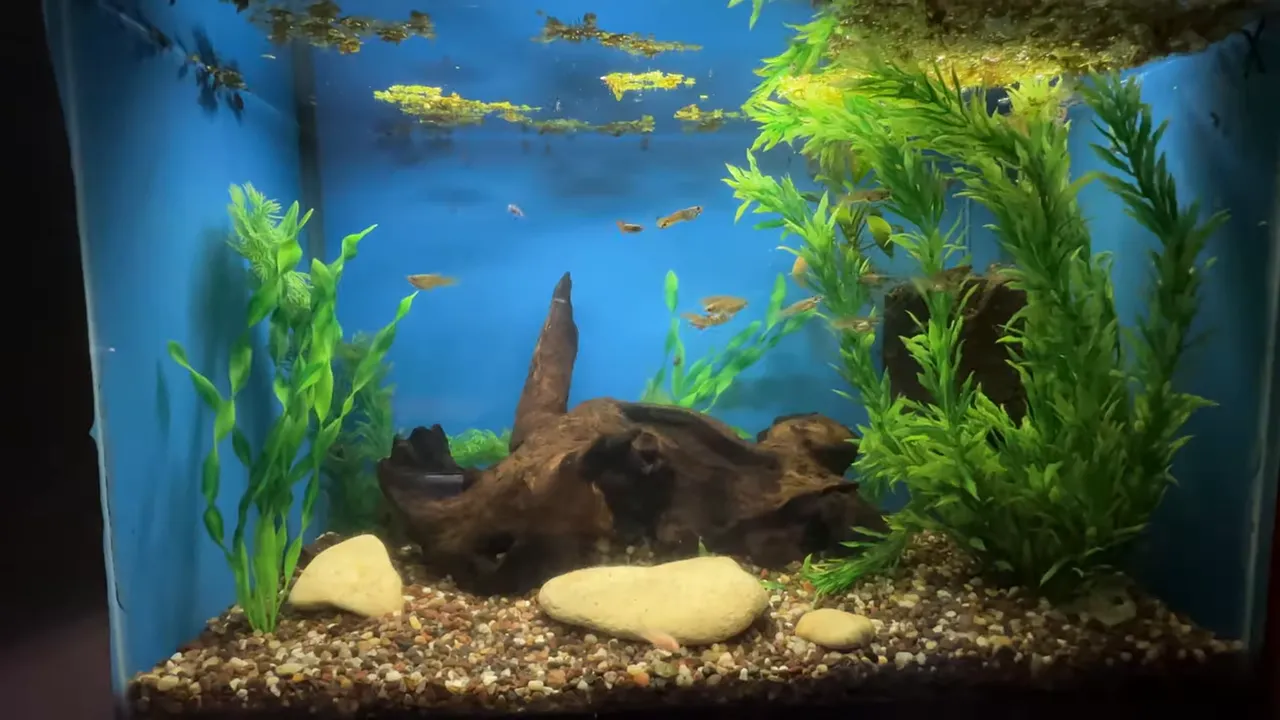
Use plants at different levels of the aquarium. A combination of rooted plants, bushy mid-water plants and floating plants can create a layered environment where small fry can move out of sight.
Useful plant cover options
- Duckweed: A low-cost floating option for adding surface cover.
- Red root floaters: A floating plant choice that may require more attention than duckweed.
- Dense planted areas: Thick growth gives fry more places to retreat.
- Artificial plants: These can provide structure, although realistic floating-plant alternatives can be harder to find.
Breeding traps are not always necessary. Confining a female in a small trap can create stress, while a planted aquarium can provide fry cover without isolating her. In a well-planted setup, fry may be able to survive without a trap.
Best filtration for guppy breeding tanks
A sponge filter is a strong choice for guppy tanks, particularly where fry are present. Young guppies are extremely small, and filters with a suction intake can pose a risk to them. Sponge filtration provides a gentler alternative.
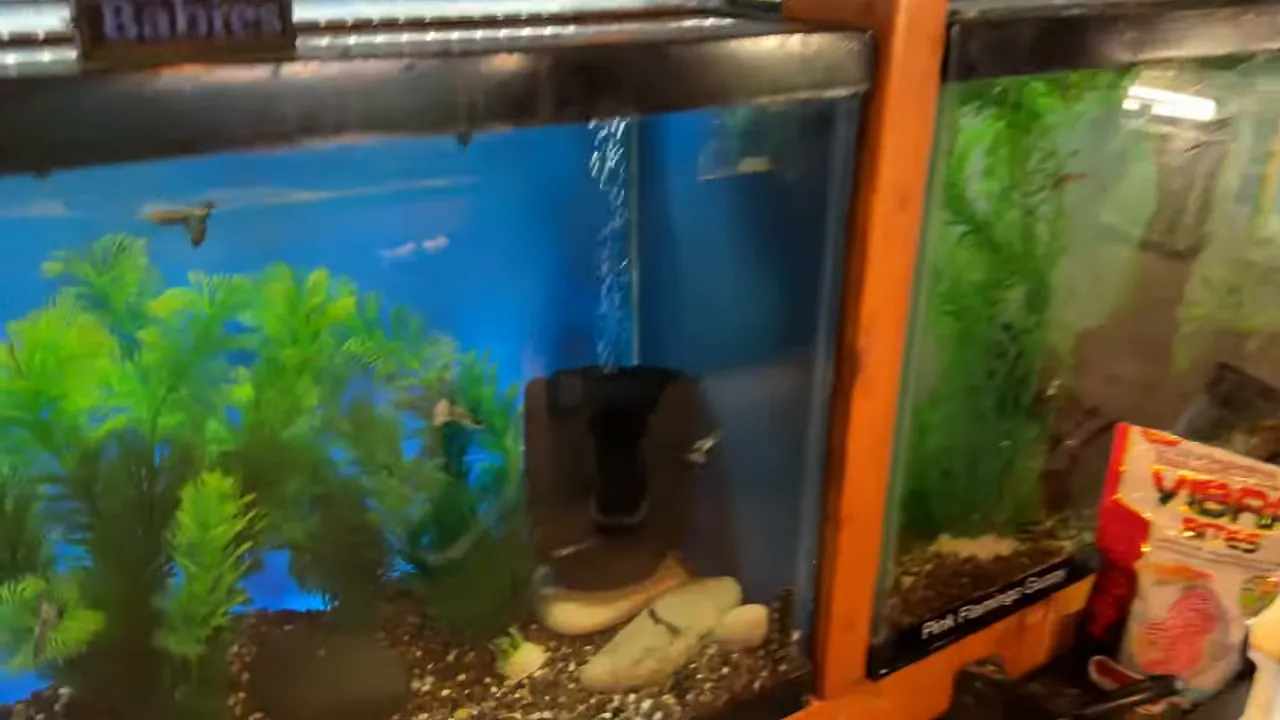
Use an appropriately sized sponge filter for the aquarium and adjust air flow so the water movement remains suitable for the fish and fry. The goal is filtration without creating a powerful intake or excessive current.
Guppy water temperature and pH
Guppies can be maintained across a broad temperature range, from about 65°F to the mid-80s°F. Do not push temperatures above the mid-80s. A fish room maintained around 70°F can keep multiple aquariums warm enough without individual heaters in every tank, but most home aquariums may need their own heater depending on room temperature.
For water chemistry, guppies favour a higher pH. The practical takeaway is to avoid adding materials that intentionally acidify the aquarium. Consider the effect of any active aquarium soil before using it.
What to feed guppies
Guppies are omnivores. They should receive both animal-based and vegetable-based foods rather than relying on one food every day. A varied feeding routine supports a more complete diet and prevents dependence on a single formula.
Adult guppy feeding plan
Offer a rotation of at least three different foods. Suitable categories include:
- Quality flake food
- Frozen foods
- Freeze-dried foods
- Foods with vegetable content
- Foods with animal-based ingredients
Freeze-dried food is a useful option because it retains nutritional value while being easy to store. Regardless of the food type, do not overfeed. Add a small amount and allow the fish to eat it rather than repeatedly adding more food to the water.
Feeding guppy fry
Fry need much smaller food than adults because their mouths are tiny. Use foods sized for young fish, such as very small pellets or rotifers. Add only a small quantity, since excess food can quickly foul the aquarium.
How to breed guppies responsibly
Guppies are livebearers, meaning females give birth to free-swimming fry rather than laying eggs that require a cave or spawning site. This simplifies the breeding environment, but it also means fry may appear regularly once males and females are kept together.
Use this basic framework for a breeding setup:
- Start with a manageable group. In a 20-gallon tank, around 10 fish is a reasonable starting point.
- Keep the right ratio. Include about two females for each male.
- Choose your breeding objective. Mix varieties for a community display, or keep one strain per tank to preserve a line.
- Use gentle filtration. Sponge filters help protect tiny fry.
- Add plant cover. Dense plants and floaters give fry places to shelter.
- Feed fry appropriately. Use fine foods in small portions.
- Plan for growing numbers. Breeding guppies can produce more fish than a single aquarium can comfortably hold.
Common guppy care mistakes to avoid
Keeping too many males with too few females
Male guppies may continually chase females. A female-heavy ratio helps reduce the pressure on any one fish.
Using an intake that can pull in fry
Tiny fry can be vulnerable around strong suction. A sponge filter is a practical choice in breeding and fry tanks.
Choosing acidic substrate without checking its effect
Some aquarium soils are intended to reduce pH. That does not align well with guppies’ preference for higher-pH water.
Feeding the same food every day
Guppies need both plant and animal nutrition. Rotate multiple foods instead of offering only one flake or pellet product indefinitely.
Overfeeding adults or fry
Food should be offered in modest amounts. This is especially important for fry foods, which are very fine and easy to add in excess.
Relying on breeding traps as the only fry strategy
A heavily planted tank can provide a less restrictive alternative for the female while still giving fry places to hide. A trap is not automatically required for successful fry care.
Simple guppy tank checklist
- Tank: A 20-gallon aquarium is a suitable starting size.
- Stocking: Begin with about 10 guppies.
- Sex ratio: Keep two females per male.
- Substrate: Choose an aquarium-safe option that does not acidify the water.
- Filter: Use a sponge filter for a fry-safe setup.
- Temperature: Maintain water within roughly 65°F to the mid-80s°F.
- Plants: Include dense cover, especially if fry survival is important.
- Adult food: Rotate at least three foods with plant and animal components.
- Fry food: Use fine foods such as tiny pellets or rotifers.
- Feeding amount: Feed lightly and avoid excess food.
Frequently asked questions about guppy care
How many guppies can live in a 20-gallon tank?
A practical starting point is about 10 guppies in a 20-gallon aquarium. Keep the group balanced with approximately two females for every male.
Do guppies need a heater?
Guppies can be kept from around 65°F to the mid-80s°F. Whether a heater is needed depends on the room temperature and whether the aquarium can remain within that range.
What is the best filter for guppy fry?
Sponge filters are a strong option for guppy breeding tanks because they provide filtration without the exposed suction associated with some other filter types.
Do guppies need live plants?
Live plants are not mandatory, but dense plants and floating cover can be very useful for protecting fry. Artificial plants can also add structure, though floating live plants are particularly effective at creating surface cover.
What should guppy fry eat?
Guppy fry need very small foods. Tiny pellets and rotifers are appropriate examples. Feed small amounts to avoid overfeeding.
Key takeaway
A well-planned guppy aquarium does not need to be complicated. Start with a sensibly stocked 20-gallon tank, maintain more females than males, use fry-safe sponge filtration, avoid acidifying substrates and feed a varied diet. If breeding is part of the goal, dense plant cover and appropriately sized fry food can make a major difference.