When fish outgrow a nano aquarium, moving them into a larger, established tank is often the best solution. A successful aquarium upgrade is not simply a matter of catching fish and releasing them into new water. The new home needs stable conditions, compatible water chemistry, adequate filtration, and a calm transfer process.
This guide explains how to move small aquarium fish, shrimp, and plants into a larger planted tank while reducing stress and protecting water quality.
Table of Contents
- When Is It Time to Upgrade Your Aquarium?
- Plan the Move Around Water Stability
- How to Move Aquarium Hardscape and Attached Plants
- Should You Reuse Old Aquasoil During an Aquarium Upgrade?
- How to Move and Replant Staurogyne Repens
- How to Catch Fish Without Chasing Them
- Why Drip Acclimation Matters When Moving Fish
- How to Transfer Amano Shrimp
- Equipment That Supports a Small Planted Aquarium
- What to Do Immediately After Moving Fish
- Common Mistakes to Avoid During a Tank Upgrade
- Frequently Asked Questions
- Key Takeaway
When Is It Time to Upgrade Your Aquarium?
A fish may need a larger aquarium when it has grown significantly, when its schooling group needs more swimming space, or when the existing aquascape has become crowded. Plants can outgrow a pico or nano tank too, especially fast-growing species attached to hardscape.
Before moving livestock, make sure the destination aquarium is cycled. It should have a functioning filter, stable temperature, and safe water parameters. Moving fish into an uncycled aquarium can expose them to ammonia and nitrite, even if the aquarium looks clean and finished.
Prepare the new tank before catching anything
- Install and run the filter.
- Heat the aquarium if the species requires stable warm water.
- Use established filter media where possible to support biological filtration.
- Confirm the water temperature is close to the original tank.
- Prepare conditioned tap water or properly remineralized RO water.
- Arrange plants, hardscape, and substrate before transferring livestock.
A prepared tank gives fish somewhere secure to settle instead of placing them into an unfinished layout while equipment is still being adjusted.
Plan the Move Around Water Stability
The central risk in any aquarium transfer is a sudden change in water conditions. Even two tanks in the same room can differ in pH, hardness, temperature, and dissolved mineral content.
Temperature matters, but it is not the only consideration. A gradual transition also helps fish adjust to differences in pH and water hardness. This is particularly important when transferring fish from a mature tank to a newly set-up aquarium with different substrate or source water.
Choose the right water preparation method
Tap water generally needs a dechlorinator before it enters an aquarium. Reverse osmosis water has the opposite issue: it does not contain the minerals fish need. When using RO water, add an aquarium remineralizer so essential elements such as calcium and magnesium are restored.
Use the water treatment approach appropriate for the water source. Dechlorinator handles chlorine or chloramine in tap water, while remineralizer restores minerals removed by reverse osmosis filtration.
How to Move Aquarium Hardscape and Attached Plants
Large aquascape pieces are easiest to transfer before the fish. In a planted nano tank, a removable hardscape feature can make the job far simpler. For example, spiderwood mounted to slate can be lifted out as one piece, placed in the new aquarium, and partially buried with gravel to hide the slate base.
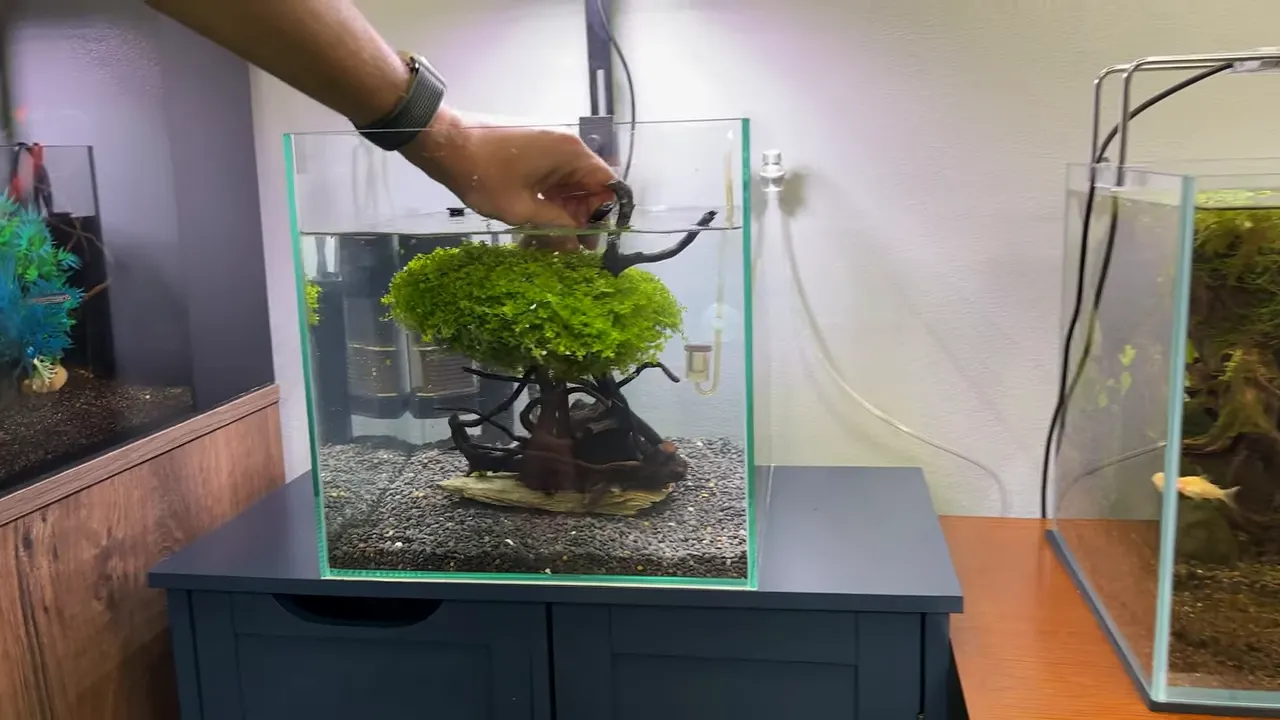
Mounting spiderwood on slate also avoids the need to boil or soak the wood just to make it sink. Once in the aquarium, add enough substrate around the slate to keep the base visually discreet and stable.
Trim attached Monte Carlo outside the aquarium
Monte Carlo can grow densely over spiderwood and create an underwater bonsai effect. As it grows, trim hanging or uneven sections to maintain the desired shape. If the plant is rooted securely into a removable hardscape piece, take the piece out of the aquarium before trimming.
This reduces floating plant debris and makes shaping much easier. A small amount of loose foliage may still fall into the tank, but it can be removed with a cup by dipping the opening near the floating fragments and letting water draw them inside.
Should You Reuse Old Aquasoil During an Aquarium Upgrade?
Reusing established aquasoil can be tempting, but moving it from an older planted aquarium can create a substantial mess. Disturbing substrate that has been in place for a long time can cloud the water and complicate an otherwise simple transfer.
For a straightforward upgrade, using fresh gravel in the new tank can be a practical option. However, changing from nutrient-rich aquasoil to inert gravel changes how plants receive nutrition.
Important: Do not assume plants that grew well in aquasoil will receive the same nutrition in gravel. Root-feeding plants need nutrients placed near their roots.
How to Move and Replant Staurogyne Repens
Staurogyne repens is a rooted planted-tank species that can grow into large, bushy clumps from a small tissue culture start. It tolerates trimming well, including root trimming during replanting.
Trim long roots before replanting
Long roots can be difficult to bury in gravel. Rather than forcing a tangled mass into the substrate, trim the roots back and plant the stems cleanly. This makes planting easier and encourages the plant to establish fresh roots in its new location.
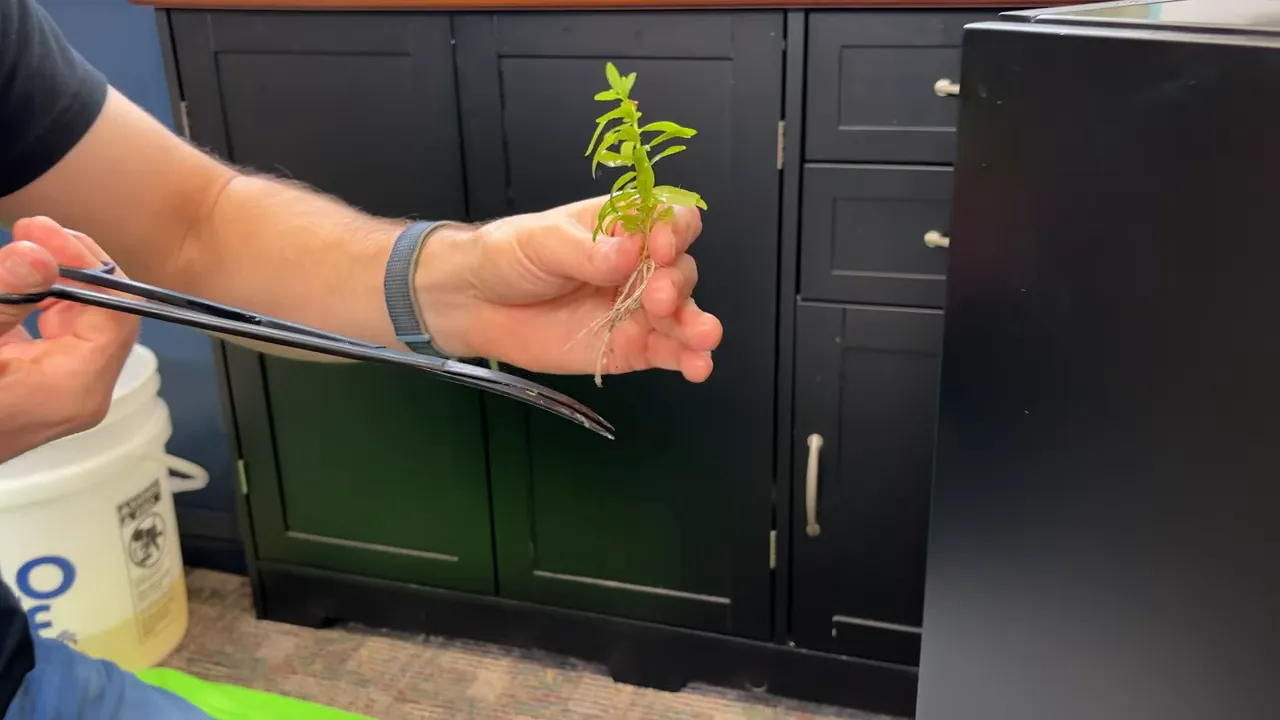
Plant the trimmed stems into the gravel, placing the roots beneath the surface as effectively as possible. New roots can then grow into the new substrate.
Use root tabs in gravel
Inert gravel does not provide the nutrient base that aquasoil does. Root tabs solve this problem by delivering fertilizer directly near the plant roots. Place a root tab within roughly an inch of a root-feeding plant so nutrients are available where the plant can use them.
The replacement schedule depends on the root tab product. Some products need replacement every four to six weeks, while slower-release options may last around two months. Follow the product directions and set a reminder so plants do not slowly decline after the initial move.
How to Catch Fish Without Chasing Them
Catching fish can be the most stressful part of an aquarium upgrade. The key is patience. Do not swing or swat at fish with the net, and do not turn the process into a prolonged chase around the aquarium.
A gentler fish-net method
- Move the net slowly through the water.
- Follow the fish's movement rather than lunging toward it.
- Pause when the fish becomes agitated instead of increasing the chase.
- Allow the fish to drift or swim gently into the net.
- Transfer one fish at a time when practical.
Slow, controlled movements are less likely to panic fish. If a fish escapes the net, reset and wait for a calmer opportunity rather than immediately pursuing it.
Release fish from the net carefully
Once the fish is in the destination container or aquarium, submerge the net and let the fish swim out on its own. A gentle backward or side-to-side movement can help if necessary. Avoid shaking the fish free or pouring it abruptly into the tank.
Why Drip Acclimation Matters When Moving Fish
Drip acclimation gradually mixes water from the destination aquarium into the holding container. It gives fish time to adjust to differences in temperature, pH, and hardness before they enter the new tank.
Even a short acclimation period can make a meaningful difference to how fish handle a tank move. It is a useful safeguard when water sources, substrates, or mineral levels differ between the two aquariums.
Basic drip acclimation process
- Place the captured fish in a clean bucket or holding container with water from the original aquarium.
- Run airline tubing from the new aquarium to the holding container.
- Start the siphon by filling the tubing with water.
- Use a clamp or valve to reduce the flow to a slow drip.
- Allow the destination water to mix gradually with the old water.
- After acclimation, net the fish from the holding container and release it gently into the new aquarium.
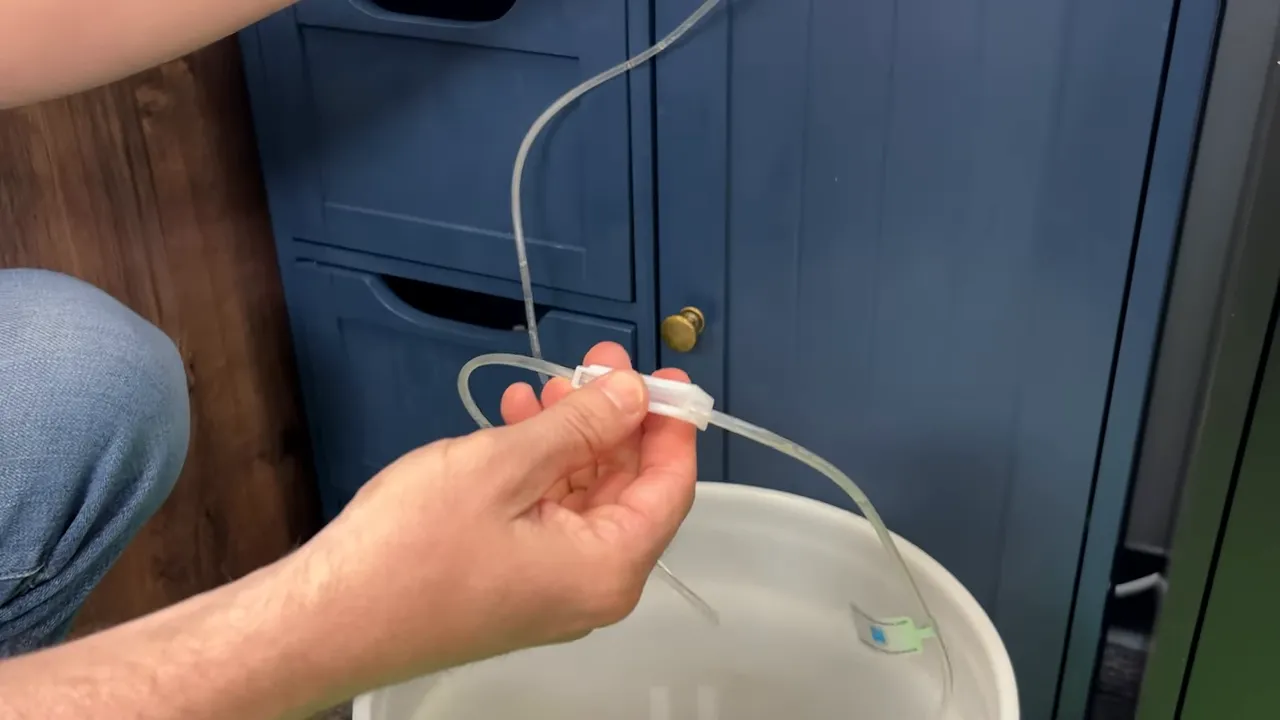
Do not confuse drip acclimation with simply matching temperature. Temperature is only one factor. Slow mixing also reduces the impact of pH and mineral differences.
How to Transfer Amano Shrimp
Amano shrimp can be quick and difficult to catch, especially in planted aquariums. A small shrimp net provides more control than a large fish net. Use the same patient approach: observe the shrimp's movement, position the net calmly, and avoid frantic attempts.
Once in the new aquarium, submerge the net and allow the shrimp to leave on its own. Shrimp, like fish, benefit from a gradual acclimation process when the two tanks have different water conditions.
Equipment That Supports a Small Planted Aquarium
A compact planted aquarium does not need to be complicated, but it does need dependable basics. A functional nano setup can include:
- Filter: An internal filter with chambers for established biological media and an adjustable outlet helps maintain circulation while directing flow where it is needed.
- Heater: A small preset heater maintains temperature. Some compact models can be concealed under substrate if designed for that use.
- Lighting: Plants need appropriate light, but excessive light can contribute to algae growth.
- CO2 system: Supplemental CO2 can support plant growth in a planted aquarium. A complete kit with a cylinder, solenoid, tubing, and drop checker can simplify setup.
- Root tabs: Essential for rooted plants grown in nutrient-poor gravel.
- Planting tweezers and curved scissors: Helpful for placing plants and trimming established growth.
CO2 is not a substitute for maintenance. Light intensity, algae growth, water parameters, and plant health still need regular observation.
What to Do Immediately After Moving Fish
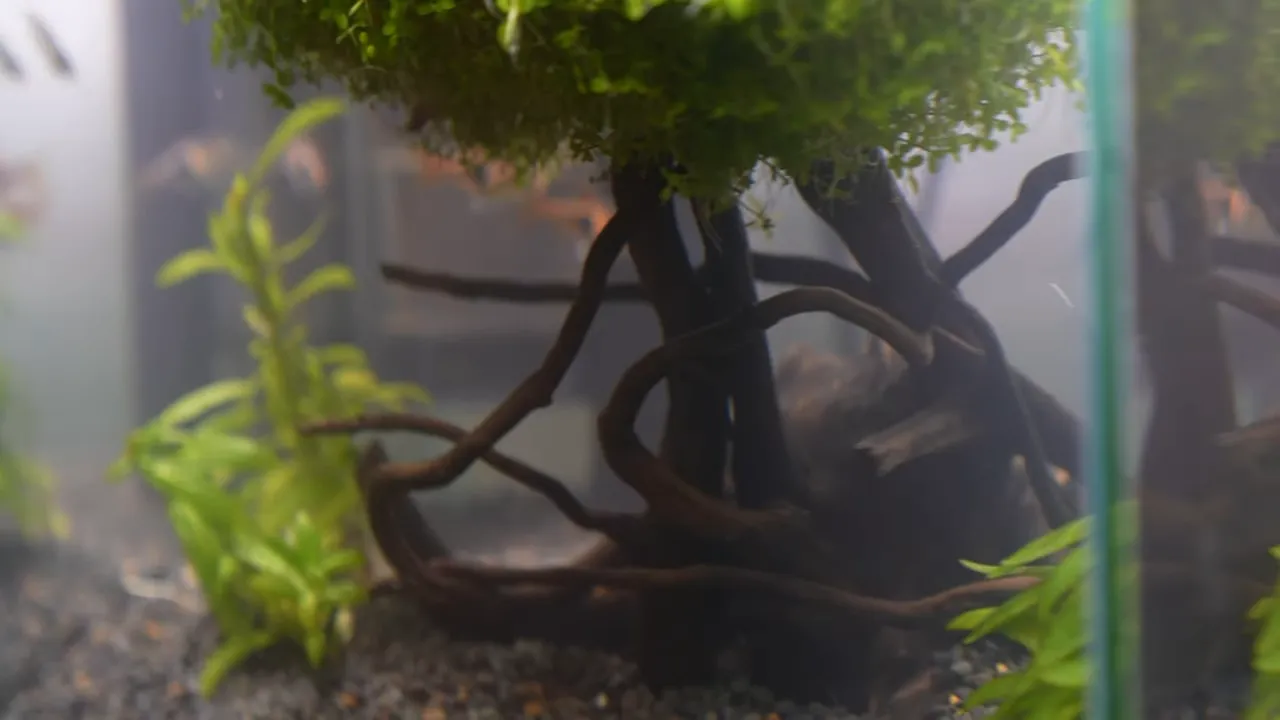
The first day after a tank move is a settling period. Fish may take time to explore, school normally, and resume feeding. Avoid adding unnecessary stress while they adapt.
Do not feed immediately
Fish often do not eat right after a transfer. Adding food too soon can leave uneaten food in the aquarium, increasing waste and ammonia risk. Giving fish about a day to settle before feeding avoids creating a water-quality problem during the most sensitive part of the move.
Monitor the aquarium closely
Observe fish behavior and inspect the tank regularly during the first days after the move.
- Look for gasping or unusual surface breathing.
- Check for white spots or other visible signs of illness.
- Test water to confirm parameters remain safe.
- Watch plants for signs of adjustment or nutrient deficiency.
- Monitor algae and adjust lighting if algae begins to increase.
- If using CO2, adjust it carefully based on plant and fish response.
If fish show signs consistent with ich, prompt treatment may be needed. More broadly, abnormal behavior should be treated as a signal to check water quality first.
Common Mistakes to Avoid During a Tank Upgrade
- Moving fish into an uncycled tank: A larger aquarium is not automatically safe without established biological filtration.
- Skipping acclimation: Similar temperature does not guarantee matching pH or hardness.
- Chasing fish aggressively: Slow netting is less stressful and usually more effective.
- Feeding immediately: Fish may not eat, leaving decaying food in a newly stocked aquarium.
- Ignoring nutrients after changing substrate: Root feeders moved from aquasoil to gravel need root tabs.
- Using pure RO water without remineralizing: Fish need mineral content that RO water does not provide.
- Moving old aquasoil without a plan: It can turn a simple move into a muddy, disruptive project.
Frequently Asked Questions
Can fish be moved directly from one aquarium to another?
Fish can be moved directly only when the new aquarium is cycled and the water conditions are very close. A gradual drip acclimation is the safer approach when temperature, pH, or hardness may differ.
How long should fish settle before being fed after a move?
Allowing fish about a day to settle is a sensible approach. Fish often do not eat immediately after a transfer, and leftover food can add unnecessary waste to the aquarium.
Can aquarium plant roots be trimmed before replanting?
Yes. Trimming overgrown roots can make rooted plants easier to plant and can encourage new root growth. This is especially useful when moving plants into gravel.
Do plants need root tabs in gravel?
Root-feeding plants moved from nutrient-rich aquasoil to inert gravel need a nutrient source near their roots. Root tabs provide that localized nutrition.
Do I need to remineralize RO water for an aquarium?
Yes. RO water lacks the minerals that fish need, including calcium and magnesium. Add an aquarium remineralizer before using it for a freshwater aquarium.
Key Takeaway
Upgrading fish to a larger aquarium works best when the new tank is fully prepared before the move begins. Prioritize a cycled filter, safe water preparation, gentle netting, drip acclimation, and close post-move monitoring. If plants are moving from aquasoil into gravel, trim them as needed and provide root tabs for continued growth.
A careful transfer protects the fish, keeps the planted aquascape manageable, and gives a growing community the space it needs to settle into its new home.