Cloudy aquarium water after cleaning, aquascaping, or disturbing the substrate can make a tank look worse before it looks better. When the cloudiness is caused by fine debris suspended in the water column, a sediment filter reactor can work as a high-flow mechanical polishing filter and clear the water far faster than waiting for standard filtration alone.
This approach repurposes a carbon or RODI-style reactor, replacing chemical media with a sediment filter cartridge. It is suitable for freshwater and saltwater aquariums when the goal is to capture suspended particles such as detritus, dust, mulm, and similar debris.
Table of Contents
- What causes cloudy or dirty-looking aquarium water?
- What is a sediment filter reactor?
- When should you use this aquarium water polishing method?
- What you need
- How to set up a sediment filter reactor for cloudy water
- How long does it take to clear aquarium water?
- How to tell when the sediment filter needs replacing
- Mistakes to avoid when polishing aquarium water
- Why use a sediment filter instead of a water change?
- Quick checklist for crystal-clear aquarium water
- Frequently asked questions
- Takeaway
What causes cloudy or dirty-looking aquarium water?
Not all cloudy water has the same cause. In many cases, the haze is made up of physical particles floating through the aquarium, rather than a water chemistry problem. This is especially common immediately after maintenance or any activity that stirs up the tank.
Common sources of suspended cloudiness include:
- Fine dust from substrate, rocks, or aquarium décor
- Detritus released during cleaning
- Mulm disturbed from the substrate or plants
- Fine debris created while aquascaping
- Bacterial blooms or other small suspended matter
A normal aquarium filter can eventually collect this material, but it may take a long time to make a visible difference. A dedicated sediment cartridge creates a more direct route for aquarium water to pass through fine mechanical filtration.
What is a sediment filter reactor?
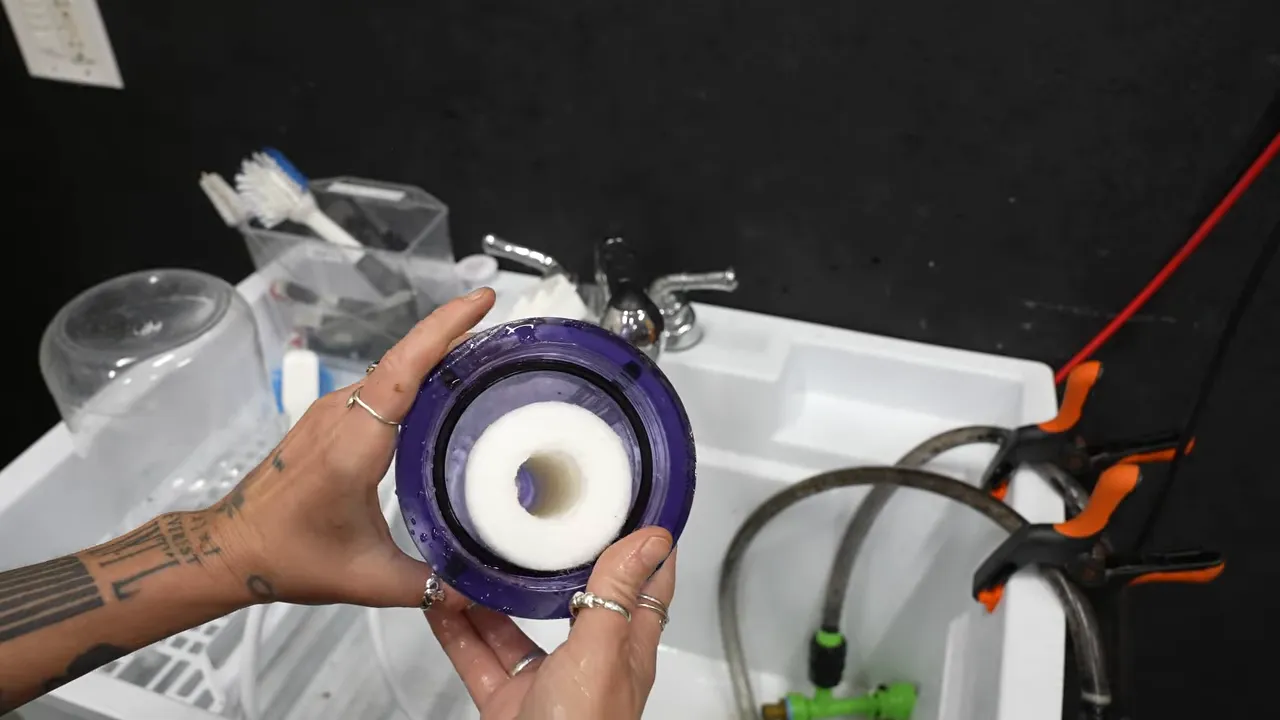
A sediment filter reactor is a standard reactor housing used with a sediment filter cartridge instead of carbon, GFO, or another chemical filtration medium. A small pump moves aquarium water from the tank, through the cartridge, and back into the tank.
Sediment cartridges are commonly used as the first stage of an RODI system. In that role, they trap fine particles before water moves through later purification stages. Applied to aquarium water, the same cartridge can polish the water by physically collecting suspended debris.
When should you use this aquarium water polishing method?
Use a sediment filter reactor when the main problem is visible particulate matter in the water. It can be particularly useful after:
- Cleaning the aquarium
- Vacuuming or disturbing the substrate
- Trimming plants or moving hardscape
- Adding or rearranging décor
- General maintenance that releases detritus
- A period of water cloudiness where fine particles remain suspended
This is a temporary clean-up tool, not a replacement for the aquarium’s regular filtration and maintenance routine. Once the water has cleared, remove the reactor from service.
What you need
- A compatible carbon reactor or RODI-style canister reactor
- A standard sediment filter cartridge that fits the reactor
- A pump to move water through the reactor
- Input tubing and return tubing
The essential principle is simple: water must be drawn from the aquarium, pushed steadily through the sediment cartridge, and returned to the aquarium.
How to set up a sediment filter reactor for cloudy water
1. Remove the existing chemical media
Open the reactor and take out any carbon, GFO, or other inserts already inside it. The housing needs to hold the sediment filter cartridge instead.
2. Install the sediment filter cartridge
Place the cartridge correctly inside the reactor, then seal the unit securely. Confirm that the cartridge is properly seated before running water through the system.
3. Connect a pump and tubing
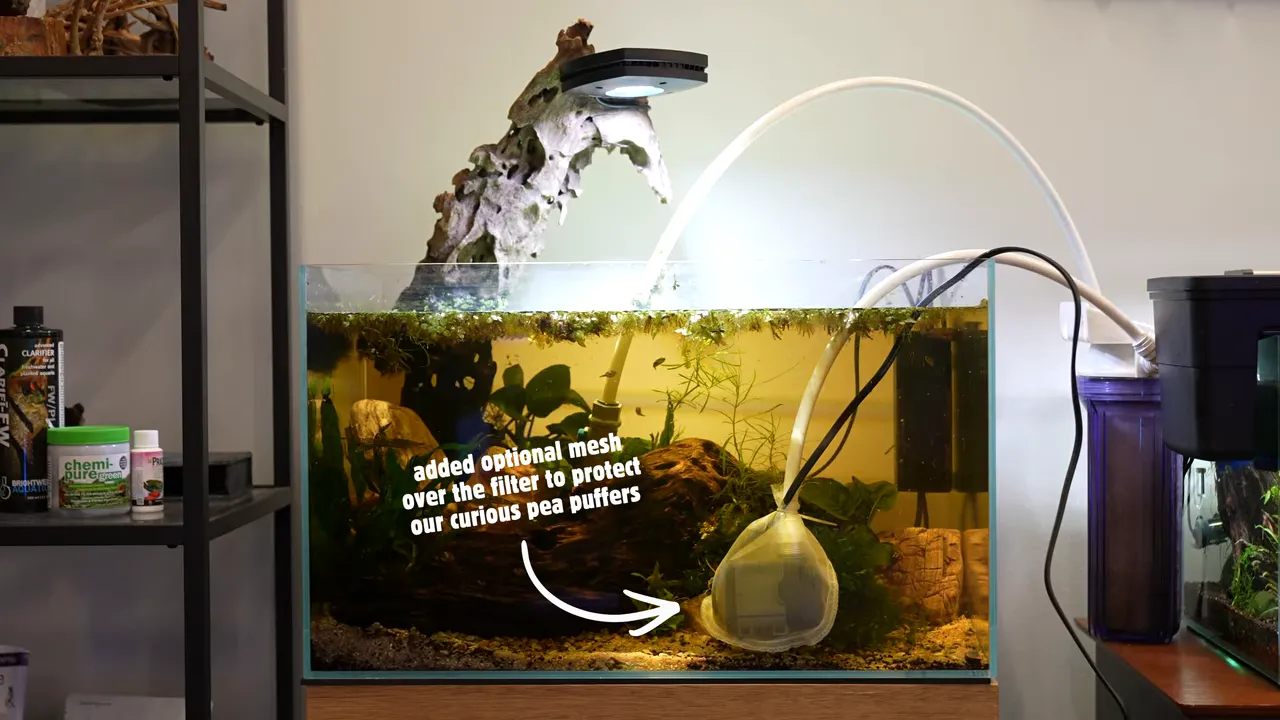
Attach a pump so it can feed aquarium water into the reactor. Connect the output tubing to return filtered water to the aquarium.
4. Put both lines in the aquarium
Place the pump or intake in the tank and position the output tubing so filtered water returns safely to the aquarium. Keep the tubing secure and avoid a setup that could shift while running.
5. Use a steady, moderate flow rate
Flow rate matters. The goal is a consistent, steady stream through the cartridge. Avoid a powerful rush of water, but do not reduce the flow to a trickle either. Water needs enough movement through the filter for the reactor to clean the aquarium effectively.
How long does it take to clear aquarium water?
With the reactor operating at a steady flow, a visible improvement can appear within hours. Running the filter overnight or for a full day can produce clear water when the haze is primarily suspended particulate matter.
The exact result depends on how much debris is present and how quickly the cartridge loads up. If water remains cloudy, inspect the cartridge and flow rate before assuming the method is ineffective.
How to tell when the sediment filter needs replacing
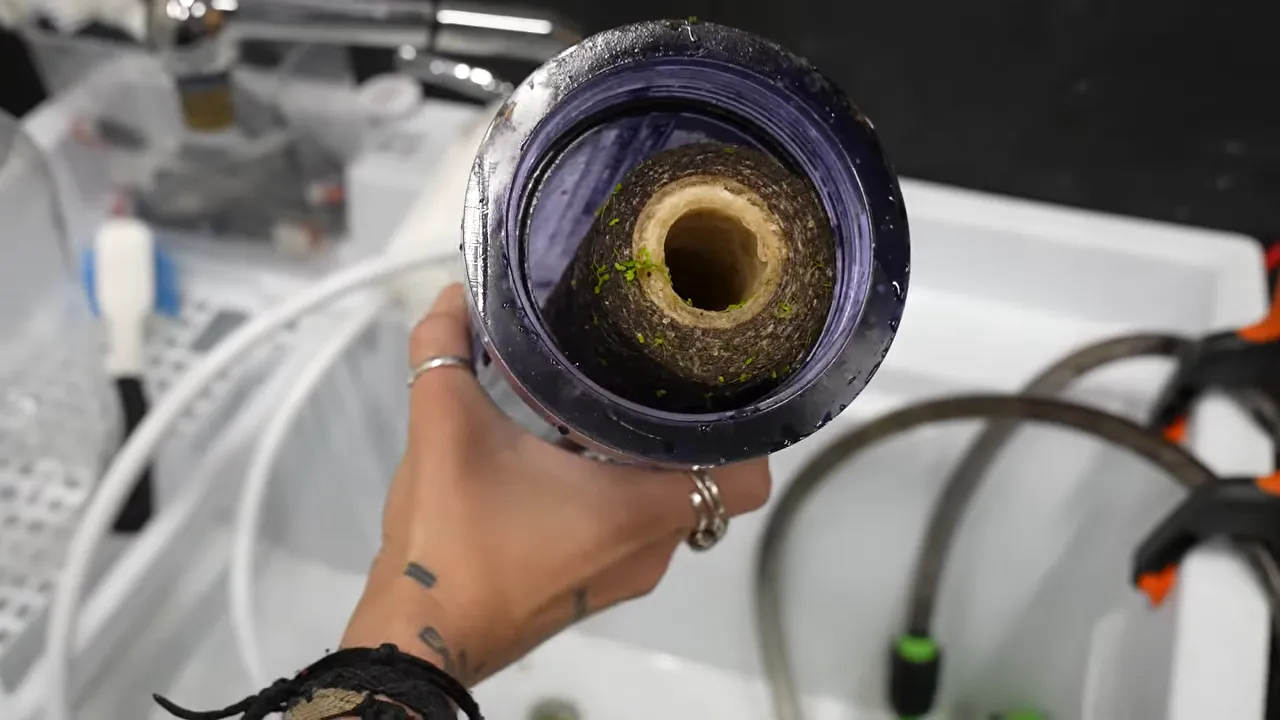
A sediment cartridge gradually fills with the debris it captures. A heavily loaded cartridge becomes visibly dirty and may look unpleasant when inspected. Its flow rate may also slow noticeably as the material inside becomes clogged.
Replace the cartridge when:
- It is visibly loaded with debris
- Water flow through the reactor slows significantly
- The reactor is no longer filtering effectively
Mistakes to avoid when polishing aquarium water
Using excessive flow
More flow is not automatically better. A strong rush through the system is not the intended operating condition. Use a controlled, constant flow that allows the filter to do its work.
Leaving a clogged cartridge in service
A fully loaded sediment filter restricts water movement and stops filtering efficiently. Check it if the flow rate drops or the aquarium is not clearing as expected.
Keeping the reactor running after the water is clear
The reactor is intended as a short-term polishing solution. Remove it once the water has cleared rather than treating it as a permanent substitute for normal filtration.
Assuming every type of cloudiness is the same
This method is designed to remove suspended particles. It is most appropriate when the issue is visible debris in the water column. Aquarium cloudiness can have different causes, so consider whether the water contains physical particles before relying on mechanical polishing alone.
Why use a sediment filter instead of a water change?
When the primary issue is suspended debris, a sediment filter reactor directly captures that material. It can improve water clarity without relying on an additional water change or chemical dosing for the immediate clean-up.
That makes it a useful option when a recent cleaning has stirred up debris and the aquarium simply needs faster mechanical filtration to polish the water.
Quick checklist for crystal-clear aquarium water
- Identify the issue: Look for visible suspended particles rather than assuming a chemistry issue.
- Prepare the reactor: Remove carbon or other chemical media.
- Fit the cartridge: Install a compatible sediment filter cartridge.
- Connect the pump: Feed tank water into the reactor and route the outlet back to the tank.
- Control the flow: Run a steady, moderate flow.
- Inspect the cartridge: Replace it if it becomes dirty and clogged or flow slows down.
- Remove the reactor: Take it offline once the water has cleared.
Frequently asked questions
Can a carbon reactor be used to clear cloudy aquarium water?
Yes. A carbon reactor can be repurposed as a mechanical polishing filter by removing the carbon media and installing a compatible sediment filter cartridge.
Will a sediment filter remove detritus from aquarium water?
A sediment filter can capture fine suspended detritus and other particulate debris as aquarium water passes through the cartridge.
Can this method be used in freshwater and saltwater aquariums?
Yes. A sediment filter reactor can be used to polish water in both freshwater and saltwater aquariums when suspended particles are causing the cloudy appearance.
Do I need to run the reactor permanently?
No. It is a temporary water-polishing tool. Once the aquarium water is clear, remove the reactor and continue using the aquarium’s usual filtration system.
Why has the flow through my sediment filter slowed down?
The cartridge may be loaded with debris and becoming clogged. Inspect the filter and replace it when it is visibly dirty or no longer allows adequate flow.
Takeaway
A sediment filter cartridge in a compatible reactor is a practical way to clear aquarium water when fine particles are suspended after cleaning or maintenance. Set it up with a pump, use a steady moderate flow, monitor the cartridge for clogging, and remove the reactor after the water has been polished clear.